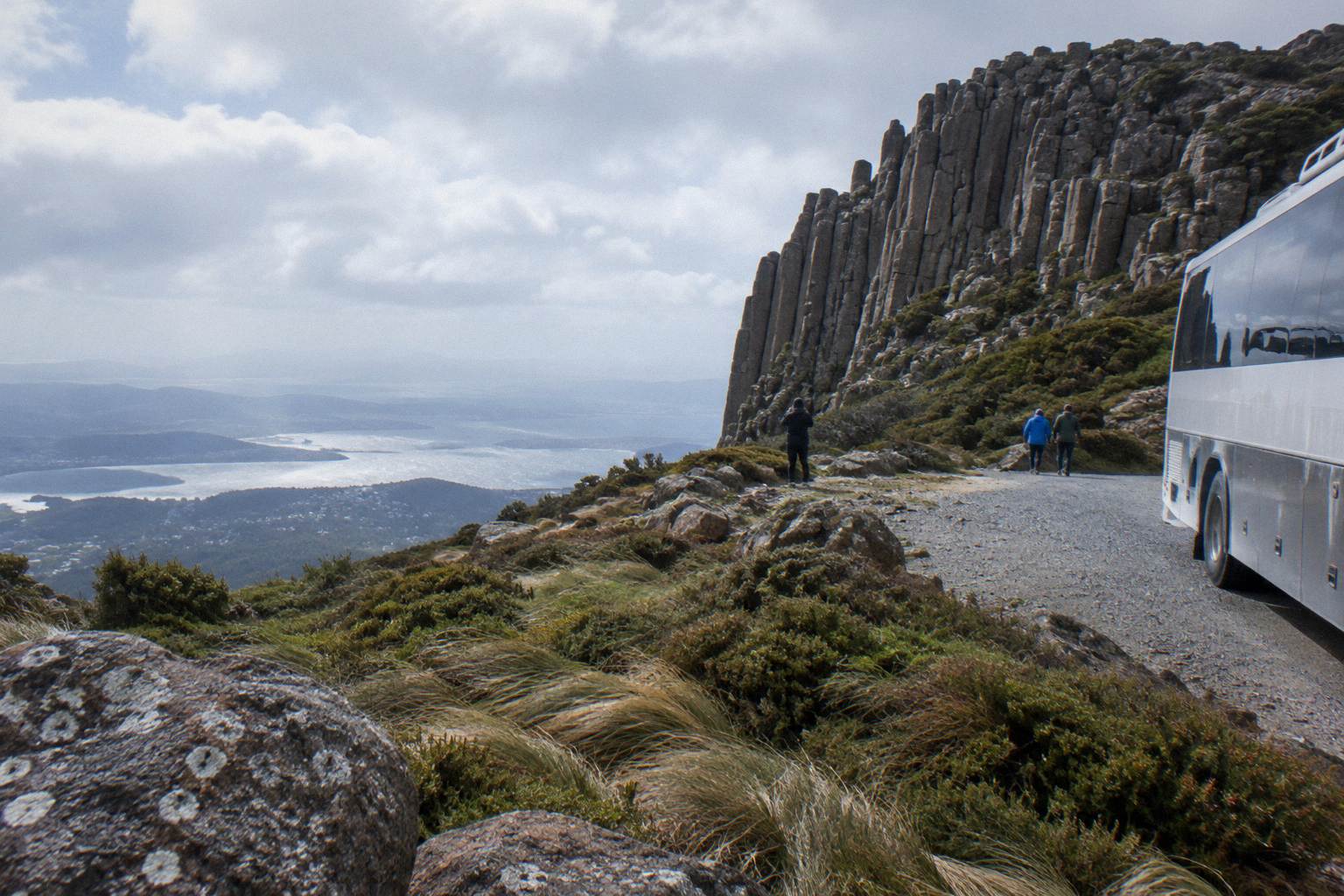
Can You See The Southern Lights From The Summit On A Tour?
No night tour of kunanyi / Mount Wellington exists, and no verified source promises the Southern Lights from the summit. Here is what is actually bookable, and how to chase the aurora safely.
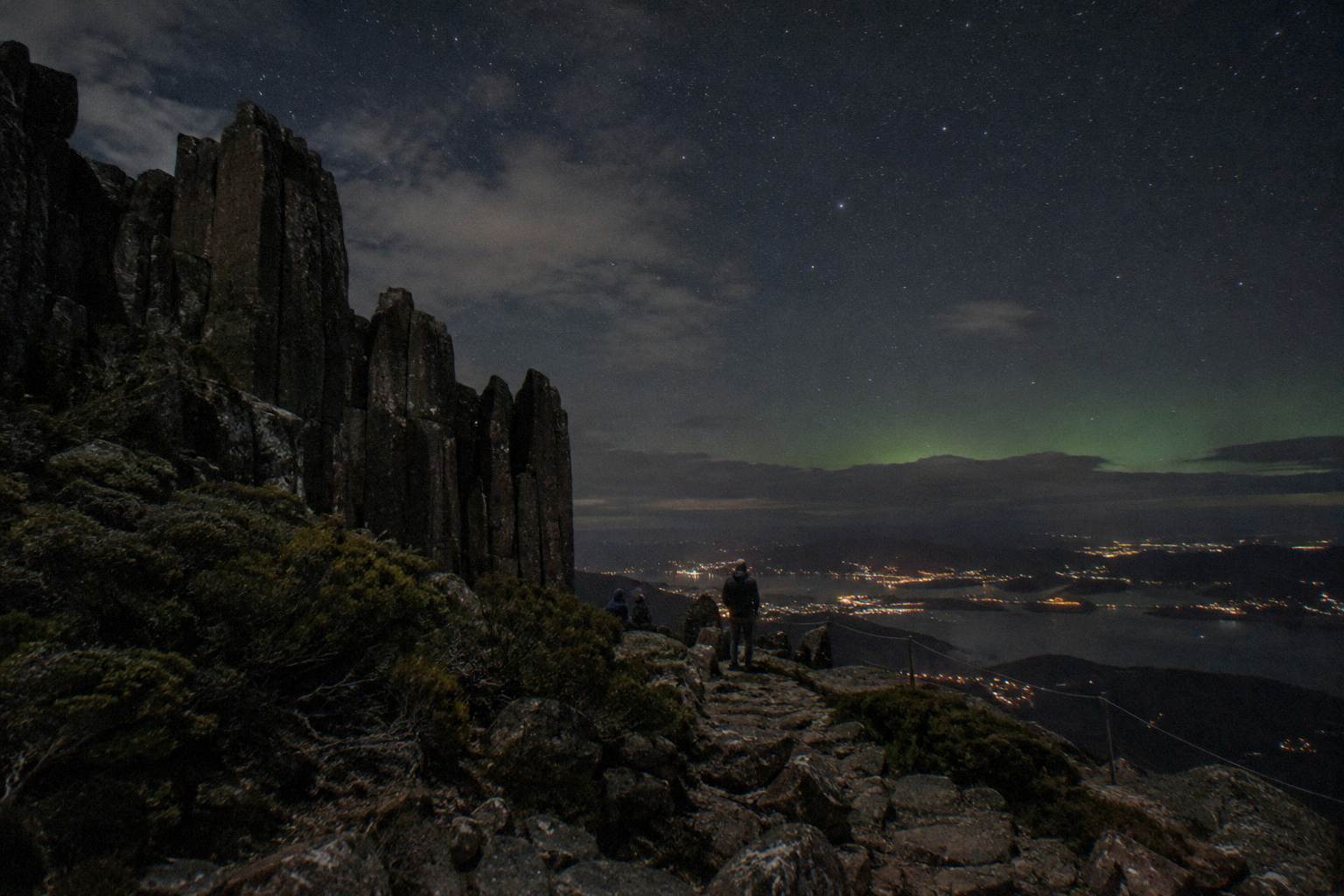
No. There is no night tour of kunanyi / Mount Wellington on any booking page, and no verified fact says the Southern Lights can be seen from the summit. Every summit trip sold here is a daytime product, and none of the operators promises an aurora sighting. If the Southern Lights are the goal, book a daytime summit tour for the mountain itself and chase the aurora separately.
That answer surprises people, so it deserves the full reasoning. Hobart sits unusually far south for an Australian capital, which is exactly why the question gets asked so often: Tasmania is one of the few places in the country where an aurora australis display is a realistic hope at all. The logic that follows, a dark sky plus elevation equals lights, is sound in principle. In practice, nothing in the verified record supports booking a summit tour for that purpose.
Three separate facts close the door. First, no evening or night departure exists on any booking page for this mountain, so there is nothing to book even in theory. Second, the summit road is managed by the City of Hobart and closes overnight whenever ice or snow is present, and it shut on 95 nights in 2025-26 for snow or ice alone, per the Wellington Park Management Trust. Third, the summit is often in cloud, which is the single most underrated obstacle to any summit view, aurora or otherwise.
None of this makes the mountain a bad buy. It makes the mountain a bad aurora buy. The trips that do run, and run well, are daytime products, and the smarter path for a Southern Lights hopeful is toward them rather than a search for a night tour that does not exist.
For readers who want to skip ahead, these are the three real ways up the mountain that best fit a visit built around the aurora question:
- Return Explorer Bus Pass
- Summit Tour, 2 Hours 45 Minutes
- MONA Plus Summit Day Trip
- Mt Field, Bonorong And Richmond Trip
- Hop-On Hop-Off Summit Pass
- Summit And City Combo
- Bike Descent, Rainforest Trail
- 48-Hour Bus And City Loop
- Richmond Village Shuttle Trip
- Two-Hour Small-Group Summit
- One-Way Explorer Bus Pass
- Organ Pipes Guided Walk
- Half Day, Cascade Female Factory
Why There Is No Night Tour Of The Mountain
No operator sells an evening or night summit departure, and none of the three daytime formats runs after dark. The Trust confirms the summit toilets close at 10pm in the summer season and the lookouts are technically accessible at any time, but the road itself closes overnight for snow and ice. A commercial night product would have to run against that closure risk all winter.
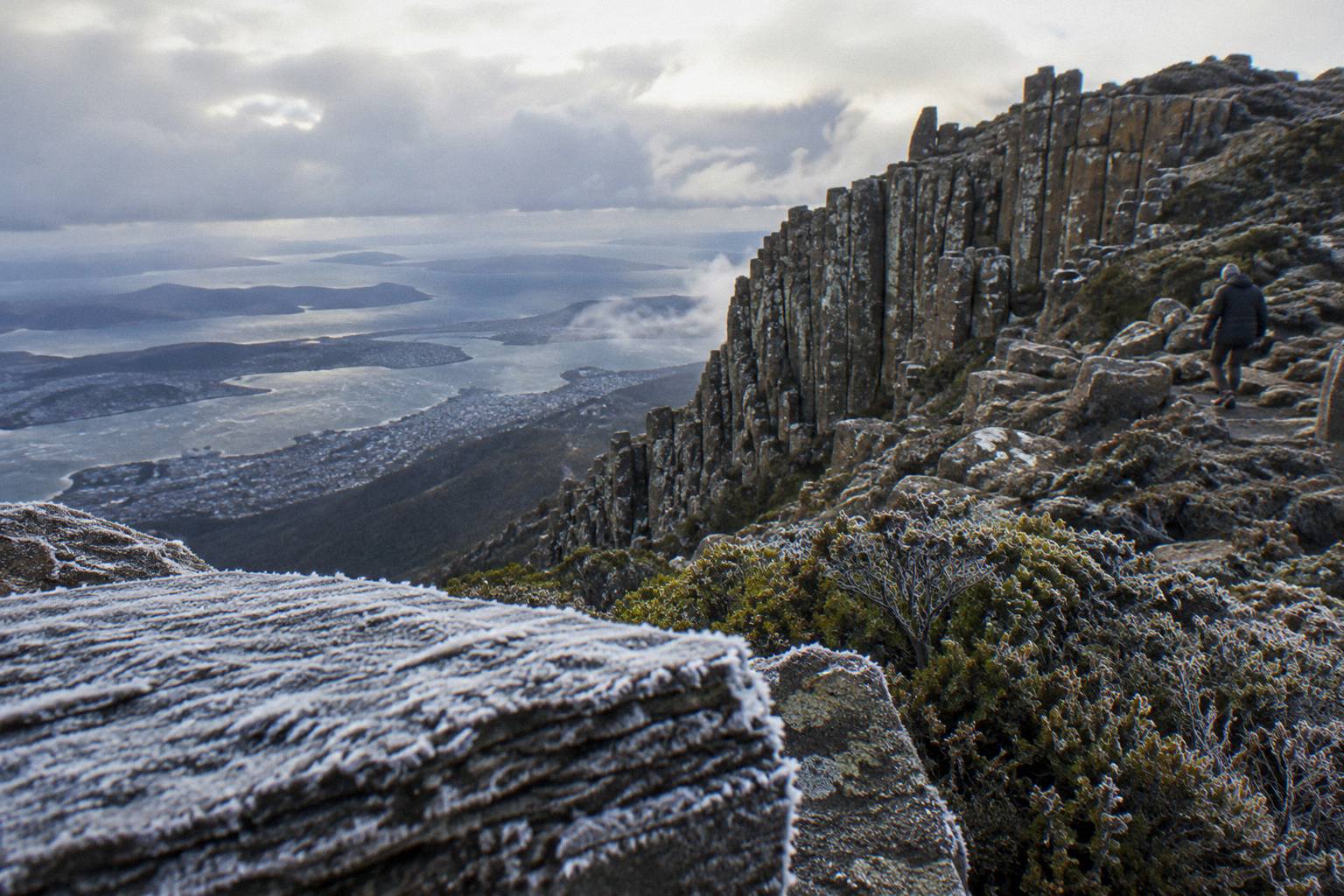
The structural problem is the road. Pinnacle Road is the only public road into Wellington Park: it starts at the end of Pillinger Drive in Fern Tree, climbs past The Springs at 720 metres, and winds up to the summit at 1,271 metres. It is sealed and passable in a conventional vehicle, but it is narrow, shared with bikes and pedestrians, and managed by the City of Hobart with a hard gate at Bracken Lane or above The Springs. When ice is present, or even forecast, the gate closes. The Trust records that overnight closures ran past 9.30am on 46 days in 2025-26, and the summit was unreachable by private vehicle entirely on 14 days. An operator selling a 9pm departure would be gambling every clear winter night against a gate that may shut at any hour from April through September.
Then there is the weather itself. The Trust's safety guidance is blunt: high winds and temperatures below zero are common at the summit, the gap between the Hobart waterfront and The Pinnacle can be 12 degrees or more, and wind chill below minus 20 degrees Celsius is possible. Snow can fall in any month, more likely overnight from May to September. An aurora display and survivable summit conditions rarely share a calendar. When the lights are out, winter is bearing down on the mountain.
What about going up independently at night, in your own car or on foot? The lookouts and the observation shelter are accessible at any time, and the summit toilets stay open until 10pm from 1 September to 30 April. That is the extent of the verified night access. Nothing says the road is open at night in winter, and the road also shuts for annual maintenance every November, when there is no vehicle access to the summit at all. Anyone attempting it should check the City of Hobart Pinnacle Road status page or call the Pinnacle Road Information Line on 03 6238 2711 first, and dress for wind chill well below what the waterfront suggests.
The practical conclusion for an aurora hopeful: plan the mountain for daylight, and plan the lights from somewhere with a warm exit. If that reframing lands, the guide to Mount Wellington Tours lays out the full daytime range, and the best time of day for a summit tour covers the late-afternoon window that gets you closest to dusk on a real, bookable trip.
Is one of the daytime options the right fallback for your dates?
What The Aurora Actually Requires (And Why The Summit Is Not It)
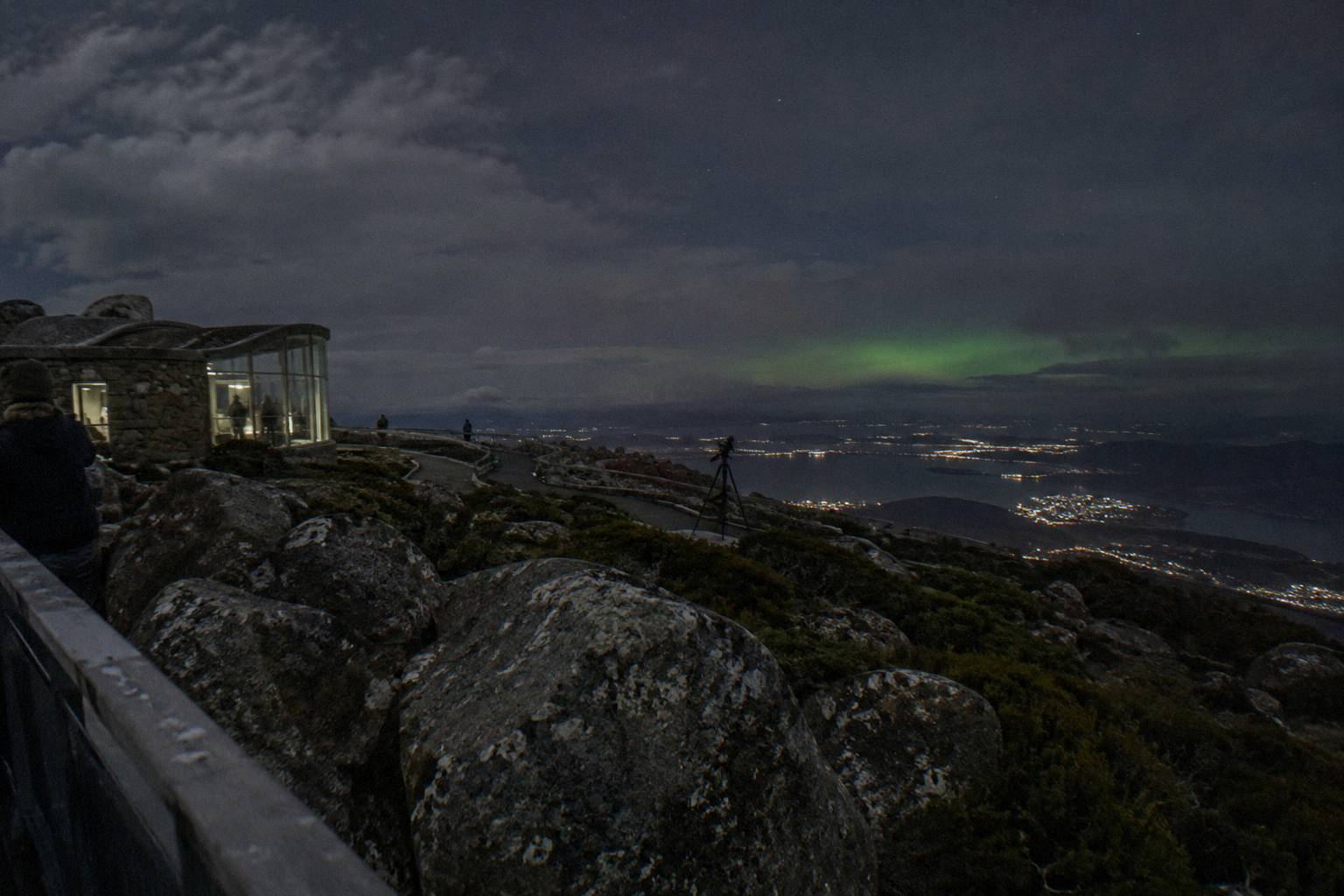
An aurora needs three things at once: a strong enough geomagnetic storm, a sky dark and clear enough to see it, and a horizon facing south. Kunanyi delivers elevation and a south-facing view, but it adds brutal cold, cloud that often caps the summit, and a road that closes in exactly the conditions aurora hunters love. Lower, sheltered, coastal dark spots near Hobart serve the purpose better.
The Southern Lights are not weather; they are space weather. A display over Tasmania needs a geomagnetic disturbance strong enough to push the auroral oval this far north, which is irregular and never promised by anyone for any date. When it happens, what you see depends almost entirely on local sky conditions, and this is where the summit's reputation works against it. The mountain is 1,271 metres tall and generates its own weather; the summit is often in cloud while Hobart itself sits under clear sky. A cloud-capped summit shows you nothing, at any hour, for any reason.
The cold factor compounds with altitude. The Trust says the summit can be 12 degrees or more colder than the waterfront, with wind chill below minus 20 degrees Celsius possible, and high winds common. Aurora watching means standing still for long stretches facing south. That is unpleasant at sea level in Tasmania in winter; at the Pinnacle it is a genuinely hostile way to spend two hours waiting for a maybe.
One more note: no cable car exists and none is approved, so there is no lifted, enclosed night option in the works either. The proposal was refused by Hobart City Council and that refusal was upheld by the tribunal in 2022. The mountain's access reality for the foreseeable future is the road, the buses, and your own legs.
For judging conditions from town, the guide to summit webcams and live conditions does exactly that, and the Bureau of Meteorology maintains a live station on the mountain itself, Kunanyi / Mount Wellington station 094087, though it notes wind and feels-like readings can drop out when ice builds up on the instruments, which tells you something about the summit in its own right.
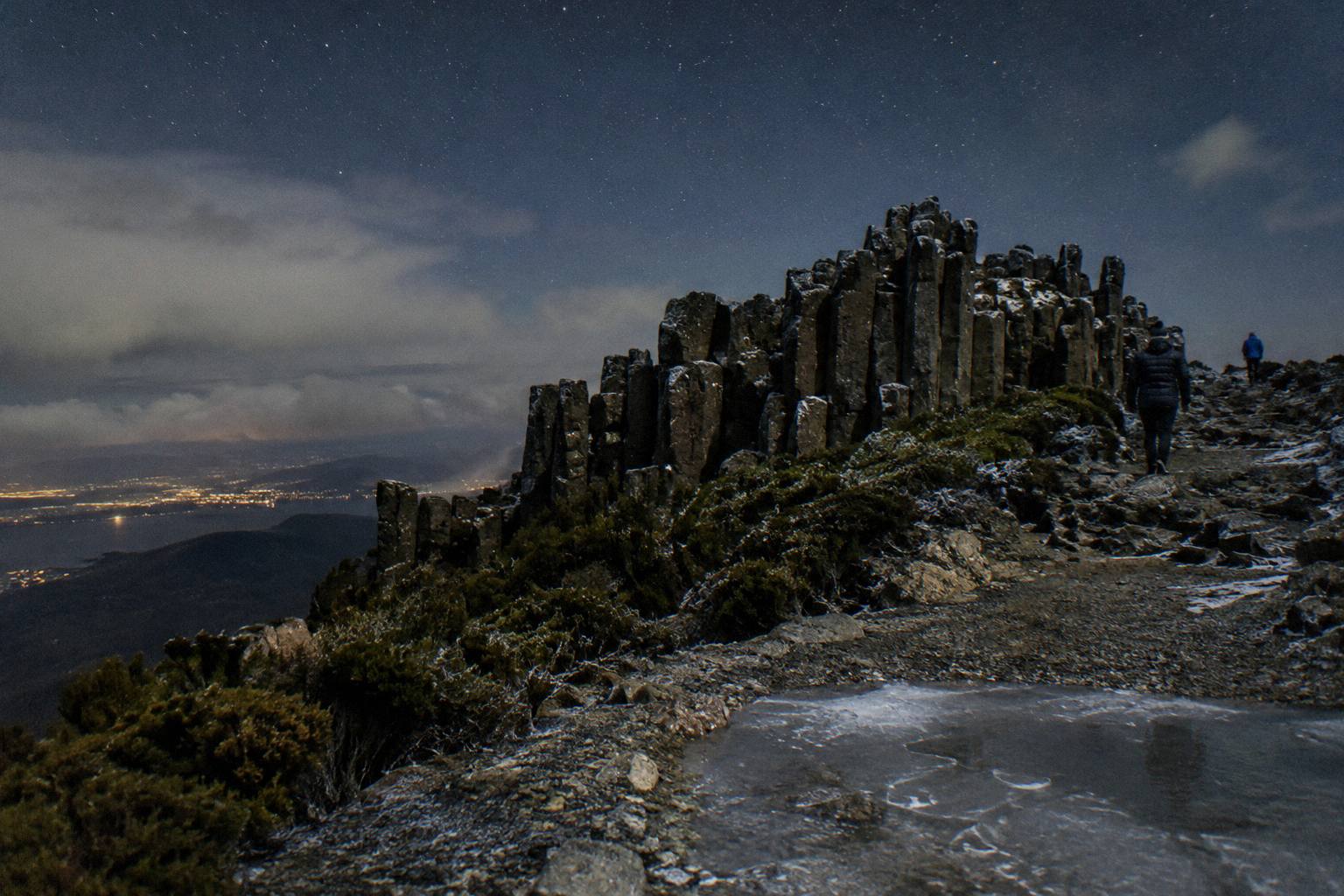
Here is how the summit's traits stack up for aurora hunting versus a low coastal dark site:
| Factor | Summit at night | Coastal dark site near Hobart |
|---|---|---|
| Dark sky | Very dark above the cloud line | Dark, some light pollution on horizons |
| Cloud risk | Summit often capped in cloud | Cloud varies with the night, escape possible by driving |
| Cold and wind | Often 10 to 12 degrees or more colder than the waterfront; wind chill below -20 °C possible | Waterfront winter temperatures, shelter available |
| Access at night | Road closes overnight for snow and ice; no night tour exists | Public roads and carparks, no gate |
| Comfort while waiting | No shelter beyond the observation shelter, toilets close by 10pm in summer | Car, thermos, quick retreat |
| South horizon | Excellent, unobstructed | Good to very good depending on the beach |
A useful framing: the summit is a superb daytime viewpoint and a poor nighttime waiting room. The decision logic flips the moment the sun sets.
Could A Daytime Summit Tour Still Be Worth It For An Aurora Trip?
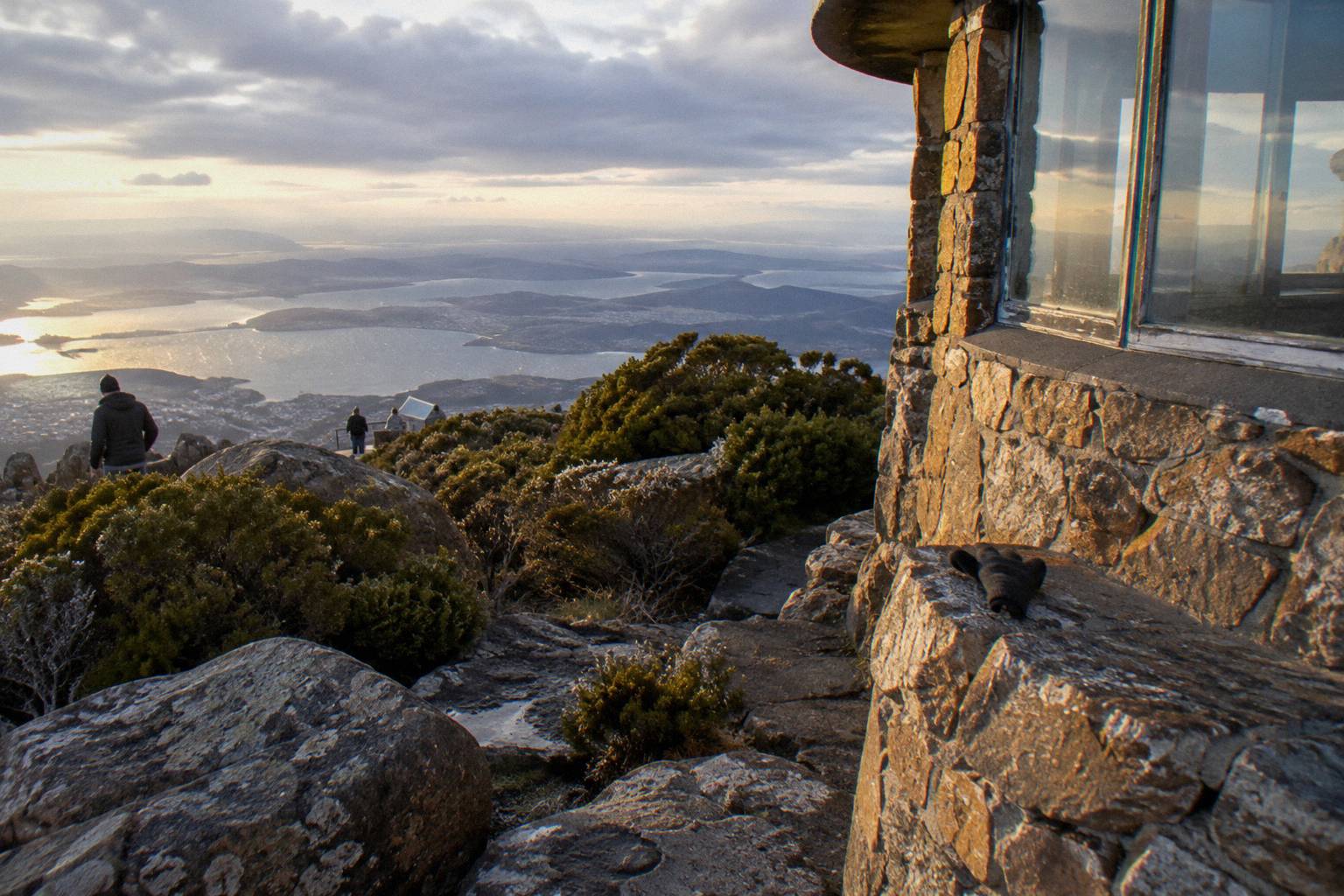
Yes, for the mountain itself. A daytime summit tour gives you the 1,271 metre view, the Organ Pipes, and a read on the weather system you will face that night, all with free cancellation up to 24 hours before start on every trip. Treat it as reconnaissance and a great half day, not as step one of an aurora ticket.
An aurora trip to Hobart usually spans two or three nights, because a strong display is never guaranteed on any given night. That leaves daylight hours to fill, and a summit tour is one of the best half-day fills in the city. It also serves a tactical purpose: standing at The Pinnacle at 2pm shows you exactly where the cloud sits, how the wind is running, and whether the Organ Pipes are clear, all information that shapes where you point the car after dark.
The Explorer Bus Return Tour is the natural pick for this. It runs from Brooke Street Pier, takes 2.5 hours, costs from A$55 per person, and carries a 4.8 rating from 1,081 reviews, the most-reviewed trip on the booking pages. The pass is valid all day, hop-on hop-off, across five stops between Fern Tree and The Pinnacle, so you can linger where the view is working and skip where it is not. It operates in all weather, with commentary, a bushwalking map and free Wi-Fi onboard, and it is wheelchair accessible per the booking pages. You can read the full rundown in the kunanyi Explorer Bus guide.
The Hobart Shuttle Hop-On Hop-Off Summit Pass is the same from-price from A$55 per person, with a 2.5-hour shape of its own at 2 hours 15 minutes, live commentary and an air-conditioned vehicle. Its practical edge on snow days: when the gates close to the public, the tour is run by the Kunanyi/Mt Wellington Explorer Bus partners, the only bus approved beyond the closed gates. In an aurora-season winter, that matters.
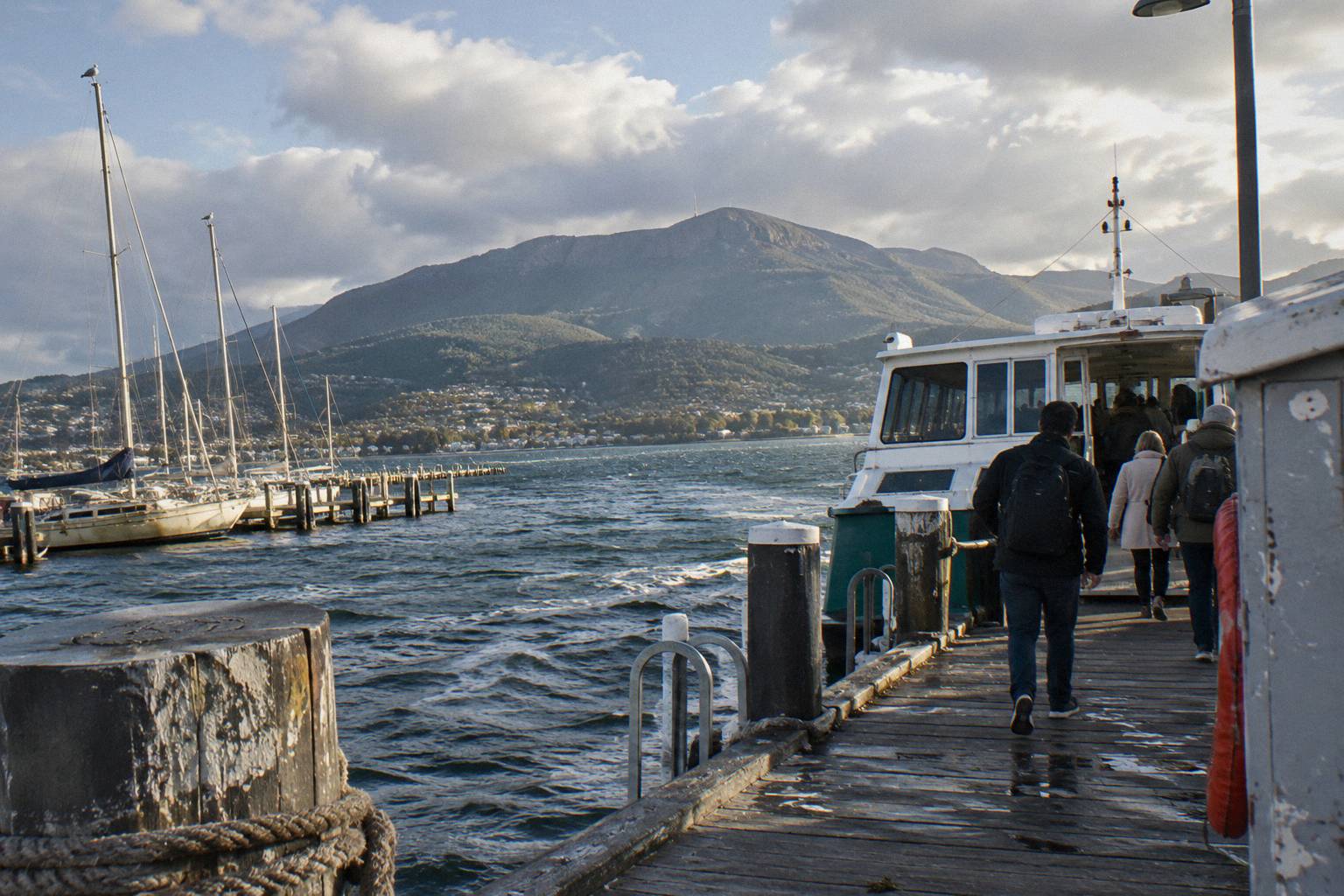
If you would rather have a guide than a timetable, the Ultimate Experience Guided Summit Tour from Experience Tasmania Gray Line Day Tours runs 2 hours 45 minutes from Brooke Street Pier or selected hotel pickup, from A$65 per person, rated 4.6 from 90 reviews, with full commentary en route. Note it is not suitable for people with mobility impairments and the booking page says it is not wheelchair accessible. Its itinerary may vary due to road and weather conditions, which in winter is a feature rather than a bug, since the operator is working around the same closures everyone else is.
For the evening end of the day, see the piece on sunset at the summit for what the last light looks like and what the departure maths realistically allows. No sunset tour product exists either, but the late Explorer Bus departure in the summer timetable gets you close to dusk, and no booking page promises a summit sunrise or sunset as a product.
Picking Your Daytime Trip: Formats Compared
Three formats cover almost everyone: the hop-on hop-off bus pass (from A$55 per person, Explorer Bus Return Tour, 2.5 hours), the shuttle summit pass (from A$55 per person, 2 hours 15 minutes), and the guided coach tour (from A$65 per person, Ultimate Experience, 2 hours 45 minutes). All three include free cancellation up to 24 hours before start, so weather indecision costs nothing if you bail a day ahead.
The real difference is freedom versus narrative. The bus pass lets you get off at The Springs, walk a section, and catch a later bus; the pass is valid all day and the timetable runs seven days. The shuttle pass is a tighter loop with 30 minutes at the summit and a driver-guide talking the whole way. The coach tour is the most hands-off: hotel pickup from selected hotels, a guide, and no route-finding of your own, though hotel drop-off is not included, which catches some people out.
| Trip | Format | From-price per person | Duration | Reviews | Good for |
|---|---|---|---|---|---|
| Explorer Bus Return Tour | Hop-on hop-off bus pass | A$55 | 2.5 hours | 4.8 from 1,081 reviews | Freedom to linger at five stops |
| Hobart Shuttle Hop-On Hop-Off Summit Pass | All-day shuttle pass, 30 min at summit | A$55 | 2 hours 15 minutes | None printed | Snow-day resilience via the Explorer Bus partners |
| Ultimate Experience Guided Summit Tour | Guided coach with hotel pickup | A$65 | 2 hours 45 minutes | 4.6 from 90 reviews | Hands-off commentary and selected hotel pickup |
Two planning notes specific to an aurora-season visit. First, all prices here are in Australian dollars and are from-prices per person; anything else on the day is your own spending. Second, every one of these trips can shift or vary with the road, so the same pre-trip check applies: the City of Hobart Pinnacle Road status page or the 03 6238 2711 line. The Trust's own safety guidance on park safety at the summit is worth two minutes of anyone's time before a winter booking.
The Explorer Bus tour page has the full inclusions list and a live availability check: Check availability
If The Road Closes During Your Trip Window
Closures are a routine winter event, not an exception: 95 nights closed for snow or ice in 2025-26, overnight closures extending past 9.30am on 46 days, and a full maintenance shutdown every November. Book with free cancellation in mind, check the status line the morning of, and know that the Hobart Shuttle trip is the one that keeps running via the Explorer Bus partners when the gates close.
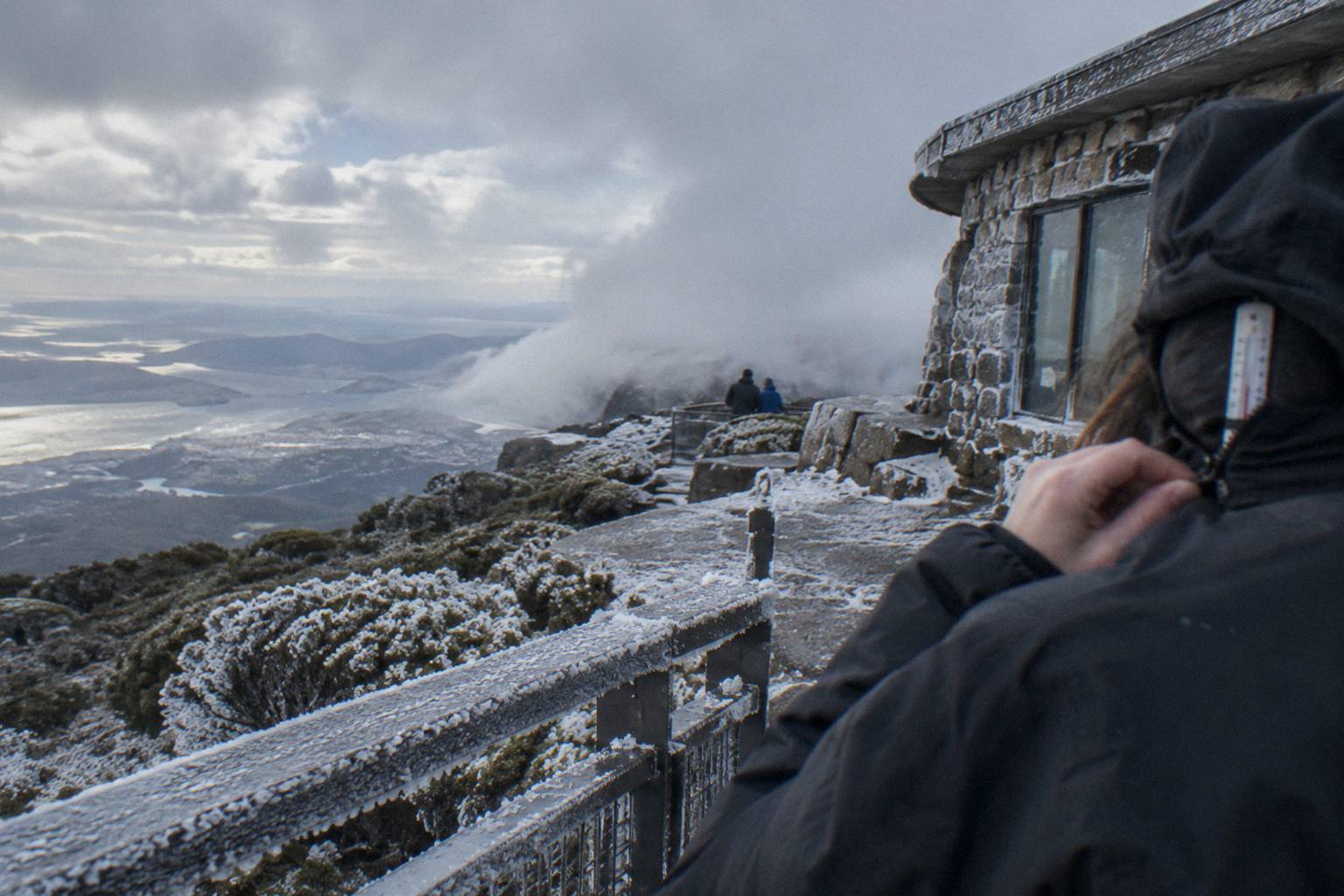
The mechanics are simple. The gate sits at Bracken Lane, the park entrance, or above The Springs, and it closes when ice or snow is present, sometimes before snow even arrives. The Trust says access may be restricted at any time of year, particularly April to September. On most closure days, the road below the gate still reaches The Springs, which is its own worthwhile stop: a sheltered picnic area, the Lost Freight cafe in a shipping container, and the short level walk to Sphinx Rock. On snow days the record shows how much the mountain pulls: 1,906 vehicles on one day after heavy snow, with City of Hobart traffic management in place and parking at a premium.
For tour bookings, the operators handle it differently. The Explorer Bus operates in all weather conditions and is the only licensed operator able to take visitors up when the road is closed for snow, per the Trust. The Ultimate Experience's itinerary may vary due to road and weather conditions. Free cancellation up to 24 hours before start applies to every trip, so a forecast that turns ugly the day before costs you nothing, which is exactly the flexibility an aurora-season plan should be built on.
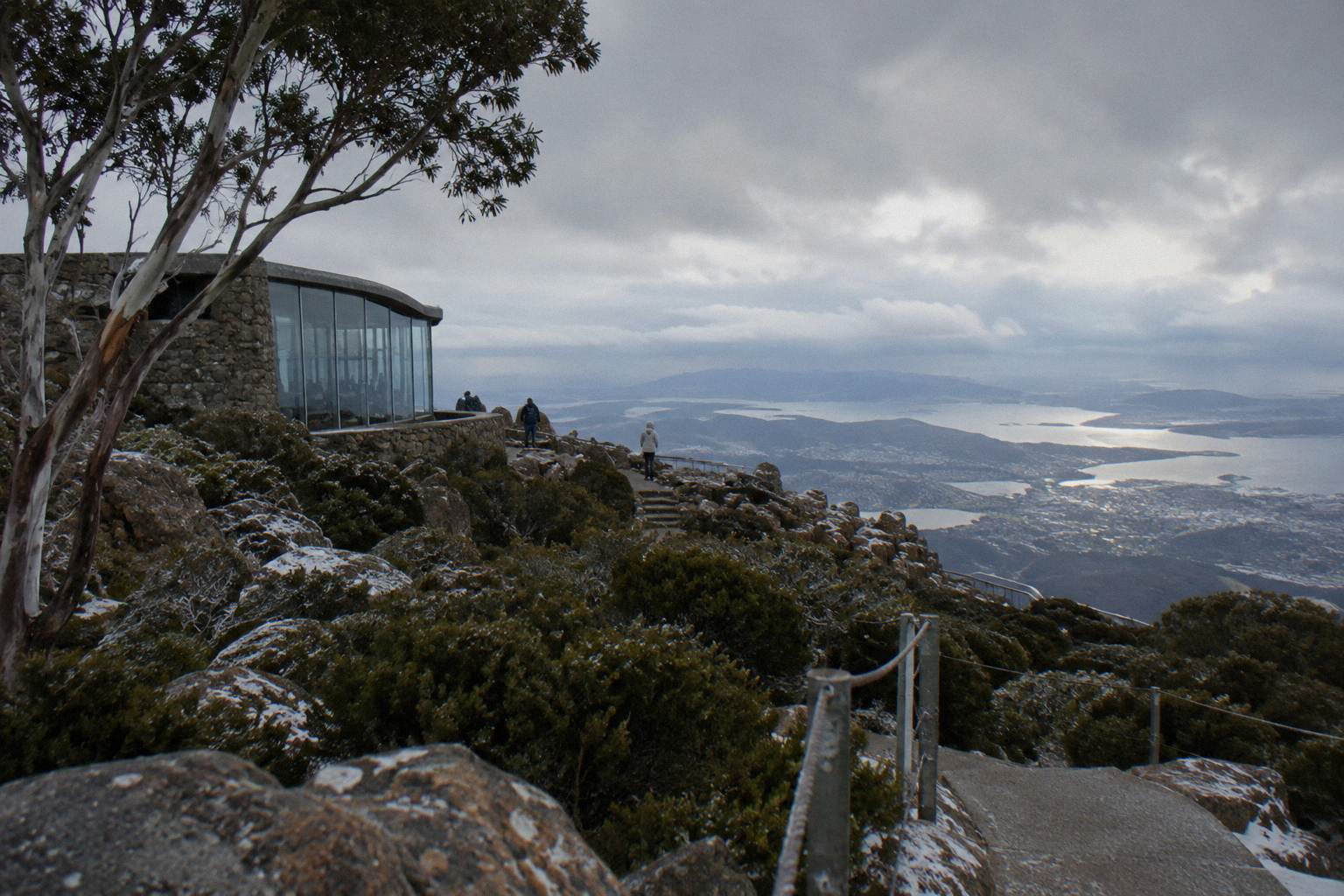
The deeper guide to pinnacle road closures and your tour walks through the whole decision tree, and snow on the mountain tours and closures covers the snow-day specifics.
A Realistic Aurora-Season Plan For Hobart
Spend your daylight on a summit tour, spend your nights at sea level facing south, and keep both halves refundable. Book the daytime trip for the mountain's own sake, check the road status each morning, and let any aurora be a bonus rather than the itinerary. That plan works whether the lights show up or not, which is the only kind of plan worth buying.
Concretely: day one, the Explorer Bus Return Tour or the shuttle pass, from A$55 per person either way, to read the mountain and see the Organ Pipes and the Derwent estuary from 1,271 metres. Day two, if the first was clouded out, the Ultimate Experience guided tour with hotel pickup, or swap the summit half-day for something else entirely and revisit the mountain another trip. Evenings, a low coastal dark spot south of the city, a good coat, and a geomagnetic alert app. Every tour element of that plan carries free cancellation up to 24 hours before start.
The one mistake to avoid is letting the aurora hope drive a booking the product cannot honour. No trip departs after dark and none promises lights, so do not book one expecting them. Booked as a mountain experience, the daytime tours deliver reliably; booked as an aurora vehicle, nothing on any page here can deliver that.
If that plan suits your dates, these are the three trips that fit it best:
Common Questions About Seeing The Southern Lights From The Summit
Can You See The Southern Lights From The Summit On A Tour?
No. No night tour of kunanyi / Mount Wellington exists on any booking page, and no verified fact says the Southern Lights can be seen from the summit. Every bookable summit trip is a daytime product, and none promises an aurora sighting.
Is There Any Evening Or Night Bus To The Summit?
No. The only verified departure times are the Explorer Bus daytime timetable, which runs from a 9.30am first departure to a 3.30pm last departure, the latter in the summer timetable only. Nothing on any booking page offers a night departure.
Can I Drive Up At Night To Look For The Aurora Myself?
The lookouts are accessible at any time and the summit toilets stay open until 10pm from 1 September to 30 April, but the road closes overnight for snow and ice and shuts for annual maintenance every November. Check the City of Hobart Pinnacle Road status page or call 03 6238 2711, and expect wind chill well below waterfront temperatures.
Would A Higher Vantage Point Help Me See The Aurora?
Not enough to justify it. The summit is often in cloud, can be 12 degrees or more colder than the waterfront, and wind chill below minus 20 degrees Celsius is possible. A low coastal dark site with a clear south horizon serves aurora watching better.
What Should I Book Instead If I Want The Summit And The Lights?
Book a daytime summit tour for the mountain, and chase the aurora separately at sea level. The Explorer Bus Return Tour, the Hobart Shuttle Hop-On Hop-Off Summit Pass and the Ultimate Experience Guided Summit Tour all run daytime, and all carry free cancellation up to 24 hours before start.
Does The Road Closure Risk Apply In Aurora Season?
Yes, strongly. Winter is peak closure season: the road closed 95 nights for snow or ice in 2025-26, with August the worst month at 22 nights. The Hobart Shuttle trip keeps running on snow days via the Explorer Bus partners, the only bus approved beyond the closed gates.