Is Pinnacle Road Sealed, And Can I Drive It Instead Of Booking A Tour?
Pinnacle Road to the kunanyi / Mount Wellington summit is sealed and takes conventional vehicles, but it is narrow, winding, shared with buses and bikes, and closes for snow, ice and annual maintenance. Here is the drive-versus-tour breakdown.
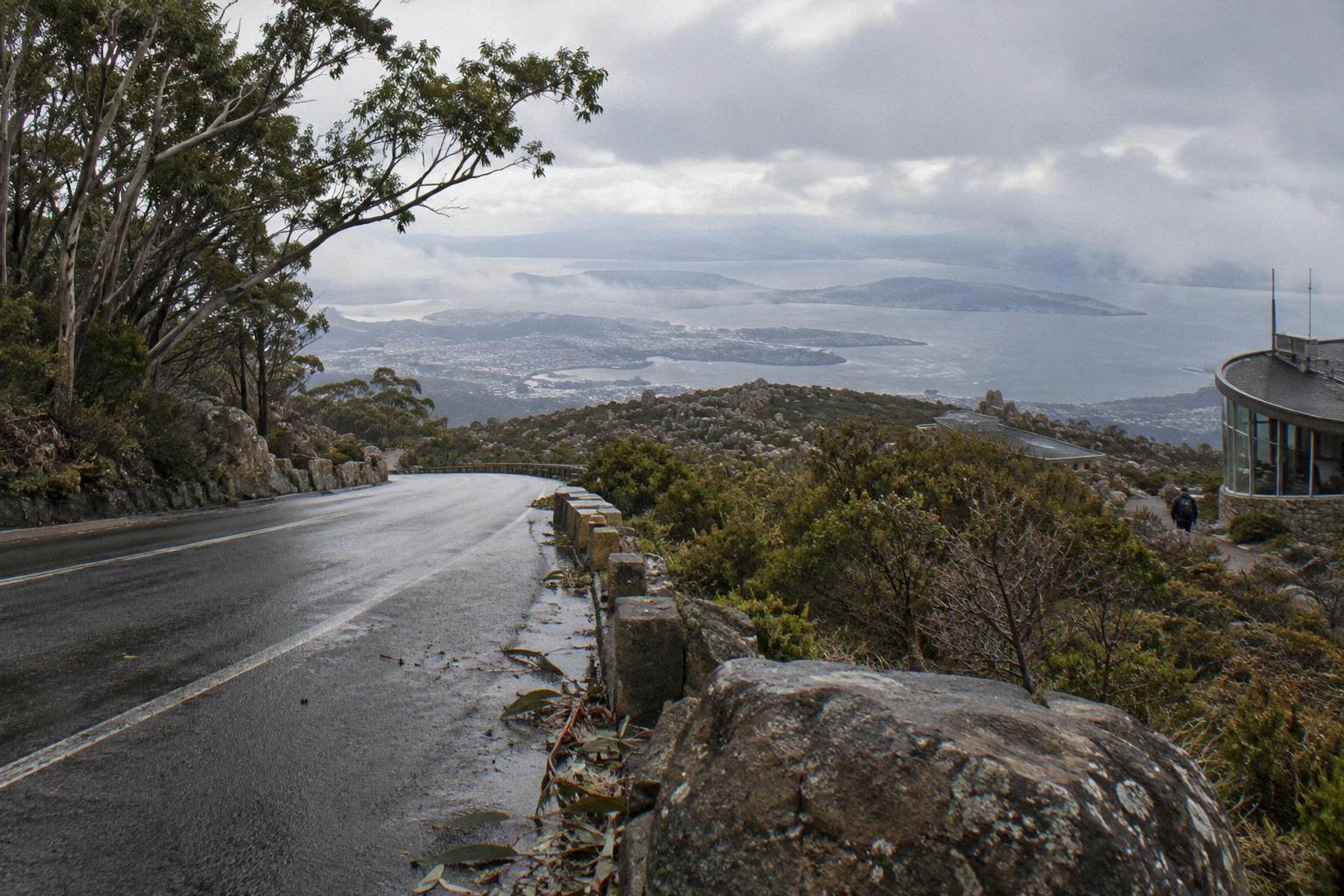
Yes, Pinnacle Road is fully sealed and a conventional car can drive it. It is the only public road into Wellington Park, running from Fern Tree past The Springs at 720 m to the summit. But it is narrow and winding, shared with tour buses, bikes and pedestrians, it closes for ice or snow, and parking at the top is limited, so a tour sidesteps all three problems.
The question sounds like it is about tarmac, and the tarmac answer is simple. The Wellington Park Management Trust describes Pinnacle Road as a sealed road suitable for conventional vehicles, starting at the end of Pillinger Drive in Fern Tree, passing The Springs and climbing to The Pinnacle at about 1,270 m. No four-wheel drive is needed, no permit is needed, and entry to the park itself is free. If you have a hire car in Hobart, nothing about the surface stops you.
What the question is really asking, though, is whether driving yourself beats booking a trip, and that trade-off is less simple. The road is managed by the City of Hobart and it closes whenever ice or snow is present, sometimes before the snow even arrives, and access can be restricted at any time of year. Parking at The Springs, The Pinnacle and the roadside lay-bys is limited, and on snow days congestion brings active traffic management. A driver also shares the narrow, winding carriageway with buses, bikes and walkers, and the summit is often 10 to 12 degrees or more colder than the waterfront, which is a bigger deal behind a steering wheel than most visitors expect.
If that is already sounding like work, the alternatives are cheap and frequent. The Explorer Bus Return Tour, run by Red Decker Company, is a 2.5-hour return trip from Brooke Street Pier with a rating of 4.8 from 1,081 reviews, from A$55 per person, with an all-day hop-on-hop-off Explorer Pass and commentary on board. Two other formats sit at the same price point or just above it, and all three can be cancelled free up to 24 hours before start.
The road is worth judging on the facts: what it is actually like to drive, when it closes and how to check, how parking works at the top, and how the drive stacks up against the tours. Nothing here promises the road is open on any given day, because the Trust itself says access may be restricted at any time, and its own records show why.
What Is Pinnacle Road Actually Like Behind The Wheel?
It is a sealed, narrow and winding mountain road shared with buses, bikes and pedestrians, with a loop at the top. The Trust advises drivers to continue around the Pinnacle loop to park rather than stopping on the road. Most people find it a steady, watchful drive rather than a scary one, but it demands attention the whole way.
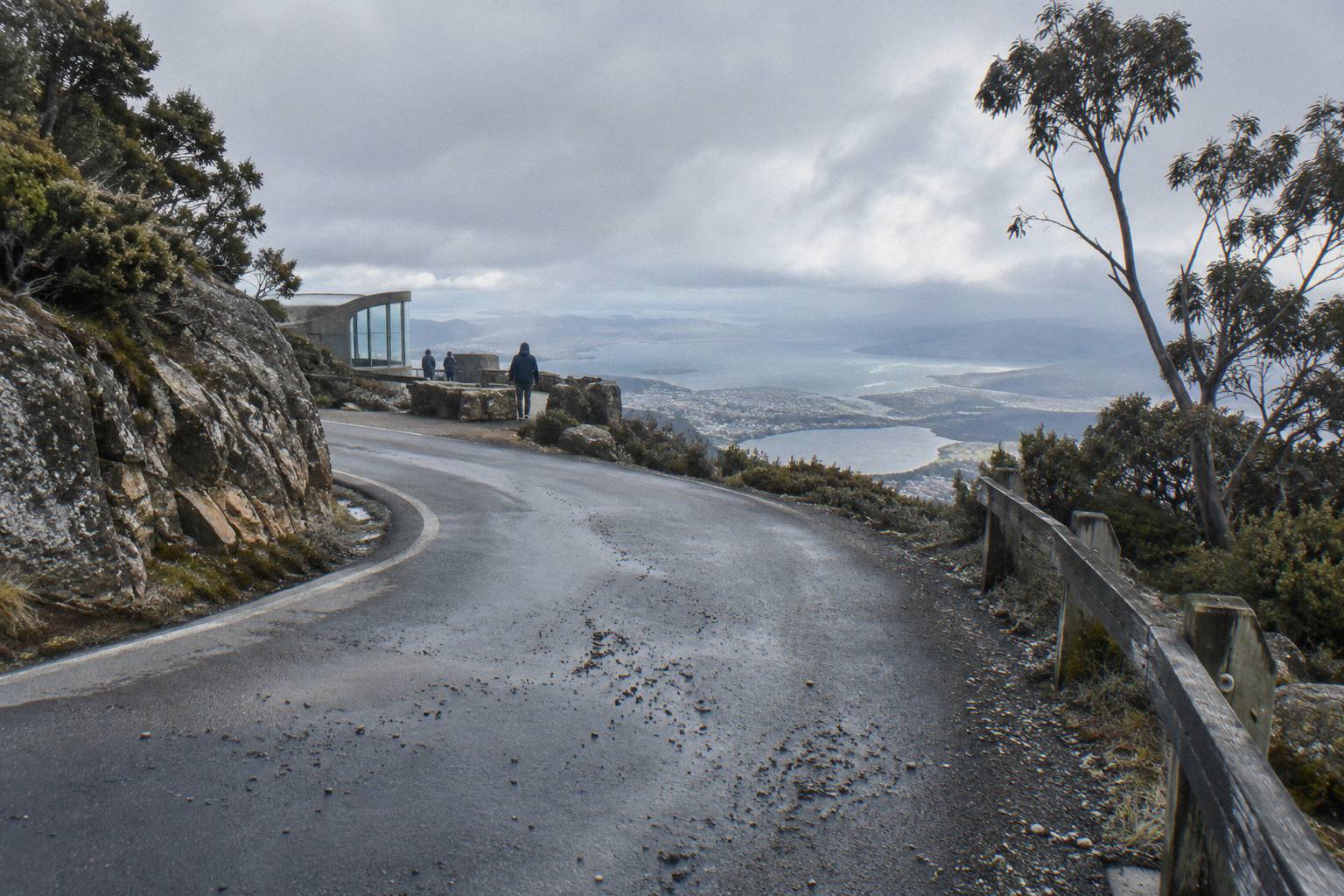
Sealed does not mean wide. The Trust's getting-there guidance is explicit that the road is narrow and winding and shared between cars, tour buses, cyclists and pedestrians, and that character shapes the whole drive. You will meet buses on tight corners, walkers crossing near The Springs, and descending riders moving faster than you expect, particularly on the bike-descent runs that start at the summit. There is no official drive-time figure on any City of Hobart, Trust or Tourism Tasmania page, and Wikipedia gives only the distance, about 22 km from the Hobart CBD, so treat any minutes figure you read elsewhere with suspicion.
The geometry at the top catches people out too. The Pinnacle is a loop: the Trust tells drivers to continue around the loop to find a park and never to stop on the road itself. In cloud, which is common, the loop plus the limited parking plus the cold adds up to a more stressful fifteen minutes than most itineraries budget for. And a small oddity worth knowing: the FM and TV transmitters near the summit can stop a car key fob from working. The Trust calls this harmless, and it is, until you are standing in a windy car park at zero degrees pressing a dead-looking fob.
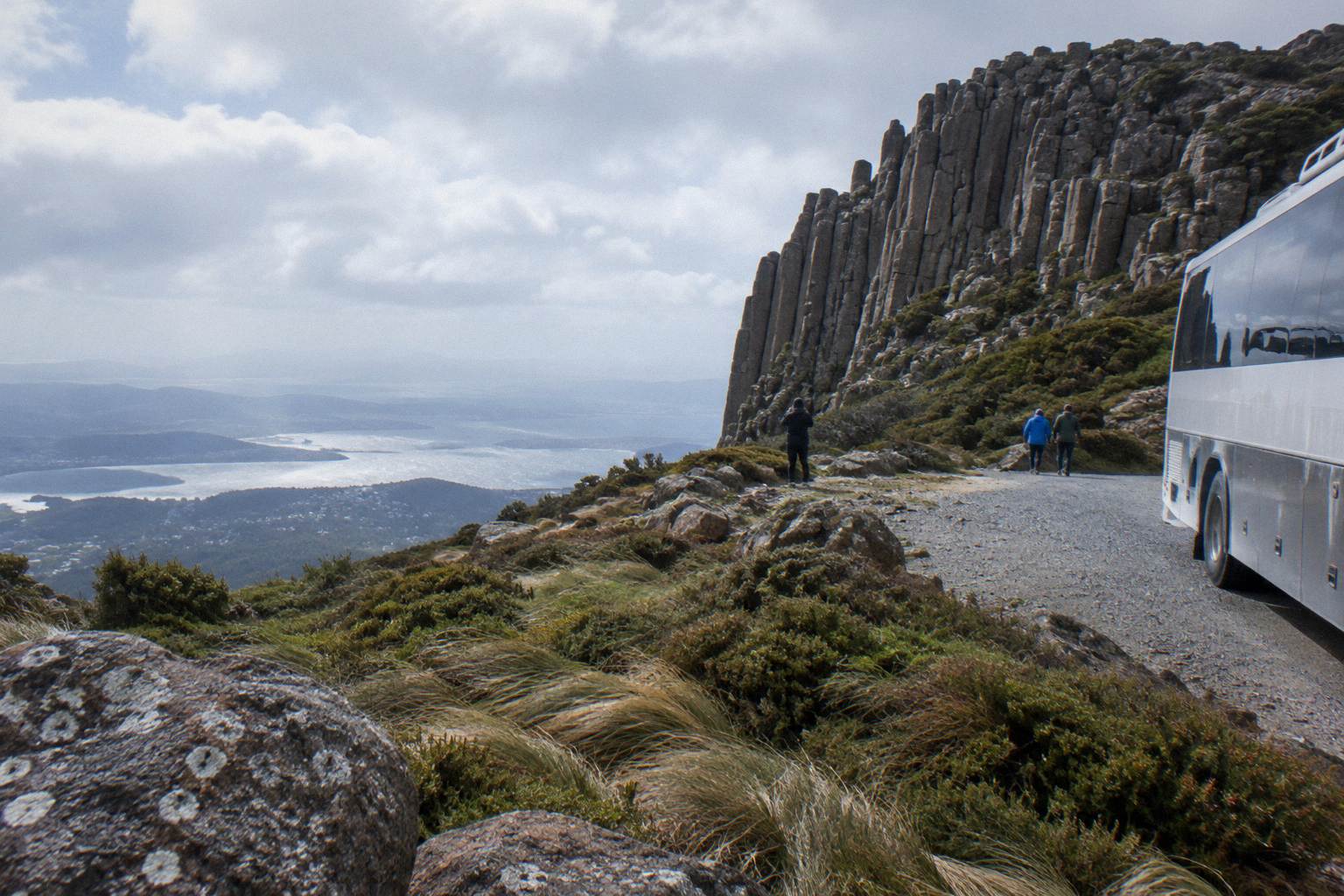
For drivers who enjoy a mountain road, none of this is a dealbreaker, and plenty of visitors drive up happily. But if you are the nominated driver in a group, you will spend the summit portion of the day concentrating on the road and the car park rather than the Organ Pipes and the Derwent estuary. That is the quiet argument for the trips, not any flaw in the road surface.
If you would rather look out the window, the Explorer Bus Return Tour covers the same road from A$55 per person with hop-on-hop-off use of the bus all day, and it is free to cancel up to 24 hours before start.
When Does Pinnacle Road Close, And How Do You Check?
The City of Hobart closes the road whenever ice or snow is present, sometimes pre-emptively, and it shuts entirely each November for annual maintenance. The Trust logged 95 nights of snow or ice closure in 2025-26. Check the City of Hobart Pinnacle Road status page or call 03 6238 2711 before you drive.
The closure point is either Bracken Lane at the park entrance or above The Springs at about 680 m, and the Trust warns that access may be restricted due to snow and ice at any time of year, particularly April to September. Snow can fall in any month on kunanyi / Mount Wellington, which is why a spring or autumn day in Hobart can still end with a closed summit road. The road also closes for events and for maintenance work.
The Trust's own numbers for 2025-26 give the scale of it. The road was closed 95 nights for snow or ice, with the worst months being August at 22 nights, October at 19, and July and September at 18 each. Overnight closures ran past 9.30am on 46 days, the summit was not reachable by private vehicle at all on 14 days, and vehicle access to The Springs remained possible on all but one closure day. After heavy snow on 6 September, the record day, 1,906 vehicles came up the mountain and the traffic management that followed is exactly why the Trust keeps publishing these figures.
| Closure fact, 2025-26 season | Figure |
|---|---|
| Nights closed for snow or ice | 95 |
| Worst month | August, 22 nights |
| Overnight closures extending past 9.30am | 46 days |
| Days the summit was unreachable by private vehicle | 14 |
| Vehicle access to The Springs possible | All but one closure day |
| Record vehicle day | 1,906 vehicles on 6 September |
None of this means the road is unreliable, it means the mountain is a mountain. The practical routine is to check the City of Hobart's Pinnacle Road status page or call the Pinnacle Road Information Line on 03 6238 2711, the number the Trust publishes on its own park safety page, before you set out, and again the night before if snow is forecast. The Trust also posts current road and track status on its own site, at road and track updates, which is where the closure counts above come from.
Here is where the tour question stops being about comfort and becomes about access. On snow days when the gates are closed to the public, the Explorer Bus is, in the Trust's words, the only licensed operator able to take visitors up beyond the closed gates. The Hobart Shuttle Hop-On Hop-Off Summit Pass from A$55 per person, 2 hours 15 minutes, hands its snow-day runs to that same Explorer Bus service for exactly this reason. A hire car sitting at a closed gate has no equivalent upgrade path.
The Ultimate Experience Guided Summit Tour, run by Experience Tasmania Gray Line Day Tours, is from A$65 per person, rated 4.6 from 90 reviews, over 2 hours 45 minutes, with hotel pickup from selected hotels and full commentary en route. Its booking page notes the itinerary may vary with road and weather conditions, a caution every visitor should carry into a summit day, driver or not.
Driving Versus A Tour: The Trade-Off
Driving wins on flexibility and on cost for a full car, and loses on closures, parking and having someone else watch the road. A tour wins on snow days, since the Explorer Bus is the licensed service beyond the closed gates, and costs from A$55 per person with free cancellation up to 24 hours before start.
Without a settled hire-car price, fuel cost or taxi fare for the mountain run, the comparison works on structure rather than dollars, and the only prices available are the trip from-prices in Australian dollars. On the driving side of the ledger: you leave when you want, stay as long as you want, stop at The Springs for Lost Freight Cafe, and pay nothing to enter the park. For a family of four in a car already hired for Tasmania, that is a genuinely strong case.
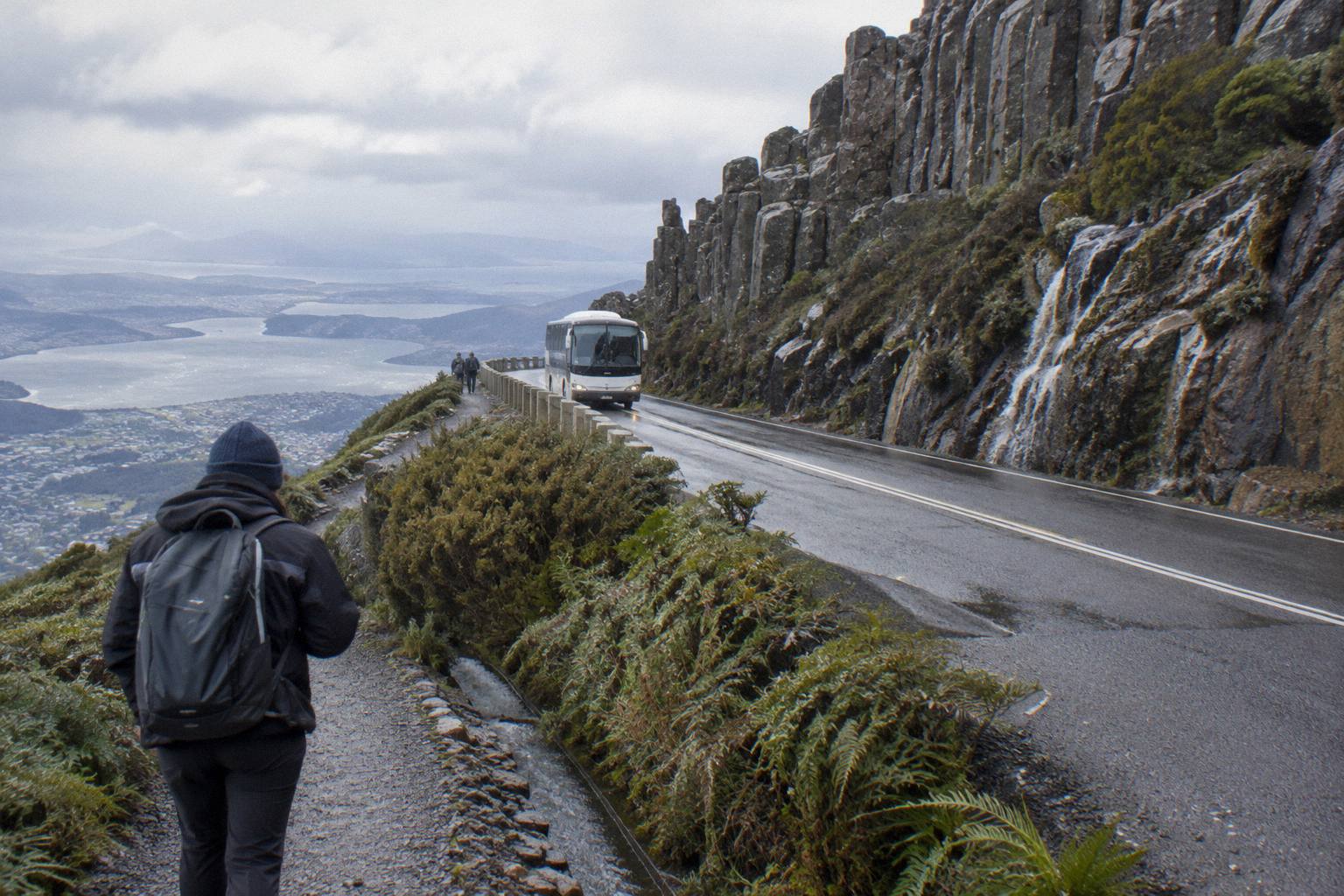
On the trip side: you do not navigate a narrow, winding shared road, you do not hunt for a park on a snow day, you get commentary that names the Organ Pipes and the palawa history of kunanyi rather than a phone screen, and, the part no hire car can match, on closed-road snow days the Explorer Bus can still legally carry you up. Every trip listed here also carries free cancellation up to 24 hours before start, so booking one does not lock you out of a perfect clear driving day; cancel and drive. The reverse, arriving at a closed gate with a booked rental and no plan B, is the scenario worth avoiding.
| Factor | Drive yourself | Book a trip |
|---|---|---|
| Road surface | Sealed, conventional vehicles fine | Same road, someone else drives it |
| Snow-day access | Blocked at the gate | Explorer Bus licensed beyond closed gates |
| Parking | Limited at The Springs and summit | Set down at the top, no parking hunt |
| Time at summit | As long as you like | Typically around 30 minutes |
| Commentary | None | Included on every trip listed here |
| Cost | Park entry free, car costs not verified | From A$55 per person |
| Flexibility | Full, road permitting | Hop-on-hop-off passes valid all day |
| Cancellation | Not applicable | Free up to 24 hours before start |
Two hybrid strategies work well. One is the one-way trick covered in the guide on getting up the mountain without a car: bus up, walk down, or the reverse. The other is watching the forecast and deciding the day before, using the free 24-hour cancellation window as your insurance policy. If you want to dig into closures before committing either way, the guide to Pinnacle Road closures and your tour works through what happens to each trip type when the gates shut.
Can You Actually Park At The Summit?
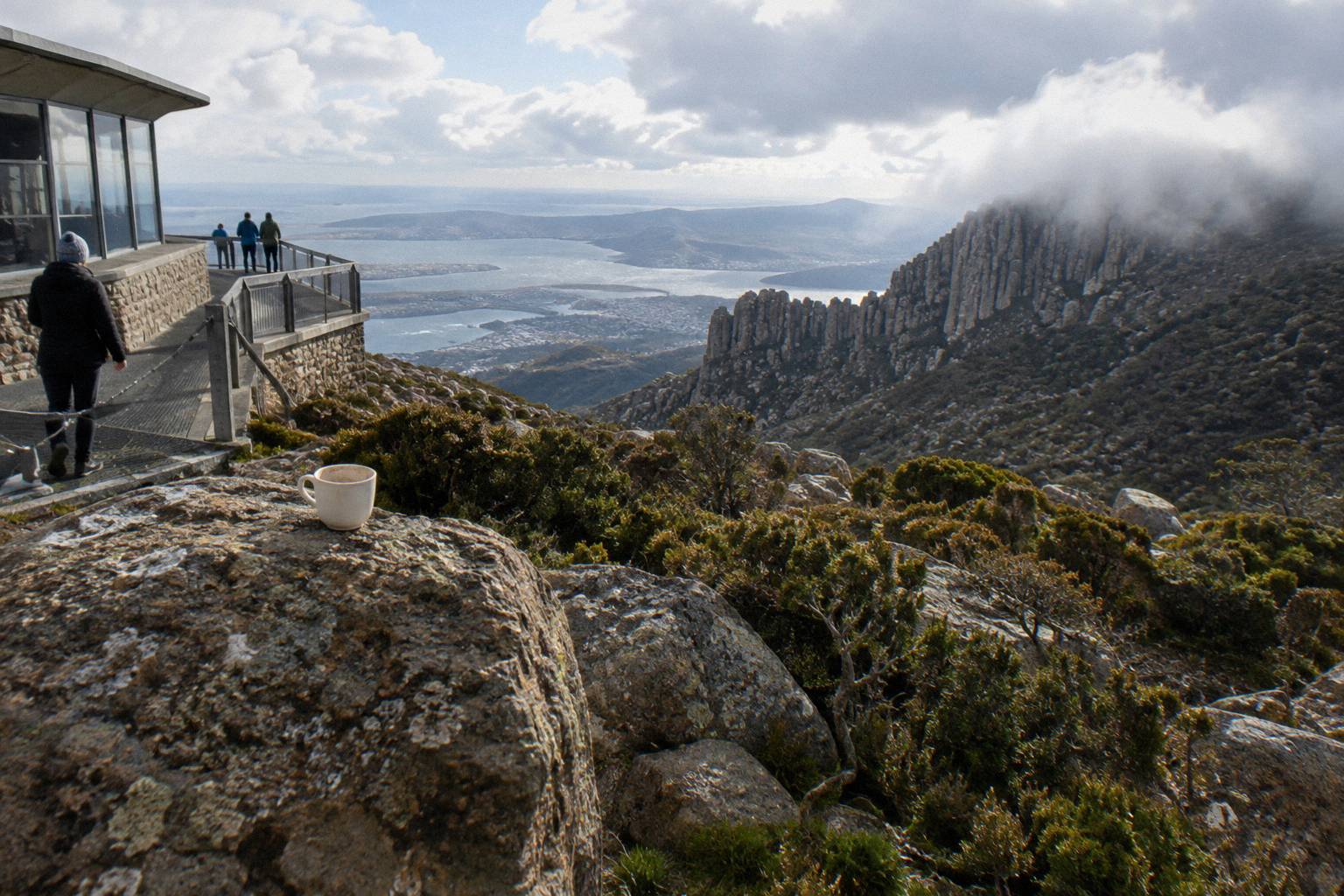
Parking at The Pinnacle, The Springs and the roadside lay-bys is limited, and on snow days the City of Hobart runs active traffic management. The Pinnacle is a loop: continue around to park and never stop on the road. Arrive early or late in the day to find a space in peak periods.
The Trust's facilities guidance says it plainly: parking is limited at The Springs, The Pinnacle and the lay-bys. On a clear winter weekend, and especially on a snow weekend, the summit car park fills and overflows, and the record 1,906-vehicle day in September shows what the road looks like when everyone has the same idea at once. Drivers who arrive mid-morning on a post-snow Saturday should expect circling, not parking.
The rules of the loop matter here. The Pinnacle road at the top is a one-way loop, and stopping on the road itself to grab a view is both discouraged and the fastest way to create the congestion the Trust keeps warning about. Continue around to the car park, park properly, and walk back to the lookouts and the observation shelter, which are accessible at any time.
Facilities at the top are minimal in ways that catch drivers out. There are summit toilets, open 7am to 10pm in the warmer months and 7am to 5.30pm from May to August, but there is no cafe at the summit; the only food on the mountain is Lost Freight Cafe, the shipping-container cafe at The Springs, which trades seven days year-round apart from 25 and 26 December. A tour that drops you for a fixed 30 minutes does not change any of that, but it does remove the parking variable entirely.
What If You Skip The Car Entirely?
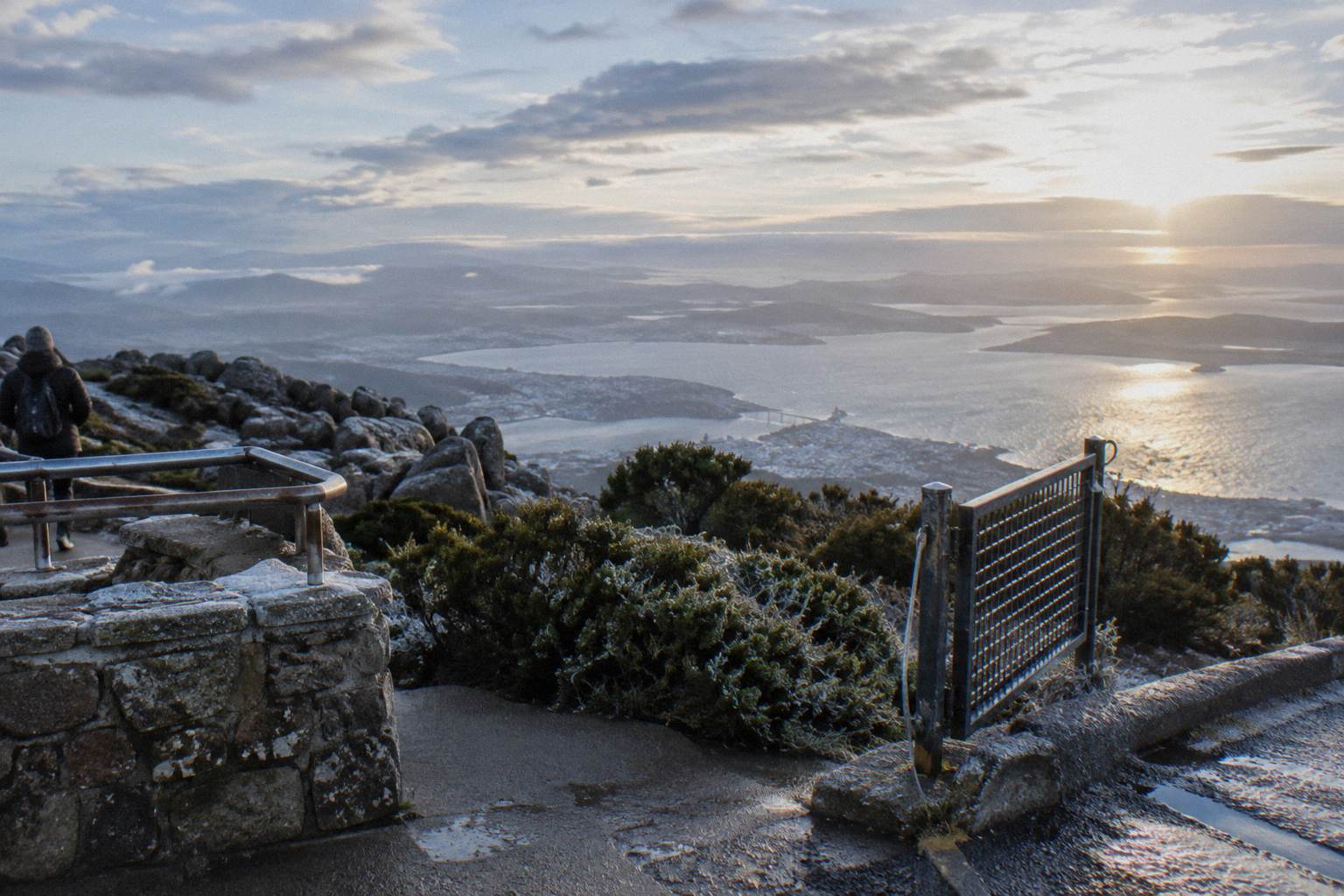
You do not need a car at all. The Explorer Bus and several private shuttle and tour services run to the summit, Metro routes 448 and 449 reach Fern Tree only, and Tasmanian public transport is temporarily free. A small-group guided minibus is a middle path from A$55 per person.
The bus-and-tour ecosystem here is dense enough that a car-free summit day is straightforward. The Trust notes that several privately operated shuttle and tour operators serve the mountain, including one service that takes wheelchairs and up to four bikes, so the choice is not simply drive or take the one bus. Those options take some sorting; Mount Wellington Tours covers each of them in detail.
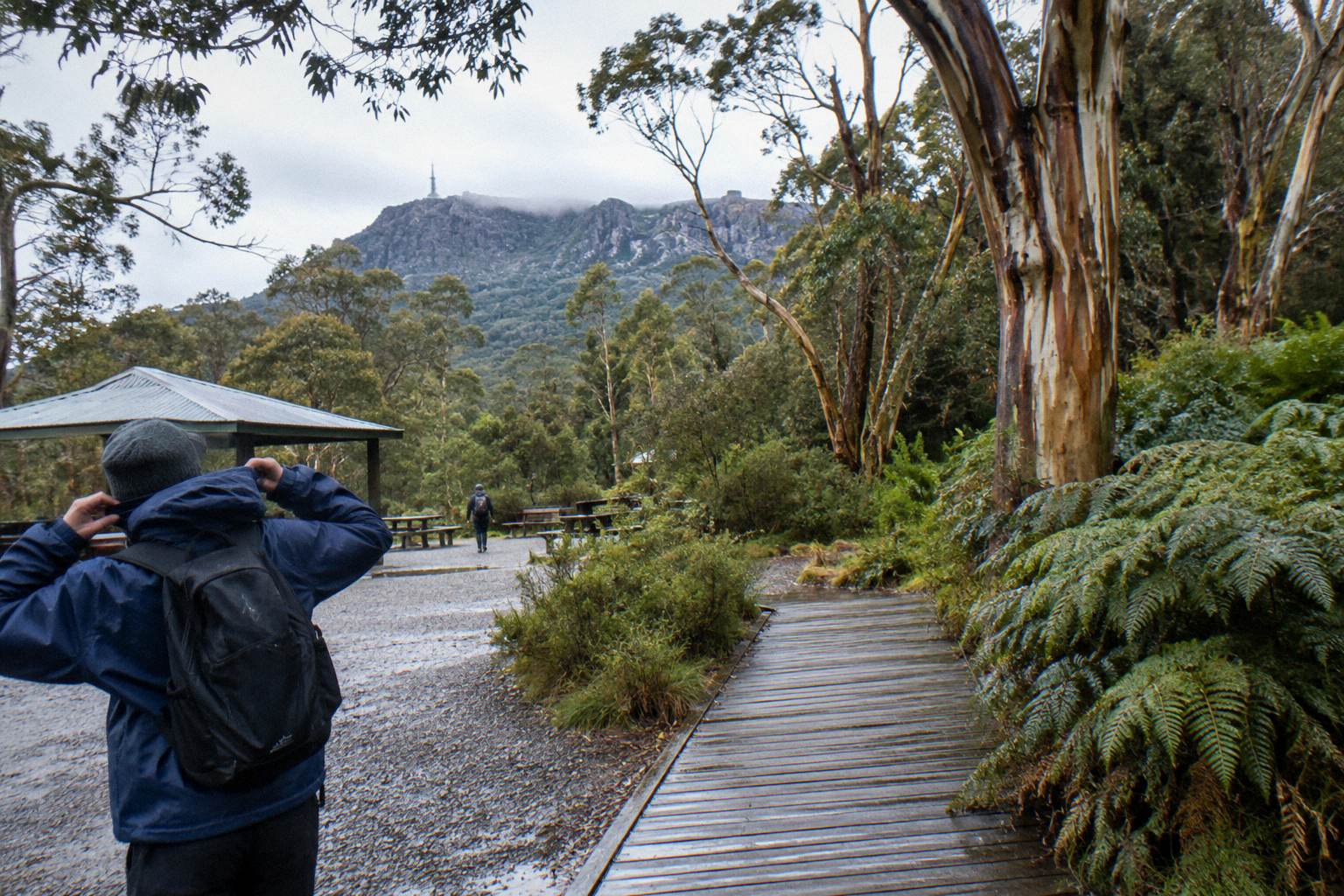
Public transport gets you partway. Metro Tasmania routes 448 on weekdays and 449 on weekends and public holidays run from Franklin Square to Fern Tree, stopping at Huon Road and Summerleas Road, and they stop there: Fern Tree is the end of the line, not the summit. Tasmanian public transport is free as a temporary measure, which the Trust says runs until June 2027, so the Fern Tree leg costs nothing, but the climb from Fern Tree to the top is still on you, on foot or by connecting to a summit service. That two-stage approach suits walkers more than summit-first-timers.
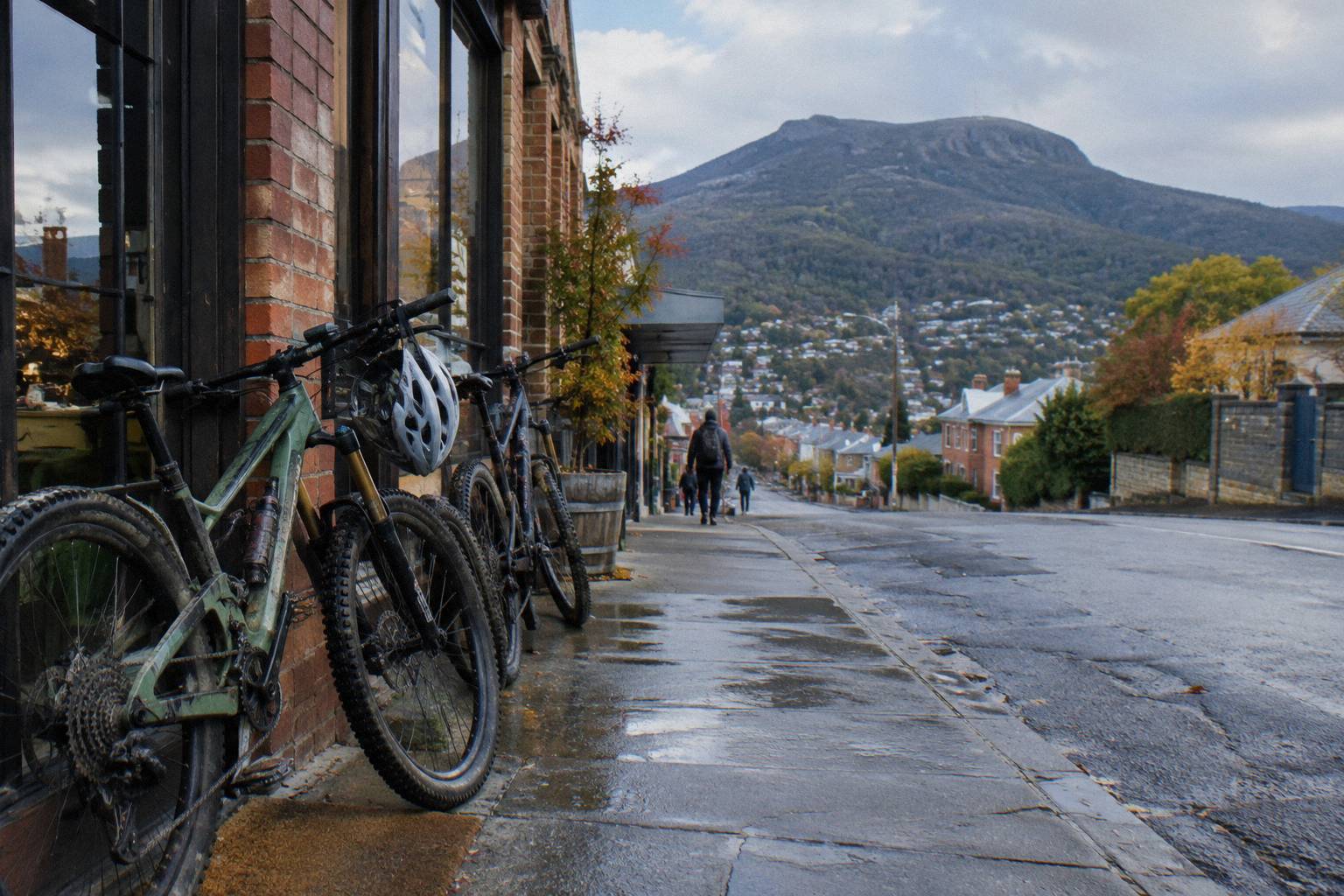
For a smaller format, the Pinnacle 2-Hour Small-Group Tour, run by Island of Tasmania Tours, is from A$55 per person for a 2-hour guided minibus trip with a university-trained local guide and 30 minutes of free time at the top, capped at 11 guests, minimum age 8. It meets at 20 Davey Street outside the Tasmanian Travel and Information Centre, offers an optional drop-off at the cruise ship terminal, and is not wheelchair accessible. It sits at the same from-price as the Explorer Bus while trading hop-on-hop-off freedom for a small-group guide, which is the format comparison that actually matters when choosing.
Common Questions About Driving Pinnacle Road
Is Pinnacle Road Sealed, And Can I Drive It Instead Of Booking A Tour?
Yes, it is sealed all the way to the summit and a conventional car can drive it. It is the only public road into Wellington Park. It is narrow, winding and shared with buses, bikes and pedestrians, it closes for ice or snow and for annual maintenance each November, and parking at the top is limited, which is why many visitors book a trip from A$55 per person instead.
Is The Road Open Today?
No page can promise that. The City of Hobart closes Pinnacle Road whenever ice or snow is present, and it shut for 95 nights in 2025-26. Check the City of Hobart Pinnacle Road status page or call the Pinnacle Road Information Line on 03 6238 2711 before you leave.
Do I Need A Four-Wheel Drive For Pinnacle Road?
No. The Trust describes the road as sealed and suitable for conventional vehicles. The challenge is its narrow, winding, shared character and the weather, not the surface or the gradient for a normal car.
Can A Tour Still Get Up When The Road Is Closed?
On snow days when the gates are closed to the public, the Explorer Bus is the only licensed operator able to take visitors up, per the Wellington Park Management Trust. The Hobart Shuttle Hop-On Hop-Off Summit Pass runs its snow-day service through the same arrangement.
Is There Parking At The Summit?
Yes, but limited. The Pinnacle is a loop and the Trust advises continuing around to park rather than stopping on the road. On snow days the City of Hobart runs traffic management, and the car park can fill within hours of a clear morning.
Which Is Cheaper, Driving Or A Tour?
Park entry is free and there is no settled hire-car, fuel or taxi figure, so there is no clean dollar comparison. Trips start from A$55 per person, and every trip covered here offers free cancellation up to 24 hours before start, so booking one does not rule out a clear-day drive.
If the trade-off still feels balanced, the deciding fact is usually this one: the driver in your group sees the road, and everyone else sees the mountain. Whichever way you choose, check the status line the morning of, because on kunanyi / Mount Wellington the mountain, not the tarmac, makes the final call.