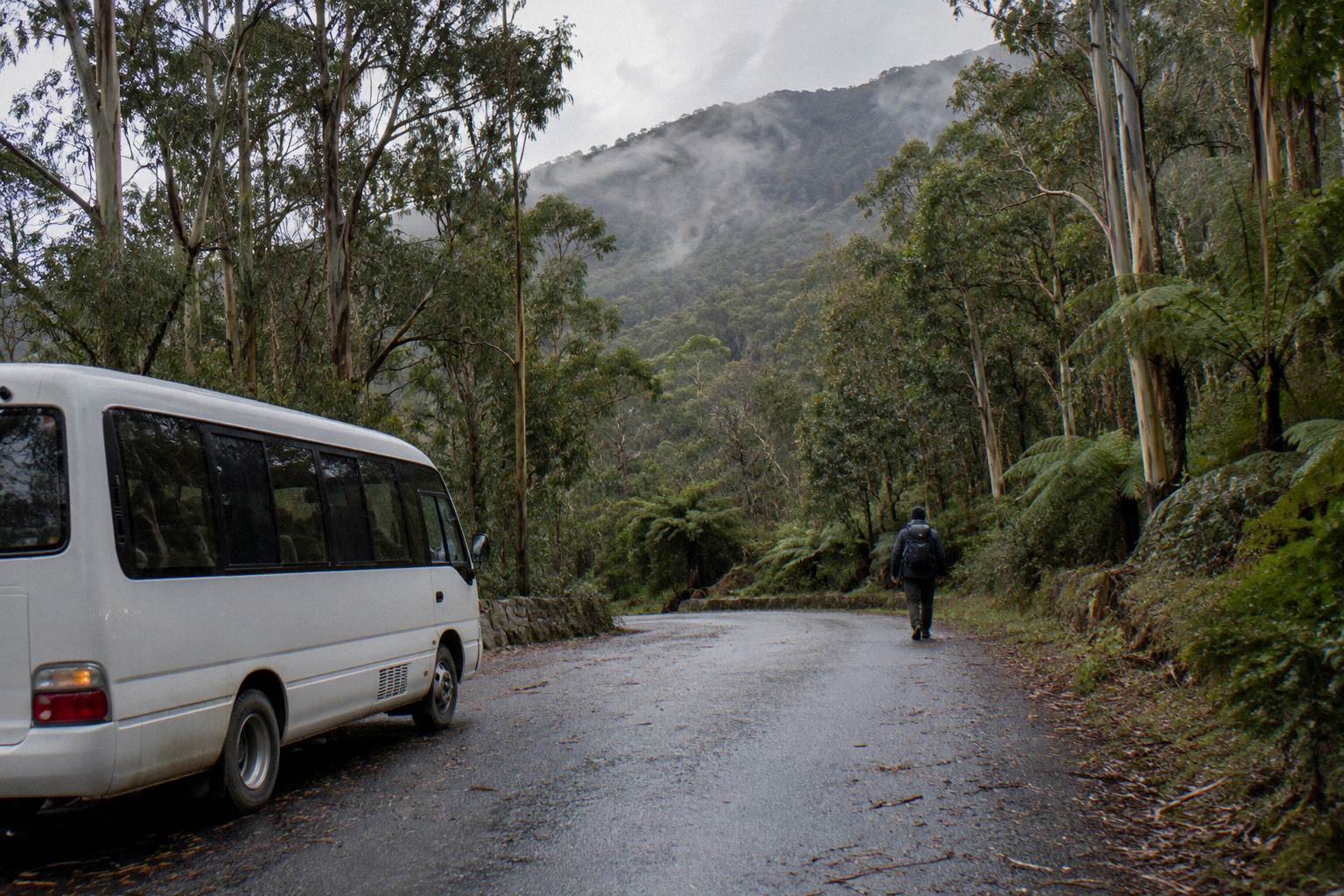
Can I Ride Up By Shuttle And Bike Down One Way?
The two real one-way options for riding up kunanyi / Mount Wellington and biking down: the Explorer Bus One-Way Pass with bike carriage, and the guided Summit Descent Bike Tour, compared on price, duration and limits.
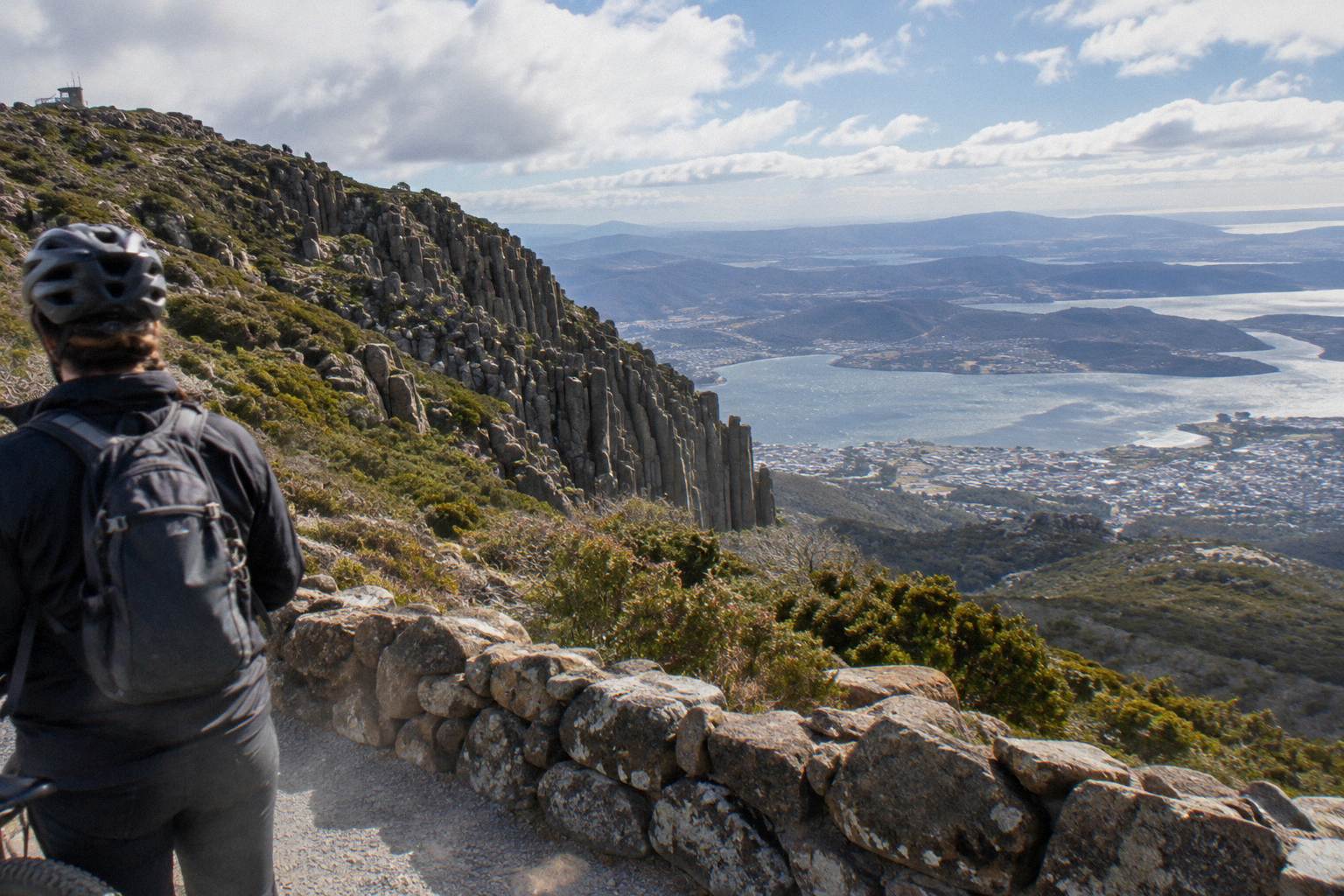
Yes, two routes make this possible. The Explorer Bus One-Way Pass (from A$35 per person, 50 minutes) carries you to the summit and can take up to four mountain bikes per departure for a separate per-bike fee. The Summit Descent Bike Tour (from A$179 per person, 4 hours) is the fully guided version: a minibus up, then a 6 km summit-road descent and a 12 km rainforest ride with guides riding alongside.
The idea sounds simple: save your legs on the climb, spend them on the descent. On kunanyi / Mount Wellington the geometry is tempting, because the summit sits at 1,271 m and the road down is long, sealed and winding. What trips people up is not the ambition but the details: which bus actually takes bikes, how many bikes fit, what the park lets you ride, and what happens when snow closes the road. The sections below work through all of it.
Start with the headline: there is no generic road shuttle waiting to absorb bikes and riders on demand. What exists is the Explorer Bus service run by the Red Decker Company, which sells several tickets on one service, including a one-way pass, and which carries a limited number of bikes per departure. Alongside that sits a guided descent tour run by Tasmanian Mountain Bike Adventures, which handles the whole loop for you, bus up and bike down. Everything else, including riding down from a summit you drove yourself to, is a private arrangement the park regulates but does not provide.
What Does The One-Way Bus Pass Actually Give You?
The Explorer Bus One-Way Pass is a single-direction ticket from Hobart city to the summit of kunanyi / Mount Wellington, from A$35 per person, with a listed duration of 50 minutes. It departs from Brooke Street Pier, 12 Franklin Wharf, Hobart, carries up to 27 people, and includes commentary, a Wellington Park bushwalking map, park and summit access, and free Wi-Fi onboard. Hotel pickup and drop-off are not included.
The pass is the cleanest answer for a self-directed descent. You board in the city, ride to The Pinnacle, and the return journey is entirely your business: on foot, by bike, or, if the day turns, by buying a way back some other way.
One wrinkle deserves a sentence. The operator's own timetable page lists departures from opposite the Tasmanian Travel and Information Centre at 4 Elizabeth Street, while the booking pages for the Explorer Bus passes name Brooke Street Pier as the meeting point. The two differ. Use whichever meeting point your booking confirmation states, and if in doubt the operator's booking office sits at Brooke Street Pier itself, open 8.30am to 4pm, with the phone line +61 3 6236 9116. Pre-booking is essential; departures run 9.30am, 11am, 12.30pm, 2pm and 3.30pm, the last of those in summer only, with the summer timetable covering 1 October to 30 April and the winter timetable 1 May to 30 September.
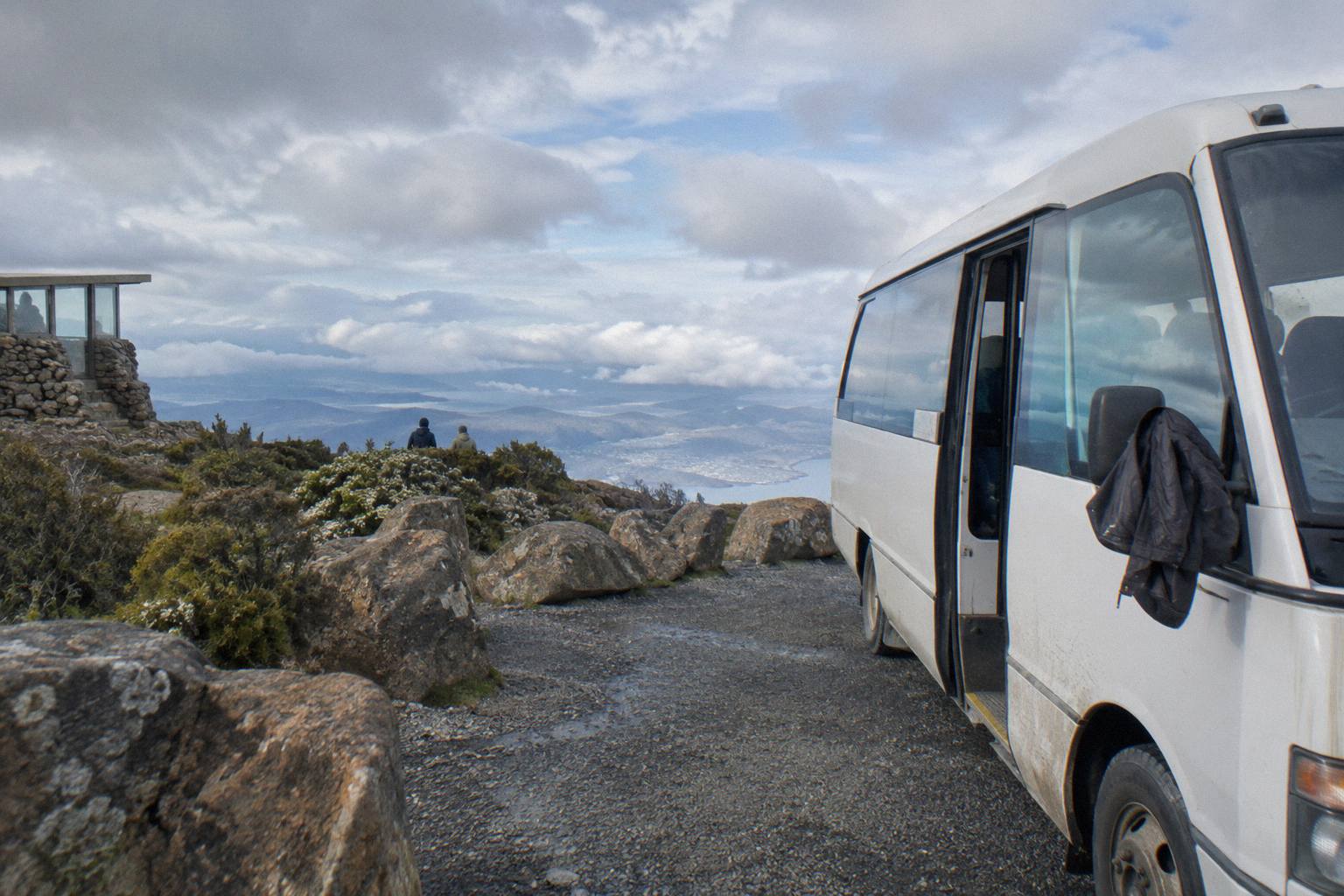
Bikes are the part most riders get wrong. The bus carries four mountain bikes per departure for a separate per-bike fee; the amount is not printed in the listing, so confirm it when you book. The bike freight line on the pass listing states $10 per bike and requires booking no less than 30 minutes before departure, while the operator's own pages ask for bikes to be loaded at Brooke Street Pier at least 20 minutes before departure. Whichever applies to your ticket, the practical rule is the same: arrange the bike when you arrange the seat, not on the kerb. On snow tours there is no bike carriage at all, which matters more than it sounds, as the snow section below explains.
Free cancellation up to 24 hours before start applies, which takes some of the planning risk out of committing to a summit departure slot before you know the weather.
How Does The Guided Descent Tour Work?
The Summit Descent Bike Tour, from A$179 per person, is a 4-hour guided trip for up to 10 riders run by Tasmanian Mountain Bike Adventures. It meets at the operator's shop at 466 Macquarie St, South Hobart; a 30-minute minibus transfer takes you to the summit, you ride a 6 km summit-road descent, then a 15-minute bus transfer to a rainforest trail for a 12 km guided ride. Bike, helmet and gloves are included.
This is the option for riders who want the down-only experience without owning a suitable bike, without arranging carriage, and without decoding the park's riding rules alone. Guides ride with the guests the whole way, which changes the character of the trip: it is a tour, not a self-guided roll. The booking page lists a maximum rider weight of 120 kg and says riders need basic bike handling skills and a basic fitness level.
The height limits are a genuine muddle, and it is only fair to say so. One booking page excludes people under 120 cm; the other states a minimum rider height of 125 cm. The two conflict, and the sensible move is to confirm your rider's height with the operator before booking rather than trusting either page. No operator minimum age is verified. Food and drink are not included, and free cancellation runs up to 24 hours before start.
The 6 km road-descent figure comes from this operator's booking page alone; it is real, but it belongs to this trip and must not be stretched onto any other descent. A third-party page suggests riders may skip the road section and ride the bus, and a self-guided variant of the same tour sits inside the same page with no price printed. If either appeals, ask the operator directly; neither is confirmed here as a bookable product with figures. For more on the format generally, the guide to downhill bike rides from the summit covers the descent options in one place.
Which One-Way Option Fits Which Rider?
Choose the one-way bus pass with bike carriage if you have your own mountain bike, want to set your own pace, and are comfortable reading the park's track rules; choose the guided descent tour if you want equipment, transport and a guide bundled, at more than five times the pass price. The pass is transport, the tour is a guided activity, and the gap between them is the gap between independence and support.
The table sets out the two stated routes side by side. Prices are from-prices per person in Australian dollars; free cancellation up to 24 hours before start applies to both.
| Explorer Bus One-Way Pass | Summit Descent Bike Tour | |
|---|---|---|
| From price | from A$35 per person | from A$179 per person |
| Duration | 50 minutes to the summit | 4 hours total |
| Bike included | No; bring your own, carriage for up to 4 bikes per departure for a separate per-bike fee | Yes; mountain bike, helmet and gloves |
| Getting up | Explorer Bus from Brooke Street Pier | Minibus from the operator shop in South Hobart, about 30 minutes |
| The ride down | Your own choice of route, self-guided | 6 km summit-road descent plus a 12 km rainforest trail, guided |
| Group size | Up to 27 on the bus | Up to 10 riders |
| Rider limits | None listed | Max rider weight 120 kg; minimum height listed inconsistently (120 cm on one page, 125 cm on the other); basic bike handling and fitness |
| Meeting point | Brooke Street Pier, 12 Franklin Wharf | 466 Macquarie St, South Hobart |
| Rating | No rating or review figure printed | No rating or review figure printed |
A third option belongs in the conversation even though it is not one-way: the Explorer Bus Return Tour, from A$55 per person, rated 4.8 from 1,081 reviews, the trip with the most reviews on the booking pages. It is the same Explorer Bus service as the one-way pass, sold as a 2.5-hour return with 30 minutes at the summit, hop-on-hop-off use all day, and the option to add bike freight at $10 per bike, booked no less than 30 minutes before departure. For a rider whose descent plan might collapse in bad weather, holding a return seat is cheap insurance: the Trust describes the Explorer Bus as the only licensed operator able to take visitors up when the road is closed for snow, which is exactly the day a do-it-yourself plan fails. If you are weighing the two bus tickets rather than bus versus tour, the page on whether you need to book the bus in advance adds the timing detail.
Where Are You Actually Allowed To Ride Down?
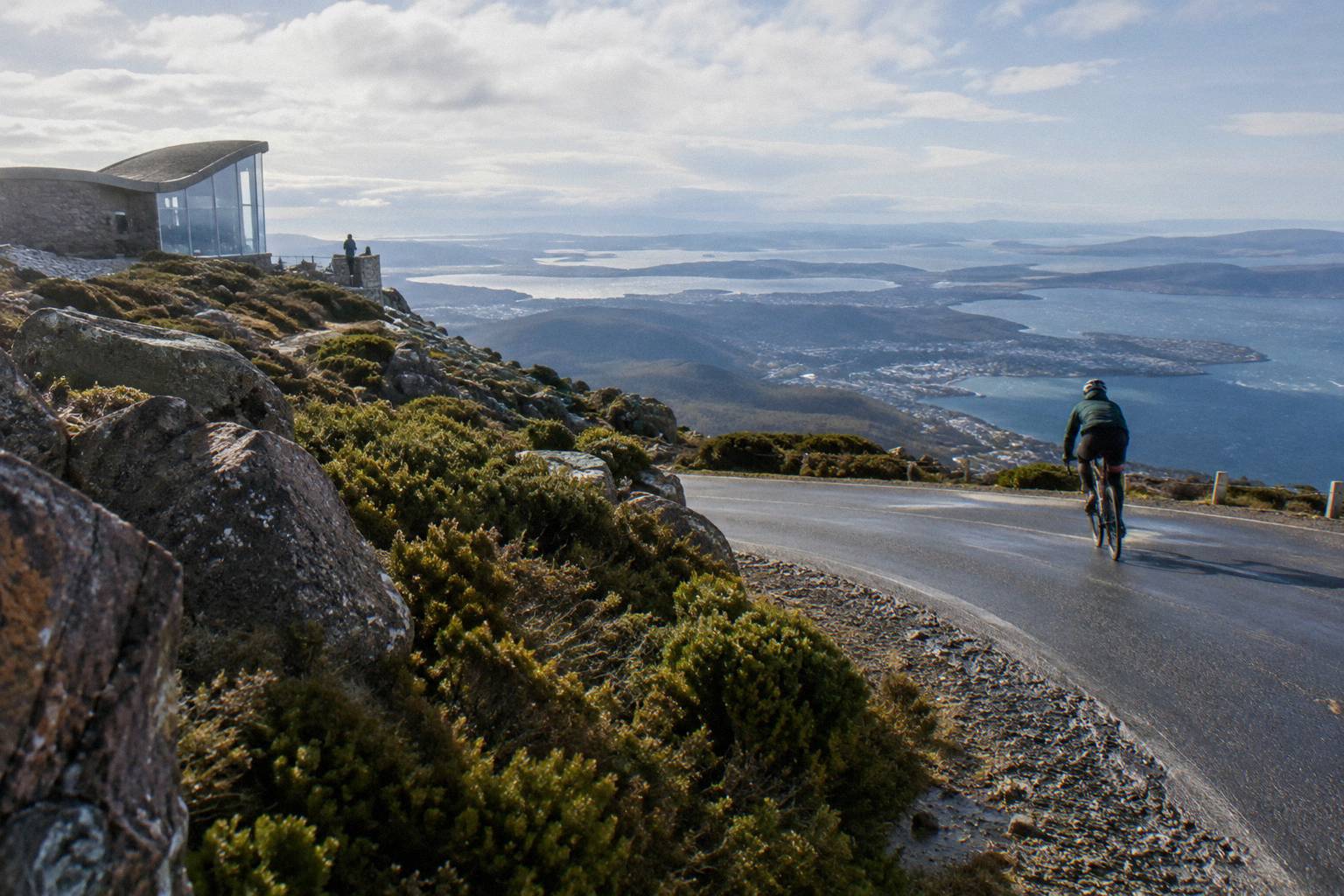
Bikes are allowed on formed roads, fire trails and listed tracks only, and riders caught on walking-only tracks can be fined. The summit road itself is a shared public road: narrow, winding, and mixed with cars, pedestrians and tour buses, per the Wellington Park Management Trust. The North South Track is rated Blue Square, intermediate, for bikes; the Pipeline Track is open to bikes but has weekday closures during water-repair works.
This is the section that decides whether your plan is a ride or a fine. The Trust's bike rules are the authority here, and they are published at the Trust's bike riding page. The short version: the mountain is not a free-for-all descent park. The road is legal and rideable but shared, and several of the walking tracks that shortcut between road bends are closed to bikes.
Know the named tracks before you choose. From The Springs you can reach the North South Track and Radfords Track toward Fern Tree; the North South Track runs Blue Square for bikes with the Glenorchy MTB Park at its northern end. The Pipeline Track, reached from Fern Tree Park and passing Silver Falls, a 4 m waterfall, is a wide track shared by walkers, runners and bikes, but TasWater repair works between Neika and the Northwest Bay Weir have run since late September 2026 for several months, with temporary closures 7am to 5pm on weekdays. Do not plan a Pipeline Track descent on a weekday without checking the Trust's road and track updates page first. Track lengths and grades beyond those named are not described here, so check the park's own track information before planning a ride on any other track.
| Route or track | Bikes allowed | What to know |
|---|---|---|
| Pinnacle Road (summit road) | Yes, shared road | Only public road into the park; narrow and winding, shared with cars, pedestrians and tour buses |
| North South Track | Yes | Blue Square, intermediate; Glenorchy MTB Park at the northern end |
| Pipeline Track | Yes | Weekday closures 7am-5pm during TasWater works between Neika and Northwest Bay Weir |
| Radfords Track (The Springs to Fern Tree) | Named in Trust track links | Check the Trust's track pages for current status |
| Walking-only tracks | No | Riders on walking-only tracks can be fined |
| Organ Pipes Circuit | A walking loop, 9.2 km | Dolerite columns visible from Hobart; not described as a bike route |
Park-wide rules also bite on a descent day. The park closes to all users on Extreme or Catastrophic fire danger days, drones need a permit, overnight campervans are not permitted, and dogs are allowed on lead on approved tracks only. Commercial operators, including every trip named here, need a Trust licence with client-to-guide ratios. None of this stops a descent, but it stops the assumption that the mountain is ungoverned space.
What About Snow Days And Road Closures?
Pinnacle Road closed 95 nights for snow or ice across 2025-26, and the summit was unreachable by private vehicle on 14 of those days; the Explorer Bus is the only licensed operator able to take visitors up when the road is closed for snow, but its snow tours carry no bikes at all. A one-way bike-down plan therefore dies on a snow day, and no operator can promise you The Pinnacle.
The numbers deserve attention. The Trust's records for 2025-26 show the heaviest closures in August with 22 nights, then October with 19, and July and September with 18 each; overnight closures extended past 9.30am on 46 days. The record day saw 1,906 vehicles on 6 September after heavy snow. The road also shuts entirely for annual maintenance every November. None of this is edge-case data: if you visit between April and September in particular, a closure is a live possibility, not a footnote.
For a bus-up-bike-down plan the consequence is specific. When the gates close to the public, the Explorer Bus can still run, which is why its return tour is worth holding as a fallback, but the operator's snow tours are bookable only once a reliable snow forecast exists, and the operator says plainly that it does not guarantee reaching The Pinnacle on snow days, with no one-way travel, hop-on use or bike freight on snow tours. So the fallback covers getting up and seeing something, not riding down. Before any summit day, check the City of Hobart road status or call the Pinnacle Road information line on 03 6238 2711. The deeper version of this story is in what happens if the road closes during your tour.
Cold is its own filter. The Trust notes the temperature difference between the Hobart waterfront and The Pinnacle can be 12 degrees or more, with wind chill below minus 20 possible at the summit, and snow can fall in any month. A descent that starts in a mild city morning can finish in a different climate. Dress for the summit, not the wharf.
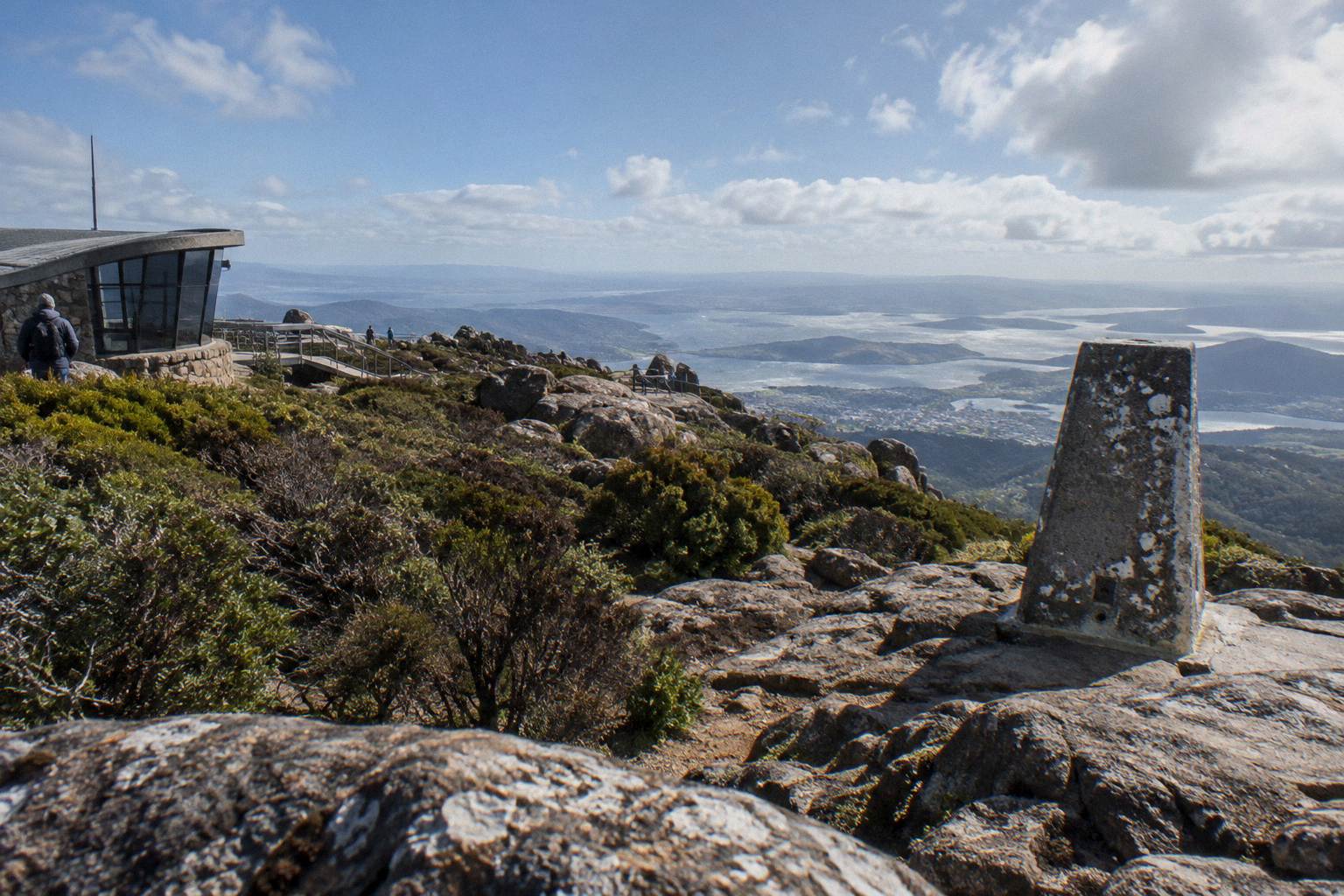
How Fit And How Prepared Do You Need To Be?
For the guided tour, basic bike handling skills and a basic fitness level are stated requirements, with a 120 kg maximum rider weight; the two booking pages conflict on minimum height, 120 cm versus 125 cm, so confirm with the operator. For a self-directed descent off the one-way bus, no operator checks your ability at all, which means the mountain does.
The guided tour's limits are published and enforceable at the meeting point. The self-directed option's limits are not written anywhere, which is worth sitting with for a moment. The summit road descent from The Pinnacle covers roughly 1,270 m of elevation on a shared road, and the park's own safety material treats the mountain as an alpine environment, not a city hill. Riders who have never handled a bike at speed on a narrow road with tour buses behind them should read that sentence twice. If you want the descent with a guide the whole way and equipment supplied, the guided tour exists precisely for that; its listing carries all the details and check availability beside the Summit Descent Bike Tour page.
Timing matters as much as fitness. The last bus up is 3.30pm in summer, 2pm in winter, and a one-way rider who lingers at the summit past mid-afternoon is committing to a long descent in fading light, with sunset in Hobart around 8.16pm in mid-November and earlier every week after. A mid-morning departure gives you the whole day as margin.
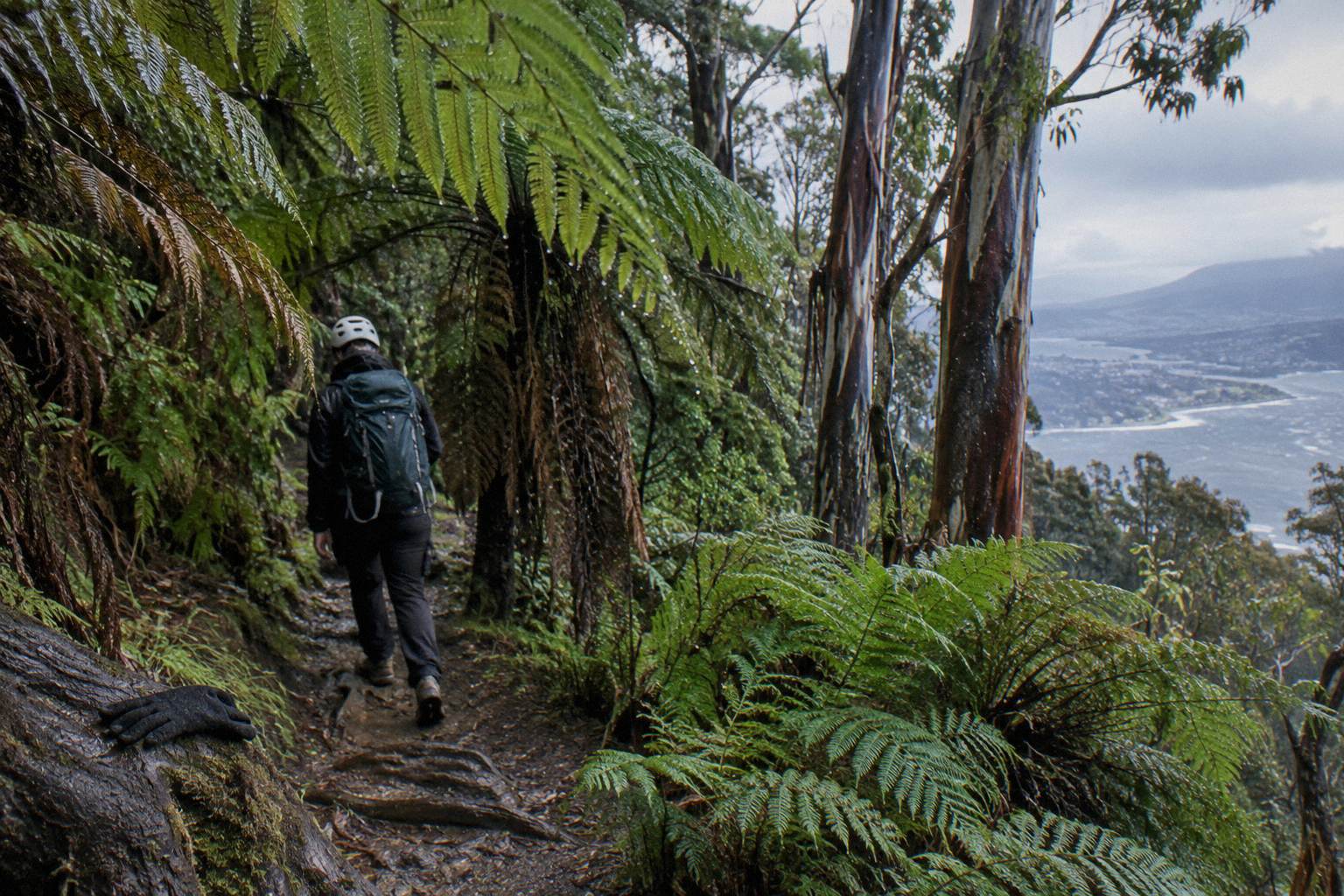
Packing follows from the conditions. There is no cafe at the summit; the only food outlet on the mountain is Lost Freight Cafe at The Springs, a shipping-container cafe open seven days year-round except 25 and 26 December, with hours that vary. Summit toilets run 7am to 10pm in the warmer half of the year and 7am to 5.30pm from May to August. Carry water, layers and a plan, and check the guidance on what to wear on a summit tour before you commit to shorts.
So Which Should You Book?
Book the one-way pass with bike carriage if you ride regularly, own the bike, and want the cheapest frame for the day, from A$35 per person plus the per-bike fee. Book the guided descent tour if you would rather not haul a bike to Hobart or judge alpine road traffic yourself, from A$179 per person with everything included. Hold a return bus ticket if weather could wreck the plan.
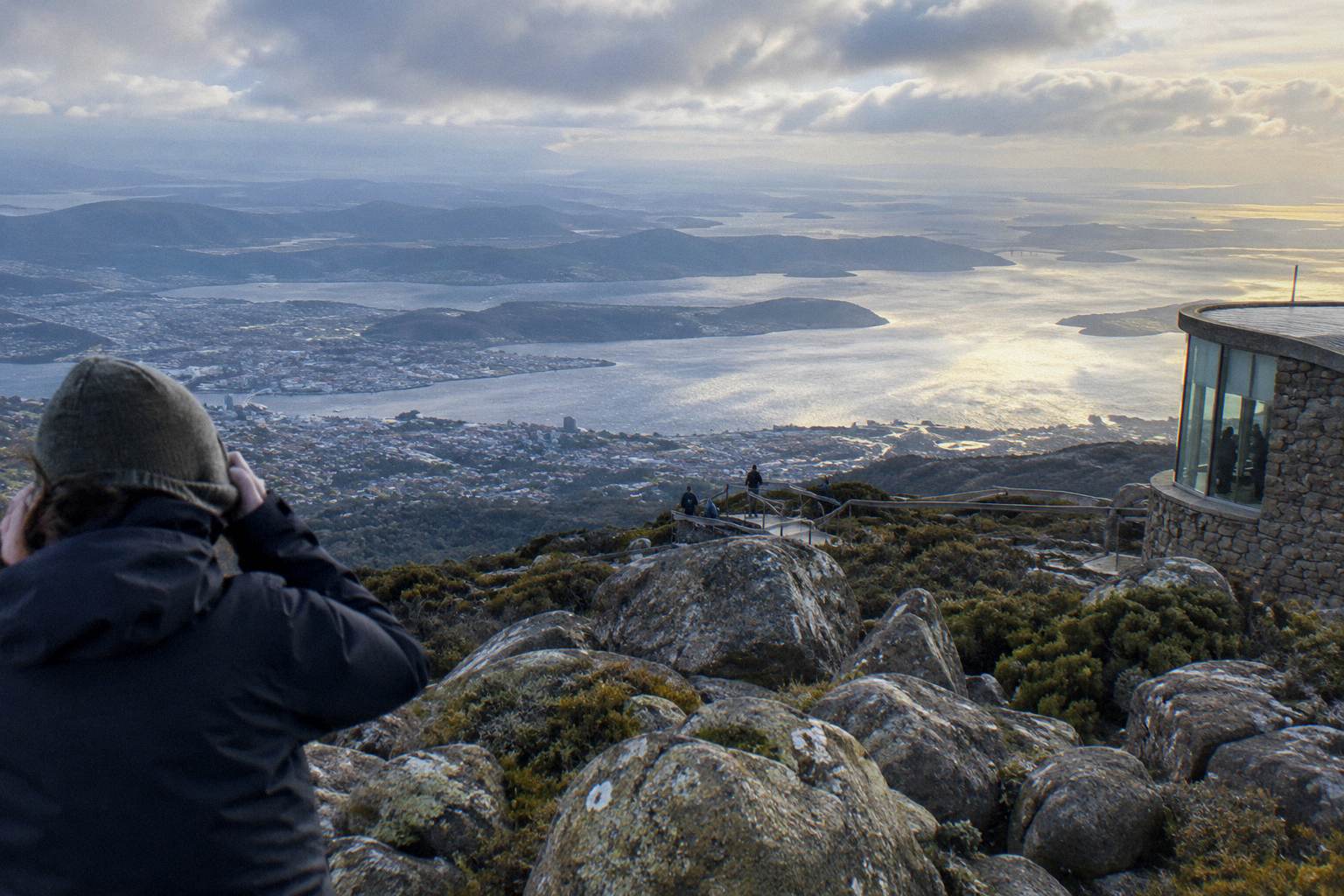
The summary: both routes are real and neither is universally right. The pass is a transport ticket with a bikes-per-departure allowance attached; it presumes competence and rewards preparation. The tour is an activity with a guide ratio, a small group of up to 10, and equipment in the price; it presumes less and costs more. Nobody should book either expecting guaranteed summit views, because the summit is often in cloud and the strongest review pool on the mountain, the 1,081 reviews behind the return tour's 4.8, is a review pool for a bus ride, not a view promise. The full list of summit trips is kept in one place at Mount Wellington Tours if the comparison sends you looking at other formats.
Whatever you choose, book ahead. Pre-booking the bus is essential, bike carriage is limited to four bikes per departure and must be arranged before the day, and the guided tour's small group size means the cheap seats go first. Free cancellation up to 24 hours before start applies to every trip, so an early booking is a soft commitment, not a hard one.
Common Questions About Biking Down One Way
Can I Ride Up By Shuttle And Bike Down One Way?
Yes. The Explorer Bus One-Way Pass, from A$35 per person, takes you from Hobart to the summit in 50 minutes and carries up to four mountain bikes per departure for a separate per-bike fee. The guided alternative is the Summit Descent Bike Tour, from A$179 per person for 4 hours, which includes the minibus up, the bike, helmet and gloves, and a guided 6 km road descent plus a 12 km rainforest ride.
Can I Take My Own Bike On The Explorer Bus?
Yes, with limits. The bus carries four mountain bikes per departure for a separate per-bike fee; the pass listing states $10 per bike booked no less than 30 minutes before departure, while the operator's pages ask for loading at Brooke Street Pier at least 20 minutes before departure. Bike carriage is not available on snow tours.
Is There A Minimum Age Or Height For The Descent Tour?
The tour listing states a maximum rider weight of 120 kg, basic bike handling skills and a basic fitness level. The two booking pages conflict on minimum height, one saying 120 cm and the other 125 cm, so confirm your rider's height with the operator before booking. No operator minimum age is verified.
Can I Bike Down When The Road Is Closed For Snow?
Not as a one-way plan. When Pinnacle Road closes for snow or ice, the Explorer Bus is the only licensed operator able to take visitors up, but its snow tours carry no bikes and do not guarantee reaching The Pinnacle. Check the road status or call 03 6238 2711 before any summit day.
Which Tracks Can I Legally Ride Down?
Bikes are allowed on formed roads, fire trails and listed tracks only, and riders on walking-only tracks can be fined. The summit road is a shared public road; the North South Track is rated intermediate for bikes; the Pipeline Track is open to bikes but has weekday closures during TasWater repair works.