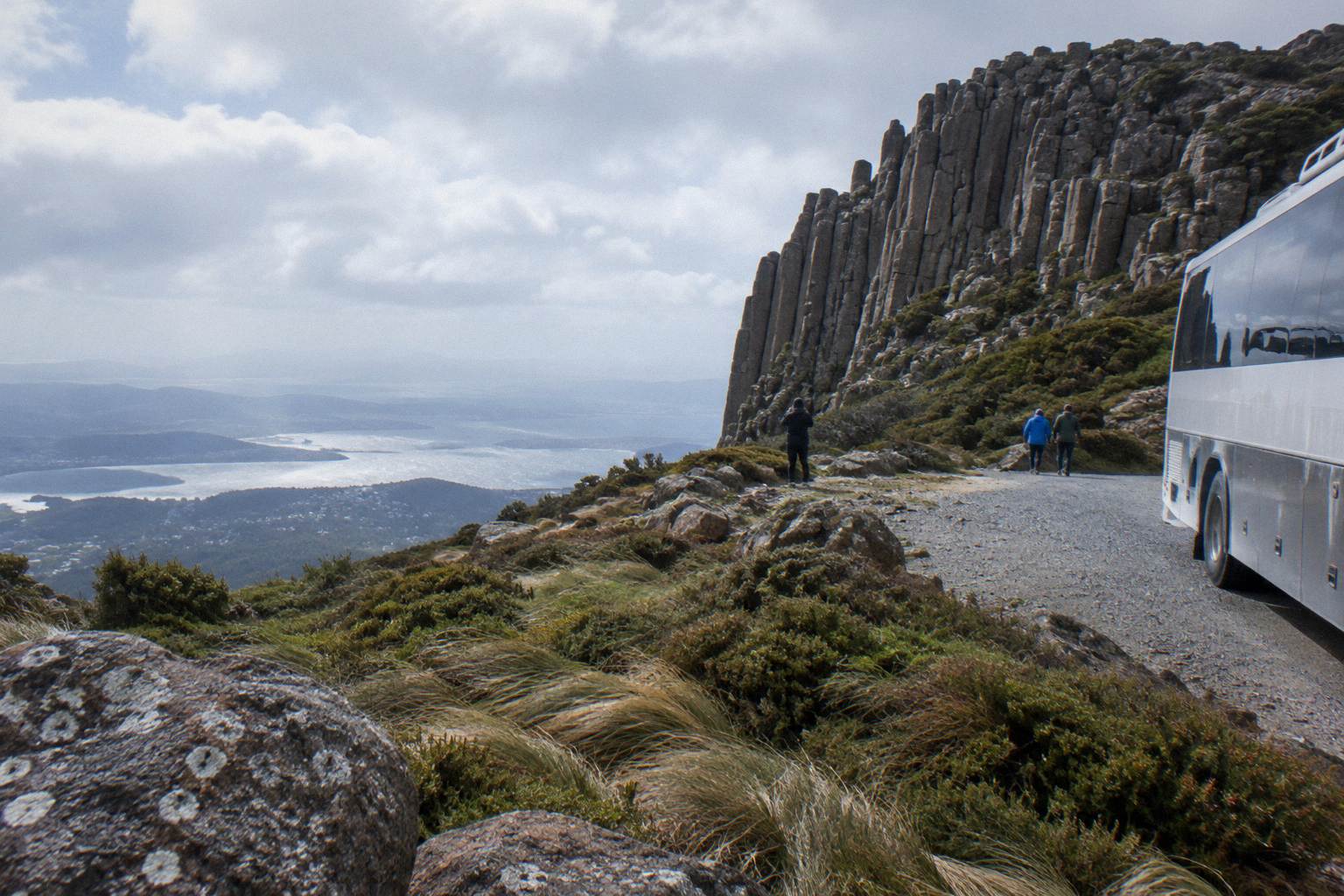
Is A Trip To The Summit Worth It?
A plain answer for readers on the fence about a kunanyi / Mount Wellington summit trip: what you get, what can go wrong, and which trip length suits which traveller.
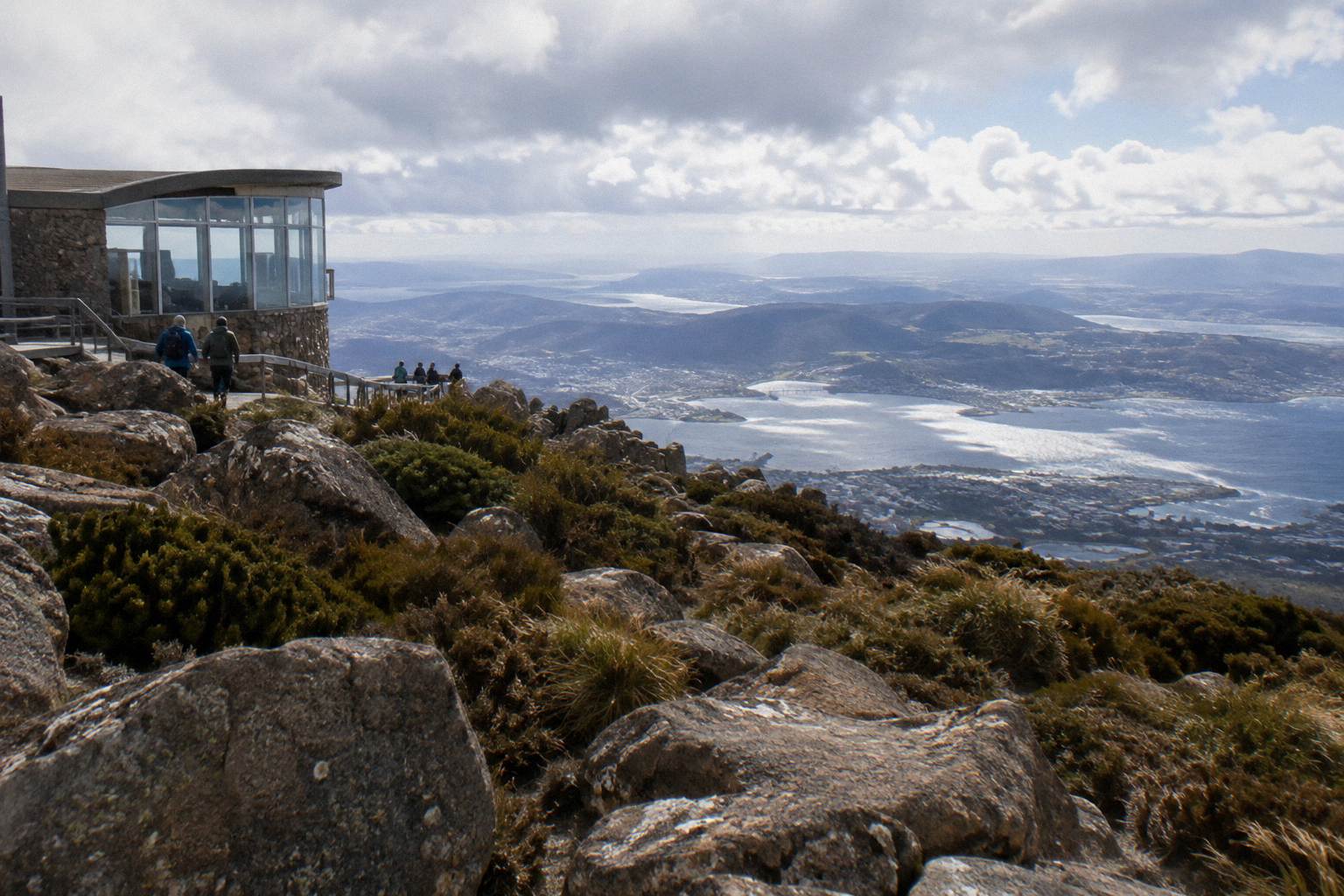
Yes, the summit is worth it for most visitors, provided the weather cooperates and the trip length suits your plans. Entry to Wellington Park is free, the shortest return trips start from A$55 per person, and kunanyi / Mount Wellington rises 1,271 metres directly above Hobart's waterfront. Be prepared for cloud at the top, temperatures 10 to 12 degrees or more colder than the city, and snow or ice road closures on 95 nights in 2025-26.
That is the short version. The longer version depends on what you expect from the word "worth", because a summit trip is really three different products wearing one name: a 50-minute one-way bus ride, a two-and-a-half-hour guided return, or a full day that bolts the mountain onto Richmond, MONA or a wildlife sanctuary. Each one asks a different amount of your holiday time and each answers the worth question differently.
The strongest argument for going is arithmetic. The mountain is not a two-hour drive from the city, it is the city's backdrop. You can be at The Pinnacle and back inside a morning, which is a rare thing for a 1,271-metre peak anywhere in the world. The strongest argument for hesitating is that the summit is often in cloud, and no operator on the mountain promises a view. If you buy a ticket expecting a postcard, you are gambling. If you buy one expecting an alpine plateau above a capital city, with whatever weather arrives that day, you will almost certainly get your money's worth.
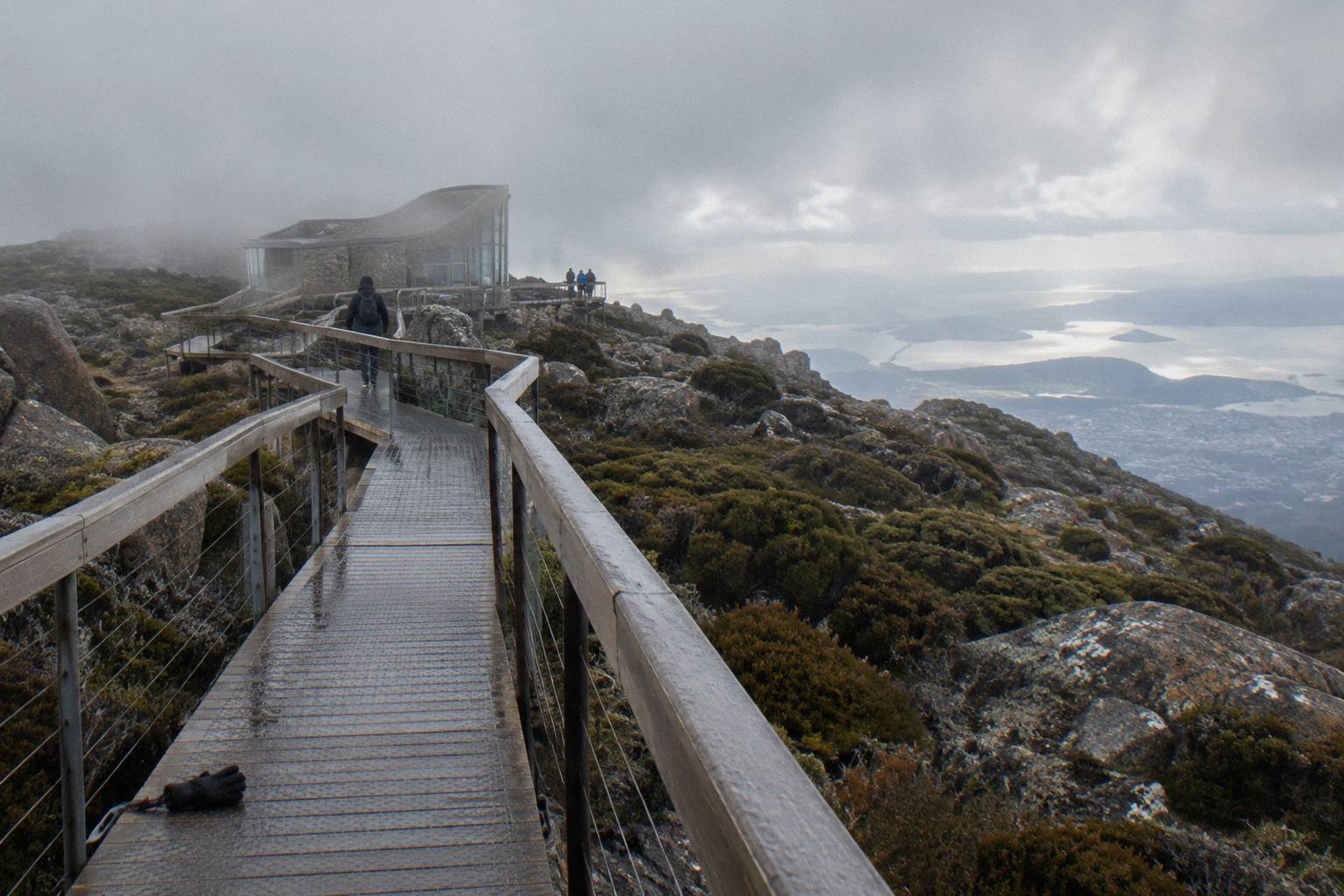
The short version from Mount Wellington Tours: the mountain rewards realistic visitors and disappoints gamblers. The decision breaks down piece by piece: what a trip actually includes, when it is not worth going, how to judge the weather, how the trip lengths compare, and what happens if the road closes on your day.
What Does A Summit Trip Actually Give You?
Every summit trip gives you transport up the only public road into the park, time at The Pinnacle, and commentary on the way, though no trip guarantees a view; the Explorer Bus Return Tour adds 30 minutes at the summit, all-day hop-on hop-off use, a Wellington Park bushwalking map, and free Wi-Fi, from A$55 per person.
The 30-minute figure matters more than people expect. It is long enough to walk the Pinnacle loop, step inside the observation shelter, and feel the altitude, and short enough that you will not run out of things to do at the top, because there is no cafe at the summit and the only food on the mountain is at The Springs, the Lost Freight shipping-container cafe at 720 metres. If you want longer up there, the answer is not a different operator, it is a different format: a hop-on hop-off pass that lets you get off at Fern Tree Park, The Springs, The Chalet or Big Bend and catch a later bus down.
The hop-on hop-off structure is the quiet advantage of the Explorer Bus family of tickets. A fixed-return tour takes you up and brings you back on the operator's clock. A pass leaves you on the mountain with options, including walking down part of the way, which some travellers combine with the bus up; the details are in whether you can walk down after the bus up. For a visitor who is genuinely unsure whether the mountain deserves half a day, that flexibility is often the difference between "worth it" and "too rushed".
A worth test that works: divide what you want from the trip into "the top" and "the ride". If the top is the point, any return trip delivers it. If the ride is the point, a guided commentary tour or a small-group format adds more value than a longer stop at the summit. If neither is the point, and you mainly want a photograph, check the webcams first; the live summit conditions and webcams guide explains how.
When Is The Summit Not Worth It?
Skip the summit, or postpone it, when thick cloud is forecast on top all day, when Pinnacle Road is closed and no licensed bus can run beyond the gate, or when you have under about three hours left in Hobart. Closures are a scheduling reality: the road shut for snow or ice on 95 nights in 2025-26, and on 14 of those days no private vehicle could reach the summit at all.
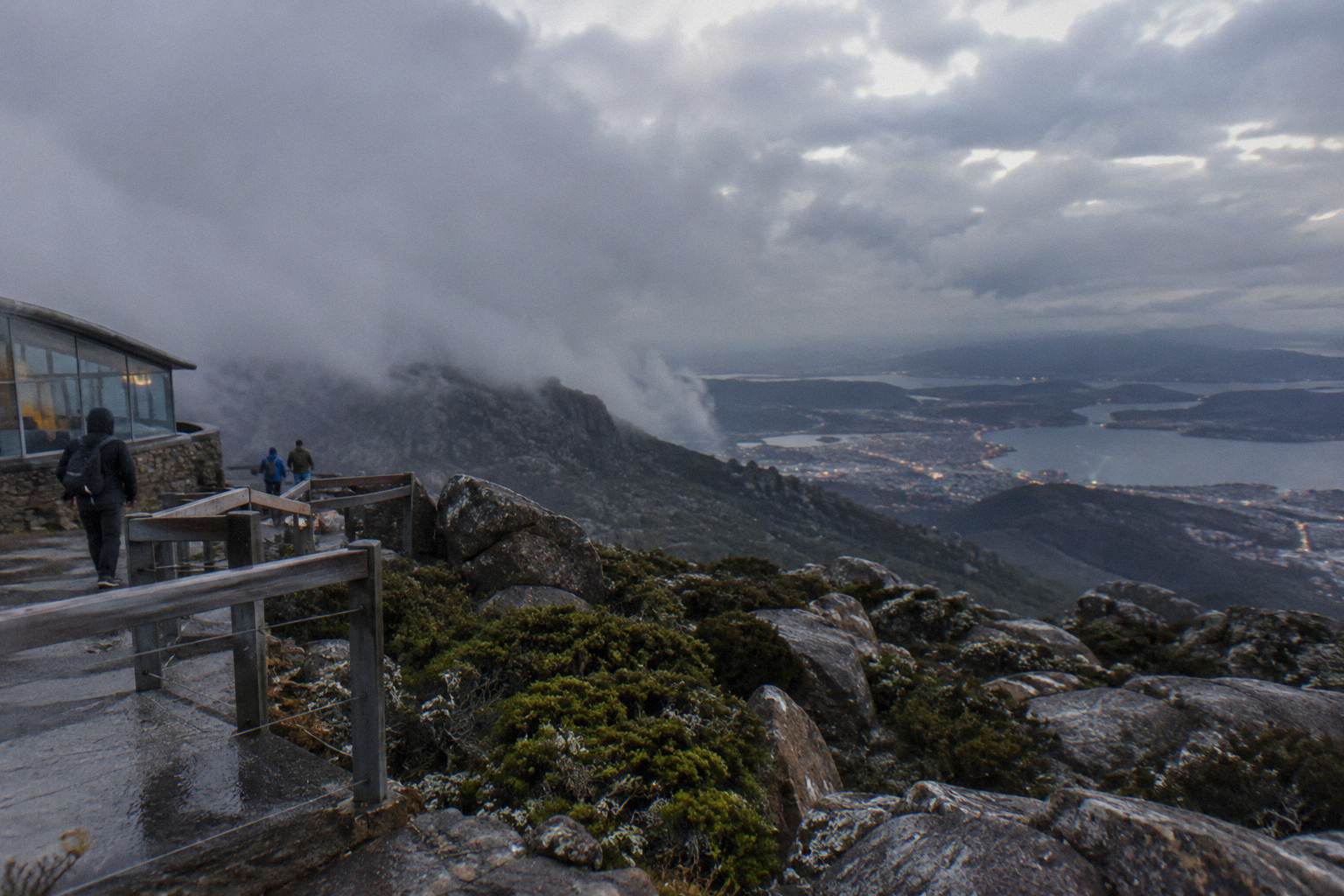
Cloud is the big one, because it is the most common and the least predictable. The summit is often in cloud even when Hobart is clear, and the cloud can arrive in minutes. A trip in fog is not worthless, the Organ Pipes dolerite columns and the observation shelter still reward a visit, but it is a different product from the one most brochures imply. If visibility at the top matters to you, decide on the morning, not the week before. The question whether a summit tour is worth it in fog gets its own full treatment.
The November maintenance closure is the other fixed hazard. Each November the road shuts for annual maintenance, with no vehicle access to the summit, tracks staying open, and no pedestrians or cyclists on the road during the works. If your Hobart visit lands in November, the summit-by-vehicle question may already be answered for you; the Pinnacle Road closure guide covers how to check status before you commit.
| Reason to go anyway | Check first |
|---|---|
| Entry to Wellington Park is free; you pay only for transport | Road status on the City of Hobart page or the Pinnacle Road line, 03 6238 2711 |
| The trip needs only 2 to 3 hours of your day | The summit forecast, not the Hobart forecast: it can be 10 to 12 degrees or more colder |
| Five hop-on hop-off stops let you spend longer on the mountain | Whether your ticket is hop-on hop-off or a fixed return |
| Free cancellation up to 24 hours before start on every listed trip | That cancellation is 24 hours, so decide the day before, not the hour before |
| Commentary and a bushwalking map are included on the bus passes | Meeting point on your booking confirmation, since operator pages and booking pages differ |
There is a fourth, softer condition: unrealistic expectations. Visitors who arrive expecting a warm lookout with a cafe and a guaranteed panorama rate the trip poorly regardless of weather. Visitors who arrive dressed for 10 degrees colder than the city, with a plan for what to do in cloud, rate it well. The mountain does not change between those two groups; the framing does. The what to wear on a summit tour guide covers the clothing half of that sentence.
How Cold And Cloudy Is The Top, Really?
Genuinely cold, and often cloudy enough to matter: the Wellington Park Management Trust reports that high winds and temperatures below 0 degrees are common at the summit, that the climb from the Hobart waterfront to The Pinnacle can mean a drop of 12 degrees or more, and that wind chill below -20 °C is possible. Snow can fall in any month, most often overnight from May to September.
The operator's own framing is a friendlier version of the same physics: about 10 degrees cooler than the city, with "four seasons in one day". The Trust's 12-degree figure is the stronger source, so the gap is best written as "often 10 to 12 degrees or more colder", never a single fixed number, because the gap itself varies by day and hour.
For scale, the climate record for the Pinnacle (1991 to 2020, at 1,260 metres) shows a mean temperature of 9.5 °C in January and 0.7 °C in both July and August, a record low of -9.1 °C, and a highest-ever reading of 29.8 C: the top has never reached 30 degrees. Sustained wind above 157 km/h has been recorded. Hobart summer days that feel like t-shirt weather at the wharf routinely meet single-digit temperatures and horizontal wind at the lookout, which is the single most common cause of a wasted summit trip. People go up dressed for the bottom of the mountain.
If you want numbers on the day rather than planning ranges, the official Bureau of Meteorology station is Kunanyi / Mount Wellington, station 094087, at the BOM live observations page. It publishes live readings only; the station itself notes that wind and feels-like readings can drop out when ice builds up on the instruments, which tells you something about conditions up there.
The Hobart Shuttle Hop-On Hop-Off Summit Pass runs 2 hours 15 minutes from A$55 per person and includes 30 minutes at the summit, live commentary, a local driver-guide and an air-conditioned vehicle. It is worth knowing, when weighing the worth question, that on snow days when the gates are closed to the public this tour is run by the Explorer Bus partners, the only bus approved beyond the closed gates, so the two formats converge exactly when the weather is at its most dramatic.
Which Trip Length Suits You?
Summit trips run from 50 minutes to 9 hours, and the right length depends on your Hobart time and what else your day must hold: choose the 2.5-hour return for a half-day visit, the hop-on hop-off pass to walk and linger, a guided small-group tour for the mountain's story, or the 7-to-9-hour combination if the summit is one stop in a bigger day.
The three formats most often compared for a first visit: the Explorer Bus Return Tour, from A$55 per person, 2.5 hours, rated 4.8 from 1,081 reviews, the trip with the most reviews on the booking pages. The Ultimate Experience Guided Summit Tour, from A$65 per person, 2 hours 45 minutes, rated 4.6 from 90 reviews, with hotel pickup from selected hotels, full commentary and a group of up to 48. And the Hobart Shuttle pass above. Three ways up the same road, three different balances of price, guide attention and flexibility. All three carry free cancellation up to 24 hours before start, which is the practical safety net for a weather-dependent decision.
| Trip format | From price per person | Length | What it favours |
|---|---|---|---|
| Explorer Bus Return Tour, hop-on hop-off pass | from A$55 | 2.5 hours | Flexibility: five stops, all-day pass, stay longer if the day is good |
| Hobart Shuttle Hop-On Hop-Off Summit Pass | from A$55 | 2 hours 15 minutes | A short, guided round trip with 30 minutes at the summit |
| Ultimate Experience Guided Summit Tour | from A$65 | 2 hours 45 minutes | Door-to-trail convenience: hotel pickup from selected hotels, full commentary |
Prices shown are in Australian dollars and are from-prices per person taken from the live listings; the exact figure you see may differ by date or season. A budget note that cuts the other way: driving yourself looks free after entry, and park entry genuinely costs nothing, but parking at The Springs, The Pinnacle and the lay-bys is limited, snow days bring active traffic management, and the record day saw 1,906 vehicles on the mountain after heavy snow. The bus spares you all of that, and on snow days the licensed bus is the only vehicle beyond the closed gate anyway.
For travellers weighing the summit against a rental car generally, whether it is worth renting a car in Hobart covers the trade-offs, including the fact that Tasmanian public transport is currently free as a temporary measure but the Metro routes only reach Fern Tree, not the summit.
What If The Road Closes On Your Day?
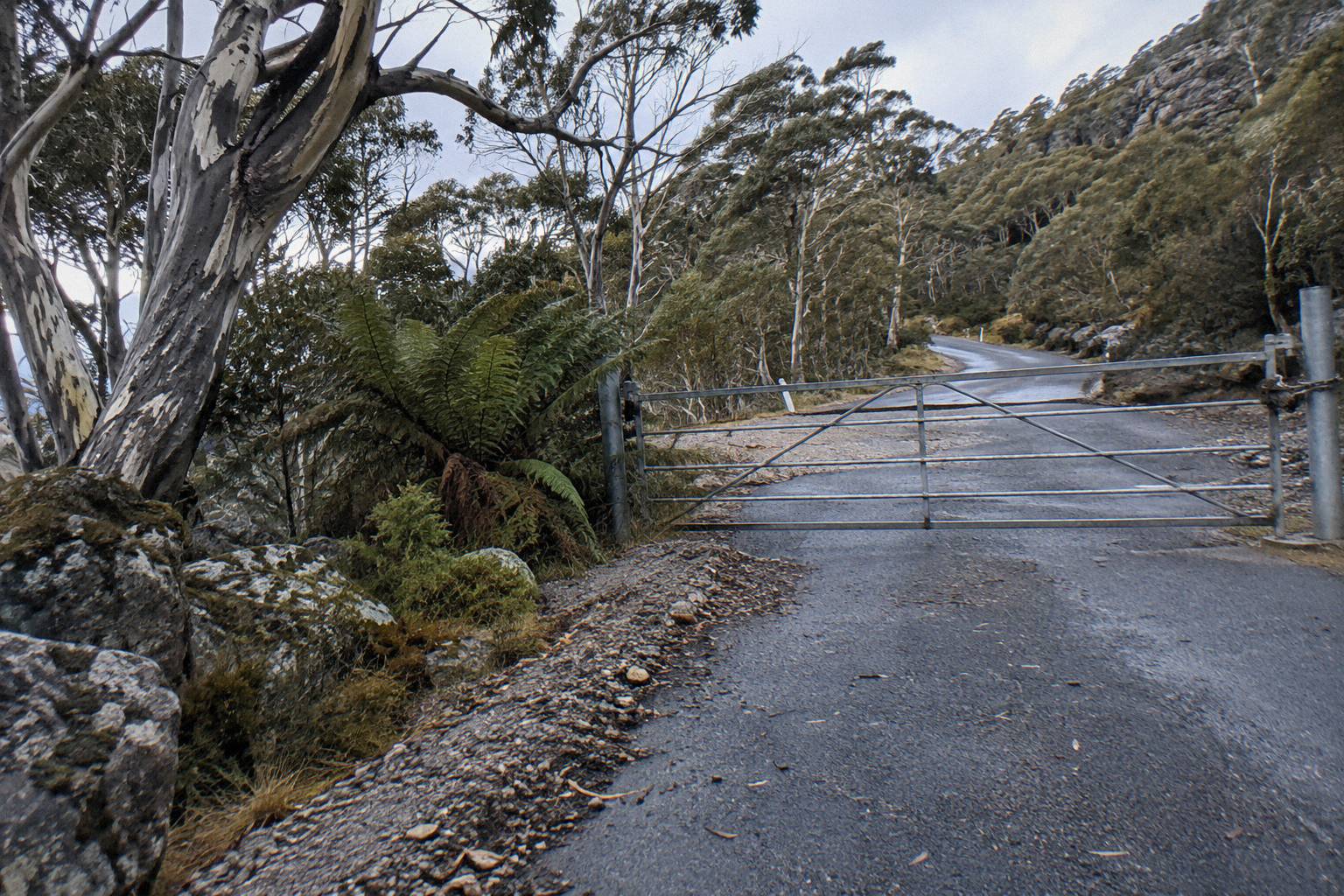
If Pinnacle Road shuts on your day, a booked tour keeps moving while a private car cannot. The City of Hobart closes this only public road into the park whenever ice or snow is present, sometimes before snow even arrives, and the Trust describes the Explorer Bus as the only licensed operator able to take visitors up in those conditions.
The 2025-26 season gives the scale: 95 nights closed for snow or ice, overnight closures running past 9.30am on 46 days, the summit unreachable by private vehicle on 14 days, and vehicle access to The Springs possible on all but one closure day. What that means in practice is that "closed" is usually partial: the lower mountain stays reachable and the upper road does not. Trips that cannot reach The Pinnacle adjust rather than cancel, as the itineraries note, and the mechanics of what happens to a paid booking are covered in full in what happens if the road closes during your tour.
Before you commit to any summit morning, check two sources: the City of Hobart Pinnacle Road status page, and the Pinnacle Road Information Line on 03 6238 2711, the number listed by the Trust for exactly this purpose. The Trust's own safety guidance, at wellingtonpark.org.au, is the primary source for the closure rules, the temperature gap and the wind-chill warning. Those two links, used together on the morning of your trip, answer more of the worth question than any review can.
The Ultimate Experience Guided Summit Tour, from A$65 per person, 2 hours 45 minutes and rated 4.6 from 90 reviews, is the format that handles a variable day with the least effort from you: hotel pickup from selected hotels or a Brooke Street Pier meeting point, an air-conditioned vehicle, and an itinerary that may vary with road and weather conditions rather than collapsing. One limitation to weigh: the booking page lists it as not wheelchair accessible and not suitable for people with mobility impairments, so travellers needing step-free access should compare the wheelchair-accessible bus passes instead; the accessible summit options guide lists them.
The Verdict
Yes, a summit trip is worth it with two to three hours, realistic expectations and a jacket, and not worth it if you are gambling on a guaranteed panorama or have too little time to flex around weather. The cheapest listed return trips start from A$55 per person, every listed trip carries free cancellation up to 24 hours before start, and when the mountain cooperates nothing else in Hobart delivers this much altitude this close to a city centre.
The decision, reduced to one sentence each way. Go if: you have half a day or less, you want the option to linger or walk down, and you will treat cloud as part of the experience rather than a failure. Wait or skip if: the forecast has the top clamped in fog all day, your visit falls inside the November maintenance window, or you would be racing a cruise-ship departure with no slack in the schedule, though cruise-ship visitors do have formats built for them, covered in cruise ship day mountain tours.
For a first-time visitor weighing the summit against everything else in the city, whether the summit is a must-do on a first Hobart visit is the companion question, and the best time of day for a summit tour covers the light and crowd half of the timing question.
Common Questions About A Summit Trip
Is A Trip To The Summit Worth It?
For most visitors, yes. Entry to the park is free, return trips start from A$55 per person, and the trip needs only two to three hours. It is worth it when you dress for a summit 10 to 12 degrees or more colder than the waterfront and accept that the top is often in cloud; it is not worth it in all-day fog, on a closed road day with no licensed bus running, or when your schedule cannot absorb a delay.
How Much Time Do I Need At The Summit?
The listed return trips include about 30 minutes at the summit, which is enough for the lookout loop and the observation shelter. There is no cafe at the top, so longer visits need a plan, and a hop-on hop-off pass is the way to stay longer.
Does The Summit Trip Cost Money If The Park Is Free?
Yes, park entry is free but transport is not. You are paying for the bus or guided vehicle up the only public road into the park, the commentary, and on some formats hotel pickup. Self-driving is free after entry but faces limited parking and snow-day closures, and on snow days the licensed bus is the only vehicle beyond the closed gate.
Can I Cancel If The Weather Looks Bad?
Every trip carries free cancellation up to 24 hours before start. That makes the practical strategy simple: book ahead, then judge the weather the day before and cancel or rebook if the top is forecast to be clamped in cloud.
Is The Summit Worth It In Winter?
Often, with caveats. Snow is more likely overnight from May to September and the road closed for snow or ice on 95 nights in 2025-26, so check the status page or call 03 6238 2711 first. When it works, winter delivers snow and the city below in the same frame; when it does not, the road gate decides for you.