Wellington Park: Tracks, Rules And How Tours Use It
Wellington Park is not a national park, it is free to enter, and a single set of rules from the Wellington Park Management Trust covers everything from dogs to drones to which tracks bikes may use.
Short answer
Wellington Park covers 18,011 hectares around kunanyi / Mount Wellington, is open 7 days and free to enter, and is not a national park, so no Parks Pass is needed. The Trust's rules ban drones without a permit and overnight campervans, require dogs to stay on lead on approved tracks, and close the whole park on Extreme or Catastrophic fire danger days.
The mountain that dominates Hobart sits inside something larger than most visitors realise. Wellington Park spreads across 18,011 hectares of dolerite, forest and alpine plateau, and it operates under a single management plan set by the Wellington Park Management Trust. The park is open 7 days, entry is free, and unlike Tasmania's national parks there is no pass to buy and no gate to queue at. That freedom is exactly why the rules matter: nobody checks your ticket, but everybody is expected to know what is allowed where.
The rules touch almost every part of a visit. Where a dog may walk, whether a drone may fly, which tracks a mountain bike may use, when the entire park shuts because of fire danger, and why every commercial tour you can book needs a licence from the Trust. The rules below are set out in plain language, with the summit tours and walks shown against them.
What Kind Of Park Is Wellington Park?
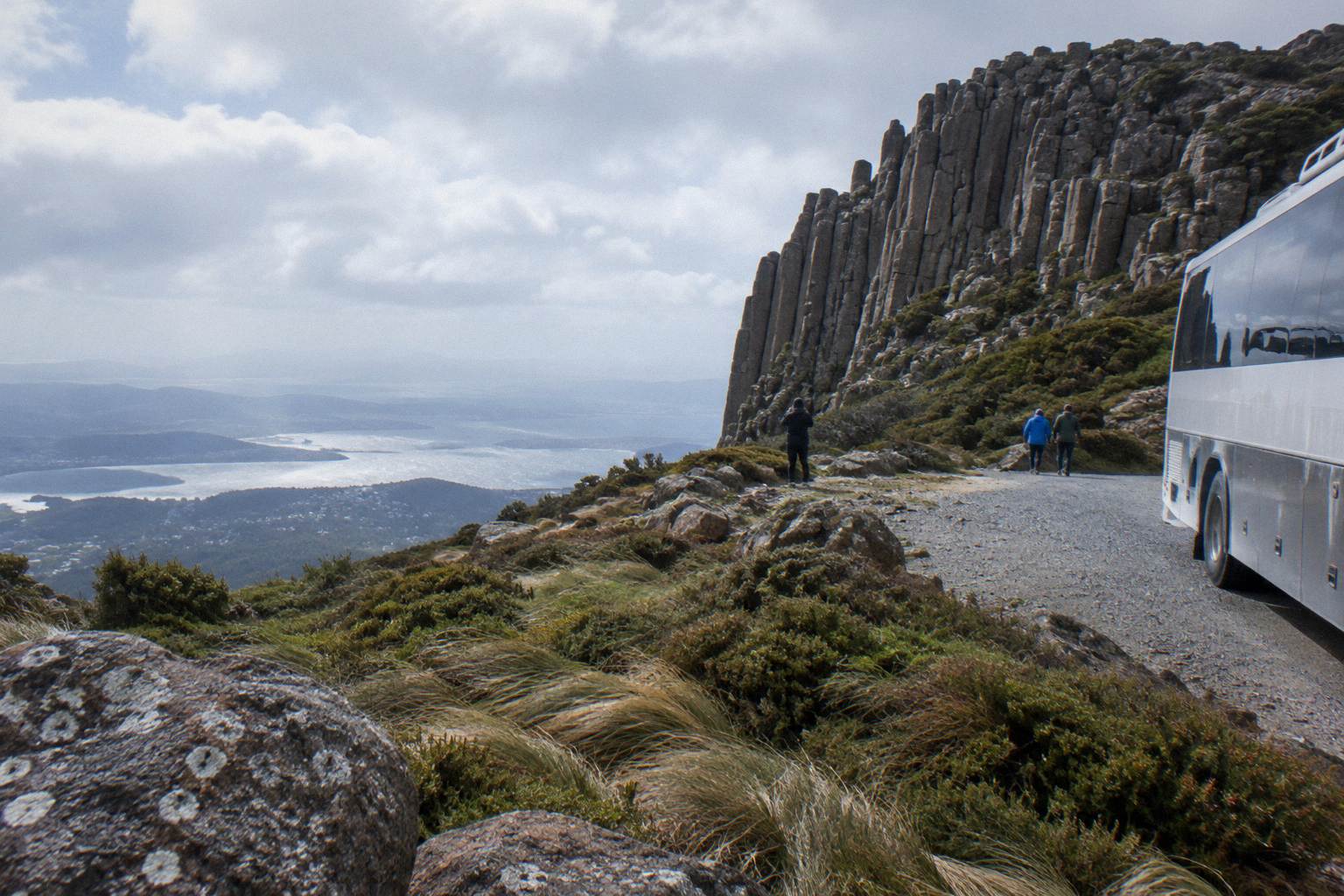
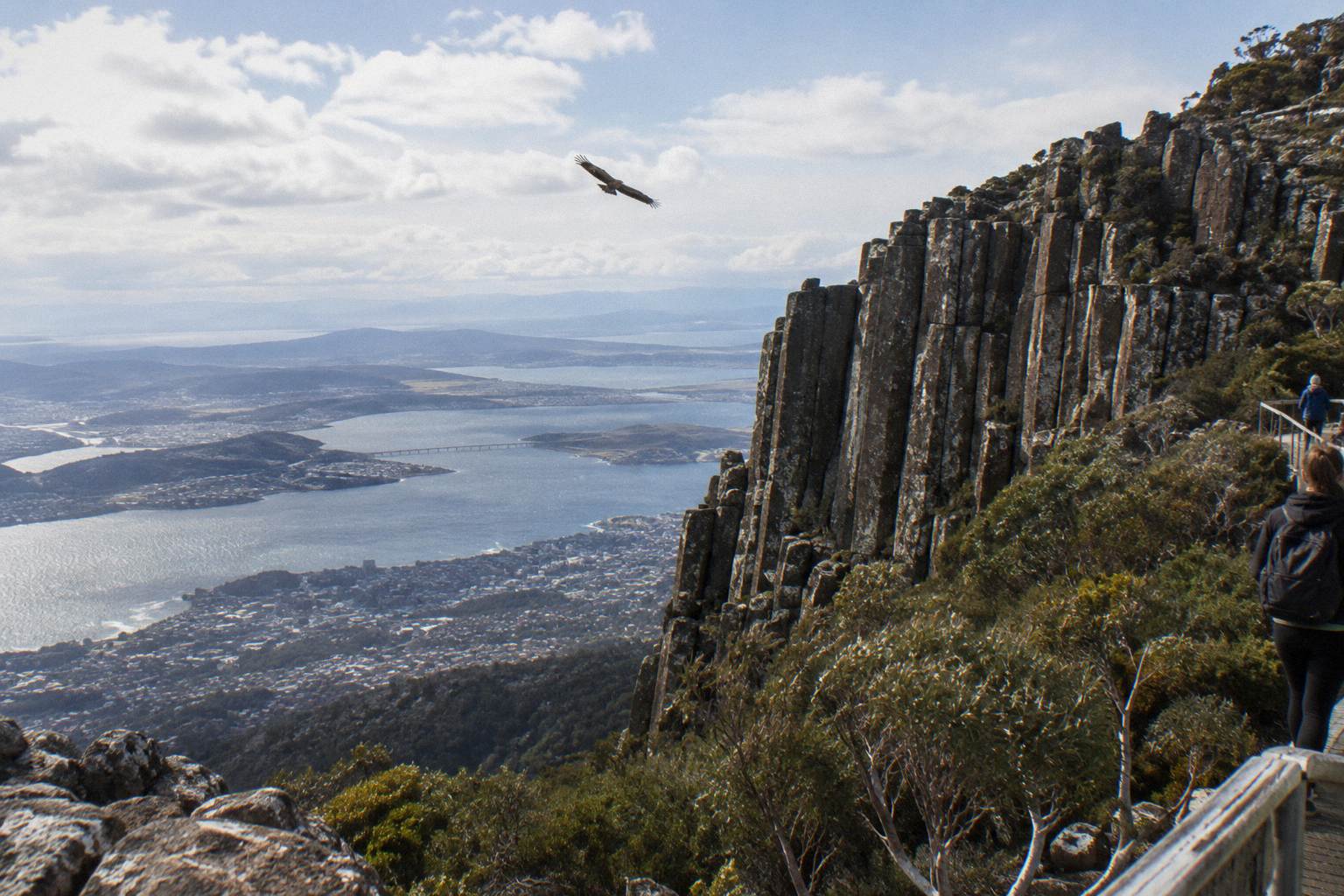
Wellington Park is 18,011 hectares of jointly managed land around kunanyi / Mount Wellington, open 7 days with free entry, and it is deliberately not a national park, so there is no Parks Pass, no entry station and no visitor centre or ranger station inside the park. The summit of kunanyi / Mount Wellington stands at 1,271 m, and the mountain road runs about 22 km from the Hobart CBD. The land is the traditional land of the Muwinina people.
The name is worth getting right on first mention. The mountain is gazetted "kunanyi / Mount Wellington", pairing the palawa kani name kunanyi with the colonial name under Tasmania's 2013 dual-naming policy. After that first mention, kunanyi, the mountain or Mount Wellington all read naturally. The Trust has capitalised "Kunanyi" at the start of a sentence since 2025.
The "not a national park" point has practical consequences. There is no Parks Pass to buy, which travellers often assume they need after visiting Freycinet or Cradle Mountain. There is also no visitor centre, no ranger station and no cafe at the summit; the only food outlet in the park is the Lost Freight Cafe, a shipping-container cafe at The Springs, 720 m up the mountain. Everything a visitor needs to know has to be known before arriving.
For trip planning, the distinction also explains pricing. Because entry is free, a tour price is paying for transport, guiding and logistics, not for admission. The Explorer Bus Return Tour, for instance, is from A$55 per person for a 2.5-hour return trip with commentary, rated 4.8 from 1,081 reviews, and none of that price is a park entry fee. Free entry, free of a pass, but never free of the rules.
Which Park Rules Actually Matter To A Visitor?
Four rules catch out the most people: the whole park closes on Extreme or Catastrophic fire danger days, drones need a permit, overnight campervans are banned, and dogs are only allowed on lead on approved tracks. Bikes may use formed roads, fire trails and listed tracks only, riders on walking-only tracks can be fined, single-serve plastic is banned, and abseiling and climbing are prohibited at the Springs Lookout.
The fire-day rule is the big one. On days rated Extreme or Catastrophic, the park is closed to all users, not just to vehicles. In a Tasmanian summer those ratings arrive with heat and wind, and a planned walk or ride can be off with little notice, so checking conditions before setting out is part of the park's own safety advice. The Trust's safety guidance, along with the live summit observations from the Bureau of Meteorology's Kunanyi / Mount Wellington weather station, is the place to look.
Drones are the other frequent surprise. The park is a fixture in travel photography precisely because of its cliffs and city views, but flying a drone without a Trust permit breaches the rules. Campervan travellers hit the overnight ban: sleeping overnight in a vehicle in the park is not allowed, and there is no camping provision in its place. Dog walkers have a narrower but workable set of options, with dogs permitted on lead on approved tracks only.
Here is the rule set in one view.
| Topic | The rule | What it means in practice |
|---|---|---|
| Entry | Free, open 7 days, not a national park | No Parks Pass, no gate, no entry fee |
| Fire danger | Park closed to all users on Extreme or Catastrophic days | Check the rating before any summer walk or ride |
| Drones | Not allowed without a Trust permit | Leave it at home unless permitted |
| Overnight stays | No overnight campervans | No sleeping in vehicles anywhere in the park |
| Dogs | On lead on approved tracks only | Off-lead walking is not permitted |
| Bikes | Formed roads, fire trails and listed tracks only | Riding a walking-only track can bring a fine |
| Climbing | Abseiling and climbing prohibited at the Springs Lookout | Applies to all users, including commercial groups |
| Waste | Single-serve plastic banned | Carry a reusable bottle |
One habit ties all of these together: the park runs on self-regulation. With no gate and no ranger station, compliance is mostly voluntary, and the fines that exist are for the offences that damage tracks or endanger others. A visitor who has read this far already knows more than most arrivals.
For travellers who would rather have a guide interpret the park than memorise a rulebook, these three trips all operate inside it with licensed operators.
How Does Pinnacle Road Access Work?
Pinnacle Road is the only public road into Wellington Park, running from the end of Pillinger Drive in Fern Tree past The Springs at 720 m to the summit; it is sealed and driveable in a conventional car, but narrow and winding, shared with bikes, pedestrians and tour buses, and it is managed by the City of Hobart, which closes it whenever ice or snow is present and sometimes before snow arrives.
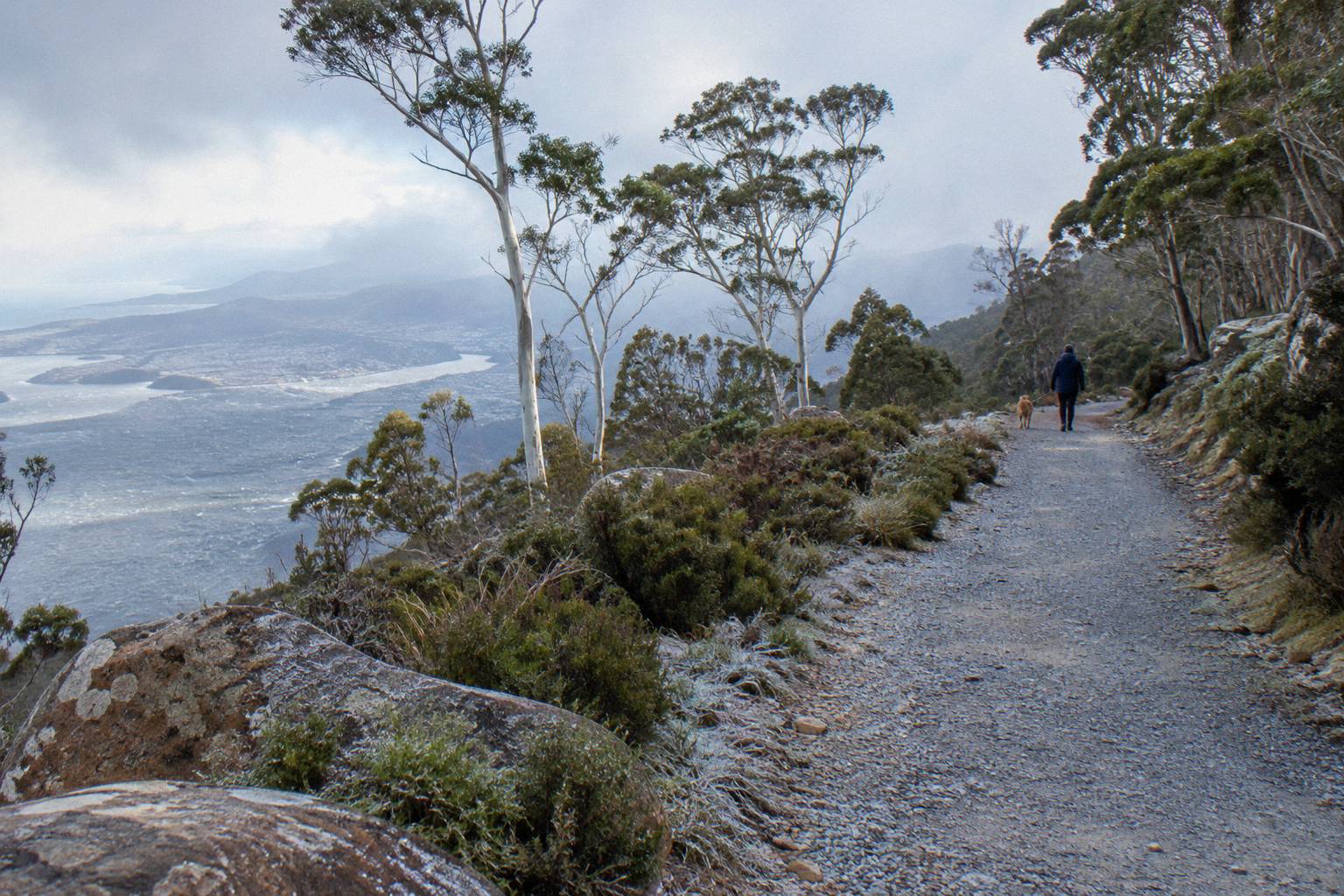
The closure point moves. When conditions turn, the gate goes down either at Bracken Lane, the park entrance, or above The Springs at 680 m, which usually preserves access to the lower mountain even when the summit road is shut. The Trust notes that access may be restricted by snow and ice at any time of year, particularly April to September, and that the road also closes for events. Snow can fall in any month on kunanyi; Wikipedia describes frequent snow from May to October and lighter falls in the rest of the year. With the lower mountain usually still open, it is a good moment to check which walking track suits you.
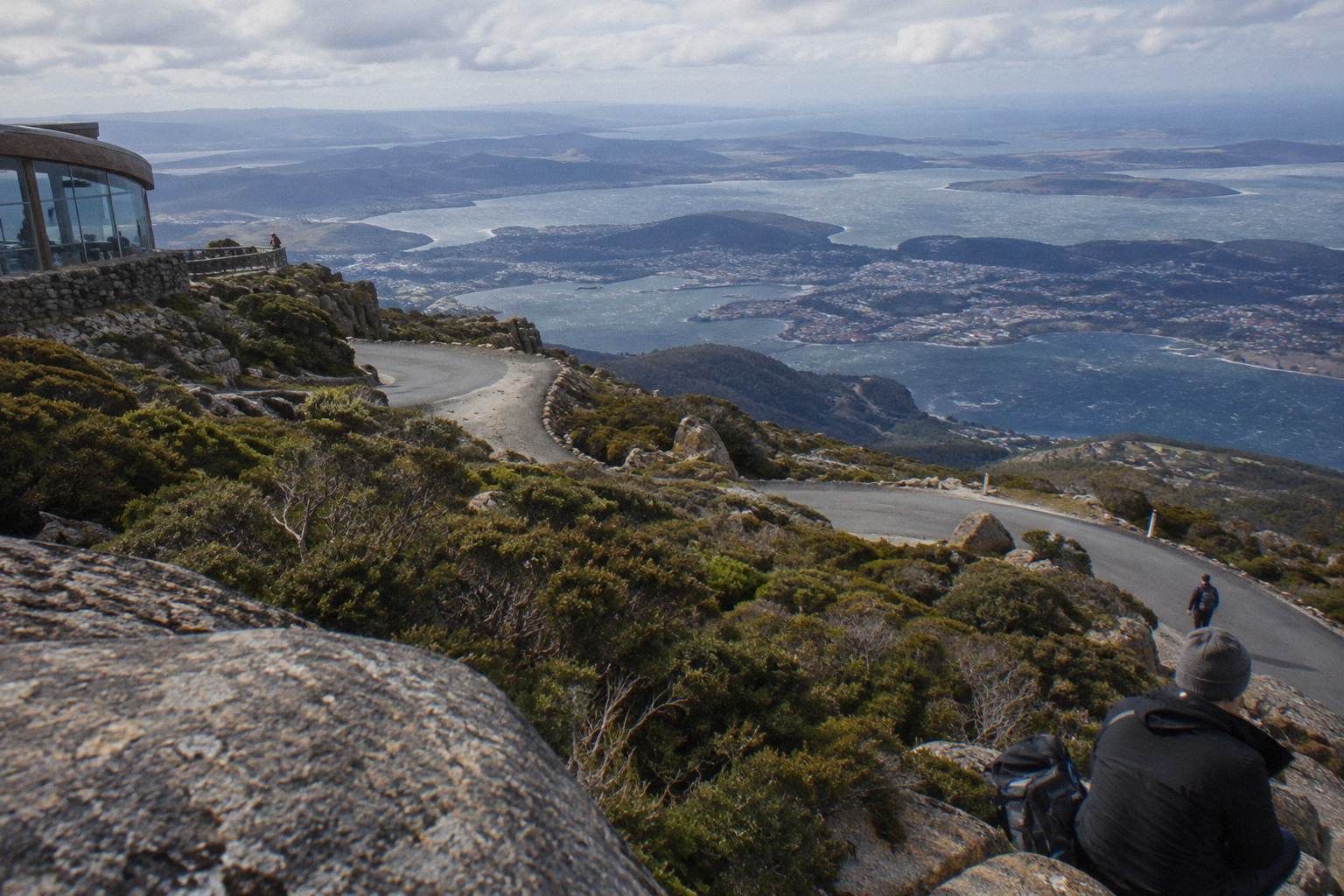
The 2025-26 season numbers show how often this bites. The road was closed 95 nights for snow or ice: 22 nights in August, 19 in October, and 18 each in July and September. Overnight closures ran past 9.30am on 46 days. On 14 days the summit was not reachable by private vehicle at all, though vehicle access to The Springs was possible on all but one closure day. After a heavy snowfall on 6 September, a record 1,906 vehicles arrived in a single day, and parking at The Springs, The Pinnacle and the roadside lay-bys could not absorb them.
Every November the road shuts entirely for annual maintenance: no vehicle access to the summit, tracks stay open, and no pedestrians or cyclists are allowed on the road during the works. Never assume the road is open on arrival. The two official status sources are the City of Hobart Pinnacle Road status page and the Pinnacle Road Information Line on 03 6238 2711, the number the Trust lists for exactly this purpose.
Two quirks are worth knowing. Parking at the summit works as a loop: continue around rather than stopping on the road itself, which is both a rule and a courtesy on a narrow alpine road. And the FM and TV transmitters at the top can stop a car key fob from working, a failure the Trust describes as harmless and fixable by moving the car slightly. If a morning on the mountain without the driving appeals, the how-to-get-up-the-mountain-without-a-car approach covers every option.
Which Tracks Can You Walk And Ride?
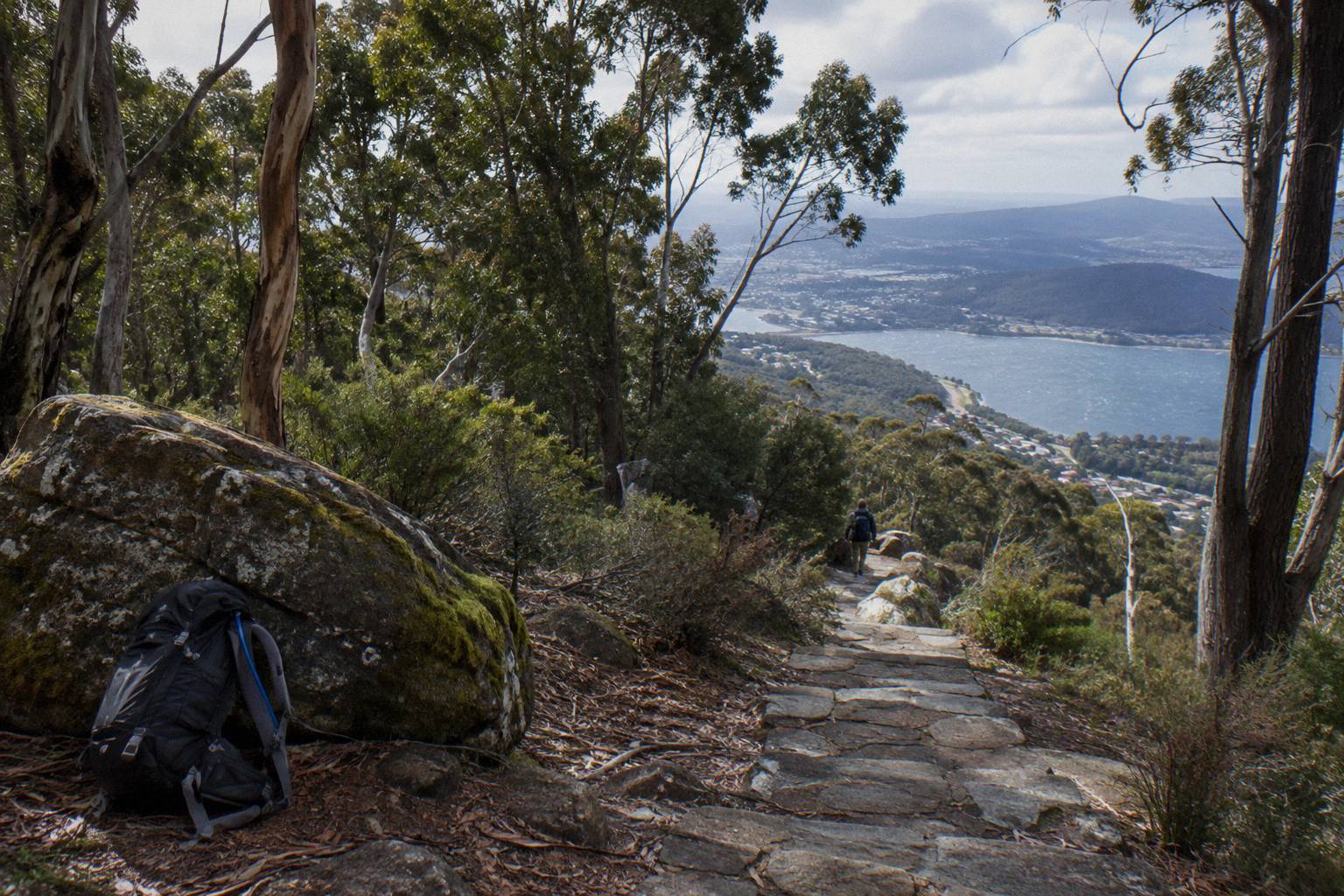
The park's track network is generous but zoned: The Springs links to Sphinx Rock, a short level walk, the Lookout Circuit and Exhibition Gardens, and the North South and Radfords tracks toward Fern Tree; the Organ Pipes Circuit is a 9.2 km loop below the dolerite columns; Silver Falls is a 4 m waterfall reached from Fern Tree Park along the Pipeline Track; and O'Grady's Falls is a 2.2 km walk from Fern Tree.
Bikes divide the network further. Riders may use formed roads, fire trails and listed tracks only, and riding a walking-only track can bring a fine. The North South Track is graded Blue Square, intermediate, for bikes and Moderate for walkers, with the Glenorchy MTB Park at its northern end. The Pipeline Track is a wide multi-use corridor shared by walkers, runners and bikes, and it carries an important caveat: TasWater repair works between Neika and the Northwest Bay Weir began in late September 2026, run for several months, and bring temporary weekday closures between 7am and 5pm, so the Pipeline Track should never be described as fully open during that period.
| Track or walk | Access point | What it is |
|---|---|---|
| Sphinx Rock | The Springs | Short, level walk |
| Lookout Circuit and Exhibition Gardens | The Springs | Short loops near the picnic area |
| North South Track | The Springs to Glenorchy MTB Park | Moderate for walkers, Blue Square for bikes |
| Radfords Track | The Springs | Route toward Fern Tree |
| Organ Pipes Circuit | Organ Pipes area | 9.2 km loop below the dolerite columns |
| Silver Falls | Fern Tree Park | 4 m waterfall along the Pipeline Track |
| O'Grady's Falls | Fern Tree | 2.2 km walk |
| Pipeline Track | Fern Tree toward Northwest Bay | Wide multi-use track, weekday works closures apply |
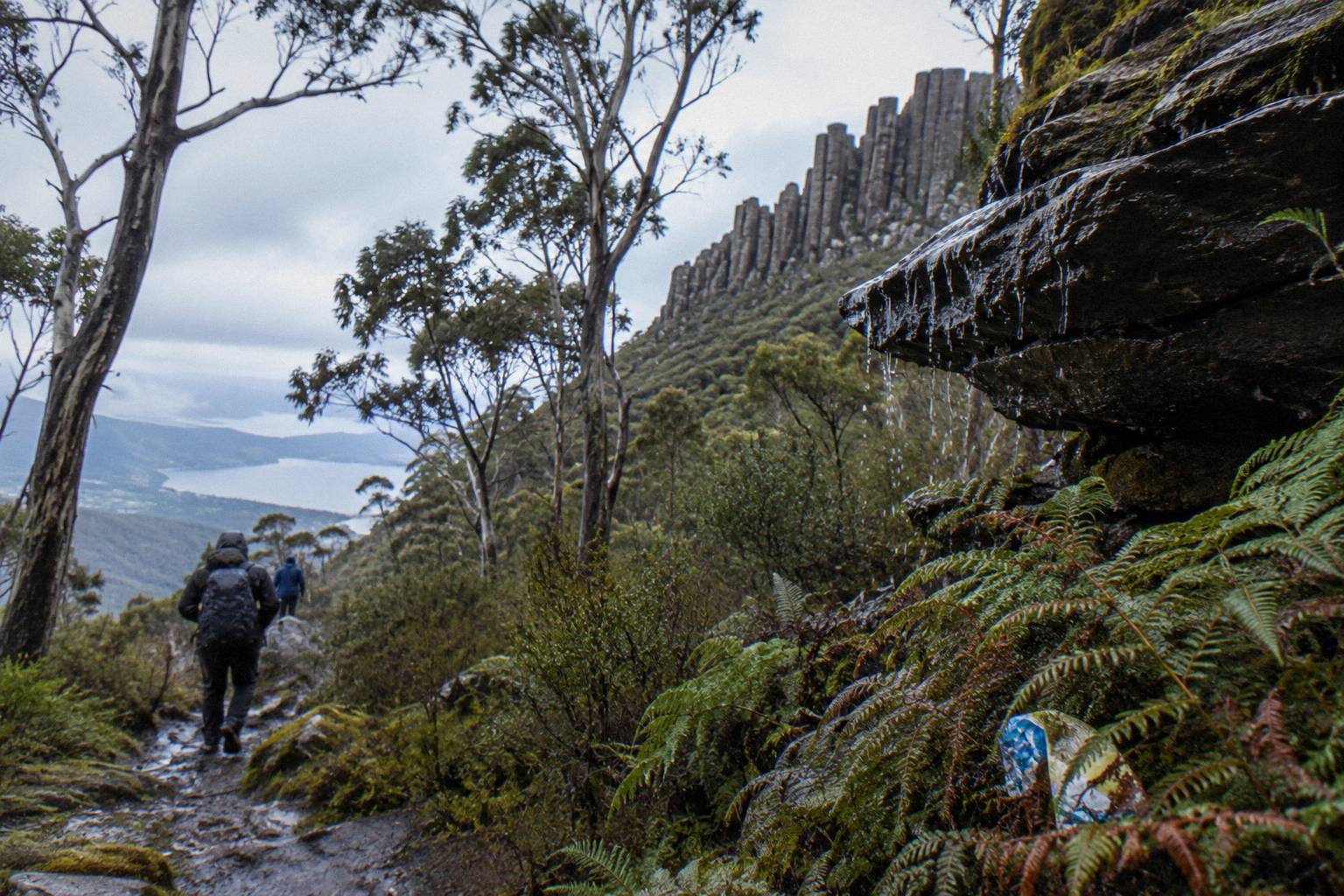
Track lengths the Trust has not published are not listed here, and that caution is deliberate. Several well-known tracks have no published length or grade in the official pages, so only what the park's own material states is described here. For a fuller treatment of the walking options, the walks-and-hikes-on-kunanyi guide gathers them in one place, and the downhill-bike-rides-from-the-summit guide covers the descent side for riders.
A guided walk is one way to enjoy the tracks without carrying the rulebook yourself. The Morning Guided Walking Tour from Island of Tasmania Tours runs 4 hours from 20 Davey Street in the city, takes up to 10 guests aged 8 and over, and pairs an air-conditioned minibus with an easy guided nature walk and a university-trained local guide, from A$85 per person. You can also read the morning guided walking tour page for the full inclusions, or check availability via the operator's live listing.
What Facilities Exist Inside The Park?
The park has lookouts and an observation shelter at the summit accessible at any time, summit toilets open 7am to 10pm from 1 September to 30 April and 7am to 5.30pm from 1 May to 31 August, no cafe at the summit, and only one food outlet in the whole park, the Lost Freight Cafe at The Springs, a shipping-container cafe open 7 days year round except 25 and 26 December with varying hours.
The Springs is the park's soft centre: sheltered, with a picnic area and the Springs Lookout, and sitting at 720 m it is reachable even on many days when the summit road above is gated. That makes it the natural fallback for families and for anyone who hits a closure, a pattern the closure data supports, since vehicle access to The Springs was possible on all but one snow-closure day in 2025-26. Find everything else covered here on Mount Wellington Tours.
The absence of a summit cafe surprises people who have read about the observation shelter and assumed a kiosk follows. It does not. Whether the toilets, shelter or paths at the summit suit wheelchairs or strollers is unclear, so check the per-tour accessibility notes on the booking page before you go, as they vary by trip. The accessible-summit-options guide works through which tours say what.
Practical planning follows from the sparseness. Bring water, since single-serve plastic is banned in the park and there is nothing to buy at the top. Time toilet stops against the seasonal hours if visiting early or late in the day. And treat The Springs as the place for a coffee rather than the summit, with the caveat that the cafe closes over Christmas and its hours vary through the year.
Why Do Commercial Tours Need A Trust Licence?
Every commercial operator working in Wellington Park needs a licence from the Trust, and those licences carry client-to-guide ratios, which is why every guided trip listed here follows the stated, permitted route for a guided group: the operator has the licence, the guide meets the ratio, and the group is covered by the conditions the Trust sets, including the ban on single-serve plastic and the prohibition on abseiling and climbing at the Springs Lookout.
That licensing regime is invisible to a visitor but shapes what a tour can offer. It is why guided groups ride with guides on the Summit Descent Bike Tour, for example, rather than being dropped at the top to find their own way down. It is also why tour itineraries may vary with road and weather conditions: the licence operates inside the same road-closure and fire-day rules that bind everyone else, and a licensed operator cannot simply drive around a gate.
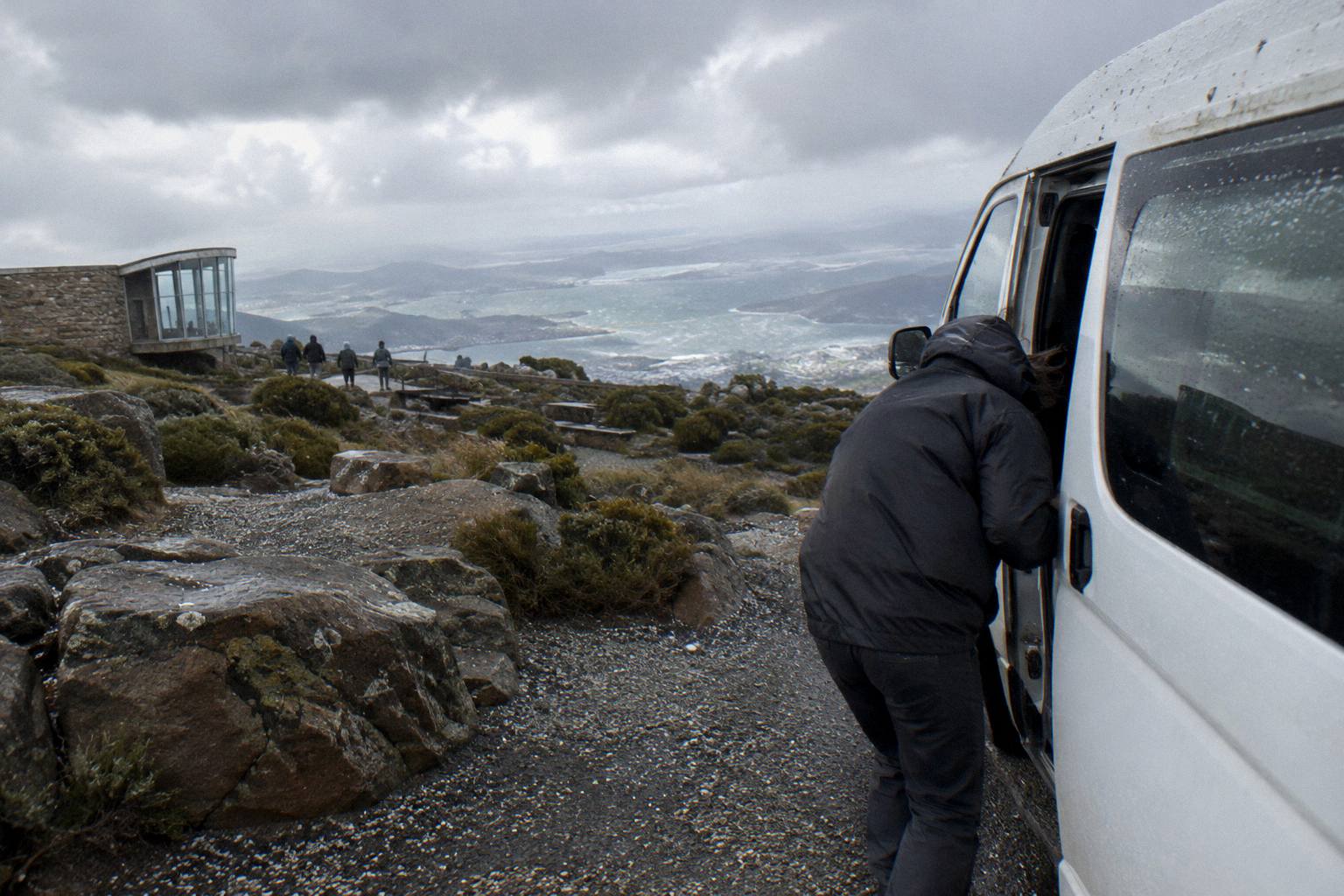
The Explorer Bus holds a particular status the Trust states plainly: it is the only licensed operator able to take visitors up when the road is closed for snow. The operator's own site, mtwellingtonexplorer.com.au, sets out the snow-day arrangements, including the plain statement that reaching The Pinnacle cannot be guaranteed on snow days. The Explorer Bus Return Tour is from A$55 per person for 2.5 hours, and its Explorer Pass is valid all day with hop-on-hop-off use at five stops between Fern Tree and The Pinnacle.
For riders, the licensing story runs through the Summit Descent Bike Tour from Tasmanian Mountain Bike Adventures, from A$179 per person for about 4 hours in a group of up to 10, including a 30-minute bus transfer to the summit, a 6 km descent of the summit road with guides riding alongside, then a 15-minute transfer to a 12 km rainforest trail ride. Note the booking pages conflict on minimum rider height, one stating 120 cm and another 125 cm, so confirm the current minimum on the live listing before booking, along with the 120 kg maximum rider weight and the basic bike-handling requirement. The summit descent bike tour page carries the full detail.
How Do The Rules Change With The Seasons?
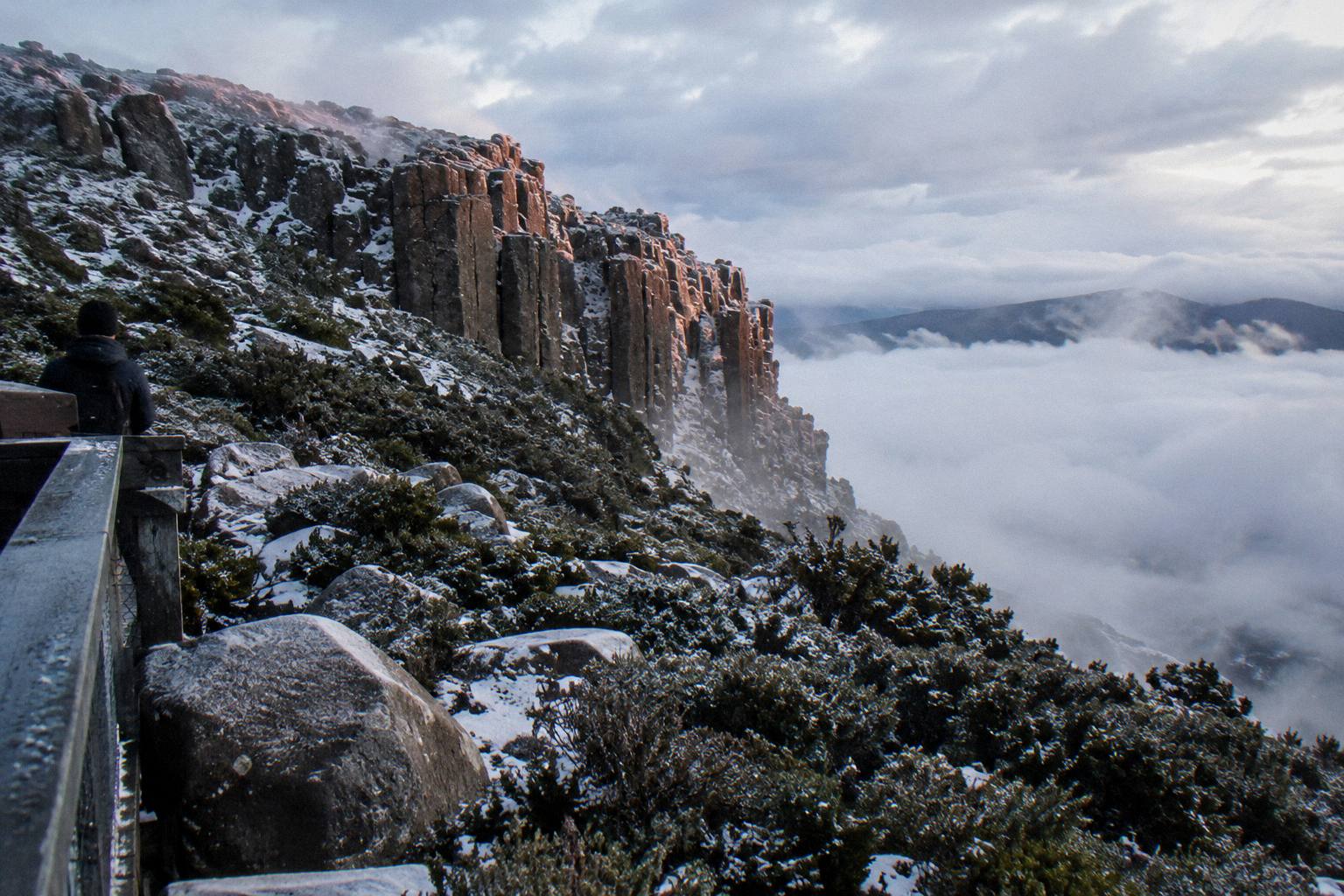
Fire-day closures dominate summer, snow and ice close the road most often from July to October with 95 closure nights recorded in 2025-26, the road shuts each November for maintenance, and the summit sits roughly 10 to 12 degrees or more colder than the Hobart waterfront, with wind chill below -20 °C possible, so the season you visit in determines which rules bite.
The temperature gap deserves its own sentence in any packing decision. The Trust's figure is that the difference between the Hobart waterfront and The Pinnacle can be 12 degrees or more, the operator's is about 10 degrees, and both paint the same picture: a t-shirt day on the wharf can be a beanie-and-shell day at the top. Wind chill below minus 20 Celsius is possible at the summit, and high winds and temperatures below zero are described as common there rather than exceptional.
Seasonal arithmetic also changes the non-driving options. Tasmanian public transport is free as a temporary measure, which the Trust says runs until June 2027, but the Metro 448 on weekdays and 449 on weekends and public holidays reach Fern Tree only, not the summit. From Fern Tree the tracks listed above take over. The best-season-for-a-summit-trip guide works through the trade-offs month by month, and the pinnacle-road-closures-and-your-tour guide explains what happens to a booked trip when the gate comes down.
Winter riders and walkers should also fold in the November maintenance closure, when tracks stay open but the road carries no vehicles, cyclists or pedestrians. Every trip listed here allows free cancellation up to 24 hours before start, which lines up neatly with the reality that mountain conditions are often only clearly forecastable a day ahead.
What Does A Visit Cost Under These Rules?
Entry to Wellington Park is free, so the only costs are getting there and what you choose to do: bus-format summit trips start from A$35 per person for a one-way pass, guided small-group tours from A$55, guided walks from A$85 and guided bike descents from A$179, all per person in Australian dollars, with free cancellation up to 24 hours before start on every trip.
Because no admission applies, comparing formats is cleaner than in a pass-charging park. A hop-on-hop-off bus ticket, at the Explorer Bus Return Tour's from A$55 per person, buys flexibility across five stops and all-day validity. The Pinnacle 2-Hour Small-Group Tour from Island of Tasmania Tours is also from A$55 per person but trades the hop-on freedom for a group of up to 11, a 2-hour itinerary, 30 minutes of summit free time and a university-trained local guide, with a minimum age of 8 and no wheelchair access. The Morning Guided Walking Tour, at from A$85 per person, adds the easy guided nature walk across 4 hours.
| Trip format | Trip | From price per person | Duration | Group size |
|---|---|---|---|---|
| Hop-on-hop-off bus | Explorer Bus Return Tour | A$55 | 2.5 hours | Up to 27 |
| Small-group minibus | Pinnacle 2-Hour Small-Group Tour | A$55 | 2 hours | Up to 11 |
| Guided walk | Morning Guided Walking Tour | A$85 | 4 hours | Up to 10 |
| Guided bike descent | Summit Descent Bike Tour | A$179 | 4 hours | Up to 10 |
The right format usually follows from the rules rather than the price. Families with children under 8 are steered by minimum ages toward the bus formats. Riders are steered toward the licensed descent, since riding the summit road independently means sharing a narrow, winding road with tour buses and logging the closure status first. And anyone visiting in the snow season is steered, gently but firmly, toward the one licensed snow-day option.
Whichever way up the mountain appeals, these three formats cover the walk, the ride and the quick summit visit inside one licensed framework.
Common Questions About Wellington Park Rules And Access
Is Wellington Park A National Park?
No. Wellington Park is jointly managed parkland of 18,011 hectares around kunanyi / Mount Wellington, open 7 days with free entry. It is not a national park, so no Parks Pass is required and there is no entry station, visitor centre or ranger station inside the park.
Do I Need To Pay To Enter Wellington Park?
No, entry is free. Any price on a summit tour pays for transport, guiding and logistics, not admission. The Explorer Bus Return Tour, for example, is from A$55 per person for a 2.5-hour return trip with commentary.
Can I Take My Dog Into Wellington Park?
Only on lead and only on approved tracks. Off-lead dogs and dogs on non-approved tracks are not permitted under the Trust's rules.
Can I Fly A Drone At The Summit?
Not without a permit from the Wellington Park Management Trust. Drone use in the park requires a permit, and the summit's transmitters and shared airspace make unpermitted flying both a rule breach and a nuisance.
When Is Wellington Park Closed?
The whole park closes to all users on Extreme or Catastrophic fire danger days, and Pinnacle Road closes whenever ice or snow is present, sometimes pre-emptively. The road also shuts each November for annual maintenance, and it closed 95 nights for snow or ice in the 2025-26 season.
Why Do Tours Need A Licence In Wellington Park?
Commercial operators working in the park must hold a Trust licence, and those licences carry client-to-guide ratios plus conditions such as the single-serve plastic ban. Booking a licensed tour means your group operates inside the park's permitted framework for guided activities.