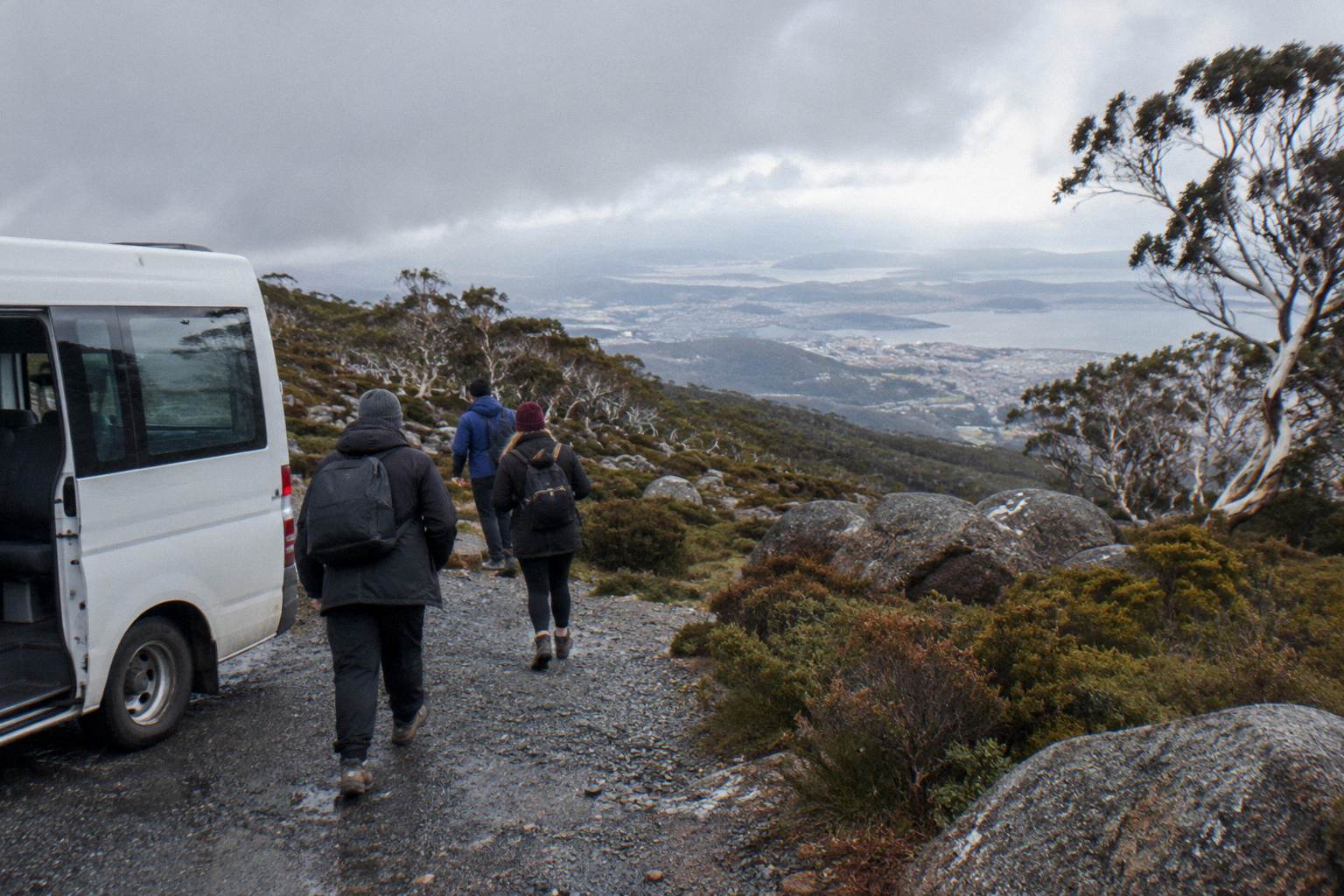
What To Wear On A Summit Tour Or Walk
The summit of kunanyi / Mount Wellington sits 1,271 m above a waterfront city that is often warm in the sun, and the Wellington Park Management Trust says the gap between the two can run 12 degrees or more, with wind chill below -20 °C possible. Here is what to pack, based only on what the official sources actually state.
Short answer
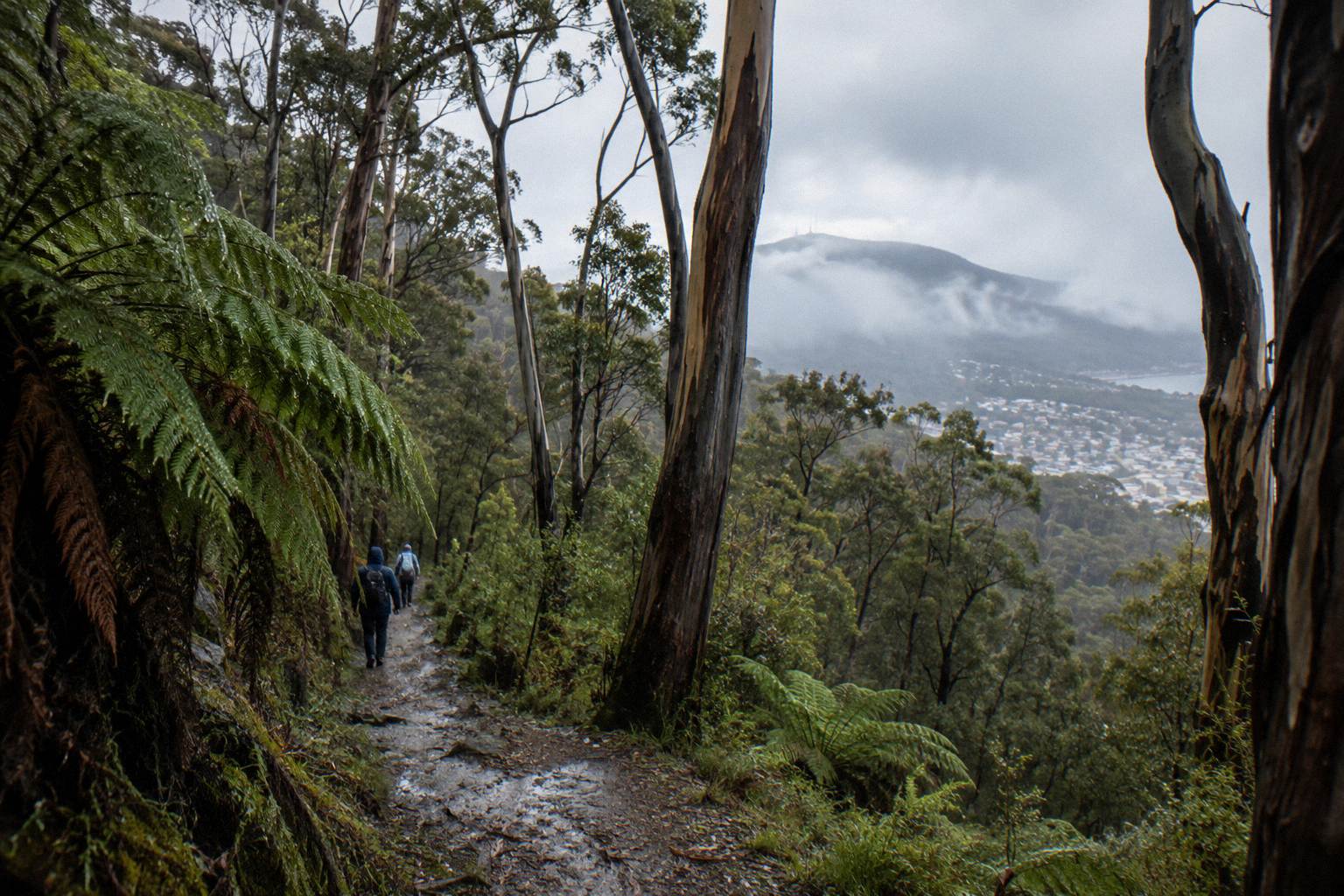
Plan for a summit often 10 to 12 degrees or more colder than the Hobart waterfront, high winds, and the chance of snow in any month. Dress in layers you can shed, bring a windproof and waterproof outer layer, and wear closed shoes you can stand on cold stone in. Wind chill below -20 °C is possible, so pack for a different mountain than the one you boarded the bus in.
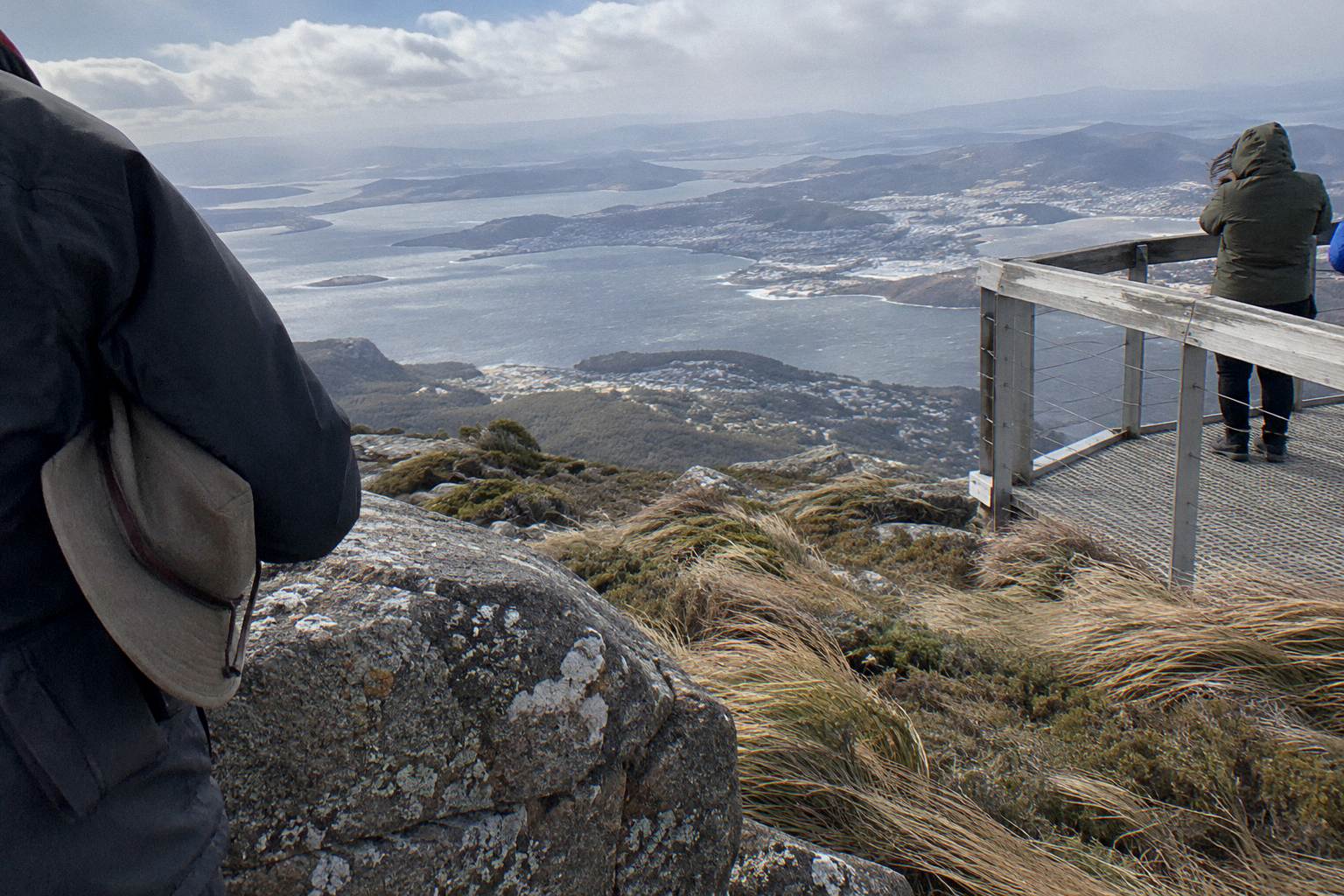
The mistake almost everyone makes with kunanyi / Mount Wellington is dressing for the Hobart they walked around in that morning. The mountain is 1,271 m high, and the Wellington Park Management Trust, which manages the park, states plainly that high winds and temperatures below zero are common at the summit. The difference between the Hobart waterfront and The Pinnacle can be 12 degrees or more. Wind chill below -20 °C is possible.
None of that is a reason to skip the trip. It is a reason to pack for two climates in one morning, which is what the packing advice below is for. Everything below is built from the conditions the official sources state, not from fabric marketing or gear folklore. No operator on this mountain publishes a kit list, so none is given here. Instead it turns each stated condition into a packing decision.
If you want the short version: layers, a windproof and waterproof shell, closed shoes, a warm hat, and gloves. If you want the reasoning behind each of those, plus what changes for a bus tour, a bike descent or a guided walk, read on.
How Much Colder Is The Summit Than Hobart?
The Wellington Park Management Trust says the temperature difference between the Hobart waterfront and The Pinnacle can be 12 degrees or more, and the Explorer Bus operator puts it at about 10 degrees cooler than the city. Written together, the real figure is often 10 to 12 degrees or more colder, never a fixed number, and wind chill below -20 °C is possible.
Two separate sources, one official park body and one operator, describe the same gap from different angles, so treat it as a range rather than a single number. The Trust's safety page is the stronger source, and it carries the harder warning: high winds and temperatures below zero are common at the summit, not occasional.
What does a 10 to 12 degree gap mean in practice for your clothing? If Hobart is a mild 16 degrees on the waterfront, the summit can be sitting around 4 to 6 degrees, before wind. Add a southern ocean wind on an exposed stone platform and the felt temperature drops again. A summer t-shirt day at sea level is a jacket day at 1,271 m, full stop.
The reverse also matters. Because the gap runs both ways, layers beat one thick garment. You want to strip a layer at the start of the descent and put it back on at the top, sometimes twice in one trip. The operator's own phrase for the mountain's behaviour is "four seasons in one day", and that phrasing is a fair description of why a fixed outfit fails here.
One more number puts the ceiling on how bad it can get. Wikipedia's climate table for the Pinnacle, drawing on Bureau of Meteorology data, records sustained wind over 157 km/h. You will not plan an outfit for that, because you will not be standing in it, but it explains why the exposed upper lookouts feel so much harsher than the sheltered lower stops such as The Springs at 720 m.
What The Weather Actually Does Up There
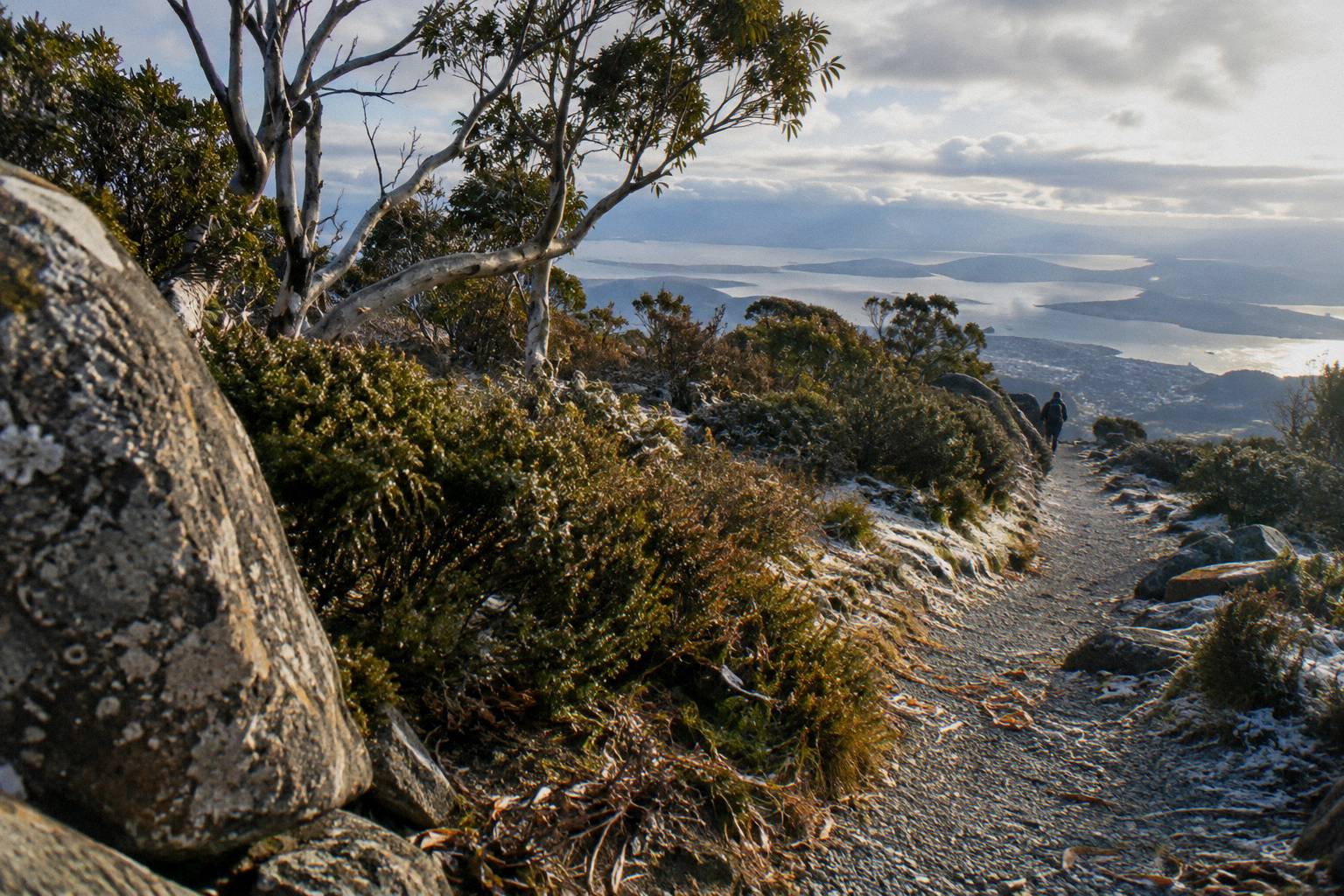
Snow can fall in any month on kunanyi, and is more likely overnight from May to September, while the Trust warns access may be restricted by snow and ice at any time of year, particularly April to September. Mean temperatures at the Pinnacle are 9.5 °C in January and 0.7 °C in July and August, and the summit is often in cloud, so a clear view is never promised.
Those climate figures come from Wikipedia's table for the Pinnacle, covering 1991 to 2020 at 1,260 m, and they are worth reading twice. The warmest month of the year averages 9.5 degrees. That is the warmest. January, peak Australian summer, has a summit mean under ten degrees, and the record low of -9.1 °C was set in September, a spring month. The mountain has never recorded a temperature above 30 °C, with its highest reading 29.8 °C.
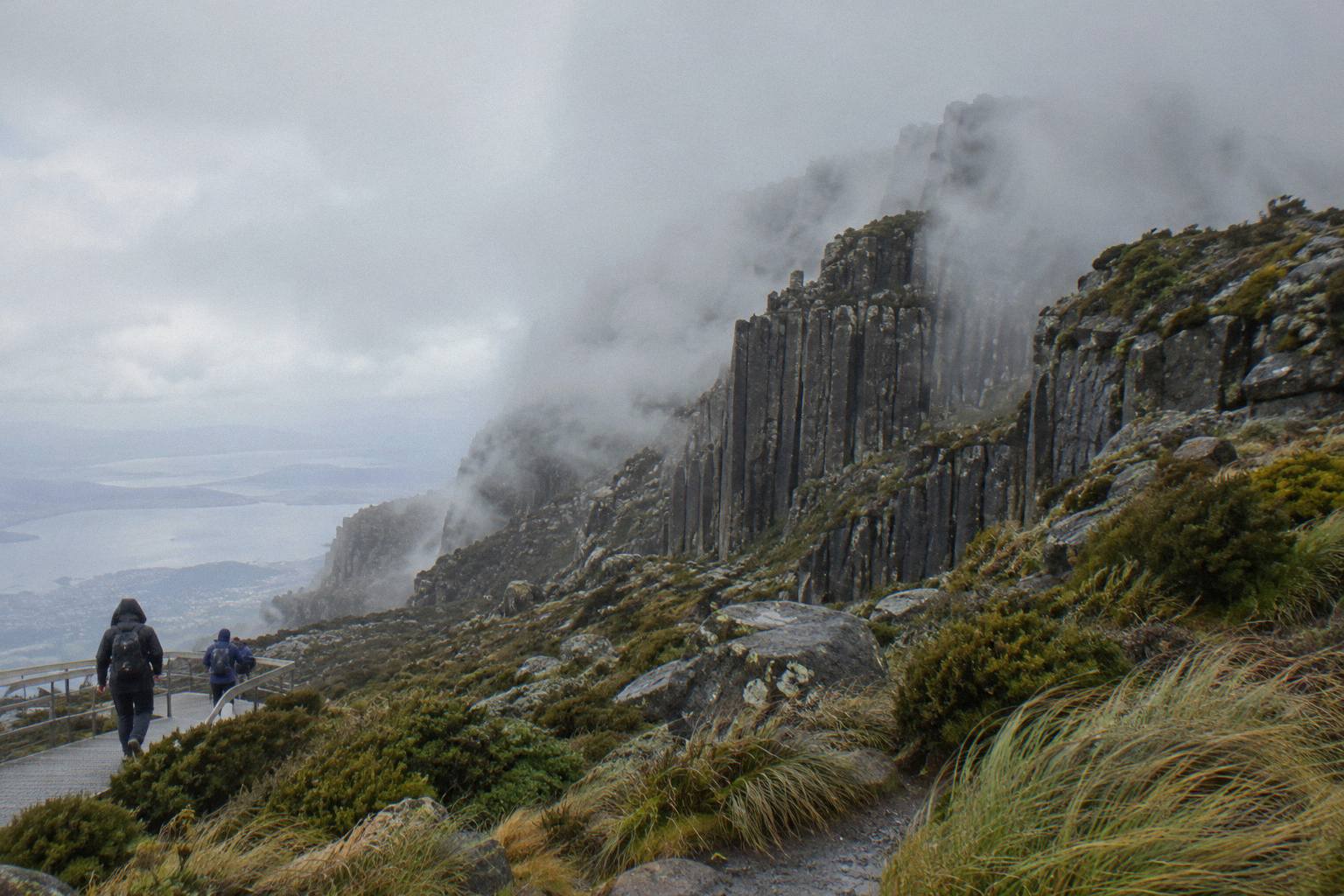
For clothing, the seasonal takeaway is simple: there is no month on this mountain that is reliably warm at the top. A February visit still wants a windproof layer in the bag. A July visit wants the full cold-weather set, gloves and hat included, treated as essentials rather than extras.
For live conditions, the official Bureau of Meteorology station is Kunanyi / Mount Wellington, station 094087, at the Bureau's live observations page. Check it the morning you go. One quirk worth knowing: the station's wind and feels-like readings can be unavailable when ice builds up on the instruments, so a missing wind figure does not mean a calm summit.
The cloud point matters for warmth as well as views. A summit in cloud is a summit without the sun's help, and many visitors report the temperature falling further as the mist closes in. If the forecast shows low cloud, your warm layer earns its place even on a mild day.
Choosing how you get up also shapes what you wear, since some formats keep you indoors between lookouts and others put you outside for hours. These three options cover the range.
The Layering Checklist For Any Summit Day
Dress in three layers: a warm base you would happily wear in a Hobart winter, an insulating mid-layer you can remove in the city, and a windproof and waterproof outer shell for the summit platform. Add a warm hat and gloves, because no operator supplies clothing, and wear closed shoes, since the summit lookouts are exposed stone.
The three-layer structure comes straight from the stated conditions. The base handles the city temperature at sea level. The mid-layer covers the 10 to 12 degree gap on the way up. The shell handles the high winds the Trust describes as common, plus the rain or snow that can arrive in any month. Remove or add layers as the bus climbs, and you have matched the mountain instead of fighting it.
Here is the condition-to-clothing table, built only from what the official sources state. Where a condition is an operator claim rather than a Trust one, the table says so.
| Stated condition | Source | What to plan for |
|---|---|---|
| 10 to 12 degrees or more colder than the waterfront | Trust and Explorer Bus operator | A mid-layer you can add and remove as the vehicle climbs |
| High winds common at the summit | Trust | A windproof outer shell, a hat that stays on, hair tied back for lookouts |
| Temperatures below zero common | Trust | Warm base layer, gloves, closed shoes at any time of year |
| Wind chill below -20 °C possible | Trust | Treat hat and gloves as essential in the colder months, not optional |
| Snow in any month, likelier overnight May to September | Operator | Waterproof outer layer in the bag even in summer |
| Summit often in cloud | Trust | A layer for the sun disappearing, plus nothing white if you want photos |
| Four seasons in one day | Explorer Bus operator | Layers over one thick garment, so you can adjust repeatedly |
A note on what this checklist deliberately leaves out. No operator on the mountain publishes a kit list, no fabric is recommended here, and no boot brand is endorsed. Any page telling you a specific fabric weight or boot model is "required" for this mountain is writing marketing, not conditions. Stick to the layer logic and your own comfortable cold-weather clothes.
The hat point deserves its own sentence. The Trust's wind figures are the strongest on the mountain, and an uncovered head in a strong wind on a stone platform at 1,271 m is the fastest way to ruin an otherwise well-planned trip. If you pack one item beyond the obvious, make it the hat.
What To Wear For Snow And Ice Days
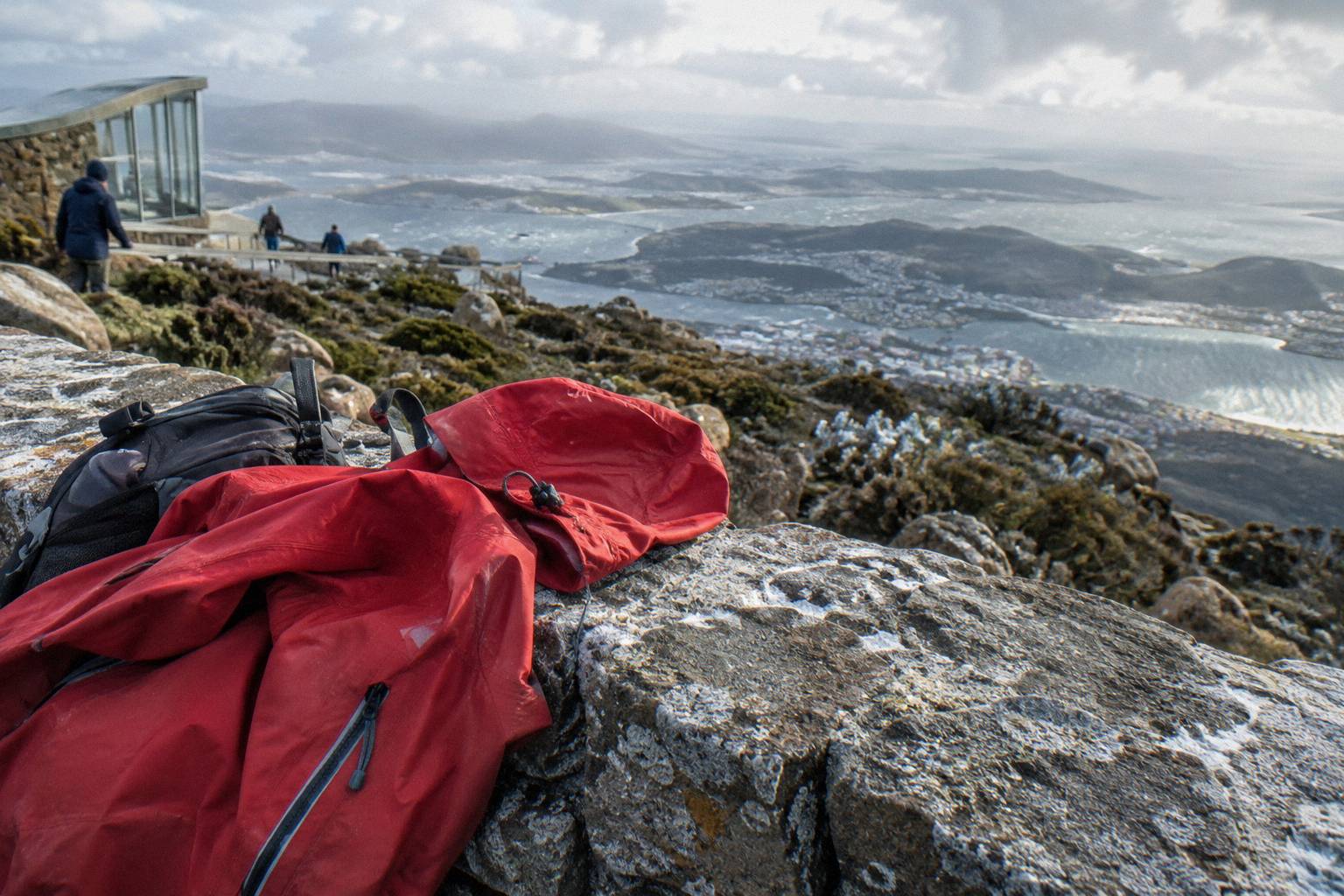
Pack full waterproofs, gloves and a warm hat, and expect cold stone underfoot, because snow can fall in any month and the Trust warns of ice restricting access particularly from April to September. Do not plan snow play or promise yourself a white summit: snow is never scheduled, and no tour guarantees reaching The Pinnacle when the road is closed.
Snow transforms the clothing question, because it combines all three stated problems at once: cold, wind and moisture. Wet clothes in a strong wind lose heat faster than dry ones, which is why the waterproof shell earns its place on any day with snow forecast. Jeans deserve a special mention, in the negative: soaked denim stays wet and cold for the whole descent.
The road statistics explain how often snow shapes the visit. Pinnacle Road closed 95 nights for snow or ice across 2025-26, with the most closure nights in August at 22, then October at 19, and July and September at 18 each. On 14 days the summit was not reachable by private vehicle at all. The Trust's data shows the pattern without promising it: those are the recorded months, and snow outside them is possible in any month.
There is one exception worth knowing if you book a bus tour for a snow day. The Trust describes the Explorer Bus as the only licensed operator able to take visitors up when the road is closed for snow, and the Hobart Shuttle Hop-On Hop-Off Summit Pass notes that on snow days when the gates close to the public, the tour runs through that same approved operator. Even then, the operator's own snow-tour wording says it does not guarantee reaching The Pinnacle.
For footwear on snow and ice days, think about grip and warmth rather than fashion. The summit paths and lookouts are exposed surfaces, and the observation shelter provides walls, not heating. Closed, water-resistant shoes with a decent sole are the recommendation from the stated conditions alone.
Finally, a practical check before you leave. The road status line is 03 6238 2711, listed by the Trust on its safety page, and the road also shuts for annual maintenance each November. A phone call or a status check the morning of your trip tells you whether you are dressing for a summit visit or a lower-mountain one, and the lower mountain in snow is still a fine morning out.
Footwear, Gloves And The Little Things
Wear closed shoes with a sole that grips, because the summit lookouts are exposed stone and the paths can be damp or icy, and bring gloves because the Trust states wind chill below -20 °C is possible. Sunglasses earn a place too, since the summit sits above much of the haze and low-angle light off snow or water is harsh.
Footwear is the item visitors most often get wrong, usually by wearing what suited the city morning: sandals, canvas shoes, thin-soled trainers. The summit is not a hike by default, and a bus tour keeps the walking short, but the surfaces are hard, cold and sometimes wet. If you plan any time on the tracks rather than the platform, the case for proper walking shoes strengthens further.
Gloves matter more than their size suggests. Fingers on a stone railing in a strong wind at below-zero temperatures go numb quickly, and numb fingers cannot work a camera phone, which is the one activity every visitor plans at the top. A thin pair that lets you use a touchscreen beats a thick pair left in the bag, but any pair beats none.
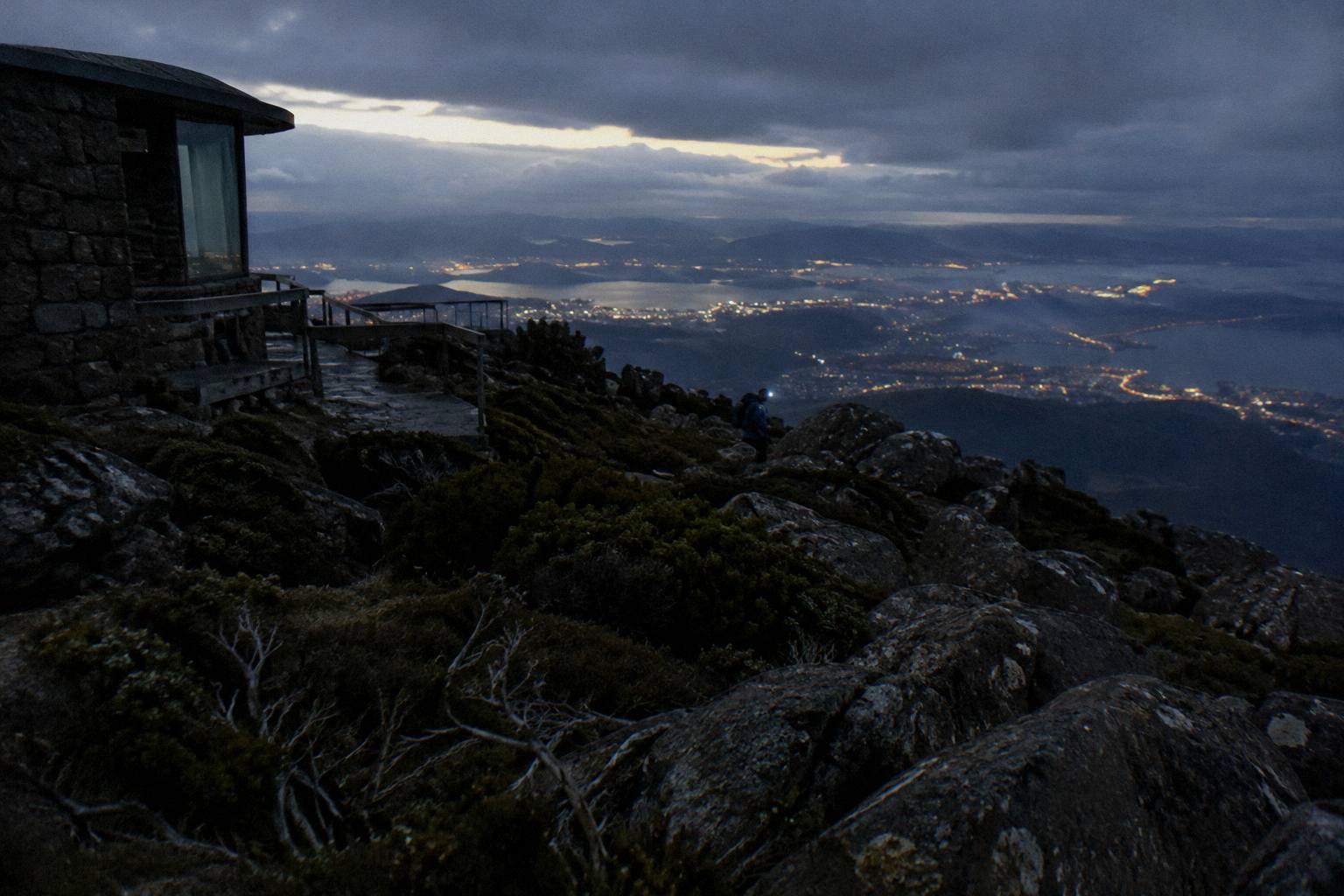
The little-things list is short and every item traces to a stated condition. Sunglasses for the glare. A spare layer for the sun disappearing into cloud. Something to tie back long hair for the windy lookouts. A water bottle, since there is no cafe at the summit, the only food outlet on the mountain being the Lost Freight Cafe at The Springs, and no food or drink is included on any of the tours here.
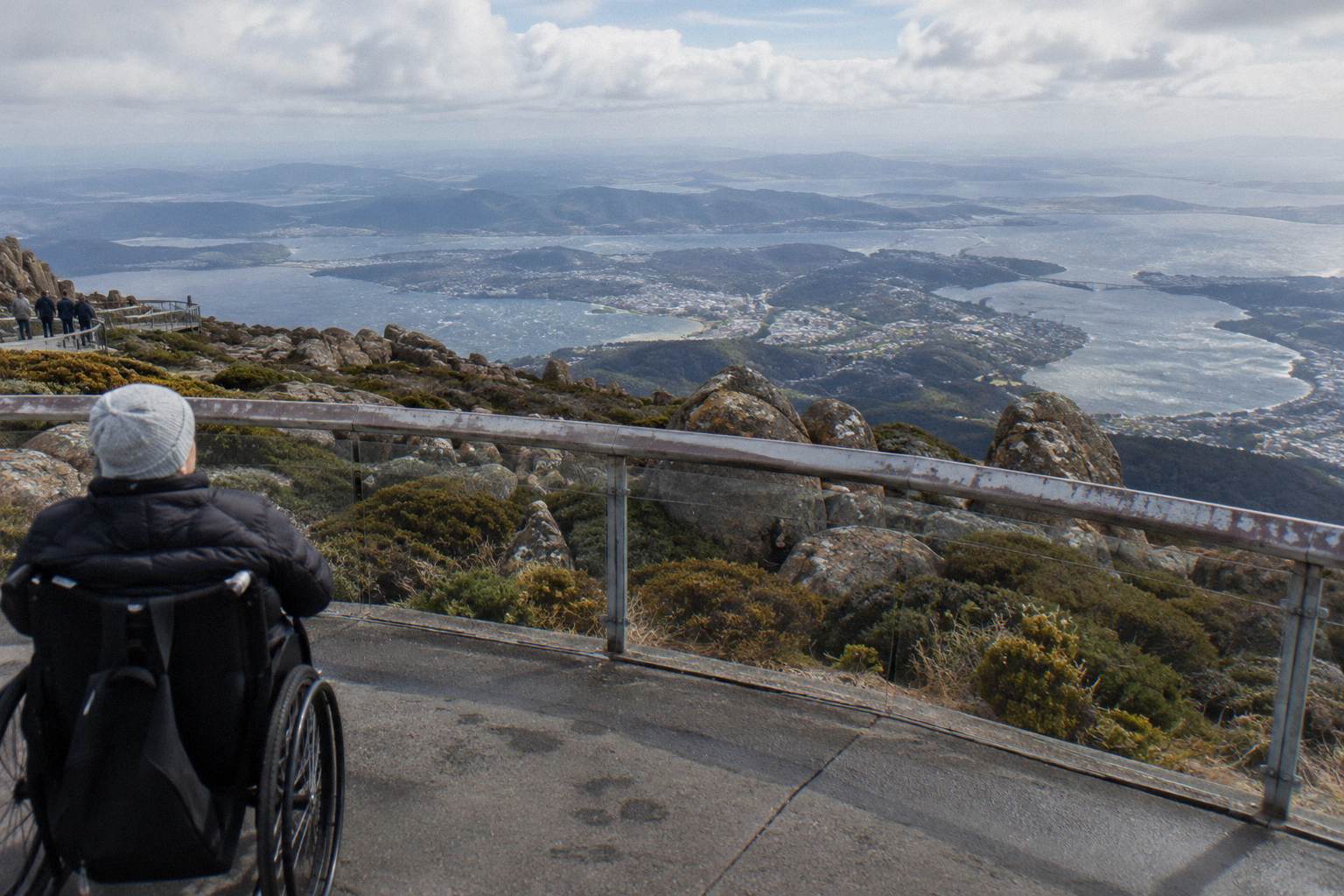
One facility note that shapes your timing: the summit toilets open 7am to 10pm from 1 September to 30 April, and 7am to 5.30pm from 1 May to 31 August. The official pages do not say whether the toilets, shelter or paths suit wheelchairs or strollers at the summit, so rely on each tour's own accessibility line rather than assuming.
What To Wear On A Guided Bus Or Minibus Tour
On a guided vehicle tour you need the same layers as any summit visit, but you can keep the warm items on the bus between stops, so the shell, hat and gloves live in a day bag. The Ultimate Experience Guided Summit Tour runs 2 hours 45 minutes with full commentary, picks up from selected hotels, and its itinerary may vary due to road and weather conditions.
The bus formats change the clothing maths in one useful way: you have a warm vehicle as a base. You are exposed to the summit conditions for the lookout portion of the trip, then back inside. That argues for the same three layers plus shell, but carried rather than worn, so you are comfortable on the drive and armoured at the top.
The Ultimate Experience Guided Summit Tour, run by Experience Tasmania Gray Line Day Tours, costs from A$65 per person, is rated 4.6 from 90 reviews, and takes up to 48 guests. It picks up from selected hotels or at Brooke Street Pier, with hotel drop-off not included. Food and drink are not included either, so any snacks ride with your layers.
The small-group format shifts things slightly. The Pinnacle 2-Hour Small-Group Tour from Island of Tasmania Tours, from A$55 per person, runs two hours with a group capped at 11 and a minimum age of 8, and includes 30 minutes of free time at the summit. Thirty free minutes on the mountain top, rather than a quick lookout stop, means you feel the full wind and cold without the bus waiting with its door open. That format makes the hat and gloves non-negotiable.
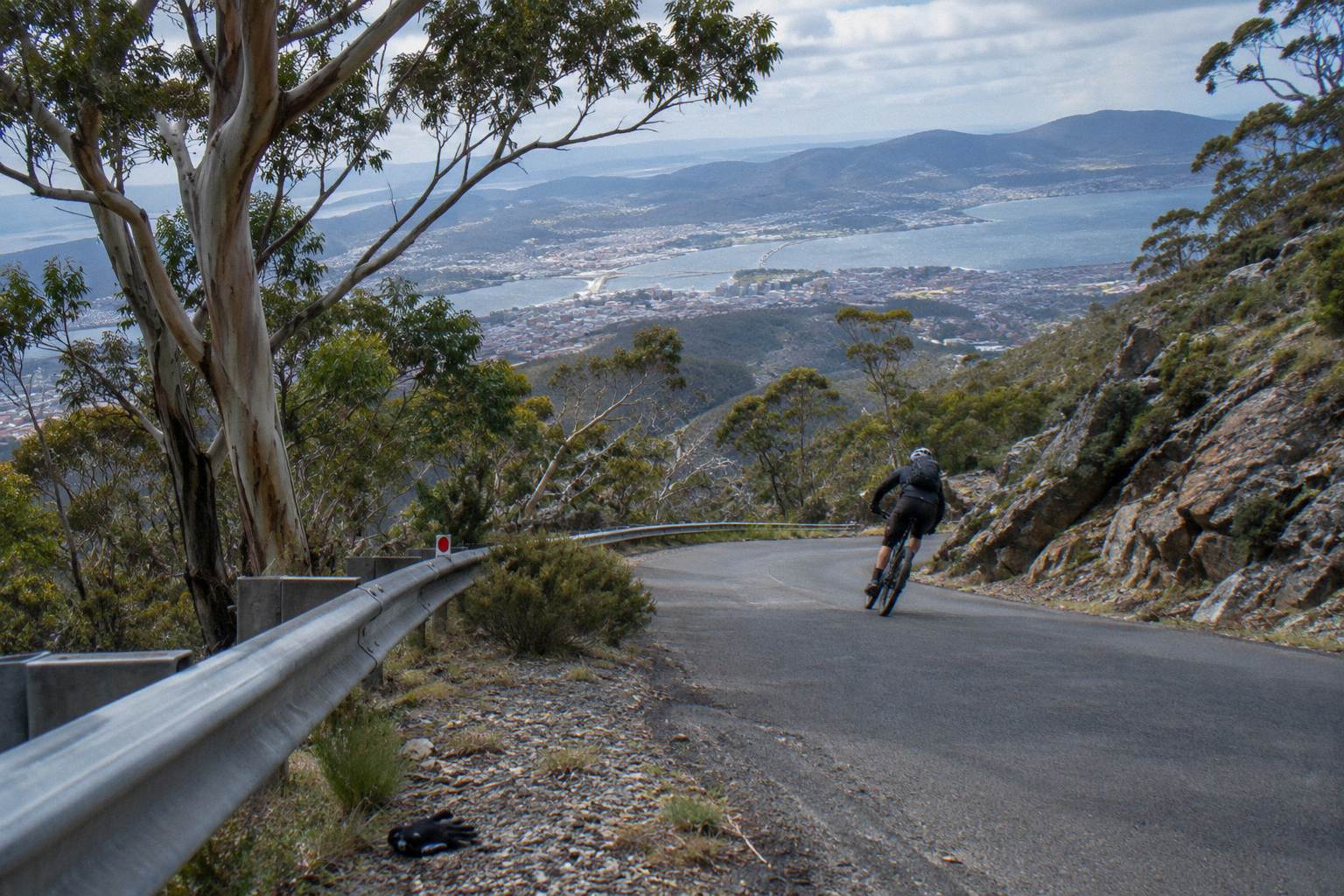
How long you spend outside is the real variable between these formats, so here is how the vehicle options compare on exposure time and the clothing weight that follows from it.
| Trip format | Duration | Time exposed to summit conditions | Clothing weight to plan |
|---|---|---|---|
| Ultimate Experience Guided Summit Tour | 2 hours 45 minutes | Lookout stops between commentary, inside the vehicle in between | Full layers carried in a day bag, shell ready |
| Pinnacle 2-Hour Small-Group Tour | 2 hours | Includes 30 minutes of free time at the summit | Full layers, hat and gloves worn or at hand, not buried |
| Explorer Bus Return Tour | 2.5 hours | 30 minutes at the summit, plus any hop-off stops you choose | Full layers, plus extras if hopping off at The Springs or The Chalet |
One planning note for families: the small-group minibus tours set a minimum age of 8, and children feel cold faster than adults on a windy platform, so a spare layer for kids weighs little. For more on ages and formats, see the site's guide to mountain trips with children.
What To Wear On The Explorer Bus
Wear the standard three layers plus a windproof shell, and keep them accessible rather than buried, because the Explorer Bus is hop-on hop-off: your pass is valid all day and you may step off at stops like The Springs or The Chalet, where conditions differ from the summit and you wait outside for the next bus.
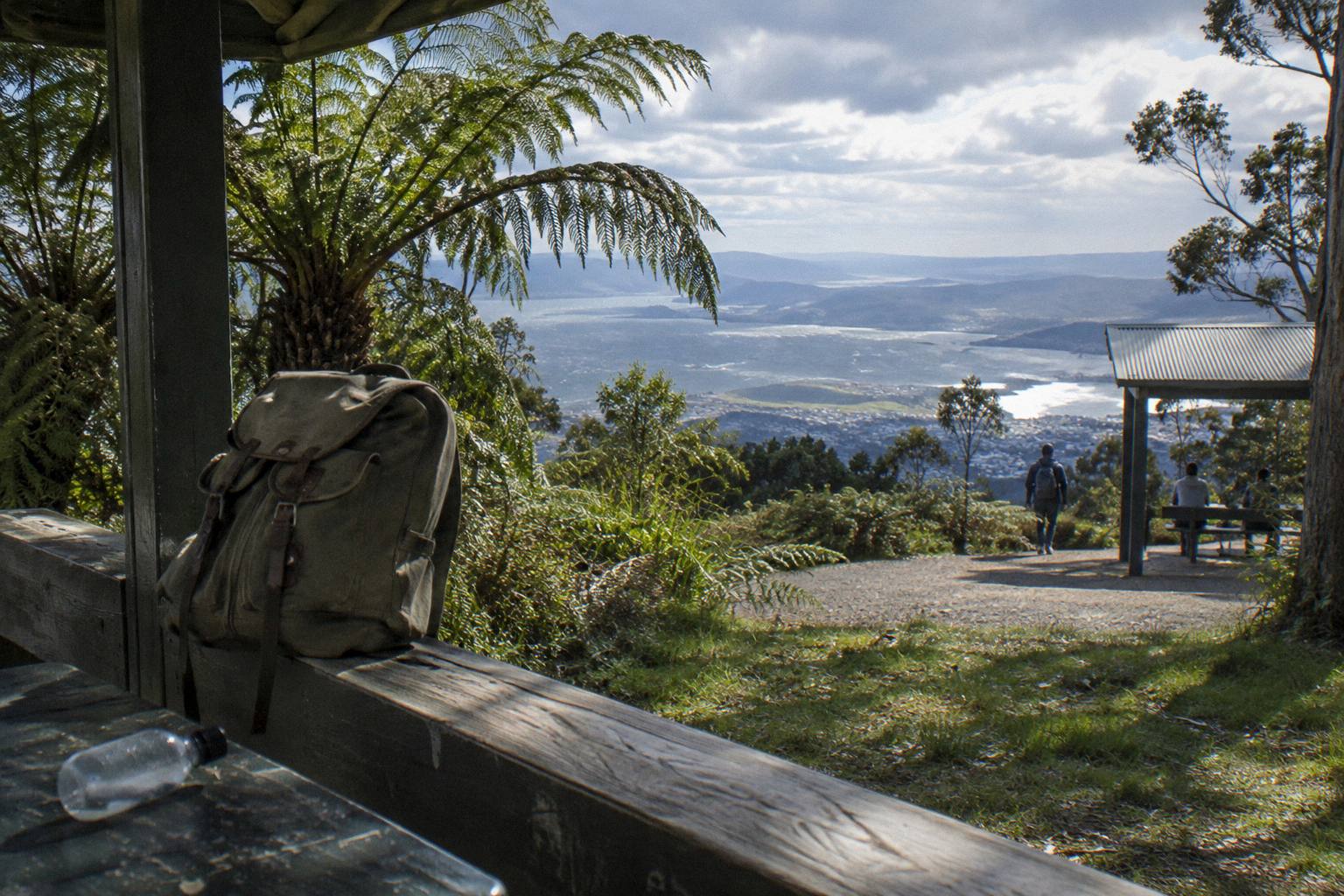
The hop-on hop-off structure is the clothing story here. Unlike a fixed guided tour, you can spend real time standing at intermediate stops. The Springs at 720 m is sheltered, with a picnic area and the Springs Lookout, and it sits below the harshest of the summit wind. The Pinnacle is the full 1,271 m experience. One outfit has to serve both, which the layer system does.
The Explorer Bus Return Tour from Red Decker Company costs from A$55 per person and carries the most reviews on the booking pages, 4.8 from 1,081 reviews, over 2.5 hours. It is wheelchair accessible per the booking pages, operates in all weather conditions, and the booking page asks travellers to check the weather before going, which is good practice. Free Wi-Fi onboard does nothing for cold hands, but the commentary fills the climb nicely.
Two practical notes specific to this service. The Explorer Bus summer timetable runs 1 October to 30 April and the winter timetable 1 May to 30 September, with the 3.30pm departure running in summer only, so your waiting-around time in the cold varies with the season. And if you are carrying a bike, bike freight is $10 per bike and must be booked no later than 30 minutes prior to departure.
For a deeper look at the service and its five hop-on stops from Fern Tree Park to The Pinnacle, the site's Explorer Bus guide covers tickets, stops and timing in full.
What To Wear On A Bike Descent
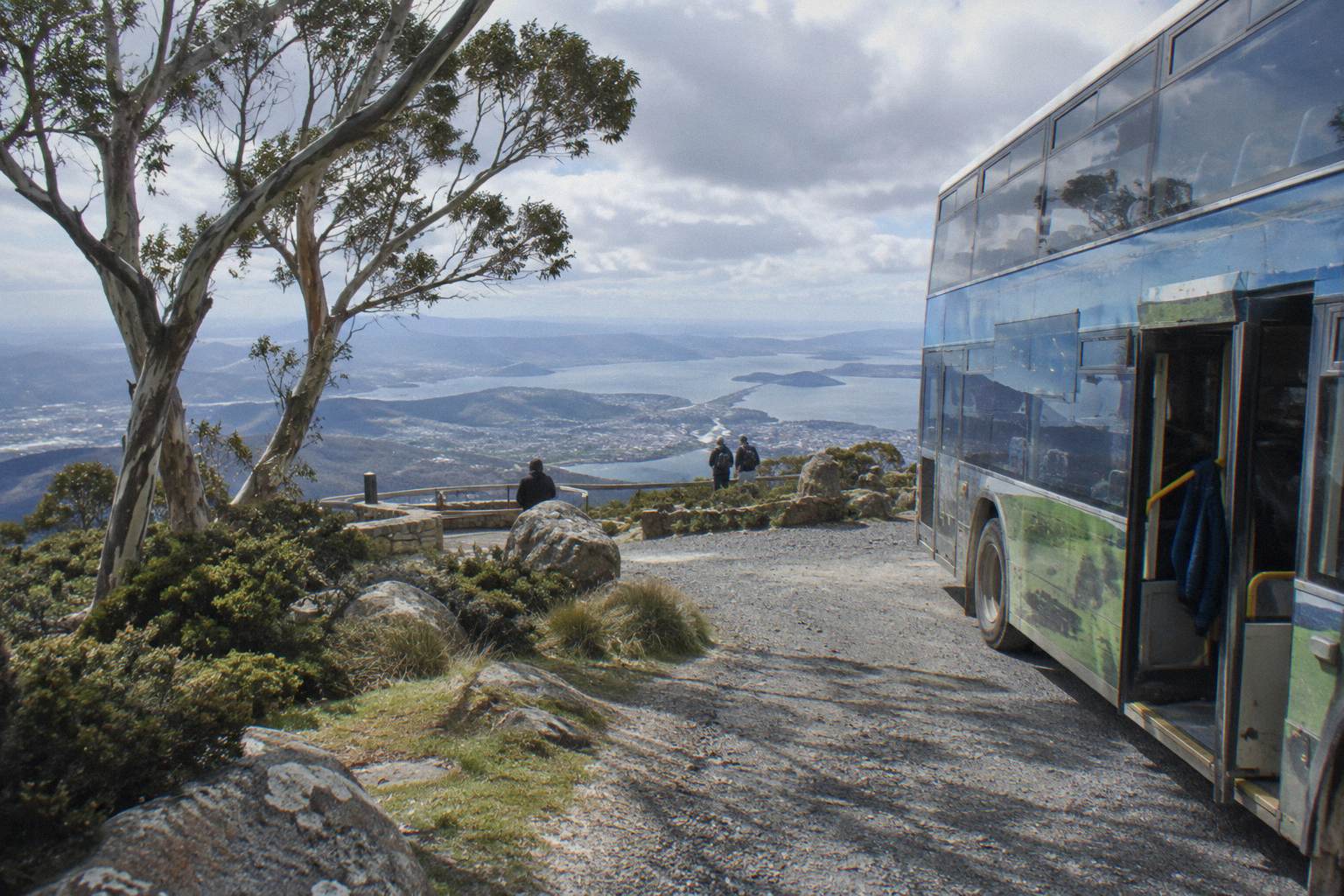
On the Summit Descent Bike Tour, the bike, cycling helmet and riding gloves are included, so you supply warm, wind-resistant clothing for a 4 hour trip: a 30 minute bus transfer up, a 6 km descent of the summit road, then a 12 km rainforest trail ride with guides riding alongside. Basic bike handling skills and a basic fitness level are needed.
The included kit is the key fact. You do not bring a helmet or gloves, they come with the tour, along with a trail briefing and bike introduction before you roll. What you do bring is clothing for three different micro-climates in one four-hour block: the cold summit at the start, wind-chill on the road descent, and the sheltered, damper rainforest trail after.
Tasmanian Mountain Bike Adventures runs the trip from its shop at 466 Macquarie Street, South Hobart, in groups of up to 10, from A$179 per person. The stated limits matter for fit as much as safety: maximum rider weight 120 kg, and a rider-height requirement the two booking pages state differently, one excluding riders under 120 cm and the other setting a minimum height of 125 cm. Confirm your rider's height with the operator before booking rather than trusting either page.
Clothing specifics for this format follow from its geometry. Descending creates its own wind on top of the mountain's, so a fitted windproof layer beats a flapping jacket, and gloves that work on brake levers matter even though riding gloves are provided, as the included pair is a cycling glove rather than an insulated one. Eye protection helps on the road section. Food and drink are not included, so carry what you will want for four hours.
Wet-weather planning is worth a sentence of its own. The rainforest trail is exactly that, a rainforest, and rain there is part of the deal rather than a failure of luck. A light waterproof you can ride in turns a soggy trail into a normal one.
What To Wear On A Guided Walk
For the Morning Guided Walking Tour, dress for a 4 hour trip that combines minibus travel with an easy guided nature walk, meaning proper walking shoes rather than city shoes, and the full layer system with shell, since you will be outside on tracks for a substantial part of the morning in whatever the mountain serves up.
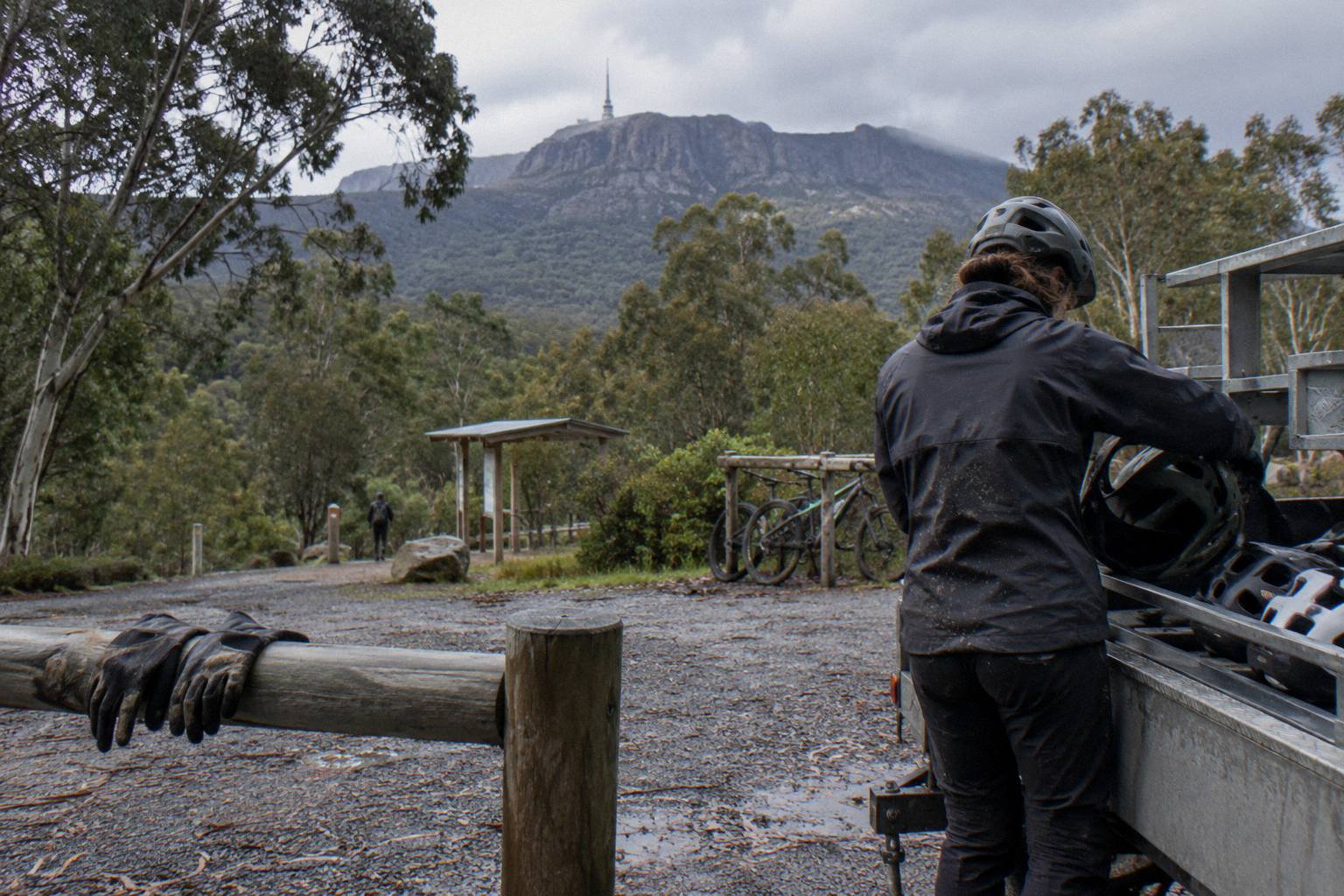
Island of Tasmania Tours runs the walk from 20 Davey Street, outside the Tasmanian Travel and Information Centre, in groups of up to 10 with a university-trained local guide, from A$85 per person. The minimum age is 8, and the tour is not suitable for children under 8, people with mobility impairments or unaccompanied minors. The easy nature walk and the lookouts for photography are the draw, and both put you on the mountain's surfaces rather than behind glass.
Walking changes footwear from advisable to important. An easy walk is still a walk on mountain tracks, which the Trust's pages describe as shared with bikes and affected by the same weather as everything else. Shoes with grip and some water resistance serve you from the first stop to the last lookout, and a spare warm layer in the day bag covers the stops where you stand still to listen, which are the coldest moments of any guided walk.
The morning timing is a small clothing factor too. Early starts mean you board before the day warms and often reach the higher stops before the sun has done any work. The site's guide to choosing the best season for a summit trip covers how the time of year shifts the whole packing question.
Dressing Children And Older Travellers For The Summit
Children need the same layers as adults plus a spare, since the tours set a minimum age of 8 for the small-group and walking formats, and older travellers should weight the kit toward wind protection and warm footwear, since the Ultimate Experience tour's booking page lists it as not suitable for people with mobility impairments and not wheelchair accessible.
The minimum age of 8 on the Island of Tasmania Tours formats means the youngest riders on this mountain are school-age, but school-age children on a cold stone platform still lose heat faster than the adults beside them. A spare base layer weighs almost nothing and solves the two problems children actually have on summits: getting damp, and refusing to put on the jacket until it is too late.
Older travellers should match the format to their comfort with steps, uneven stone and wind. The booking pages mark the Explorer Bus formats wheelchair accessible, while the Ultimate Experience Guided Summit Tour is listed as not wheelchair accessible and not suitable for people with mobility impairments. The site's guide to accessible ways to reach the summit works through those options in detail.
The format also sets how long you are exposed. A two-hour minibus trip with 30 minutes of summit free time is a different cold exposure than a four-hour hop-on hop-off day. If the people in your group feel cold quickly, choose the shorter, more sheltered formats and pack the full kit anyway.
The Full Packing Checklist, In One Table
For any summit trip, pack a warm base layer, a removable mid-layer, a windproof and waterproof shell, a warm hat, gloves, closed gripping shoes and sunglasses, plus water and any food, since no tour includes food or drink and the only cafe on the mountain is at The Springs, not the summit.
This table condenses the whole page. Each row traces back to a stated condition from the Trust, the Bureau or the operator pages.
| Item | Why it earns its place | Needed for every format? |
|---|---|---|
| Warm base layer | Summit mean is 0.7 °C in July and August, 9.5 °C in January | Yes |
| Removable mid-layer | The gap to the city is often 10 to 12 degrees or more | Yes |
| Windproof, waterproof shell | High winds are common, snow can fall in any month | Yes |
| Warm hat | Wind chill below -20 °C is possible per the Trust | Yes in colder months, wise always |
| Gloves | Below-zero temperatures are common at the summit | Yes in colder months, wise always |
| Closed shoes with grip | Exposed stone lookouts, damp or icy paths | Yes |
| Sunglasses | High glare above the haze, harsh light off snow and water | Yes |
| Water and snacks | No cafe at the summit, no tour includes food or drink | Yes |
One thing to leave out: umbrellas. In winds the Trust describes as common and occasionally extreme, an umbrella is a liability on an exposed platform, and the shell layer does its job better. Save the space for the spare layer instead.
For a wider view of conditions and timing before you finalise your plans, the site's guide to summit weather and your tour connects the same official figures to the question of when to go.
Whatever you choose, Mount Wellington Tours covers every format from a 50-minute one-way ride to a nine-hour day trip, each with free cancellation up to 24 hours before the start, so a doubtful forecast never locks you in.
Common Questions About What To Wear On A Summit Tour
How Much Colder Is The Summit Of Kunanyi / Mount Wellington Than Hobart?
Often 10 to 12 degrees or more colder. The Trust says the difference between the Hobart waterfront and The Pinnacle can be 12 degrees or more, and the Explorer Bus operator says about 10 degrees cooler than the city. Wind chill below -20 °C is possible.
Do I Need A Jacket In Summer?
Yes. Mean temperature at the Pinnacle in January, the warmest month, is 9.5 °C, high winds are common, and snow can fall in any month. Bring a windproof and waterproof layer whenever you go.
Do I Need Special Shoes For A Summit Tour?
Closed shoes with a decent sole are the recommendation from the stated conditions. The lookouts are exposed stone and paths can be damp or icy. For the guided walking tour and the bike descent, proper walking or riding footwear matters more.
Does Any Tour Provide Warm Clothing?
No operator supplies clothing. The Summit Descent Bike Tour includes the bike, cycling helmet and riding gloves, but every other layer is yours. No operator publishes a kit list, so pack from the stated conditions.
What Should Children Wear On The Mountain?
The same layers as adults plus a spare base layer, since children lose heat faster standing still on a windy platform. The small-group minibus and walking tours set a minimum age of 8, and the family formats carry the same cancellation terms.
Can Snow Ruin My Clothing Plans?
Snow can fall in any month and is more likely overnight from May to September, and Pinnacle Road closed 95 nights for snow or ice in 2025-26. Pack waterproofs, but check the road status on 03 6238 2711 the morning you go, since no tour guarantees reaching The Pinnacle when the road closes.