Best Season For A Summit Trip: Month By Month
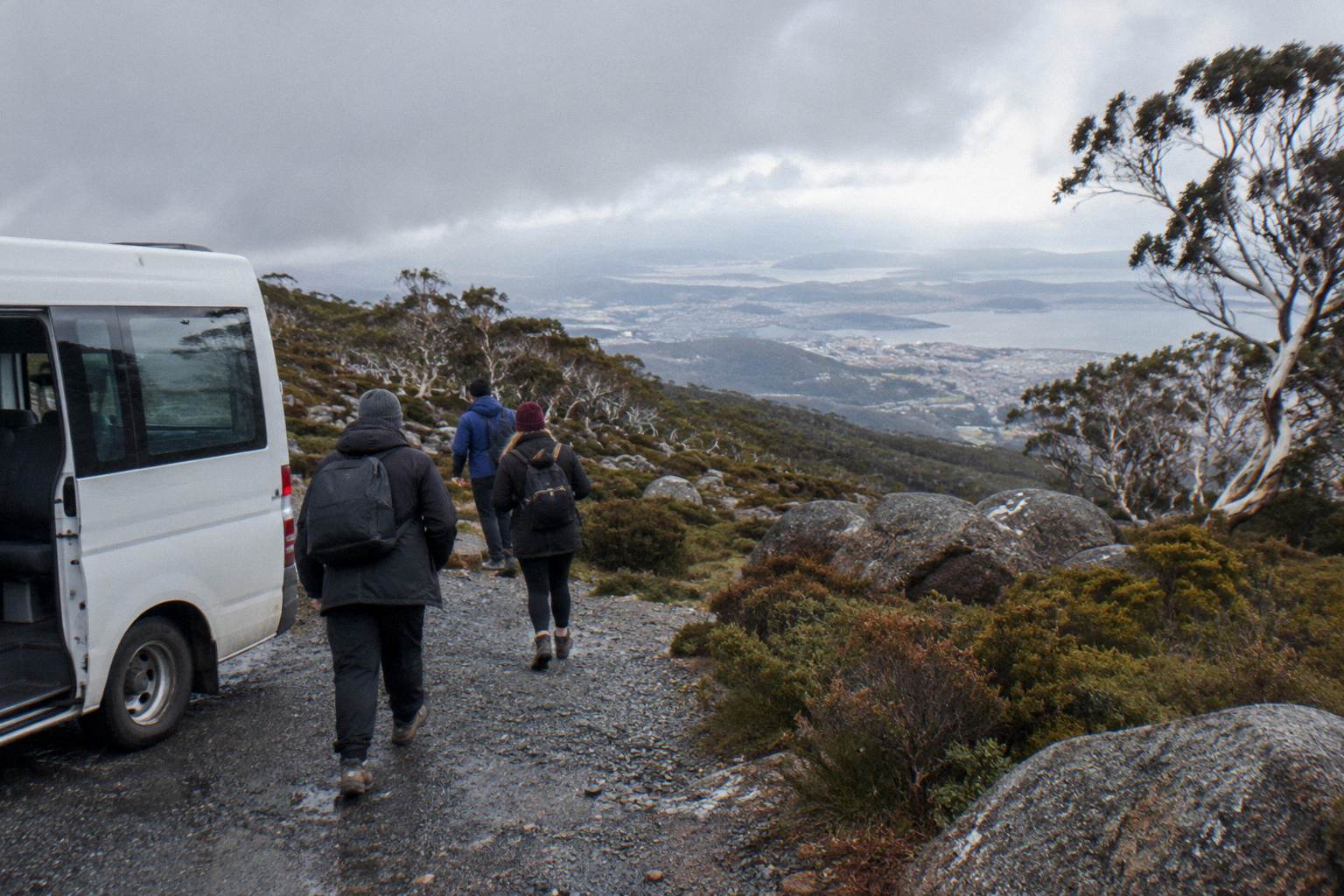
There is no single best month for kunanyi / Mount Wellington. Snow can fall in any month, the summit is often in cloud, and the road up closes without warning. What changes through the year is which risk you are managing, and the seasons are worked through below so you can pick the month and the tour format that suit your trip.
Short answer
Snow is possible in any month but most likely overnight from May to September, when Pinnacle Road closed 95 nights for snow or ice across 2025-26. Summer runs the fuller bus timetable. The summit sits roughly 10 to 12 degrees or more colder than the Hobart waterfront. Choose your season by which risk matters to you, not by a promised view.
The plain answer to "when should I go up kunanyi / Mount Wellington" is that no month is safe from snow and no month guarantees a view. The mountain stands 1,271 metres over a sea-level city, the Trust that manages Wellington Park warns that access may be restricted by snow and ice at any time of year, particularly April to September, and the summit is often in cloud regardless of the weather in Hobart. What actually changes through the year is the balance of risks: closure nights, daylight, crowds on snow days, waterfalls, and which tour format makes sense in each. Those are worked through below, month by month, on published figures only.
What Each Season Is Really Like On Kunanyi
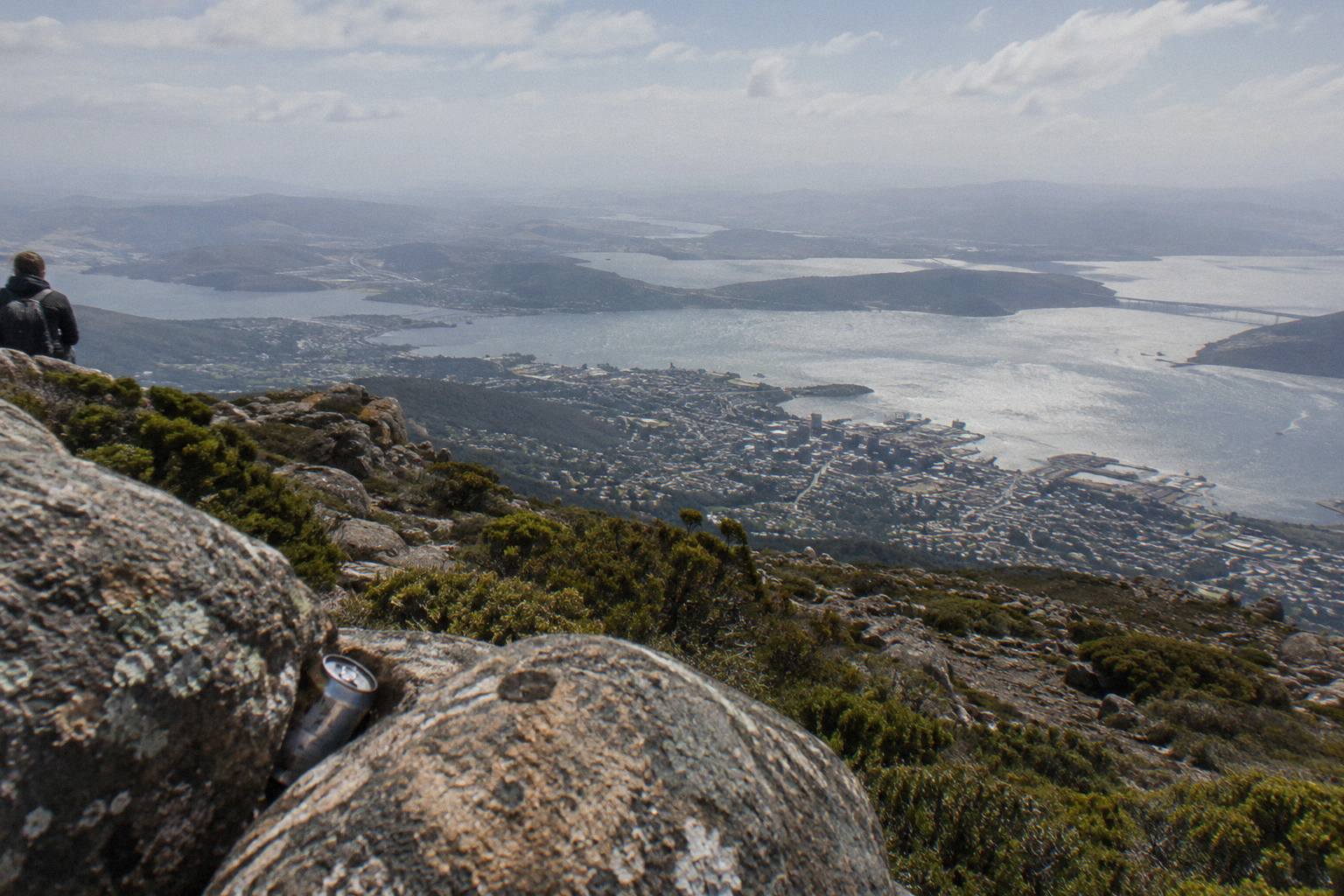
Every season delivers all four of the mountain's weathers on the same day, and the only fixed pattern is that snow is likelier overnight from May to September. The Explorer Bus operator describes the summit as about 10 degrees cooler than the city and prone to four seasons in one day; the Trust puts the gap at 12 degrees or more. Mean temperatures at the Pinnacle run from 9.5 °C in January to 0.7 °C in July.
Those two figures, 9.5 and 0.7, are the climate averages from the Wikipedia table for the Pinnacle, which covers 1991 to 2020 at 1,260 metres. Averages understate the day-to-day swings. The same record shows a low of -9.1 °C, a highest-ever reading of 29.8 °C, and a sustained wind measurement above 157 km/h. High winds and temperatures below zero are, in the Trust's own words, common at the summit, and wind chill can drop below -20 °C. None of this is a reason to stay in the city; it is a reason to dress for a different mountain than the one you left at the waterfront, which we cover in detail in what to wear on a summit tour.
The practical consequence of the temperature gap is that your Hobart morning is not a forecast for the top. The Bureau of Meteorology runs a live station at the summit itself, station 094087, and its current observations are the best pre-trip check: the Kunanyi / Mount Wellington station page. One quirk the Bureau notes is that wind and feels-like readings can drop out when ice builds up on the equipment, which tells you something about the conditions in which that happens.
The other fixed fact of the mountain is that the road up, Pinnacle Road, is the only public road into the park. It is sealed and passable in a conventional vehicle, but it is narrow and winding and shared with bikes, pedestrians and tour buses, and the City of Hobart closes it whenever ice or snow is present, sometimes before the snow arrives. Season planning on this mountain is therefore mostly closure planning, which is the next section.
When The Road Closes: The Numbers That Shape The Seasons
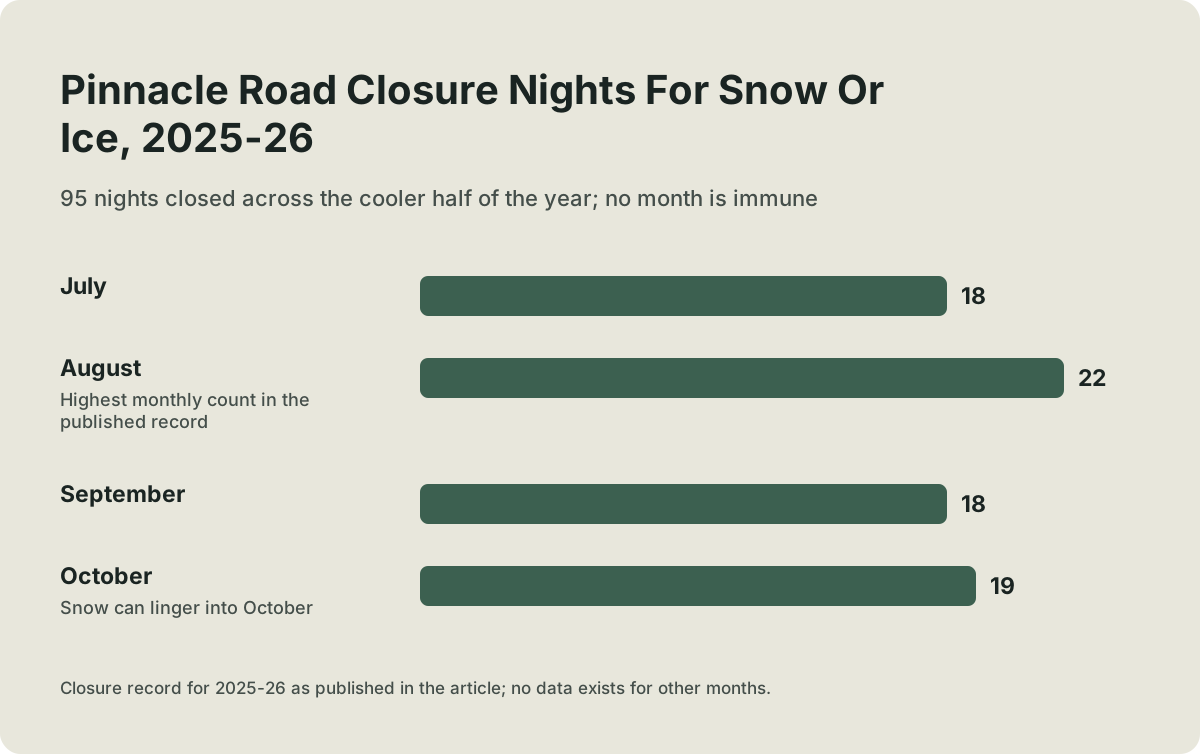
Pinnacle Road closed on 95 nights for snow or ice across 2025-26, and the closures were spread across the cooler half of the year: 22 nights in August, 19 in October, 18 in July and 18 in September. Overnight closures ran past 9.30am on 46 days, and the summit was not reachable by private vehicle on 14 days. Those four months carry the highest closure risk; no month is immune.
That record matters because a closure does not always mean the summit is unreachable. Vehicle access to The Springs at 720 metres was possible on all but one of the closure days, so a shut upper road often still leaves the lower mountain open. And on snow days one bus keeps running: the Trust describes the Explorer Bus as the only licensed operator able to take visitors up when the road is closed for snow. We go deeper into that in what happens when snow closes the mountain.
| Month | Closure nights for snow or ice, 2025-26 |
|---|---|
| July | 18 |
| August | 22 |
| September | 18 |
| October | 19 |
Only those four months are published; no figures exist for the rest of the year, so none are invented here. Two further closures sit outside the snow record. The road shuts for annual maintenance every November, with no vehicle access to the summit and no pedestrians or cyclists on the road while the works run, and it also closes for events from time to time. Before any summit day, the two official status sources are the City of Hobart Pinnacle Road status page and the Pinnacle Road Information Line, 03 6238 2711: the Trust's road and track updates page carries the current details.
Snow itself is the draw for many visitors, and it is a real possibility rather than a promise: the operator notes snow is more likely overnight from May to September but can fall in any month. If your whole reason for going up is snow play, plan a flexible window in that period, watch the forecast, and be ready for the summit to be shut on exactly the days the snow is best.
The tour formats respond differently to a closure. The Explorer Bus keeps its licence to run beyond the closed gates on snow days, so its tickets carry the least closure risk. Coach and minibus tours list itineraries that may vary with road and weather conditions, which in practice means a changed route or a lower turning point. Before you commit to a date, the format choice is worth as much thought as the month, and the next section maps one onto the other.
Which Tour Format Suits Which Season
In the high-risk snow months, the Explorer Bus Return Tour, from A$55 per person and rated 4.8 from 1,081 reviews over 2.5 hours, is the operator the Trust credits as the only licensed service able to take visitors up when the road is closed, though reaching The Pinnacle on snow days is not guaranteed.
The third common format is the small minibus. The Pinnacle 2-Hour Small-Group Tour, from A$55 per person for 2 hours with a group capped at 11, suits travellers who want a university-trained local guide and a tighter group, and it offers an optional drop-off at the cruise ship terminal that matters mainly in the peak cruise season. There is also the Hobart Shuttle Hop-On Hop-Off Summit Pass, from A$55 per person over 2 hours 15 minutes, which works like the Explorer Bus model: a hop-on hop-off pass with 30 minutes at the summit, and on snow days when the gates are closed it runs with the Explorer Bus partners, the only bus approved beyond them. All four trips, like every trip here, can be cancelled free up to 24 hours before start.
| Season | Main risk | Format that handles it best |
|---|---|---|
| Summer, October to April | Crowds and changing summit cloud, not closures | Any format; the fuller bus timetable gives the most flexibility |
| Autumn, April and May | Early-season snow and ice, late-season waterfalls | Guided coach or small-group minibus with a fixed window |
| Winter, June to August | The most closure nights of the year | Explorer Bus, licensed to run beyond the closed gates on snow days |
| Spring, September to November | Snow lingering into October, plus the November maintenance shutdown | Explorer Bus for snow; any format outside the maintenance window |
The guided-coach side of that table is best represented by the Ultimate Experience Guided Summit Tour, from A$65 per person and rated 4.6 from 90 reviews over 2 hours 45 minutes, which picks up from selected hotels and runs full commentary en route with an English-speaking guide.
A free-cancellation window up to 24 hours before start is genuinely useful in a closure-prone season, because it lets you book ahead and reassess against the forecast the day before. It does not override the weather, and no operator on the mountain guarantees a clear Pinnacle; the Explorer Bus operator says plainly that it does not guarantee reaching the summit on snow days.
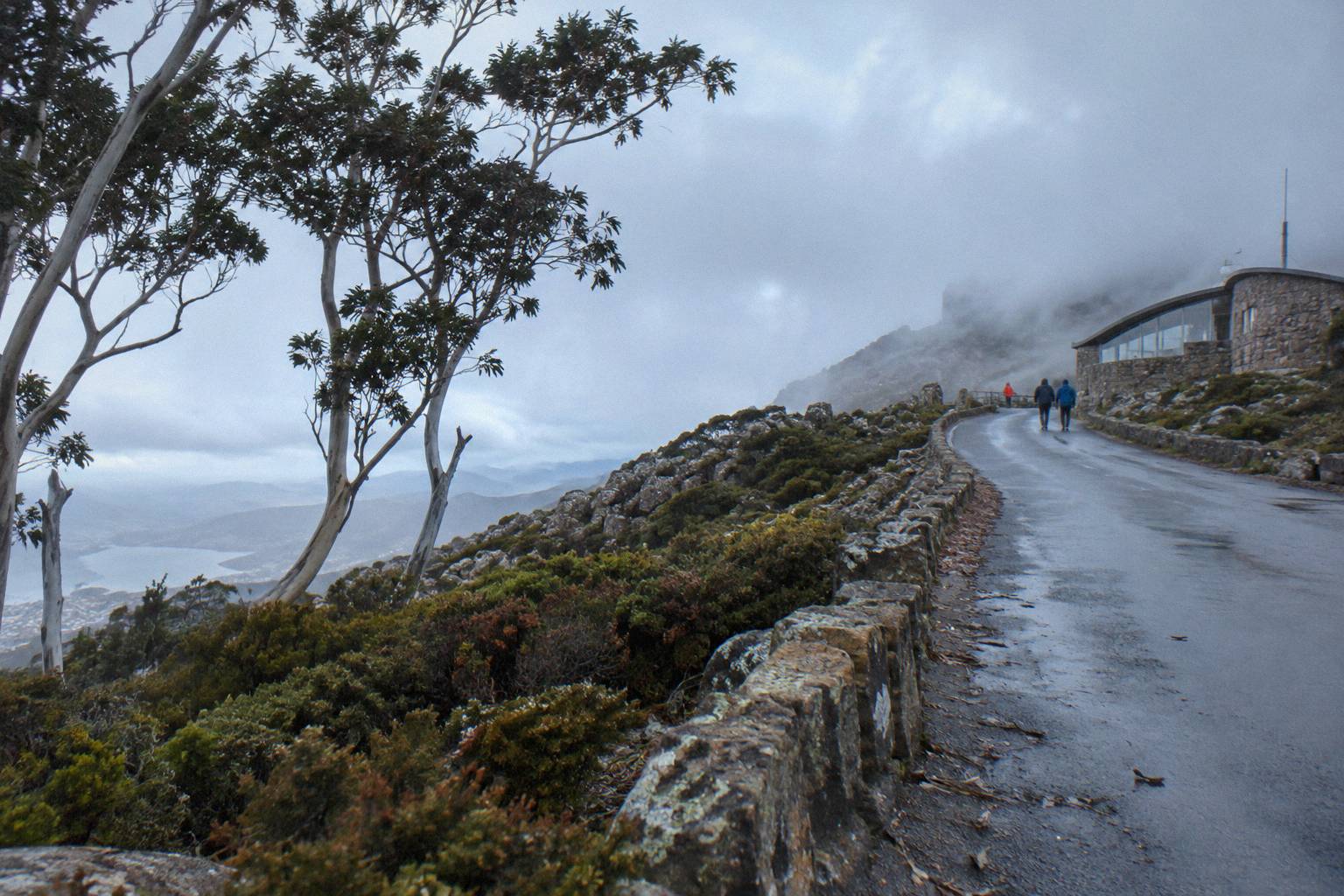
Summer On The Mountain: October To April
Summer runs the Explorer Bus's fuller timetable, with departures at 9.30am, 11am, 12.30pm, 2pm and 3.30pm, and the 3.30pm runs in this season only. The summer timetable covers 1 October to 30 April, the bus runs seven days except Christmas Day and Good Friday, and pre-booking is essential. Summit toilets stay open to 10pm. The trade for long days and warmer averages is that snow remains possible.
Summer is the season of daylight and flexibility rather than certainty. Hobart's midsummer sunrise sits near 5.35am with sunset past 8pm, which makes early and late summit visits realistic, and we look at when in the day to go in the best time of day for a summit tour. The mean January temperature at the Pinnacle is 9.5 °C, which is mild by mountain standards but still often 10 to 12 degrees or more colder than the waterfront, and the record shows the summit has never reached 30 °C. Pack a layer whatever the forecast says for the city.
The 3.30pm departure deserves a note: it is a summer-only service, so visitors reading an old timetable in the cooler months will find a departure that no longer runs. The operator's own page lists departures from opposite the Tasmanian Travel and Information Centre at 4 Elizabeth Street, while the booking pages for the Explorer Bus passes name Brooke Street Pier as the meeting point; the two differ, so use the meeting point printed on your booking confirmation. One other summer quirk, the bus carries mountain bikes, four per departure, loaded at Brooke Street Pier at least 20 minutes before departure for a separate per-bike fee, and we cover the bike angle in taking a bike on the Explorer Bus.
Summer is also the season when the summit's lack of food bites hardest on long days. There is no cafe at the top; the only food on the mountain is the Lost Freight Cafe at The Springs, a shipping-container cafe open seven days year round except 25 and 26 December, with hours that vary.
Autumn: April And May
Autumn is the hinge season. The winter bus timetable starts on 1 May, summit toilet hours shorten to 7am to 5.30pm on the same date, and the Trust flags April to September as the period when snow and ice restrictions are most likely. April can still feel like summer at the waterfront while the first snows arrive on the top.
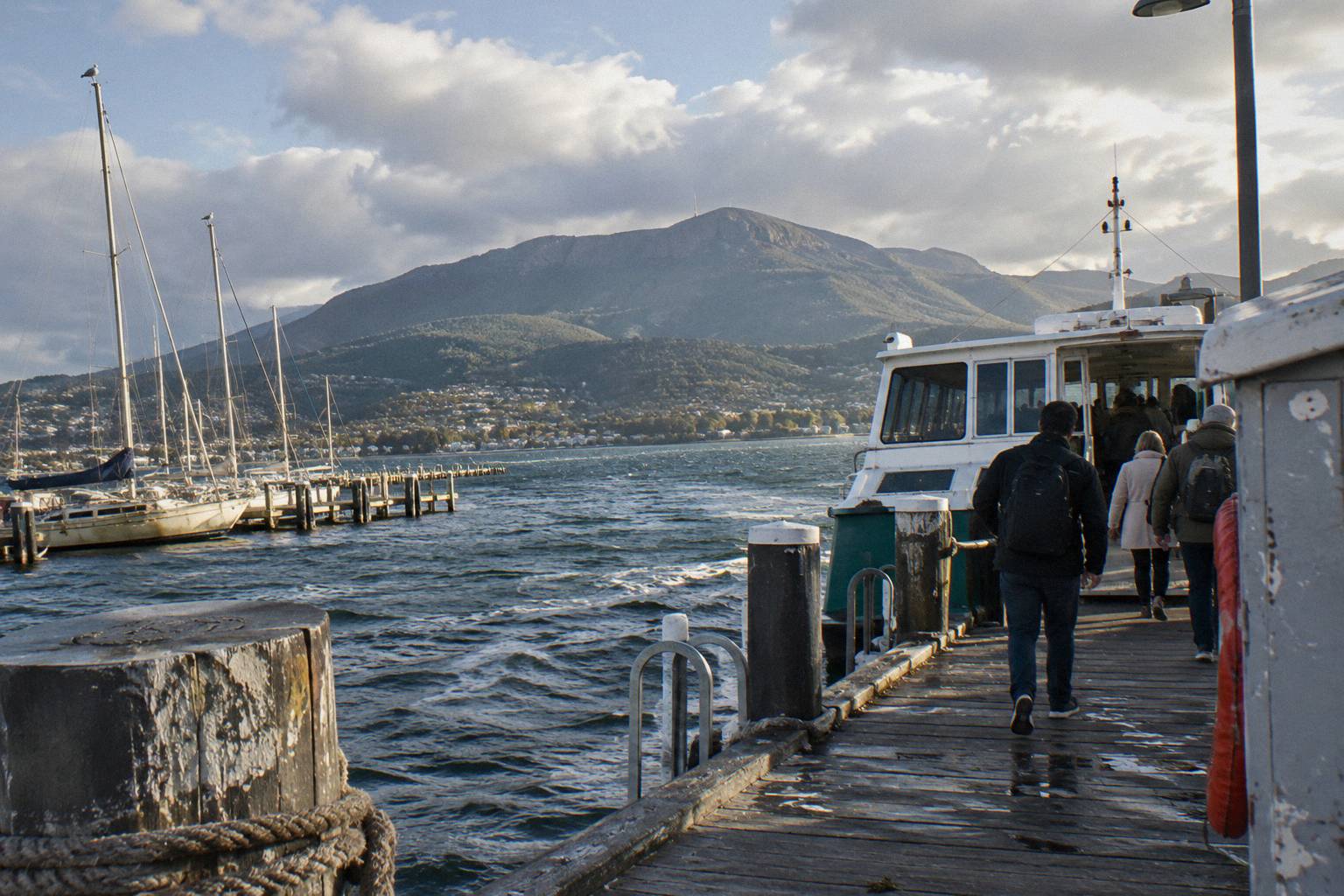
The date-switches make autumn a planning season rather than a single state. A trip in early April runs on summer settings: the 3.30pm departure, 10pm toilets, long light. A trip from May onwards runs on winter settings, with one fewer departure and earlier darkness. If you want the last of the long days with a chance of the first snow dustings, the crossover fortnight either side of 1 May is the interesting window, and it is also when the lower mountain's walking tracks are at their most comfortable, something we map in walks and hikes on kunanyi.
Autumn rain feeds the waterfalls. Silver Falls, a 4-metre fall reached from Fern Tree Park along the Pipeline Track, and O'Grady's Falls, about 2.2 km from Fern Tree, are both at their best after autumn rain, though the Pipeline Track itself is a partial exception this season: TasWater repair works between Neika and the Northwest Bay Weir are running for several months with weekday closures from 7am to 5pm. That is a works schedule, not a season, but an autumn walker planning that particular track should check the Trust's updates first.
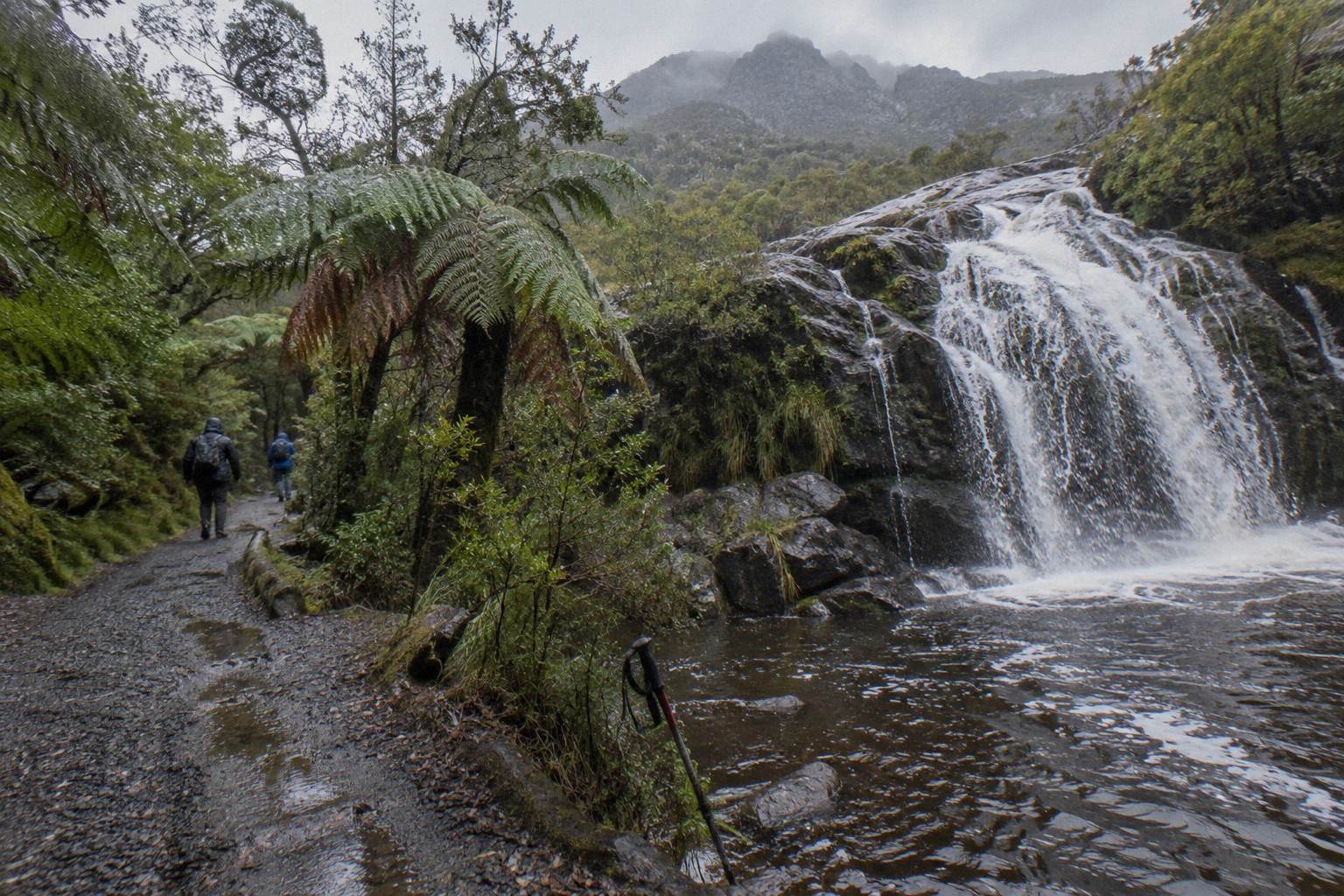
For tour format, autumn suits the guided options well. The Ultimate Experience Guided Summit Tour, from A$65 per person, rated 4.6 from 90 reviews, over 2 hours 45 minutes with hotel pickup from selected hotels, is a comfortable way to take an shoulder-season summit when you would rather not drive the winding road yourself; its group runs up to 48 and its itinerary may vary with road and weather conditions. Check availability beside our Ultimate Experience tour page.
Winter: June To August
Winter is the highest-closure season, with 22 closure nights in August 2025-26 alone, and it is also the season when the summit is most likely to deliver snow, wind chill below -20 °C, and temperatures around the July mean of 0.7 °C. The Explorer Bus is the format the Trust credits with running beyond the closed gates on snow days. Nothing about winter guarantees snow or a view.
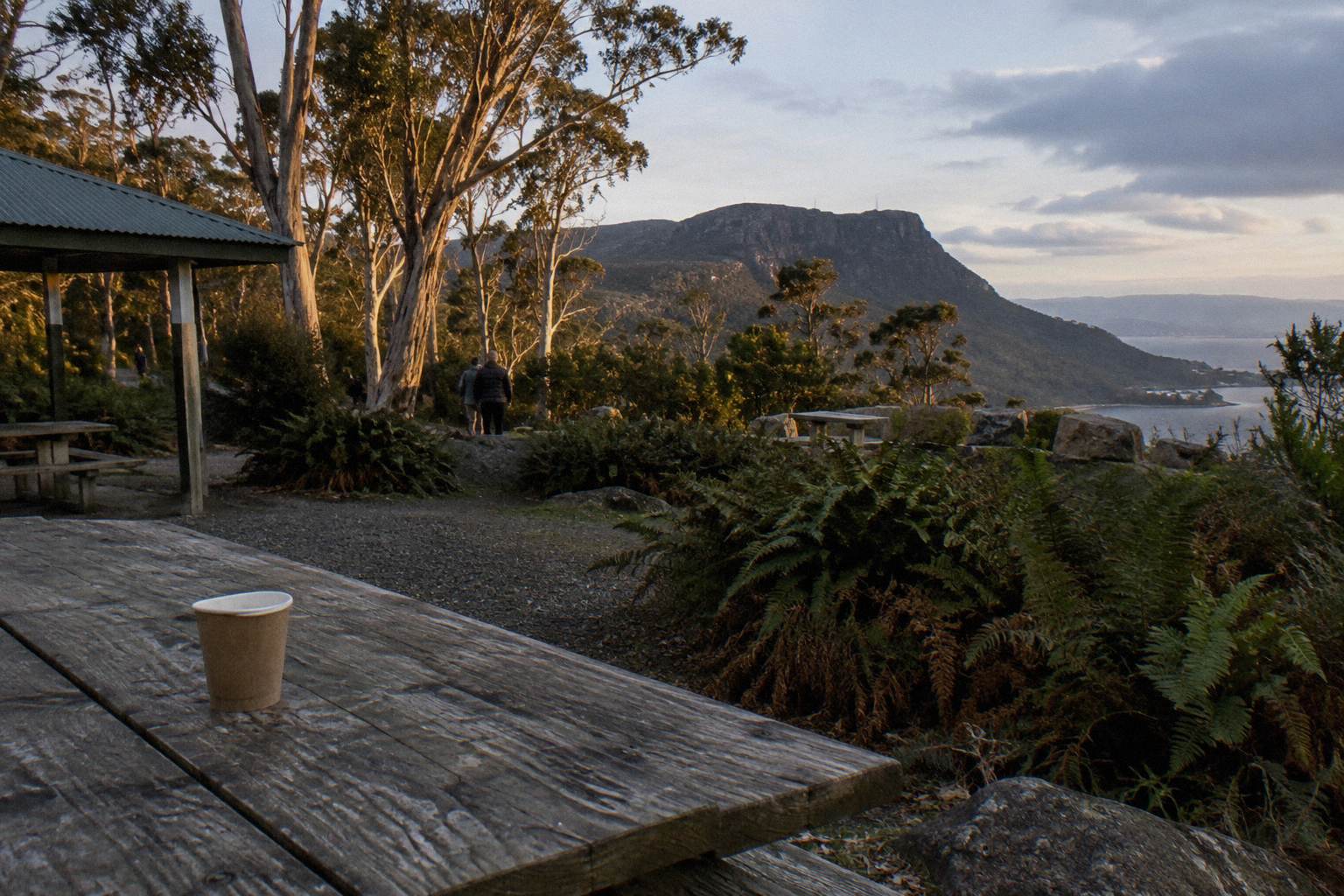
If snow is the point, check the road status and forecast first: snow-day trips run as a separate product, with no promise of The Pinnacle. The Explorer Bus Return Tour, from A$55 per person and rated 4.8 from 1,081 reviews over 2.5 hours, includes an all-day Explorer Pass with hop-on hop-off use across five stops, Fern Tree Park, The Springs, The Chalet, Big Bend and The Pinnacle, with commentary and Wi-Fi onboard and a group of up to 27. Its booking page states it operates in all weather conditions and asks travellers to check the weather before going. Check availability alongside our Explorer Bus Return Tour page.
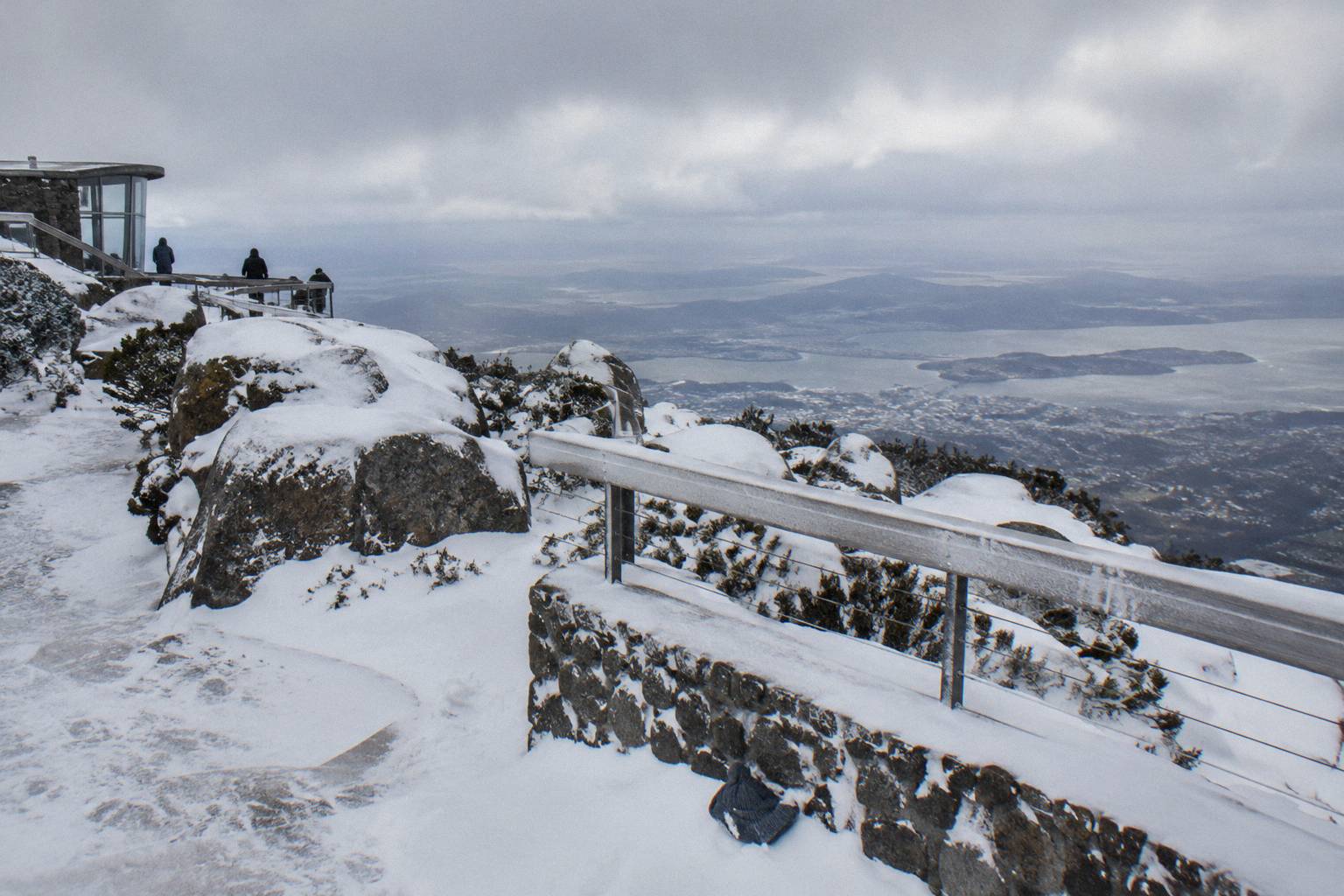
Winter also reshapes the mountain's traffic. The record day of 1,906 vehicles came on 6 September after heavy snow, and the pattern repeats through the season: the first good snow weekend sends a convoy of private cars up, parking at The Springs, The Pinnacle and the lay-bys is limited, and the City of Hobart runs traffic management. A bus ticket in winter is not just a closure hedge; it is a parking hedge. If you do drive, note the Pinnacle is a loop, so you continue around to park rather than stopping on the road, and a car key fob can fail near the FM and TV transmitters at the summit, which the Trust says is harmless.
Dress for the Trust's numbers, not the city's. High winds and below-zero temperatures are common at the top, and wind chill below -20 °C is possible even when Hobart itself sits at 12 °C. The full layering logic, including why gloves beat pockets at an exposed lookout, is in our guide to what to wear on a summit tour.
Spring: September To November
Spring keeps real snow risk late: October 2025-26 recorded 19 closure nights, more than July, and the road then shuts entirely for annual maintenance every November. The summer bus timetable returns on 1 October, restoring the 3.30pm departure, and summit toilet hours extend to 10pm from 1 September. Spring rewards flexible plans over fixed ones.
The October closure figure surprises people who assume snow ends with winter, and it is the single most useful spring fact here: October closed more nights than July in the 2025-26 record. The November maintenance shutdown is the other fixed disruption, with no vehicle access to the summit while it runs, though the walking tracks stay open. Neither fact argues against a spring trip; both argue for checking the status line, 03 6238 2711, and for the Explorer Bus formats through the snow-risk weeks.
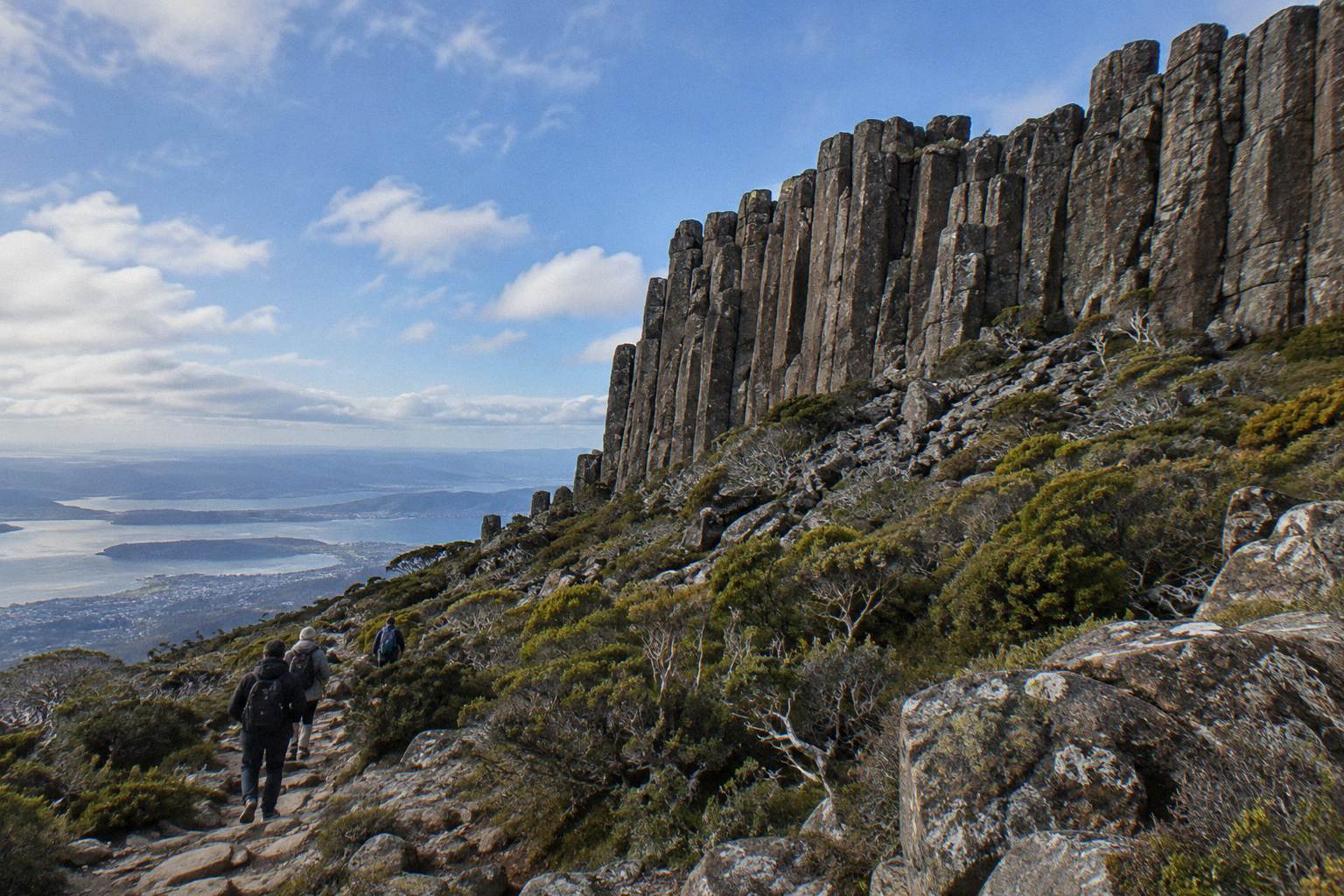
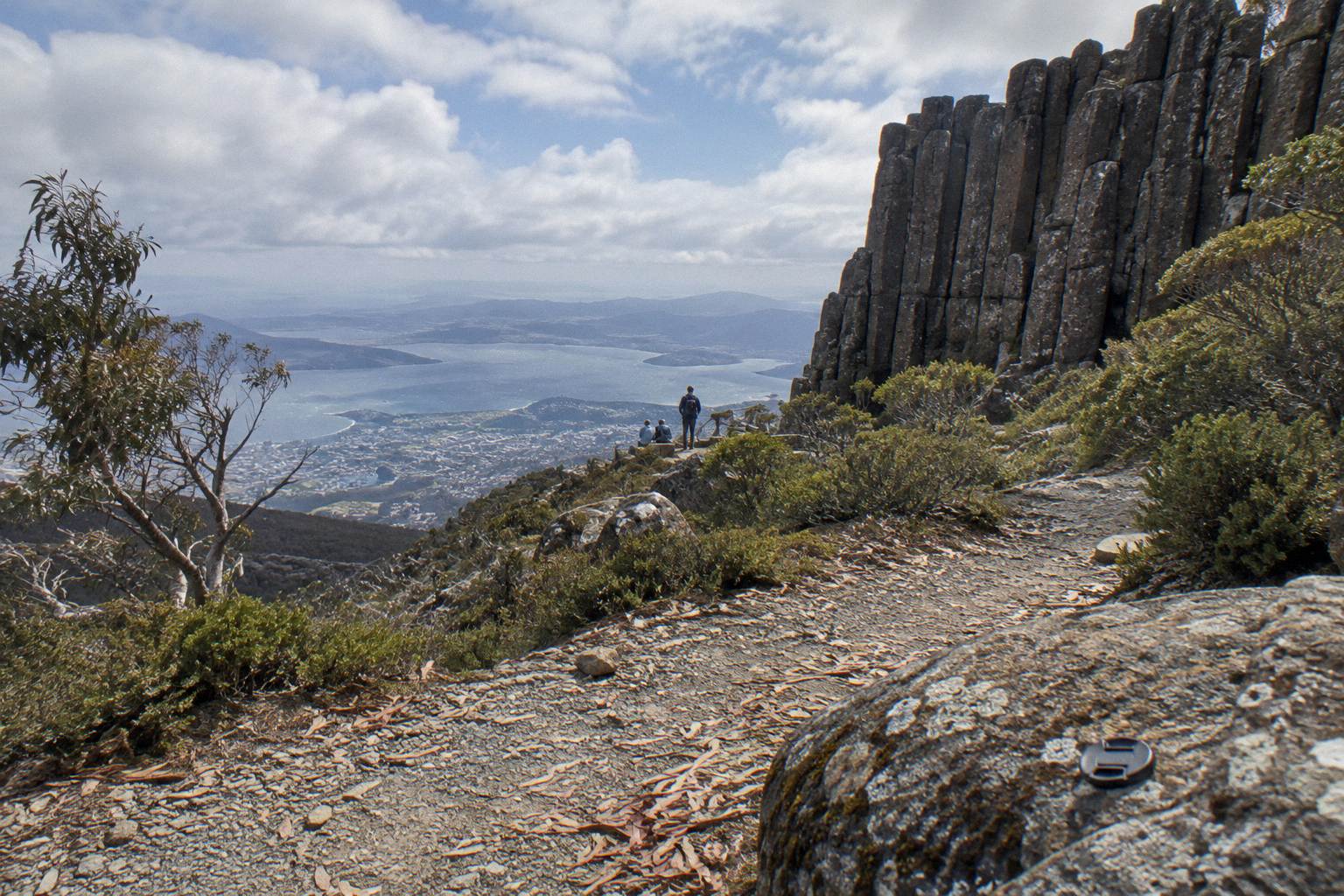
Spring light is a quieter draw. The angle of morning light across the Organ Pipes, the dolerite columns visible from Hobart, makes early spring a strong season for photography, and we map the lookouts and light in summit photography lookouts and light. For a small-group spring format, the Pinnacle 2-Hour Small-Group Tour, from A$55 per person over 2 hours with up to 11 guests, a university-trained local guide and 30 minutes of free time at the top, fits a spring day when you want the mountain interpreted rather than just reached. Its booking age bands start at 8, and it is not wheelchair accessible.
How The Seasons Compare At A Glance
Summer gives the fullest timetable and longest light with the least closure risk; winter gives the most snow and the most closures; autumn and spring mix both, with October closing more nights than July in the 2025-26 record and every November bringing the maintenance shutdown. The mean summit temperature swings from 9.5 °C in January to 0.7 °C in July, and the gap from the waterfront is often 10 to 12 degrees or more.
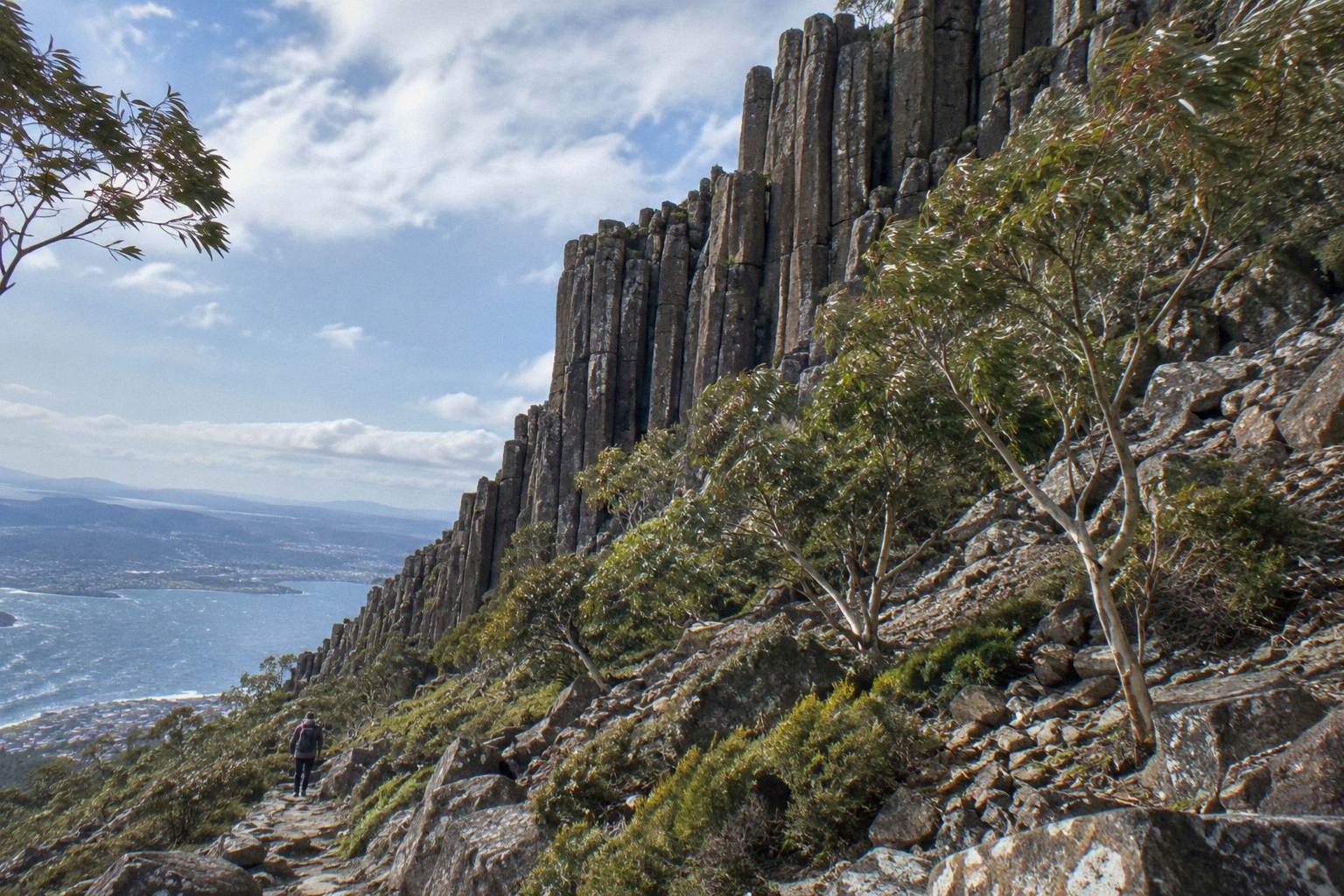
The chart below pulls the season decision into one view: the climate means, the snow-risk window, the timetable switch dates and the two fixed disruptions. Read it as a risk map, not a promise, because the summit's cloud and wind follow no season's schedule. As Mount Wellington Tours frames every comparison, the question is never which month is best; it is which risk matters to you, and which format manages it.
| Season | Months | Snow risk | Timetable and hours | Fixed disruptions |
|---|---|---|---|---|
| Summer | October to April | Possible in any month, least likely | Summer timetable, 3.30pm runs, toilets to 10pm | Closed 25 December and Good Friday |
| Autumn | April and May | April flagged by the Trust; rises into May | Switch to winter timetable and 5.30pm toilets on 1 May | None fixed |
| Winter | June to August | Highest, 18 and 22 closure nights in July and August | Winter timetable, one fewer departure | None fixed |
| Spring | September to November | 18 closure nights in September, 19 in October | Summer timetable returns 1 October | November maintenance shutdown |
Two practical notes close the season map. Tasmanian public transport, including the Metro 448 and 449 buses from Franklin Square to Fern Tree, is currently free as a temporary measure, on the Trust's figures until June 2027; those buses stop at Fern Tree and never reach the summit, so they are a lower-mountain option, not a summit one. And the free-cancellation window on every trip here, up to 24 hours before start, is the single best tool for a shoulder-season plan: book the format, watch the forecast, and decide the day before. If you are weighing whether the trip justifies the price at all, our piece on whether a summit trip is worth it works through that question with the same figures.
Common Questions About The Best Season
What Is The Best Time To Visit Mount Wellington?
There is no single best month, and none is named here. Snow can fall in any month and is most likely overnight from May to September, when Pinnacle Road closed 95 nights across 2025-26. Summer runs the fullest bus timetable with the longest daylight. Pick the season whose risk you can live with, and the format that manages it.
Does It Snow On Mount Wellington In Summer?
Yes, snow is possible in any month, though falls outside the May to September window are lighter and less likely. The Trust warns access may be restricted by snow and ice at any time of year, particularly April to September, so even a summer visit is worth a status check.
Which Month Has The Most Road Closures?
In the 2025-26 record, August led with 22 closure nights, followed by October with 19 and July and September with 18 each. Figures for the other months were not published. Every November also brings a full maintenance shutdown with no vehicle access to the summit.
How Much Colder Is The Summit Than Hobart?
Often 10 to 12 degrees or more colder, and the gap varies day to day; no single fixed number is correct. Wind chill below -20 °C is possible at the top, and the mean Pinnacle temperature runs from 9.5 °C in January to 0.7 °C in July.
Does The Bus Run When The Road Is Closed?
The Trust describes the Explorer Bus as the only licensed operator able to take visitors up when the road is closed for snow, and the Hobart Shuttle Summit Pass also runs with those partners on snow days. Even so, the operator does not guarantee reaching the summit on snow days.
When Does The Summer Bus Timetable Start?
The Explorer Bus summer timetable runs 1 October to 30 April and includes the 3.30pm departure, which does not run in winter. The winter timetable runs 1 May to 30 September. The bus operates seven days, closed on 25 December and Good Friday, and pre-booking is essential.