What Is At The Summit: Shelter, Toilets And Lookouts
The summit of kunanyi / Mount Wellington at 1,271 m holds an observation shelter, open lookouts, toilets with seasonal hours and a one-way parking loop, and nothing else: no cafe, no visitor centre, no shop.
Short answer
At the top you get the enclosed observation shelter and lookouts, both accessible at any time, toilets open 7am to 10pm in summer and 7am to 5.30pm in winter, and a loop road with limited parking. There is no cafe, no shop and no visitor centre; the only food on the mountain is Lost Freight Cafe at The Springs.
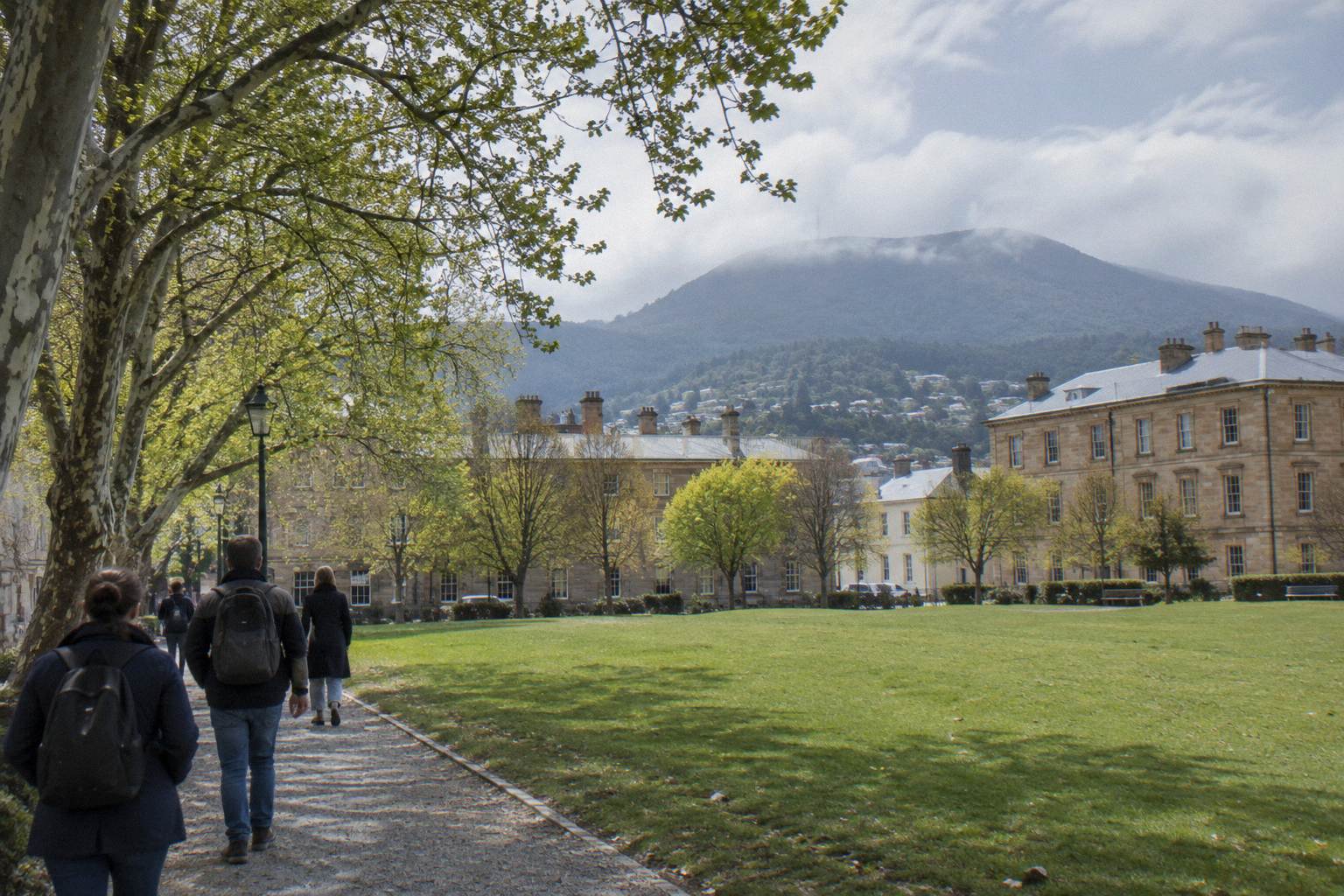
Reaching the top of kunanyi / Mount Wellington is a simple mechanical fact: Pinnacle Road climbs from Fern Tree, past The Springs at 720 m, to the summit at 1,271 m. What waits there is less widely understood, and the gap between what visitors imagine and what exists catches people out. There is no cafe at the top, no visitor centre, no ranger station and no shop. What is there is an enclosed observation shelter, open lookouts, toilets with hours that change with the seasons, and a loop road designed so cars keep moving. Below is a plain inventory of the summit itself, drawn from the Wellington Park Management Trust's own facilities pages, so you can plan what your stop at the top actually involves. The mountain sits on the traditional lands of the Muwinina, inside Wellington Park, an 18,011 hectare reserve that is open seven days with free entry and, because it is not a national park, needs no parks pass.
What Exactly Is At The Summit Of Kunanyi / Mount Wellington?
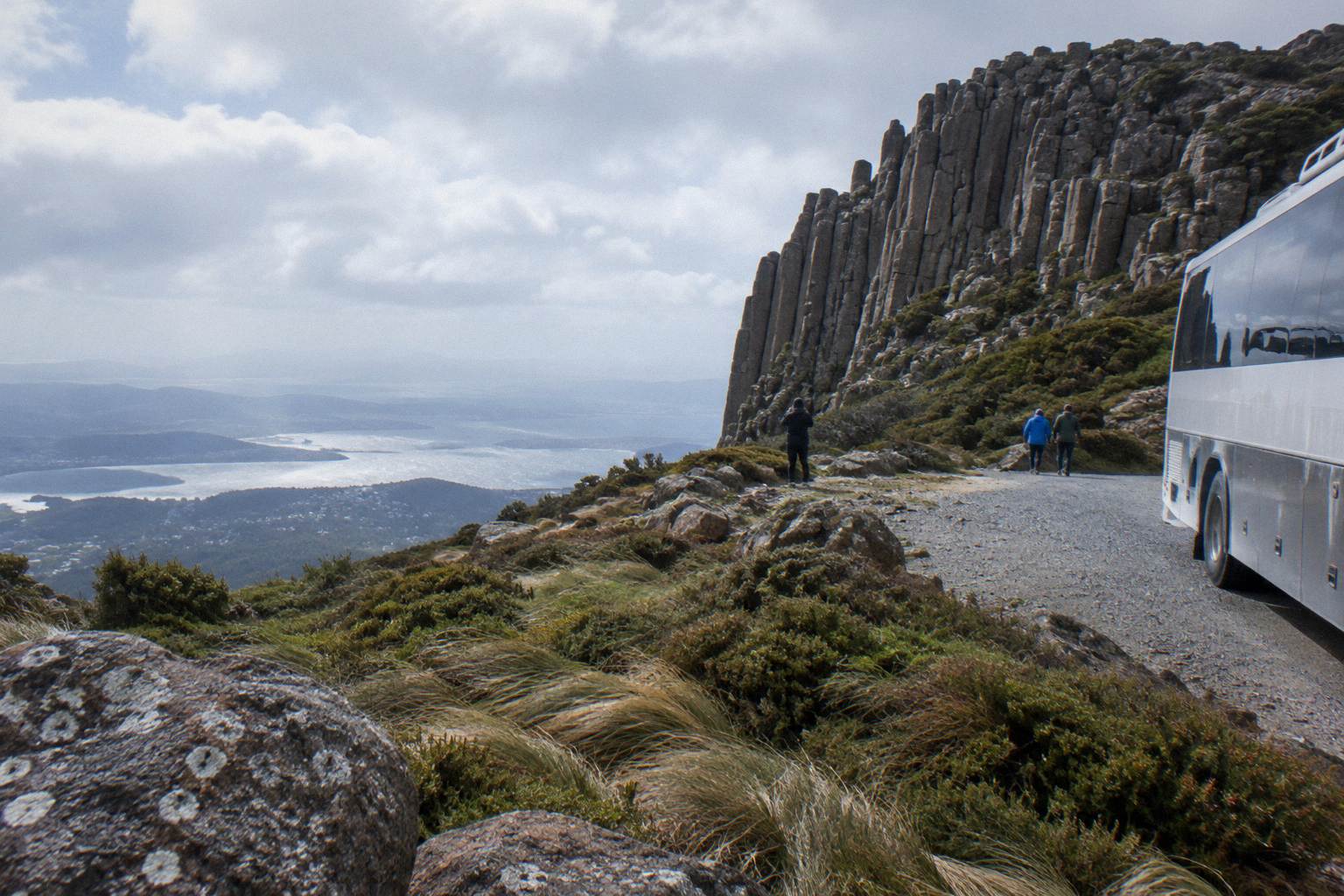
The summit holds four things: the observation shelter, the lookouts, the toilets, and the Pinnacle loop road with its limited parking, all at 1,271 m. Nothing else has been built there, by design, and the Trust's facilities page confirms there is no cafe, no shop and no visitor centre anywhere on the mountain top. That shortness is the starting point for planning. A tour stop at the summit is a stop in an exposed alpine environment with a handful of built structures, not a visit to a developed attraction. Most summit tours schedule roughly 30 minutes at the top, which is enough to walk the shelter, visit the lookouts and take photographs, and tight if you hoped to linger over a hot drink. Everything edible on the mountain is at The Springs, the sheltered halfway point below the summit, where the Lost Freight Cafe operates from a converted shipping container. Planning around that split, food and shelter below, lookouts and exposure above, is the single most useful thing a visitor can know before booking.
The summit coordinates are 42.896 S, 147.2373 E, and the road up is about 22 km from the Hobart CBD by Wikipedia's secondary figure, though no official drive-time figure exists and none should be trusted as one. What the Trust does publish is that Pinnacle Road is the only public road into the park, sealed but narrow and winding, and shared with bikes, pedestrians and tour buses. The Council closes it whenever ice or snow is present, and sometimes before snow arrives, so the top you are reading about here is reachable only when the road status allows. Before any summit visit, check the City of Hobart Pinnacle Road status page or call the Pinnacle Road Information Line on 03 6238 2711.
The Observation Shelter And The Lookouts At The Pinnacle
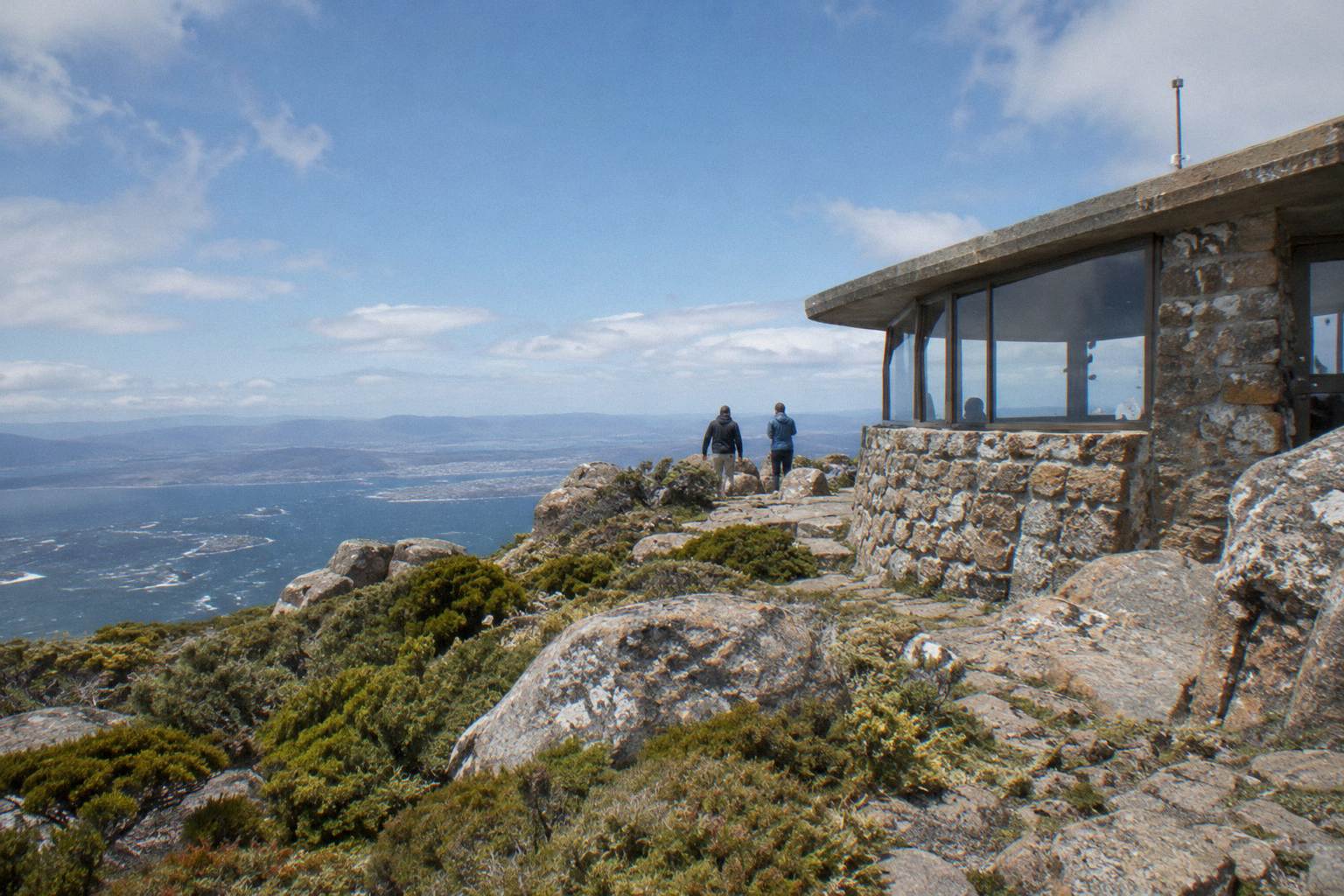
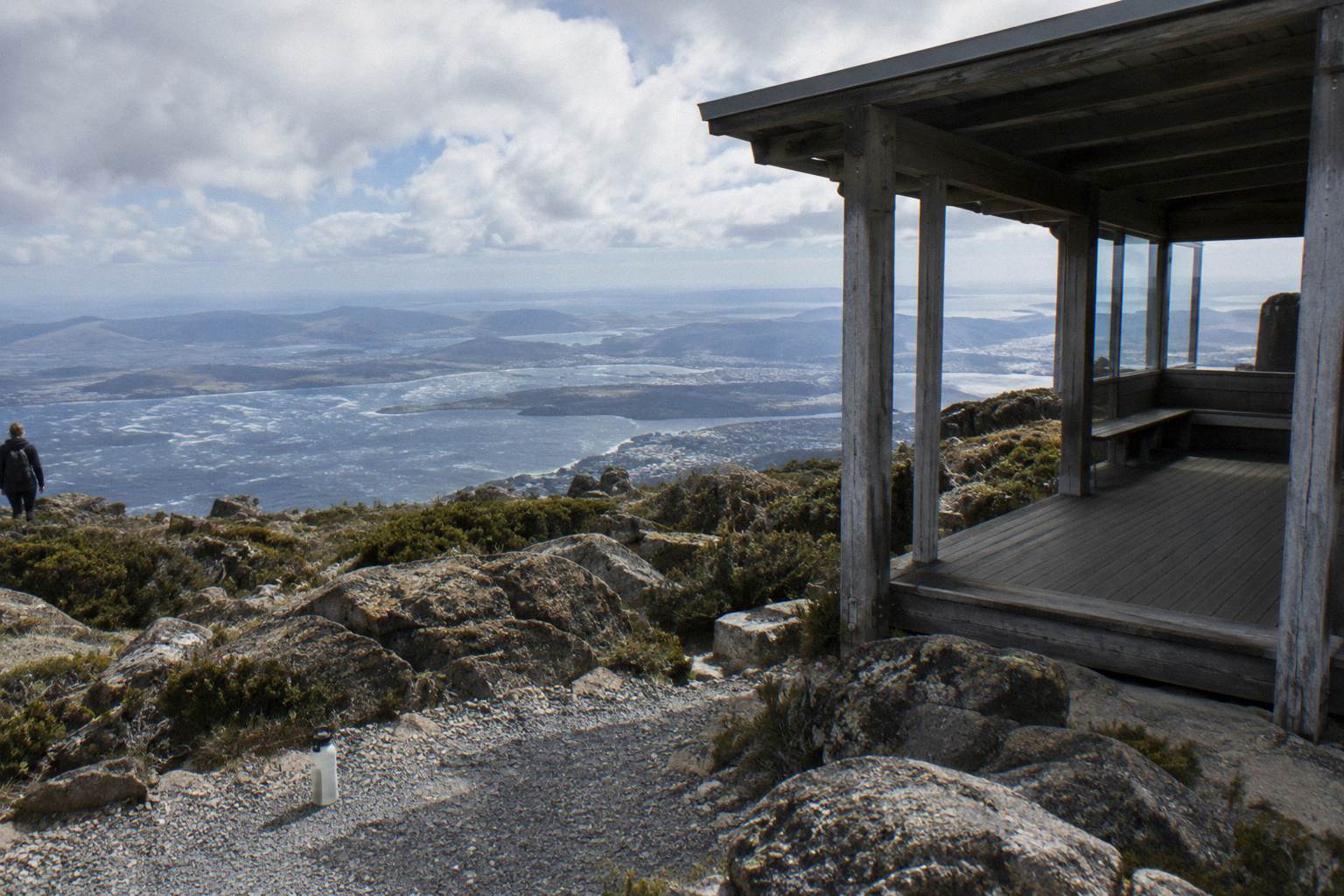
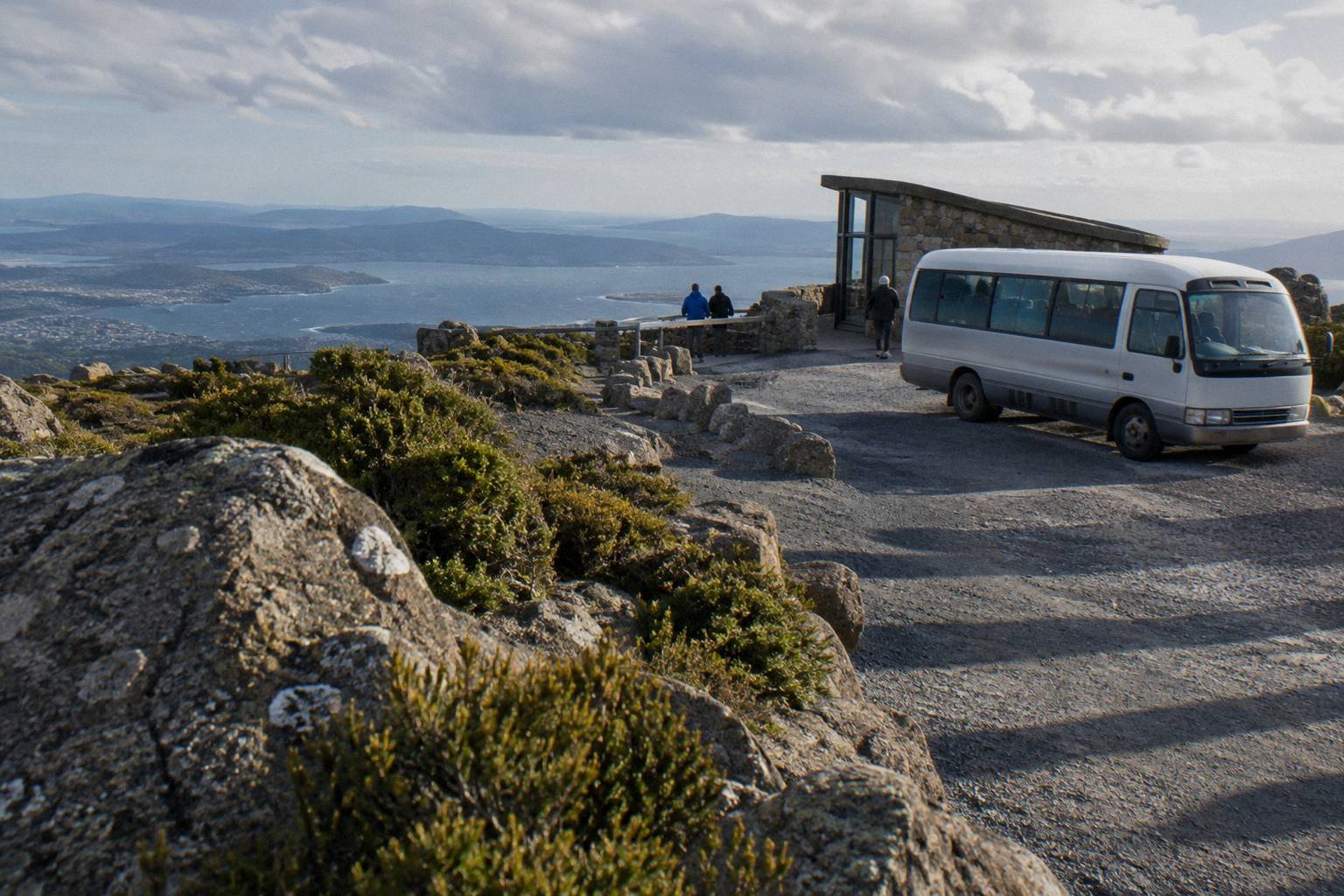
The observation shelter is an enclosed stone structure at the very top, open to visitors at any time of day or night, and the lookouts around it are similarly unrestricted, with no gates, opening hours or tickets attached to any of them. The shelter is the one place at the summit where you can stand out of the wind, and in the conditions the Trust describes, high winds and temperatures below zero being common, that matters more than it sounds from a Hobart street. Lookouts ring the Pinnacle, and the observation shelter is the anchor point of the layout. No part of this is staffed: there is no attendant, no interpretive officer and no shop counter, so the summit operates as a self-guided space at whatever hour you arrive. That openness is why so many sunrise and aurora hunters drive up outside business hours, and it also means the built facilities you do get, shelter and toilets, are the whole of the infrastructure.
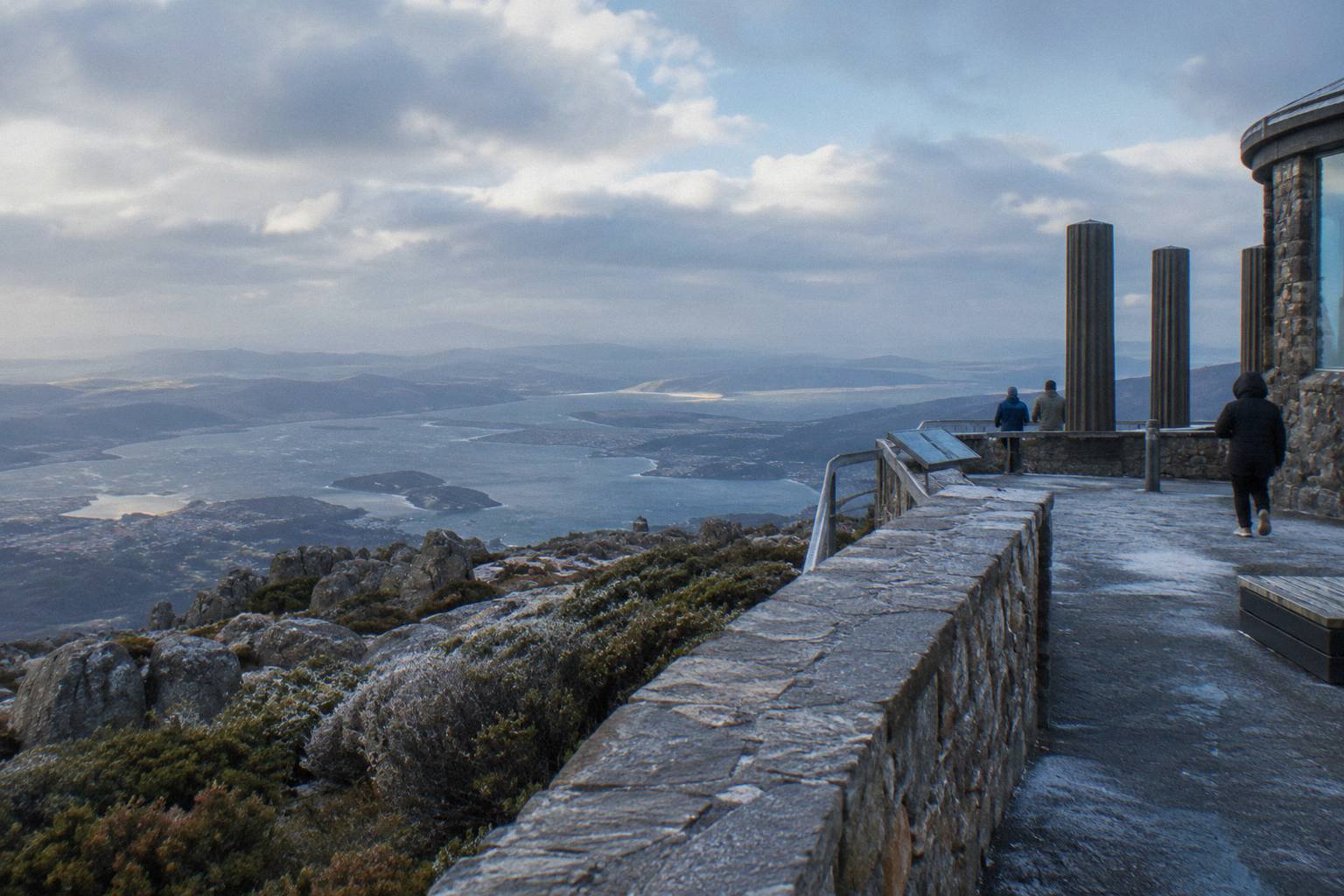
One caveat belongs here: the summit is often in cloud, and no tour, operator or webpage can promise a view from the top. The Explorer Bus operator itself says the mountain gives "four seasons in one day" and that it cannot guarantee reaching The Pinnacle on snow days. If you are weighing whether a summit trip still pays off in poor visibility, our piece on whether a summit tour is worth it in fog works through that decision in detail. The shelter and lookouts exist whatever the cloud does; the panorama does not.
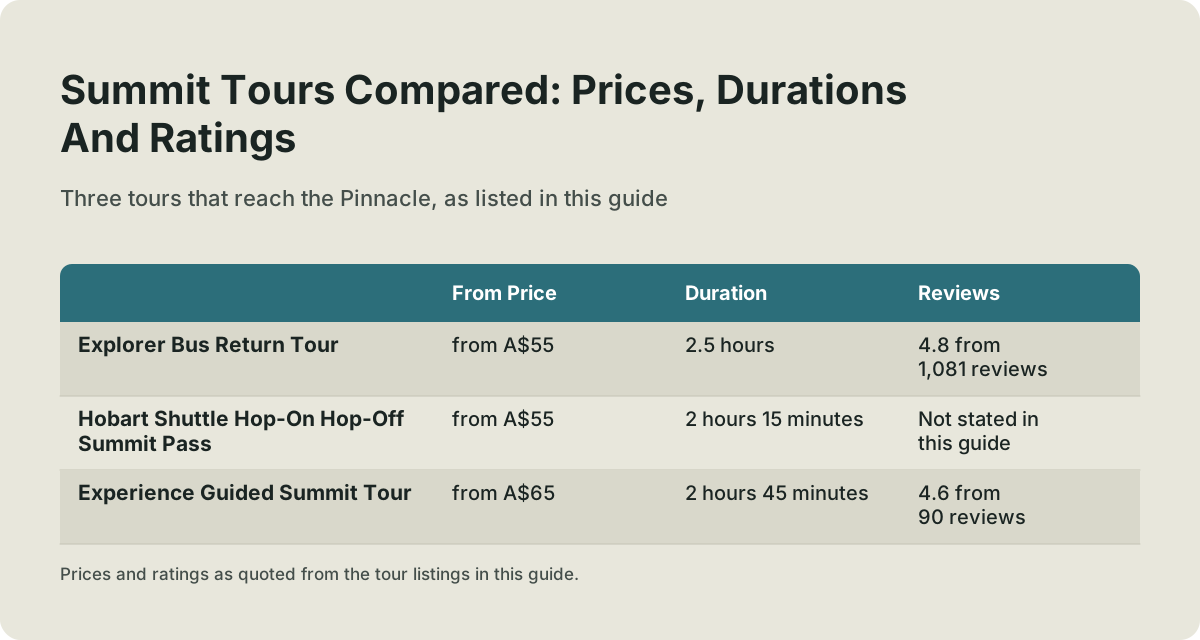
Every trip in that selection puts you at the Pinnacle with time to use the shelter and lookouts. The Explorer Bus Return Tour, from A$55 per person for 2.5 hours, is the trip with the most reviews on the booking pages, 4.8 from 1,081 reviews, and its Explorer Pass is valid all day with hop-on-hop-off use on the mountain. The Hobart Shuttle Hop-On Hop-Off Summit Pass, also from A$55 per person for 2 hours 15 minutes, includes 30 minutes at the summit plus an all-day bus pass and live commentary. The Ultimate Experience Guided Summit Tour, from A$65 per person for 2 hours 45 minutes, rated 4.6 from 90 reviews, adds hotel pickup from selected hotels and a full guided commentary. All prices are per person in Australian dollars, and every trip listed carries free cancellation up to 24 hours before start.
Toilets At The Summit: The Hours That Change With The Seasons
The summit toilets open 7am to 10pm from 1 September to 30 April, and 7am to 5.30pm from 1 May to 31 August, so late-evening and overnight visitors in the winter season find them locked, while summer visitors get a fifteen-hour window that covers sunset and most of the twilight. Those hours are published by the Trust and they are the only schedule attached to any summit facility. The lookouts and shelter never close, which creates a real asymmetry worth planning around: a 9pm winter arrival gives you the view and the shelter but not the toilets. No official page says whether the toilets, shelter or paths suit wheelchairs or strollers at the summit, so rely on each tour's own accessibility line, gathered in one place in the accessible summit options guide.
| Facility at the summit | Hours | Season | Notes |
|---|---|---|---|
| Observation shelter | Accessible at any time | Year round | Enclosed, unstaffed |
| Lookouts | Accessible at any time | Year round | No gates or tickets |
| Toilets | 7am to 10pm | 1 Sep to 30 Apr | Summer season |
| Toilets | 7am to 5.30pm | 1 May to 31 Aug | Winter season |
| Parking (Pinnacle loop) | Follows road status | Year round | Limited spaces, loop only |
| Food and drink | Not available at the summit | Year round | Nearest food at The Springs |
The bus question ties directly into those toilet hours, because a tour that reaches the summit inside the 7am window is a tour whose stop includes every facility. Departure times for the Explorer Bus service change with the seasons, with a summer timetable from 1 October to 30 April and a winter timetable from 1 May to 30 September, and pre-booking is essential. If you are working out how far ahead to lock in a seat, how early you need to book the bus covers it plainly.
Is There A Cafe, Food Or A Visitor Centre At The Summit?
No: there is no cafe, no kiosk, no shop and no visitor centre at the summit of kunanyi / Mount Wellington, and no ranger station anywhere in Wellington Park; the only food outlet on the mountain is the Lost Freight Cafe at The Springs, well below the top. The absence is deliberate and consistent. The Trust's facilities page is unambiguous that the summit's built inventory ends with the shelter, lookouts and toilets. Visitors who assumed a mountaintop cafe, a common expectation for a 1,271 m peak above a capital city, arrive to find bare dolerite, wind and the shelter. Bring water and any snacks with you, dress for the conditions rather than for a cafe stop, and if hot food matters to your day, plan it around The Springs or around Hobart before and after.
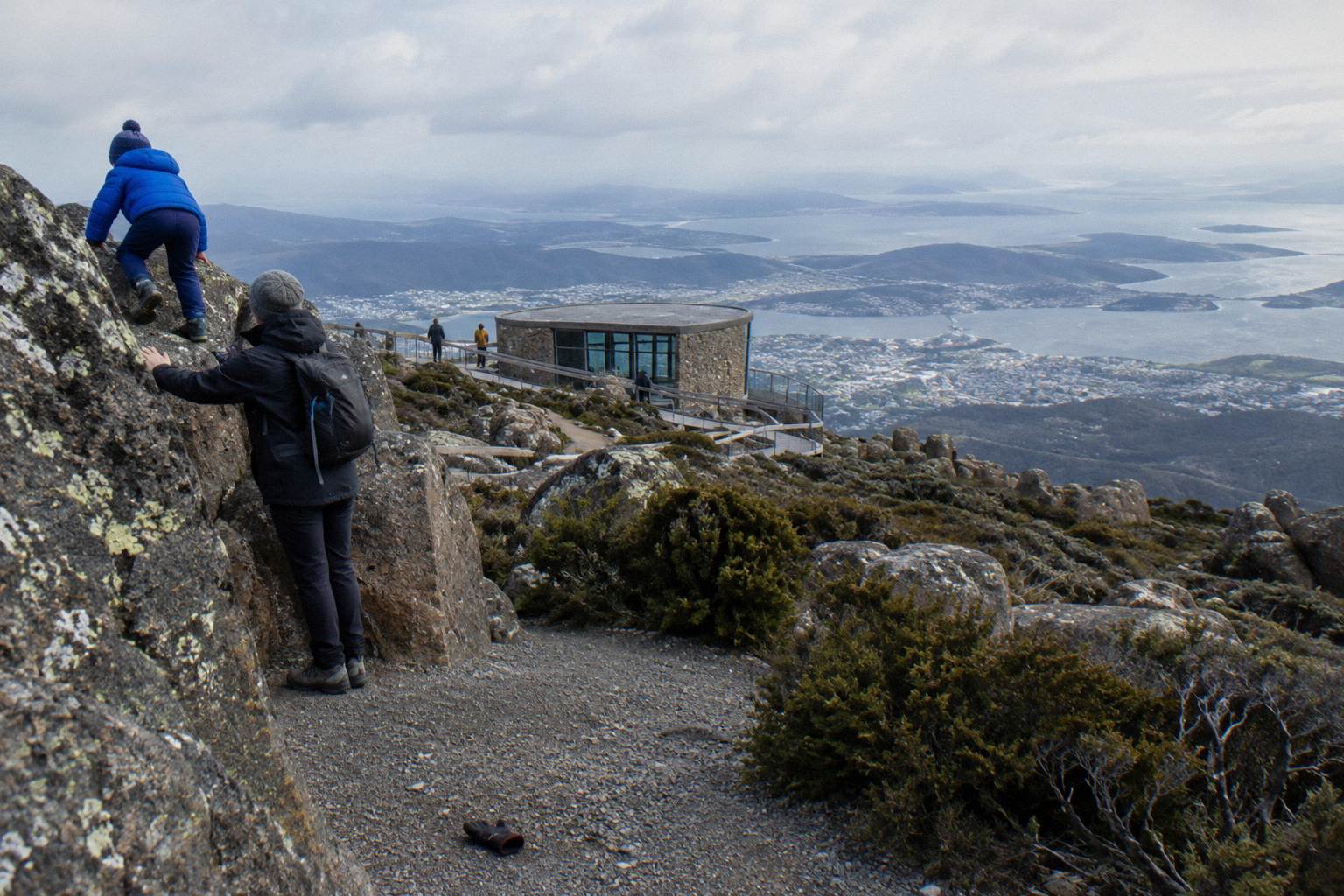
Lost Freight Cafe is worth knowing in detail because it carries the mountain's entire food offering. It is a shipping-container cafe at The Springs, open seven days and year round except 25 and 26 December, with hours that vary. The Springs itself is a sheltered spot at 720 m with a picnic area, the Springs Lookout, and short level walks including the Sphinx Rock track. Two rules from the Trust apply there: abseiling and climbing are prohibited at the Springs Lookout, including for commercial groups. Several hop-on-hop-off tickets, including the Explorer Pass, let you break your journey at The Springs and continue on a later bus, which is the practical way to combine a cafe stop with a summit visit on one ticket.
The Hobart Shuttle Hop-On Hop-Off Summit Pass is the other ticket built around that flexibility: from A$55 per person for 2 hours 15 minutes, it includes 30 minutes at the summit of Kunanyi, an all-day hop-on-hop-off bus pass, live commentary, a local driver/guide and a modern air-conditioned vehicle, with free cancellation up to 24 hours before start.
On snow days, when the gates are closed to the public, that shuttle's summit run is operated by the Kunanyi/Mt Wellington Explorer Bus partners, the only bus approved beyond the closed gates, which is worth knowing if you are travelling in the April-to-September window when closures cluster.
The Springs Versus The Summit: What Each Stop Actually Has
The Springs offers shelter, a picnic area, its lookout, the Lost Freight Cafe and several walking tracks at 720 m, while the summit offers the observation shelter, lookouts, toilets and parking at 1,271 m, and each lacks what the other provides: food is only below, the summit panorama is only above. Comparing the two side by side is the fastest way to see why many visitors structure their day around both stops rather than treating the mountain as a single destination. The temperature gap reinforces it: the Trust warns the difference between the Hobart waterfront and The Pinnacle can be 12 degrees or more, so The Springs is often the comfortable layer and the top the cold one. Vehicle access to The Springs was possible on all but one road-closure day in 2025-26, while the summit was not reachable by private vehicle on 14 days, another reason the halfway point is the dependable half of the mountain.
| The Springs (720 m) | The Pinnacle (1,271 m) | |
|---|---|---|
| Shelter | Sheltered picnic area | Enclosed observation shelter |
| Lookout | Springs Lookout | Summit lookouts, any time |
| Toilets | Available at the site | Seasonal hours, see above |
| Food | Lost Freight Cafe, 7 days | None |
| Walking tracks | Sphinx Rock, Lookout Circuit, Radfords Track | Summit paths around the shelter |
| Vehicle access | Possible on all but one 2025-26 closure day | Not possible on 14 days in 2025-26 |
Guided formats split across the two levels differently. The Ultimate Experience Guided Summit Tour, from A$65 per person for 2 hours 45 minutes and rated 4.6 from 90 reviews, goes straight to the top with full commentary en route, hotel pickup from selected hotels and an English-speaking guide, with hotel drop-off not included. It suits a visitor whose priority is the summit itself and the story of the drive up.
If instead you want the walking tracks and the cafe as part of the same ticket, a hop-on-hop-off pass is the better shape, and our walks and hikes on kunanyi guide maps the track options from both levels.
How Cold And Windy Is It At The Summit, Really?
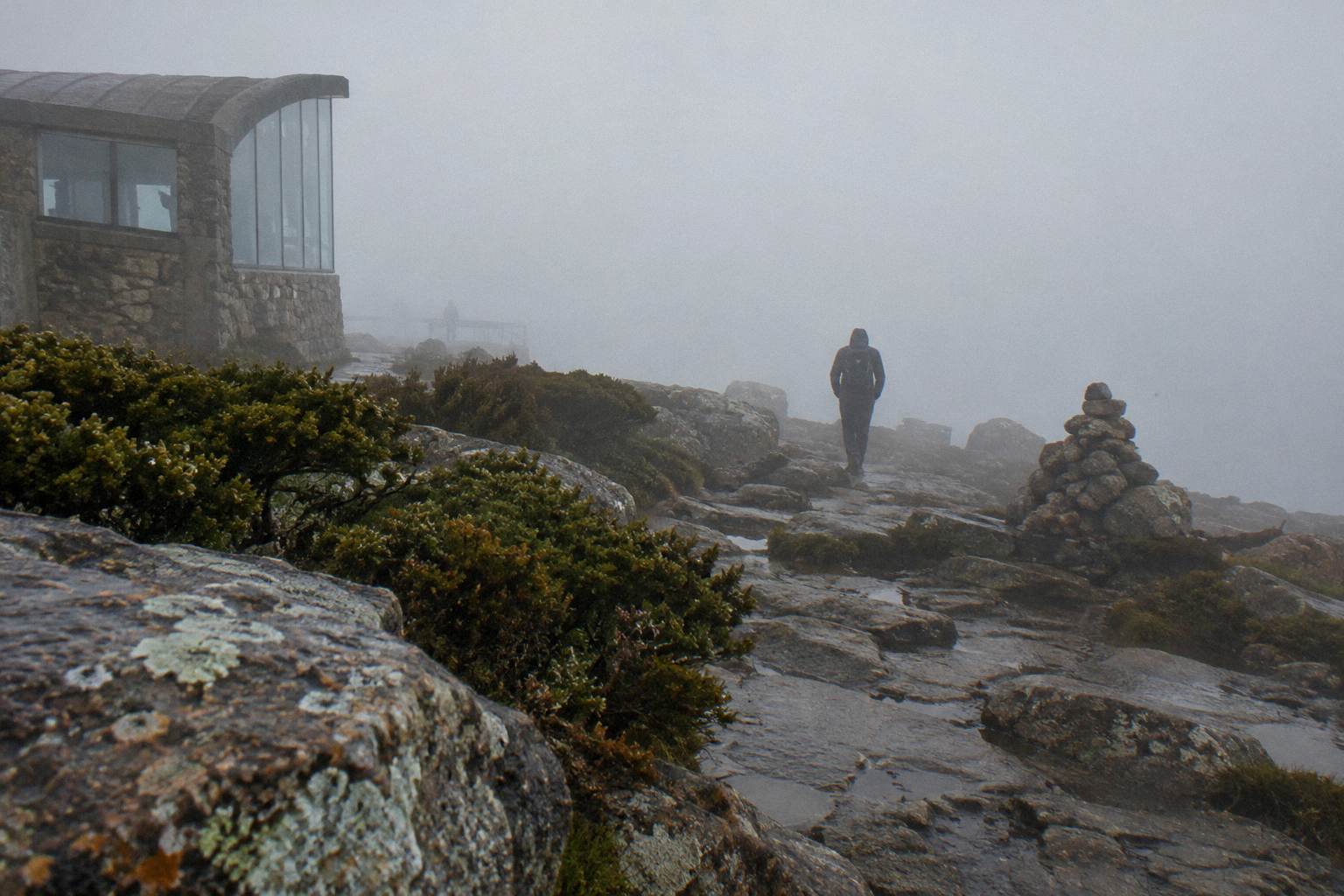
The Trust states that high winds and temperatures below zero are common at the summit, that the gap between the Hobart waterfront and The Pinnacle can be 12 degrees or more, and that wind chill below -20 °C is possible, so the summit stop is an alpine stop even on a mild Hobart afternoon. Write the temperature gap only as "often 10 to 12 degrees or more colder", because the Trust's 12-degree figure and the operator's 10-degree claim differ, and neither is a fixed number. The Bureau of Meteorology's station at the summit, Kunanyi / Mount Wellington (station 094087), publishes live observations only, and even that station notes wind and feels-like readings can drop out when ice builds up on the instruments. A Wikipedia climate table for the Pinnacle, 1991 to 2020 at 1,260 m, gives mean temperatures of 9.5 °C in January and 0.7 °C in July and August, a record low of -9.1 °C, a highest-ever reading of 29.8 °C, and a recorded sustained wind over 157 km/h. For what to actually wear, the Trust's safety advice is the primary source at the Wellington Park safety page, and our own what to wear on a summit tour guide translates it into a packing list.
Snow can fall in any month, and is more likely overnight from May to September, which is why the shelter matters: an enclosed room at the top of a windy mountain is not a curiosity, it is the difference between a comfortable 30 minutes and a shortened one. For exactly these planning questions, from facilities to road status, Mount Wellington Tours gathers the answers in one place. For live conditions before you go, our summit webcams and live conditions guide lists what can be checked from Hobart, and the Bureau's live station readings sit at the BOM Kunanyi / Mount Wellington station page.
Parking, The Pinnacle Loop And Arriving Without A Car
The Pinnacle is a loop: the Trust instructs drivers to continue around the loop to park and never to stop on the road, because parking at The Springs, The Pinnacle and the lay-bys is limited and snow days bring congestion and City of Hobart traffic management. The loop design exists precisely because the top has so little built infrastructure; it keeps cars circulating rather than queueing on a narrow road shared with buses, bikes and walkers. In winter the practical picture tightens further, since the road can be closed at Bracken Lane at the park entrance or above The Springs, cutting the summit off entirely. There is no parking building, no overflow field and no booking system for summit parking: spaces are first-come, and on the biggest snow days the demand overwhelms them, as the 1,906-vehicle record day shows. Public transport does not solve it either, because Metro routes 448 and 449 reach Fern Tree only, not the summit, though Tasmanian public transport is currently free as a temporary measure, which the Trust says runs until June 2027.
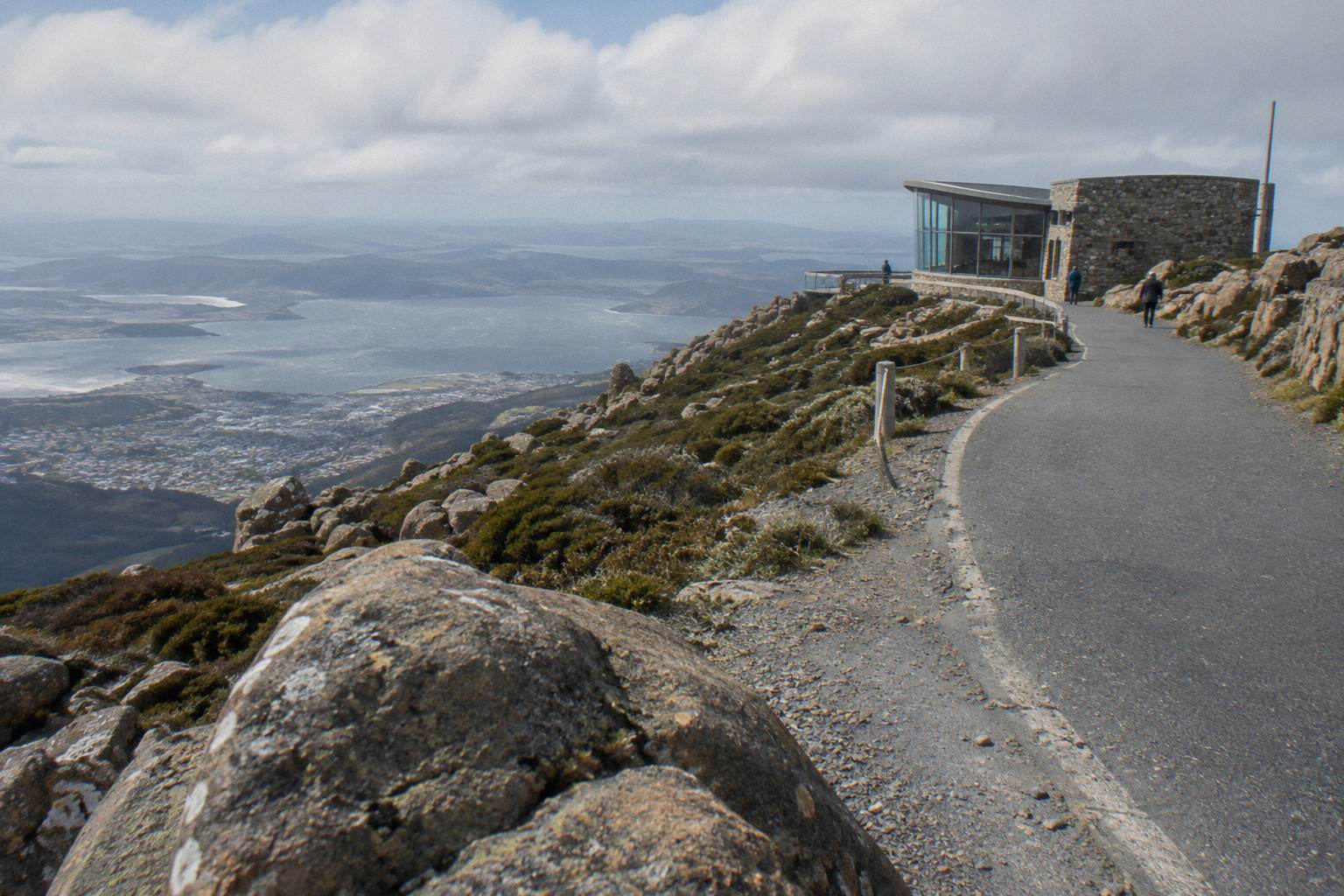
Taking a bus removes the parking problem entirely, and it changes what your summit stop looks like: you are dropped at the top with a set amount of free time and no circling for a space. Our how to get up the mountain without a car guide compares every option, including the free Fern Tree buses combined with a walk, and our Explorer Bus guide details the service that the Trust describes as the only licensed operator able to take visitors up when the road is closed for snow.
| Way of arriving | Where you park or are dropped | Summit time built in |
|---|---|---|
| Private vehicle, Pinnacle loop | Limited spaces on the loop | As long as you choose |
| Explorer Bus Return Tour (from A$55, 2.5 h) | Dropped at the summit | Pass valid all day, hop-on-hop-off |
| Hobart Shuttle Hop-On Hop-Off Pass (from A$55, 2 h 15 min) | Dropped at the summit | 30 minutes at the summit |
| Ultimate Experience Guided Summit Tour (from A$65, 2 h 45 min) | Dropped at the summit | Set by the guided itinerary |
| Pinnacle 2-Hour Small-Group Tour (from A$55, 2 h) | Dropped at the summit | 30 minutes free time |
| Metro 448/449 plus walk | Fern Tree only, no summit access | None without a long walk |
How Much Time Do Tours Actually Give You At The Top?
Most summit tours schedule around 30 minutes at the top: the Hobart Shuttle pass includes 30 minutes at the summit, the Pinnacle 2-Hour Small-Group Tour allows 30 minutes of free time, and the Explorer Bus pass can be used hop-on-hop-off all day, making it the flexible outlier among the set formats. Thirty minutes is enough to enter the shelter, walk the lookouts, use the toilets inside their seasonal hours and photograph the dolerite landscape. It is not enough to attempt a walk down or a long photographic session, and it leaves no margin for a leisurely stop if the bus is running to a tight turnaround. The small-group format changes the character of that half hour rather than its length: with a group capped at 11, a university-trained local guide, a sound system in the minibus and an optional drop-off at the cruise ship terminal, the Pinnacle 2-Hour Small-Group Tour from A$55 per person suits visitors who want the summit explained rather than just reached, with a minimum age of 8 and no wheelchair access.
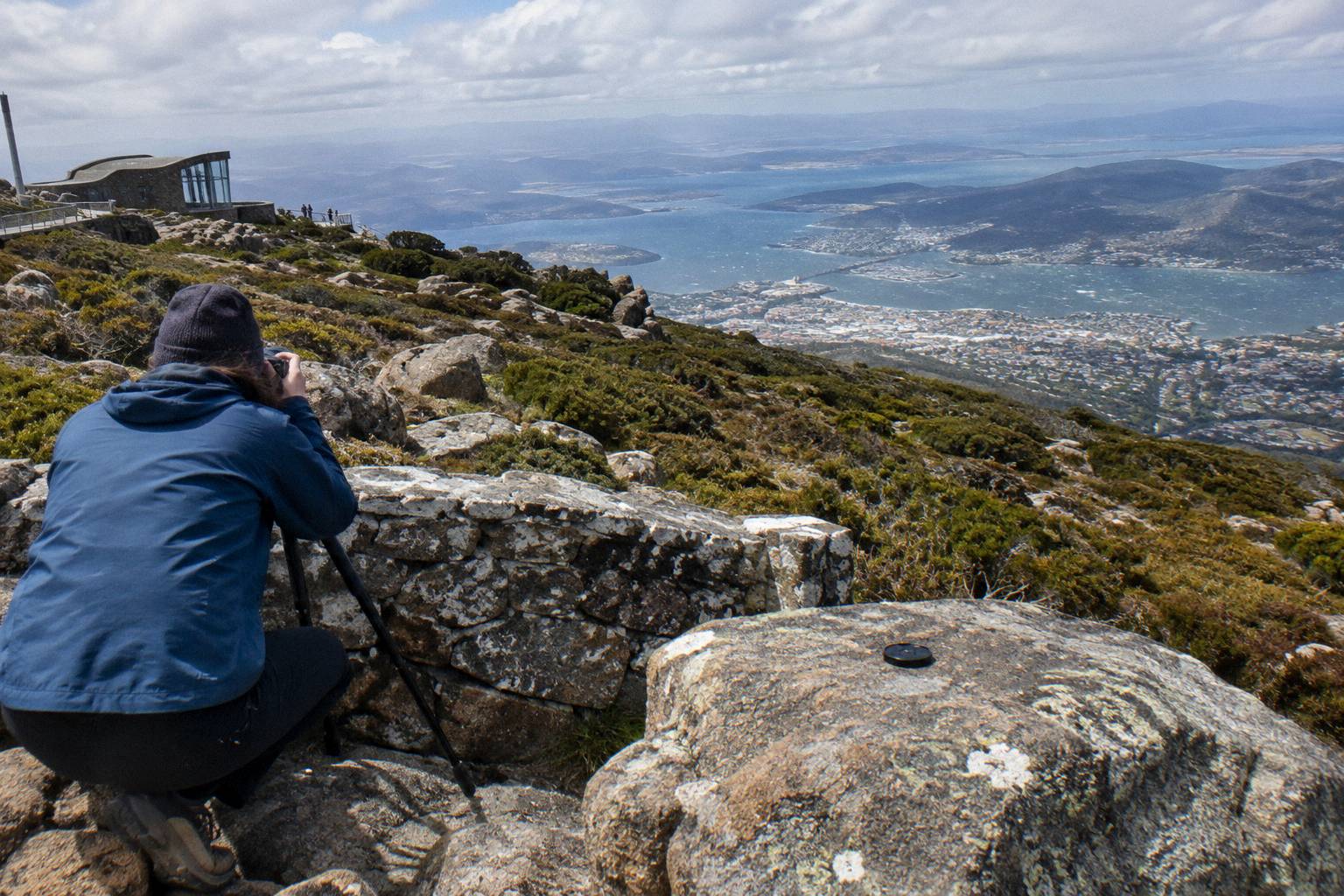
If 30 minutes sounds short, the arithmetic is on your side in one direction: because there is no cafe, shop or visitor centre at the top, there is genuinely less to do than at a developed attraction, and half an hour covers the built summit comfortably. The visitors who want more time are usually walkers or photographers, and for them the question shifts from the tour to the track network, covered in our walks and hikes on kunanyi roundup, or to whether walking down after the bus up is realistic, which our can I walk down after the bus up post answers directly.
Planning Your Stop: What To Bring And What To Expect
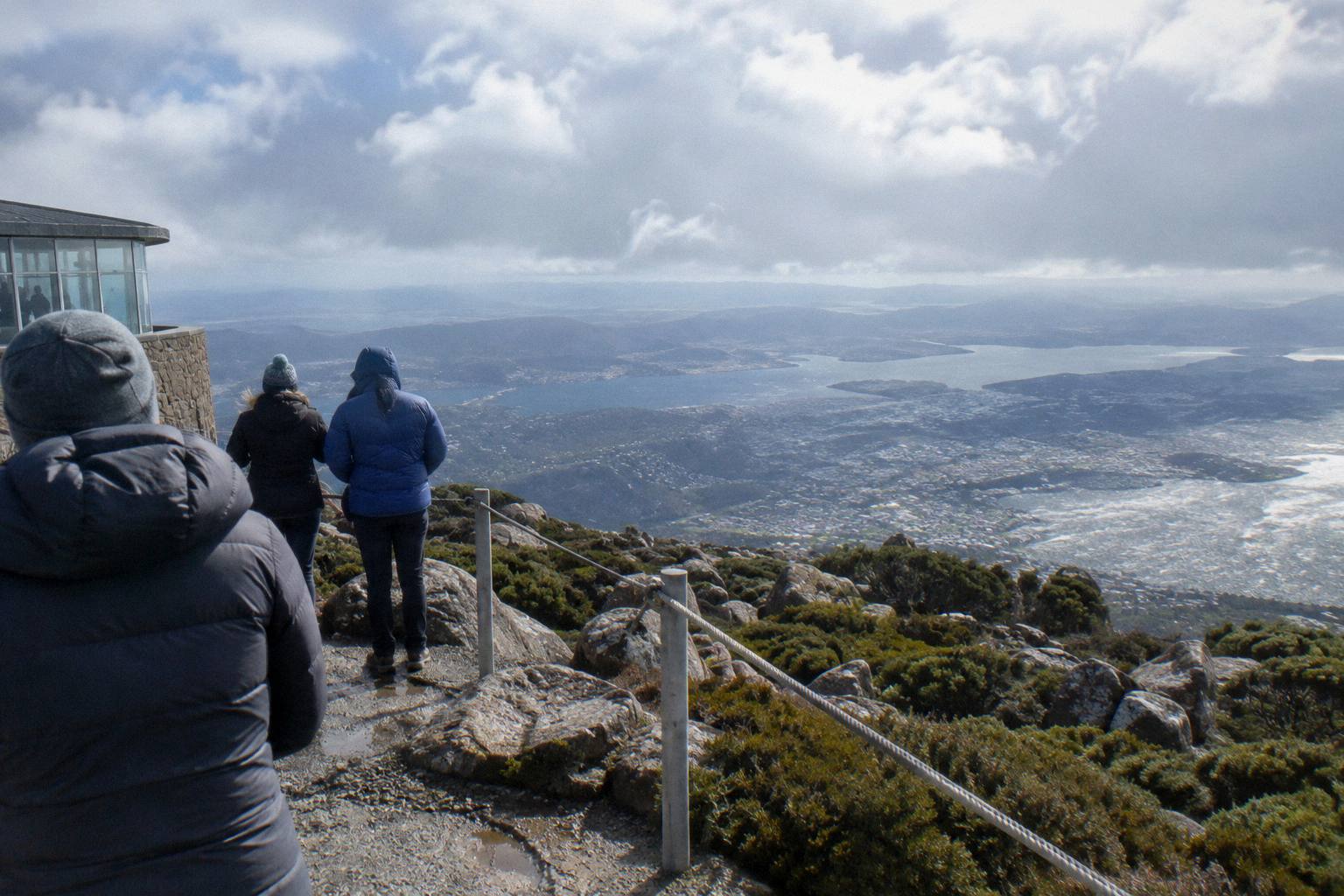
Plan the summit stop as an exposed 30-minute alpine visit: bring water and snacks since there is no food at the top, dress for temperatures often 10 to 12 degrees or more colder than the waterfront, time your visit inside the toilet hours if they matter, and check the road status before you leave because the summit is reachable only when Pinnacle Road is open. The three checks that change a summit visit are the road status line on 03 6238 2711 or the City of Hobart status page, the live Bureau observations for wind and temperature, and the season, because a 9pm summer visit and a 9pm winter visit encounter different facilities. November brings the annual maintenance closure, when the road shuts entirely, tracks stay open and no vehicles, cyclists or pedestrians use the road, so late-spring visitors should verify before relying on any summit access.
For families, the minimum ages and group caps matter as much as the facilities: the Pinnacle 2-Hour Small-Group Tour sets a minimum age of 8, while the Explorer Bus and shuttle services carry no stated minimum age, and our mountain trips with kids guide works through the choice. For cruise passengers, the small-group tour's optional drop-off at the cruise terminal is a genuine convenience, and our cruise ship day mountain tours guide covers the timing. Whatever format you choose, every trip listed here carries free cancellation up to 24 hours before start, which matters on a mountain where the weather decides the day.
Common Questions About The Summit Of Kunanyi / Mount Wellington
Is There A Cafe At The Summit Of Kunanyi / Mount Wellington?
No. There is no cafe, kiosk, shop or visitor centre at the summit. The only food outlet on the mountain is the Lost Freight Cafe at The Springs, a shipping-container cafe at 720 m open seven days year round except 25 and 26 December, with varying hours.
Are There Toilets At The Summit, And When Are They Open?
Yes. Summit toilets are open 7am to 10pm from 1 September to 30 April, and 7am to 5.30pm from 1 May to 31 August. Outside those hours the shelter and lookouts remain accessible at any time, but the toilets are locked.
Is There A Visitor Centre Or Ranger Station At The Summit?
No. There is no visitor centre or ranger station anywhere in Wellington Park. The summit is an unstaffed space with an observation shelter, lookouts, toilets and a parking loop.
How High Is The Summit Of Kunanyi / Mount Wellington?
The Trust's home page gives the summit as 1,271 m, while its facilities page says 1,270 m at The Pinnacle; 1,271 m is the figure to use, or about 1,270 m.
Can I Park At The Summit?
Parking at The Pinnacle is limited and sits on a loop: the Trust instructs drivers to continue around the loop to park and never stop on the road. Snow days bring congestion and traffic management, and on 14 days in 2025-26 the summit was not reachable by private vehicle at all.
How Long Do Tours Give You At The Summit?
Most set-format tours schedule about 30 minutes at the top. The Explorer Pass is the exception: it is valid all day with hop-on-hop-off use of the Explorer Bus on the mountain.