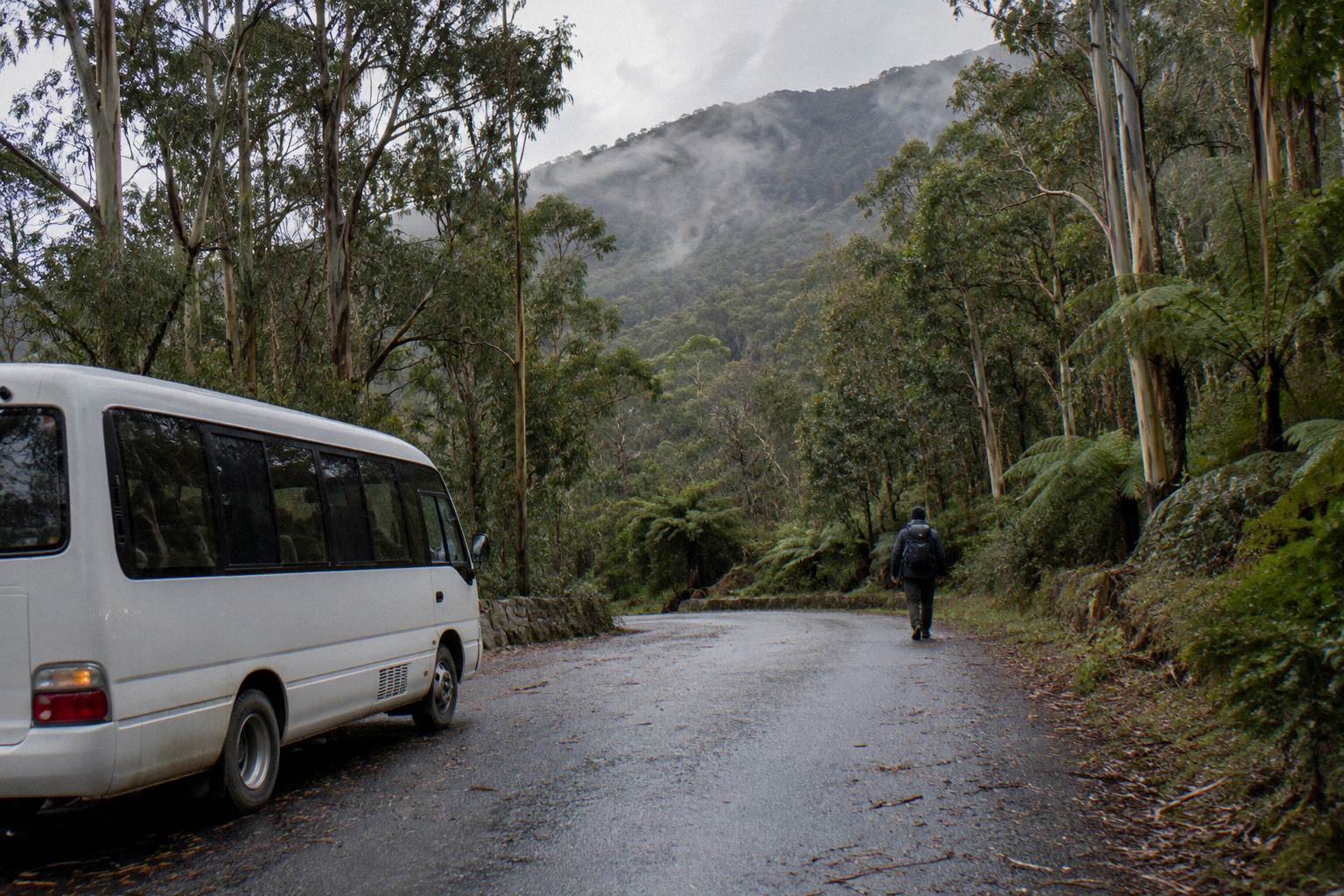
Can I Take My Bike On The Explorer Bus?
Yes, the Explorer Bus carries mountain bikes for a per-bike fee, loaded at Brooke Street Pier. Here is how bike freight works, the rules on the mountain, and how it compares with a guided descent.
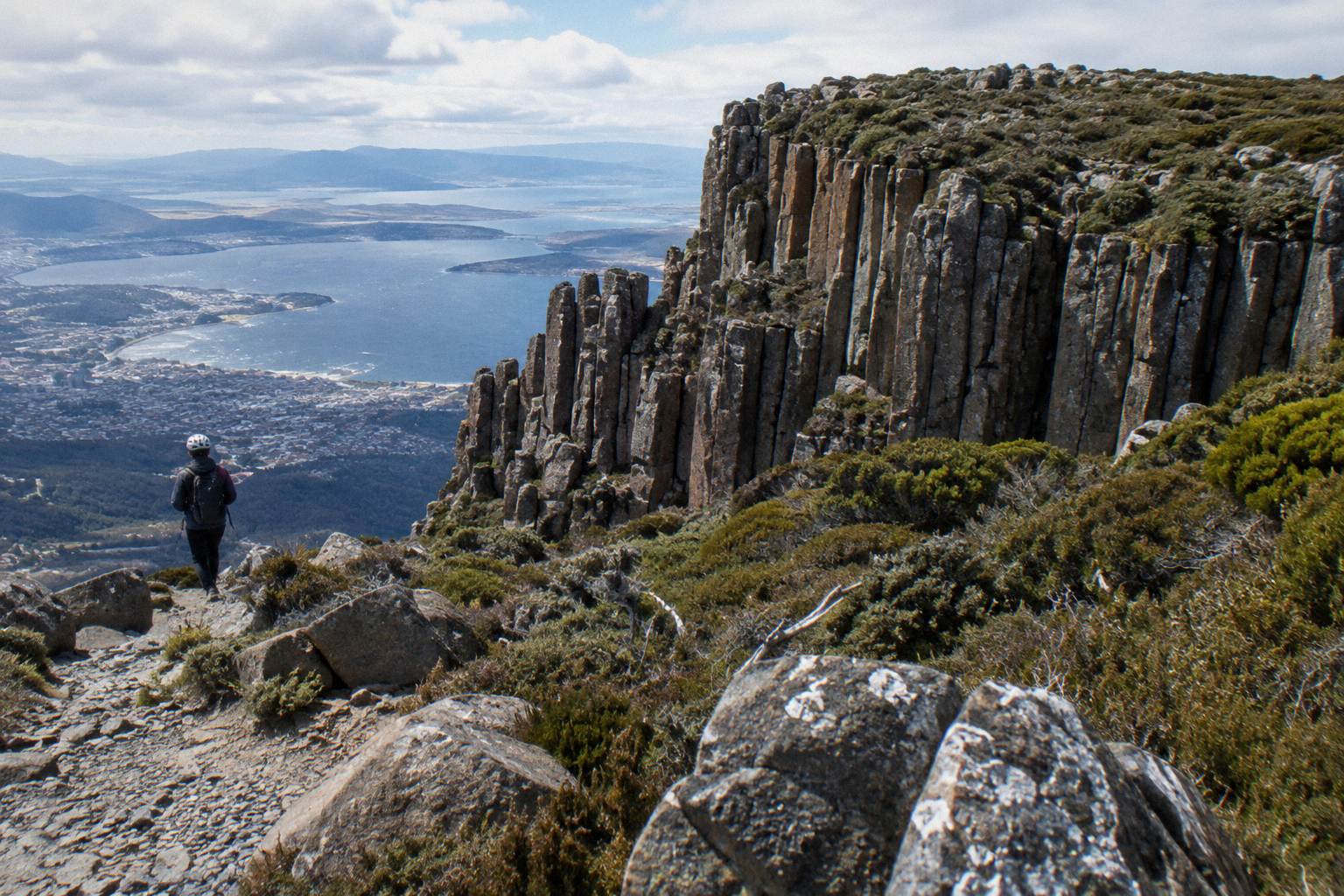
Yes, the Explorer Bus takes up to four mountain bikes on every departure for a separate per-bike fee, but your bike must be booked in advance and loaded at Brooke Street Pier at least 20 minutes before departure. With only four spaces per departure, booking early is the difference between riding along and watching the bus pull away.
That is the short answer, and it opens a bigger planning question. A rider who puts a bike on this bus is usually building a one-way mountain day: ride up as a passenger, roll down under their own power. That is a different trip from the standard return visit, and it changes which ticket makes sense. The Explorer Bus One-Way Pass, a 50-minute ride from Hobart to the summit from A$35 per person, exists for exactly this kind of day. The return version, the Explorer Bus Return Tour from A$55 per person, rated 4.8 from 1,081 reviews and the trip with the most reviews on the booking pages, suits riders who want the option of busing down again if legs or weather fail.
The bus itself is the Kunanyi / Mt Wellington Explorer Bus, run by the Red Decker Company, and it is one service with several tickets rather than a family of competing products. The Wellington Park Management Trust describes it as the only licensed operator able to take visitors up when the summit road is closed for snow, a meaningful detail for winter riders.
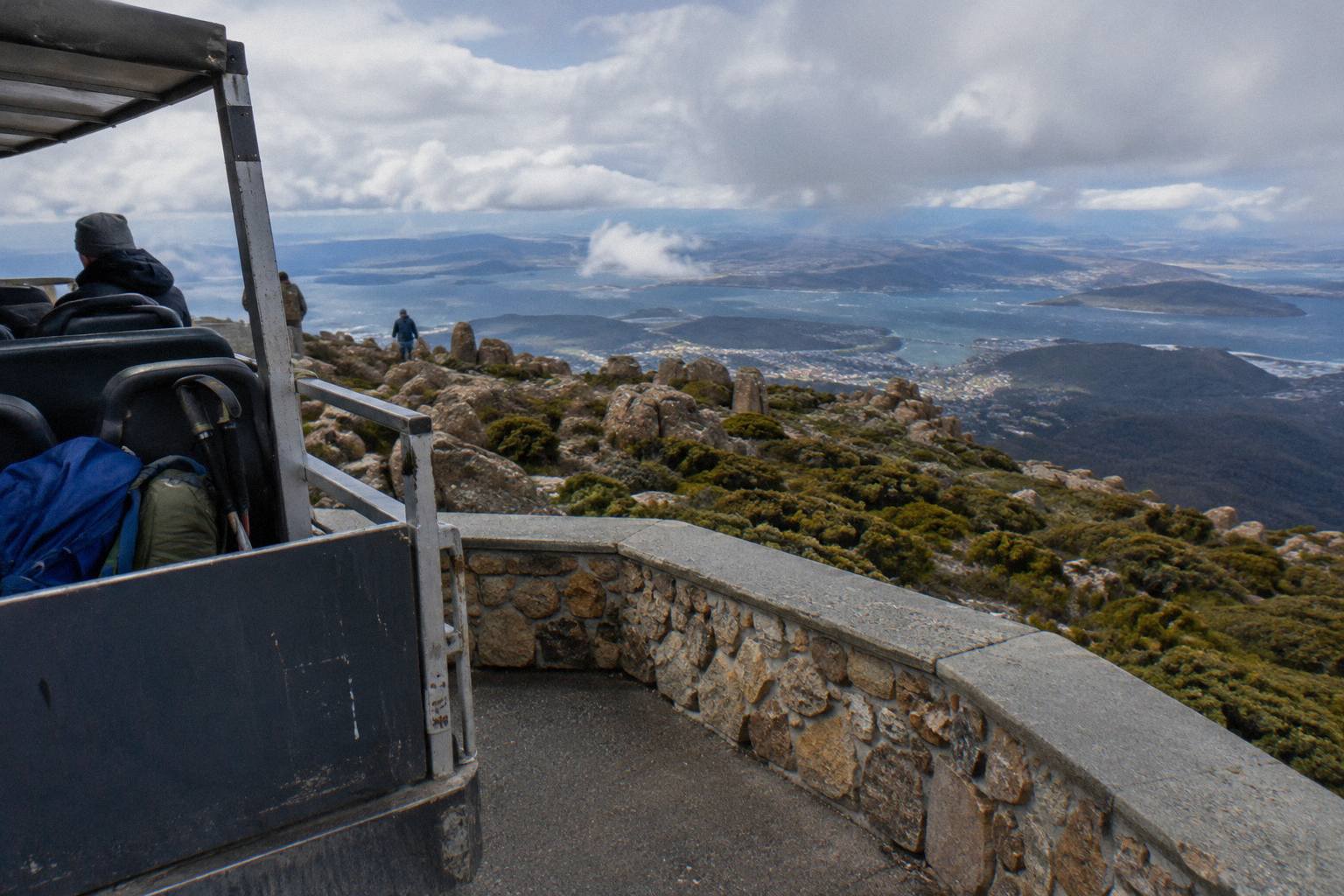
Before the mechanics, one framing point worth making early. Bringing your own bike and taking a guided descent tour are not rival versions of the same idea. Your own bike gives you freedom over route and pace but hands you the preparation, the mechanical risk and the navigation. The guided descent hands all of that to an operator and takes away your choices. Riders decide between them on familiarity with the mountain, confidence on loose gravel, and whether the trip is a riding day or a sightseeing day with a long downhill in the middle. If you are weighing the ride-up, roll-down idea, see shuttle up and bike down one way. To picture what the descent itself feels like, read downhill bike rides from the summit.
How Does Bike Freight On The Bus Actually Work?
Bike freight works as a pre-booked extra, not a walk-up service: each departure carries at most 4 mountain bikes, the fee applies per bike and is separate from your passenger fare, and bikes are loaded at Brooke Street Pier at least 20 minutes before departure, with the freight booking required no later than 30 minutes before the bus leaves. Miss either window and the bike stays behind, even if your seat does not.
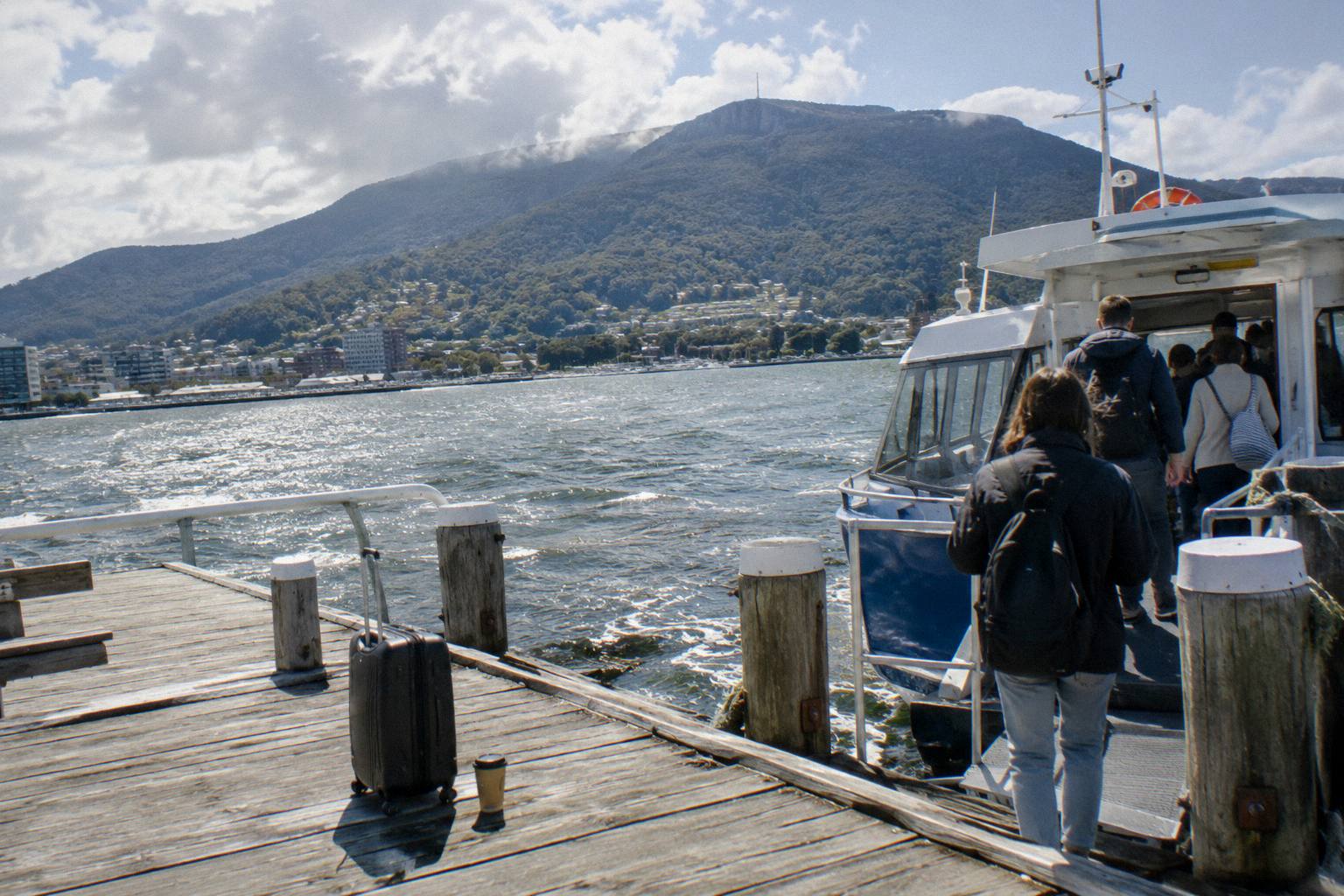
The numbers matter more than they first appear. Four bikes per departure is a hard cap, and on weekends in the warmer months, when the mountain's fire trails and the North South Track draw riders from across the region, that cap can be reached well before the day begins. The operator runs pre-booking as essential for passengers generally, and bikes doubly so. The booking office at Brooke Street Pier is open 8.30am to 4pm, and the operator's phone line, +61 3 6236 9116, answers questions about freight before you commit.
There is one wrinkle in the meeting-point details that catches riders out. The operator's own timetable page lists departures from opposite the Tasmanian Travel and Information Centre at 4 Elizabeth Street, while the booking pages for the Explorer Bus passes name Brooke Street Pier, 12 Franklin Wharf, as the meeting point, and the bike must be loaded at Brooke Street Pier regardless. The two pages differ, so treat the meeting point printed on your booking confirmation as the authoritative one, and arrive with the bike early enough to load rather than early enough to sprint.
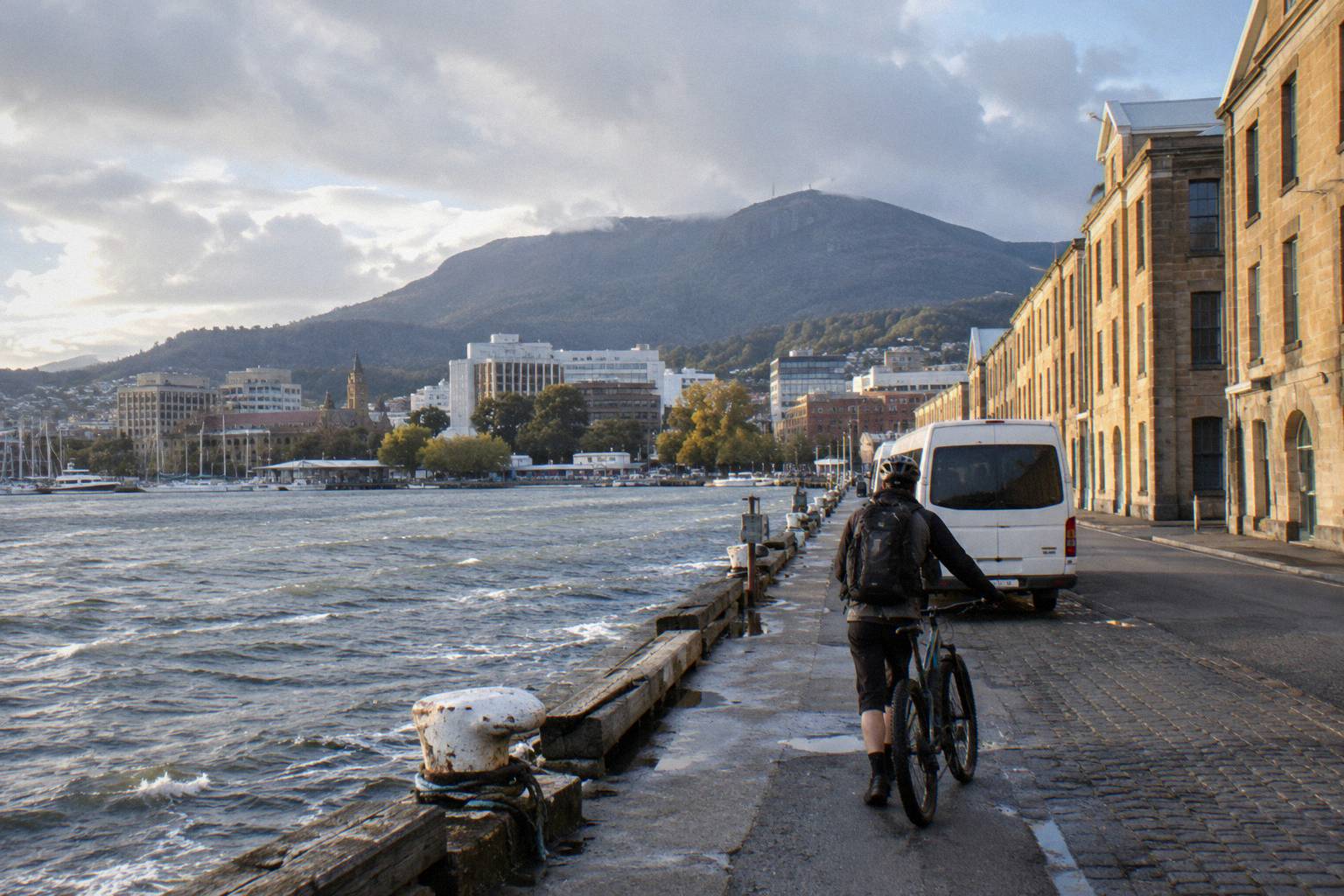
Here are the carriage rules as the operator states them, gathered in one place:
| Rule | What applies |
|---|---|
| Bikes per departure | Up to 4 mountain bikes, a hard cap |
| Booking | Essential, no later than 30 minutes before departure |
| Loading | At Brooke Street Pier, at least 20 minutes before departure |
| Fee | Charged per bike, separate from the passenger fare, on the listing |
| Snow tours | No bike freight at all on snow-day tours |
| Bike type | Mountain bikes; the service is built around trail riding, not road bikes |
One more clause in that table deserves its own sentence. The operator's snow-day tours, the City to Snow and Springs to Snow trips, carry no bikes whatsoever, so a winter rider cannot assume that because the bus runs on a snow day, the bike goes too. It does not.
Which Ticket Suits A Ride-Down Day?
The Explorer Bus One-Way Pass is the ride-up ticket for a descent day: a 50-minute trip from Hobart to the summit of kunanyi / Mount Wellington, from A$35 per person, with bike freight added alongside. The return ticket suits riders who want a bail-out option, and the guided descent suits riders who do not want to bring a bike at all. Three paths, one decision.
Working through them: the one-way pass includes access to Wellington Park and the summit, a Wellington Park bushwalking map, commentary and onboard Wi-Fi, and it boards at Brooke Street Pier. Hotel pickup and drop-off is listed as not included. The bike fee is separate, as the table above sets out. The return tour, from A$55 per person, is the same service with the ride home included and hop-on-hop-off use of the bus for the rest of the day, which is genuinely useful if your legs disagree with your plan by Big Bend.
The figures to hold in mind: all of these are Australian dollars, per person, as from-prices on the live listings, and every one of the trips named carries free cancellation up to 24 hours before start. That cancellation window matters for a bike day more than most, because a bike day depends on weather holding in a place where it often does not.
The third path replaces the whole question. Tasmanian Mountain Bike Adventures runs the Summit Descent Bike Tour, a 4-hour guided trip from A$179 per person with the bike, helmet and gloves included, bus transfers to the summit and the rainforest trail, a 6 km descent of the summit road and a 12 km rainforest ride, and guides who ride with the guests. No freight windows, no four-bike cap, no mechanical risk on your own machine. For a deeper comparison of the ways down, the guide to downhill bike rides from the summit works through the terrain and the fitness question in detail.
Who Is The Guided Descent Really For?
The guided descent is for riders who want the downhill without the logistics: it is a 4-hour small-group trip capped at 10, with all equipment and transfers included, from A$179 per person. It is not for very young or very small riders, and its booking pages state conflicting minimum heights, 120 cm on one and 125 cm on the other, so check with the operator before booking.
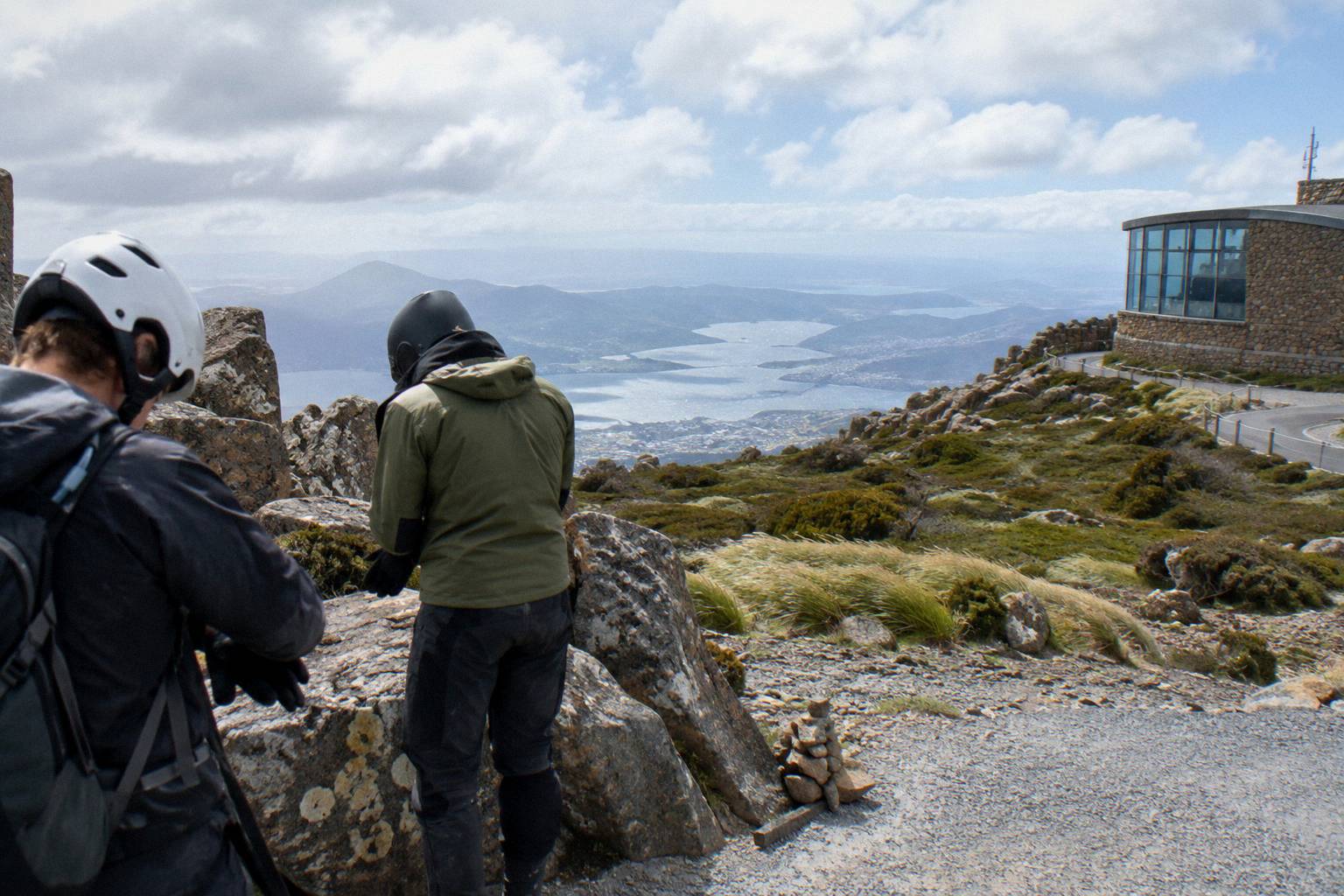
That height conflict is worth spelling out because families hit it. One booking page sets the minimum at 120 cm, another at 125 cm, so confirm the current minimum with the operator before booking a teenager in that band. The same pages set a maximum rider weight of 120 kg and ask for basic bike handling skills and a basic fitness level, described on one page as moderate-to-basic. A rider who has never stood on pedals on loose gravel will find the first kilometre of the summit road bracing.
Against that, the included list is generous: the mountain bike itself, helmet, gloves, a trail briefing and bike introduction, the 30-minute bus transfer to the summit, a 15-minute transfer to the rainforest trail, and guides riding alongside the whole way. The meeting point is the operator's shop at 466 Macquarie St, South Hobart, so unlike the Explorer Bus freight, there is nothing to load yourself. Free cancellation runs to 24 hours before start, the same window as every trip listed here.
The choice between a freighted bike and this tour usually lands on two questions. Do you want to ride your own bike, set up for you, on terrain you have chosen? Then book freight and the one-way pass. Do you want the descent delivered, with someone else carrying the mechanical risk and reading the weather? Then the guided trip is the cleaner buy, and it removes the four-bike cap entirely.
Where Are You Actually Allowed To Ride?
Bikes are allowed on formed roads, fire trails and listed tracks in Wellington Park only, and riders caught on walking-only tracks can be fined. The relevant riding from the top includes the summit road itself on a one-way descent and the North South Track, graded Blue Square, intermediate, for bikes, while the Pipeline Track below is wide and shared but has weekday repair closures running for several months.
These rules come from the Wellington Park Management Trust, and the Trust's bike riding page is the authority on them. The North South Track runs from the mountain's upper slopes toward the Glenorchy MTB Park at its northern end, and at Moderate for walkers, Blue Square for riders, it is the most ride-worthy named trail on the Trust's pages. The Pipeline Track, reached from Fern Tree, is a wide shared track used by walkers, runners and bikes, and it also leads to Silver Falls, a 4 m waterfall, though the falls walk is a walking outing rather than a riding one.
The repair works deserve a plain warning. TasWater works between Neika and the Northwest Bay Weir began in late September 2026 and run for several months, with temporary closures from 7am to 5pm on weekdays. Anyone describing the Pipeline Track as fully open is wrong, so if your descent route ends toward Fern Tree and the south, check the Trust's road and track updates page the day before.
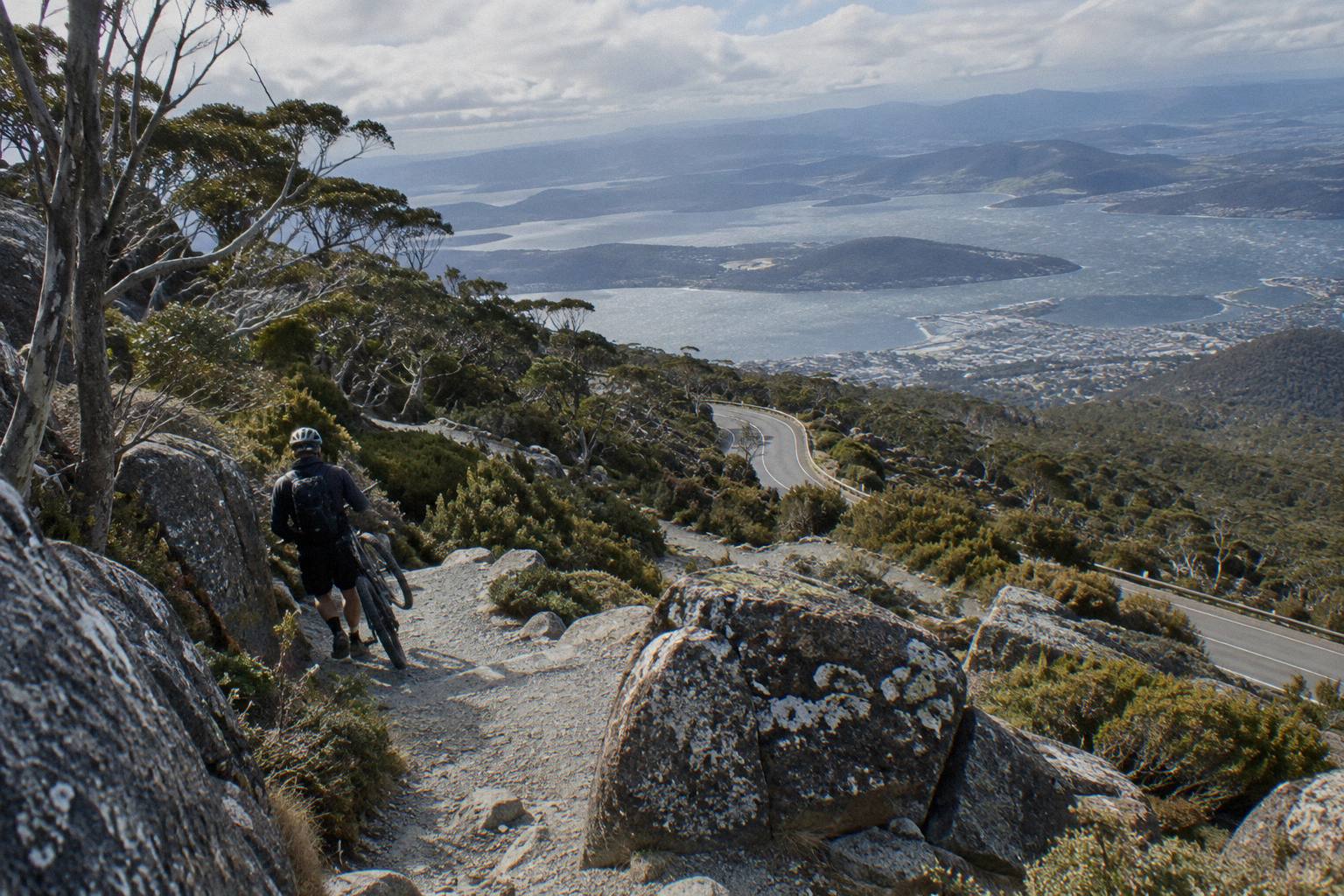
A one-way descent using the bus up most commonly means the summit road down, roughly 22 km of narrow, winding, shared bitumen from the top toward Hobart according to secondary sources, with no official drive-time or ride-time figure published on any government or Trust page, so plan time from the road itself rather than from a fixed number. The road is shared with buses, pedestrians and wildlife, and the Trust notes it is narrow and winding; riders comfortable holding a line on shared roads will enjoy it, and riders who are not should be on the guided trip or the trails instead. For the riding question in its fullest form, including the one-way descent debate, see the piece on whether you can bike down one way. The rest of the planning pages sit on Mount Wellington Tours.
What Happens To Bikes When Snow Closes The Road?
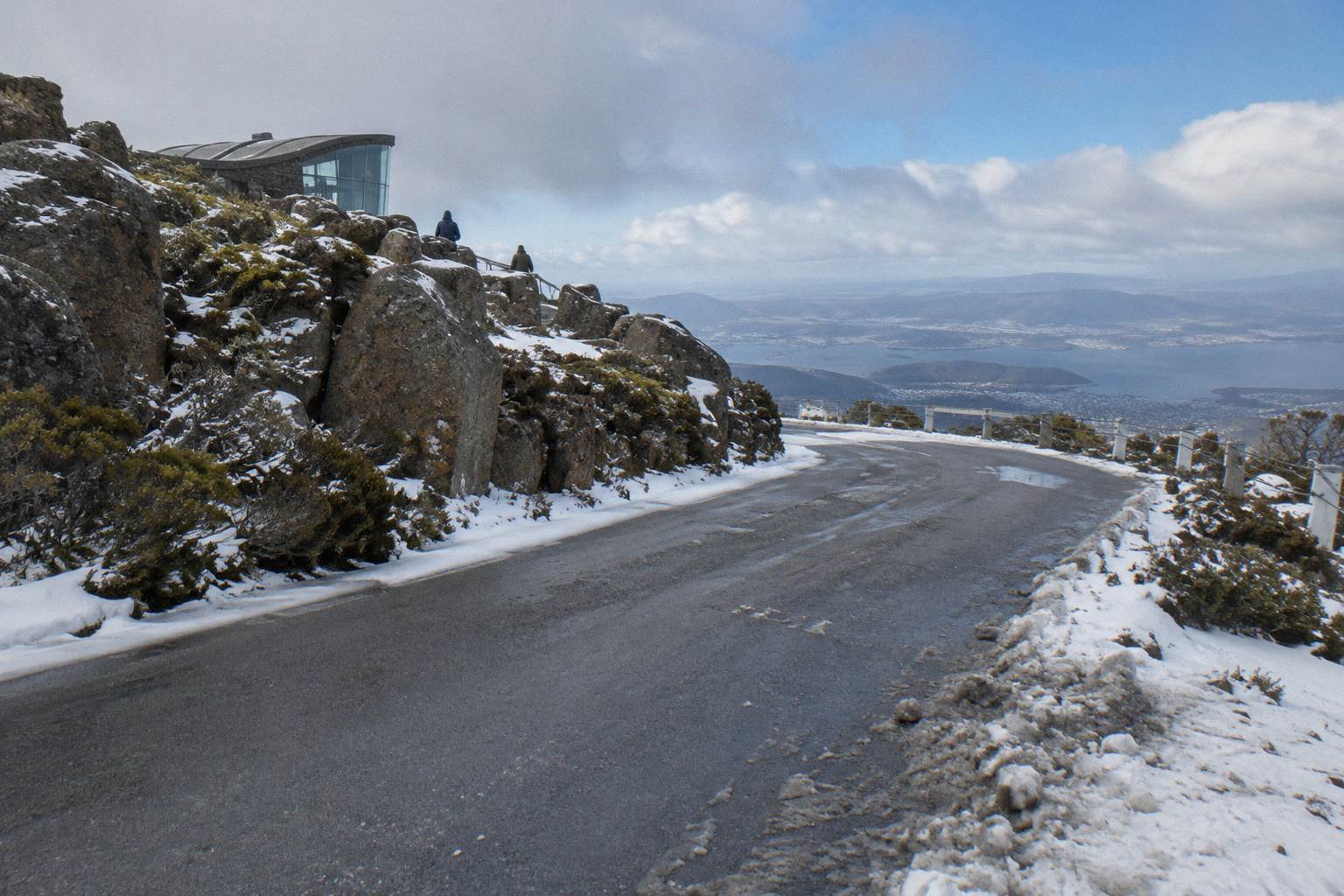
On snow days the rules change completely: the snow tours carry no bikes at all, no one-way fares and no hop-on, and while the Explorer Bus is described by the Trust as the only licensed operator able to take visitors up past the closures, that privilege extends to passengers, not to bike freight. A winter rider should plan on the bike staying in town.
The background is that Pinnacle Road, the only public road into the park, is managed by the City of Hobart and closes when ice or snow is present, with closures possible in any month but concentrated from April to September. The 2025-26 season saw the road shut 95 nights for snow or ice, the summit unreachable by private vehicle on 14 days, and a record 1,906 vehicles on one September snow day. The road also shuts for annual maintenance every November, when tracks stay open but the road itself carries no vehicles, riders or pedestrians. Before any winter or late-autumn riding day, call the Pinnacle Road status line on 03 6238 2711 or check the Council status page.
When the gates close, the Hobart Shuttle Bus Company's booking page states plainly that its summit pass is then run by the Explorer Bus partners, the only bus approved beyond the closed gates. That is the same fact the Trust states from the other side. But the operator's own snow-tour conditions are explicit that these are different products: a 2.5-hour City to Snow return or a 1-hour Springs to Snow trip, bookable only once a reliable snow forecast exists, with no guarantee of reaching The Pinnacle and no bike freight, no one-way fares and no hop-on.
Nothing is published about what happens to a trip already under way if the road shuts mid-tour, or about same-day refunds beyond the standard free cancellation up to 24 hours before start. Nothing is published on this point, so raise it with the operator and read the booking terms before a winter booking rather than assume. For a longer treatment of snow-day running, covering whether the bus runs when the road is closed, see the piece on the passenger side of the same question.
| Situation | Bike on the bus? | Notes |
|---|---|---|
| Normal day, booked in advance | Yes, up to 4 per departure | Loaded at Brooke Street Pier, 20 minutes before departure |
| Normal day, unbooked | No, if the cap or window is missed | Freight must be booked 30 minutes ahead at the latest |
| Snow tour | No | No bike freight, no one-way, no hop-on on snow tours |
| Road closed for maintenance | No bus at all to the summit | Tracks stay open; road closed to riders too |
| Extreme or Catastrophic fire danger | Park closed | Closed to all users, riders included |
How Do You Plan The Logistics Of A Bike Day?
Build the day backwards from the last bus you are willing to ride and forwards from the first loading window: the bike must be at Brooke Street Pier at least 20 minutes before departure, freight booked 30 minutes ahead at the latest, and the timetable runs from 4 Elizabeth Street at 9.30am, 11am, 12.30pm, 2pm and 3.30pm in summer, with the 3.30pm dropped in winter.
The seasonal split is exact: the summer timetable runs 1 October to 30 April, the winter timetable 1 May to 30 September, and the service runs seven days, closed only on 25 December and Good Friday. Pre-booking is essential, doubly so with a bike occupying one of four freight slots. If the descent plan is the summit road, the practical shape of the day is the 9.30am or 11am departure, an unhurried roll down, and time to spare; the afternoon departures suit riders heading up for a golden-hour start to the descent, and the sunset at the summit guide covers what that light does to the Organ Pipes.
Two small logistics points round it out. First, the mountain is often 10 to 12 degrees or more colder than the Hobart waterfront, with wind chill below minus 20 possible at the top per the Trust, so pack for the summit, not the wharf, and the what to wear on a summit tour guide is the practical checklist. Second, if something goes wrong with the booking or the bike, the operator's booking office at Brooke Street Pier, open 8.30am to 4pm, and the phone line, +61 3 6236 9116, are the two channels, and the free cancellation window runs to 24 hours before start.
Is The Bus-And-Bike Combination Worth It?
For a confident rider with their own bike, yes, and the arithmetic is straightforward: a one-way pass from A$35 per person plus the per-bike freight on the listing buys a 1,271 m descent with no guide fee and no rental. For an occasional rider, the guided descent from A$179 per person with everything included usually costs less in total once equipment, transfers and margins for error are counted.
The comparison is really about what you are insuring against. The self-guided day insures nothing: you carry the tube, the tools, the navigation and the consequence of a mechanical at Big Bend with the last bus gone. The guided day insures all of it, at a price, with a group cap of 10 and guides riding alongside. Riders who already own a working mountain bike and have ridden shared mountain roads before will find the bus-and-bike day one of the better-value outings in Tasmania; riders meeting either condition for the first time will not.
Avoid improvising the middle path, riding up and getting the bus down, because the return ticket's hop-on use makes it possible but the bike still needs its own freight slot booked in each direction, and the four-bike cap applies to every departure separately. A descent planned as bus-up, ride-down, bus-up-again is two freight bookings on one ticket, and that is exactly the kind of detail to confirm at the Brooke Street Pier office when booking rather than discovering at 3pm on the mountain.
Common Questions About Bikes On The Explorer Bus
Can I Take My Bike On The Explorer Bus?
Yes. The bus carries up to 4 mountain bikes per departure for a separate per-bike fee, booked no later than 30 minutes before departure and loaded at Brooke Street Pier at least 20 minutes before the bus leaves.
How Many Bikes Fit On Each Bus Departure?
Four mountain bikes per departure. It is a hard cap, so book the freight early, especially on weekends in the warmer months.
Where Do I Load The Bike?
At Brooke Street Pier, 12 Franklin Wharf, at least 20 minutes before departure. Note the operator's timetable page lists departures opposite the Tasmanian Travel and Information Centre at 4 Elizabeth Street; use the meeting point on your booking confirmation.
Can I Take A Bike On A Snow Tour?
No. The operator's snow-day tours carry no bike freight, no one-way fares and no hop-on. On snow days the bike stays in town.
Which Ticket Should A Rider Buy?
The Explorer Bus One-Way Pass, a 50-minute ride to the summit from A$35 per person, suits a ride-down day. The return tour from A$55 per person adds a bail-out bus down. Riders without their own bike can take the Summit Descent Bike Tour from A$179 per person with all equipment included.
Is The Summit Road Itself Open To Riders?
Yes, it is a shared, narrow and winding road, but it closes for snow or ice, sometimes pre-emptively, and shuts to everyone for annual maintenance each November. Check the Pinnacle Road status line, 03 6238 2711, before setting out.