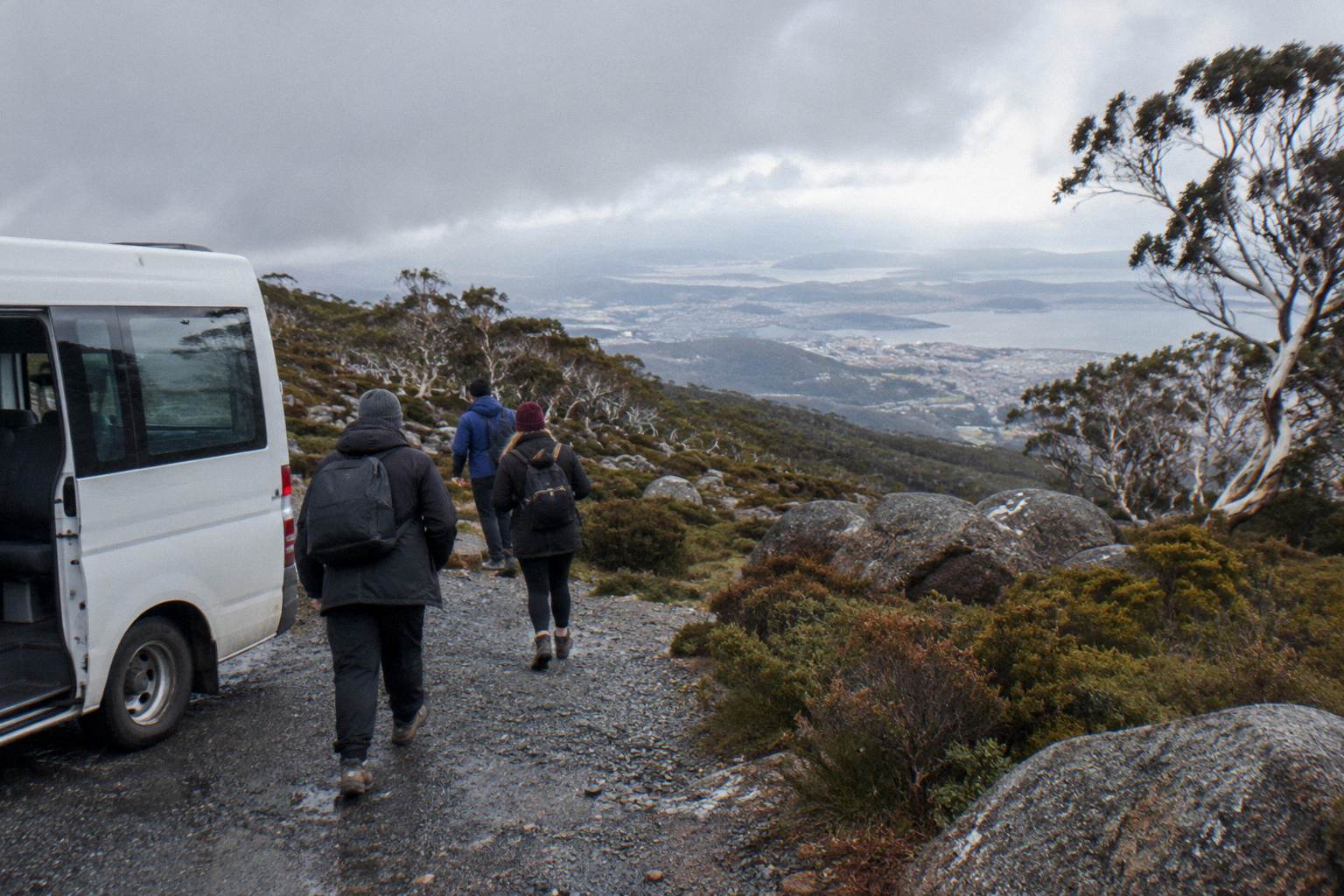
How Much Colder Is The Summit Than Hobart On A Tour Day?
The summit of kunanyi / Mount Wellington is often 10 to 12 degrees or more colder than the Hobart waterfront. Here is what the official sources say, what wind chill does, and what to wear on a tour day.
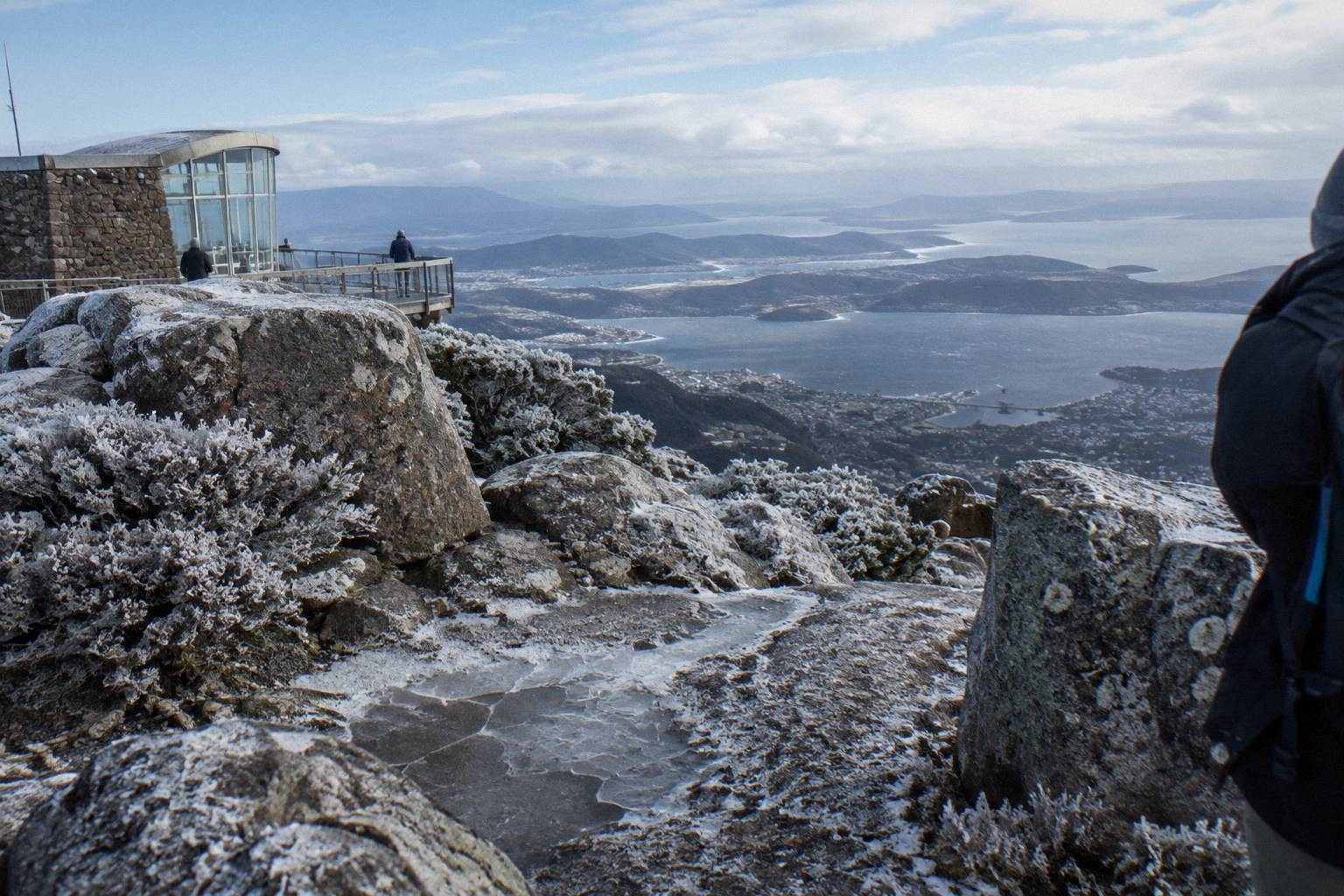
Expect the summit of kunanyi / Mount Wellington to be often 10 to 12 degrees or more colder than the Hobart waterfront on the same day. The Wellington Park Management Trust says the difference can reach 12 degrees or more, while the Explorer Bus operator describes the top as about 10 degrees cooler than the city. No single fixed number is right, because the gap shifts with wind, cloud and season.
That two-degree spread between the two most reliable sources is not a disagreement anyone needs to resolve. It is a range, and the simple way to carry it in your head is this: whatever your phone says for Hobart, subtract at least ten degrees for The Pinnacle, and plan for the possibility of more. The Trust's safety page goes further than the temperature gap alone, warning that high winds and temperatures below zero are common at the summit, and that wind chill below minus 20 degrees is possible. A mild 14-degree afternoon by the waterfront can sit close to freezing at 1,271 metres, with a wind that makes it feel far colder still.
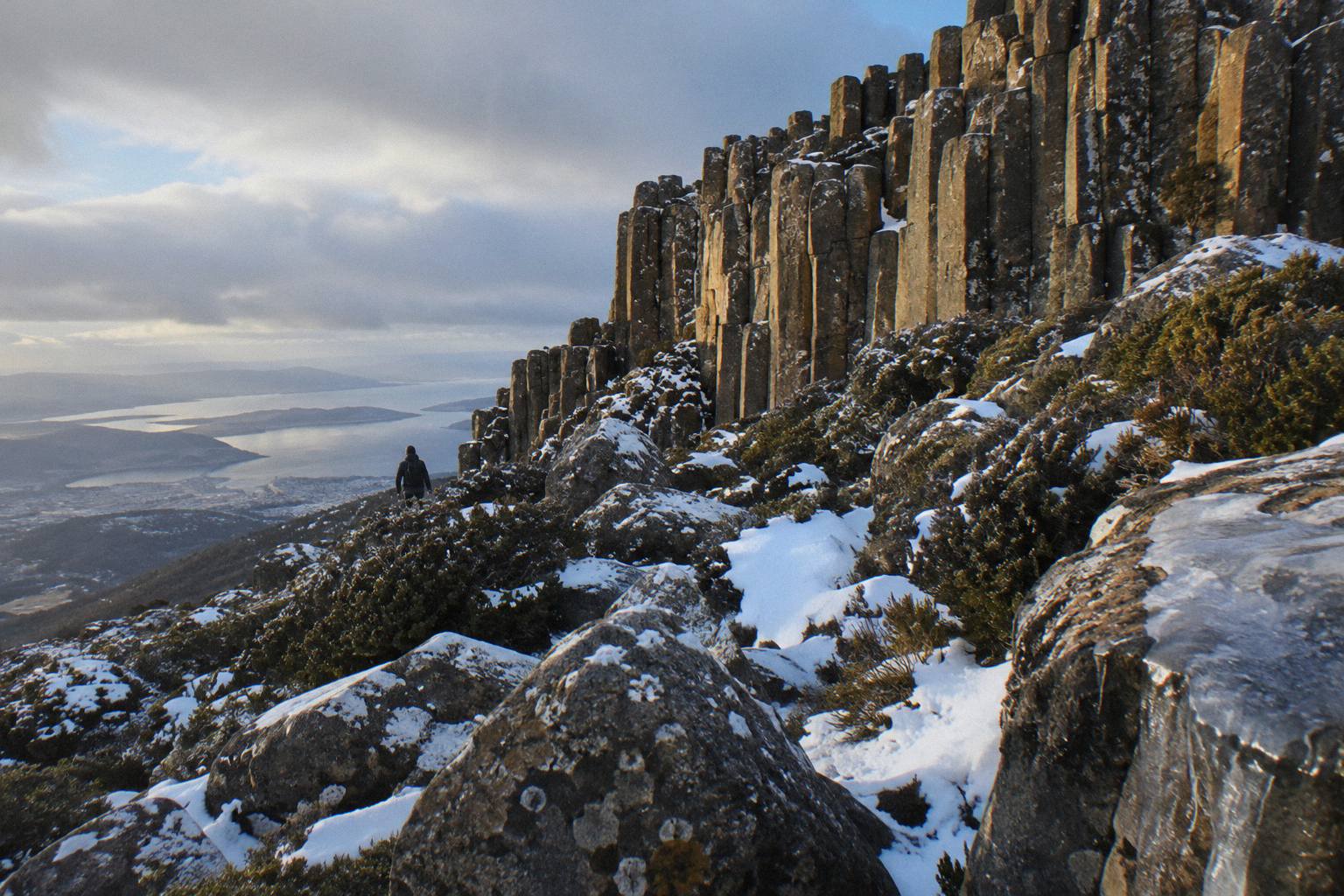
The mountain creates its own weather. Air rising over the massif cools, clouds form against the upper slopes, and the summit sits inside them far more often than the city below. If you are joining a tour, the practical consequence is that you will step off a warm bus into conditions that feel like a different season, sometimes within the same hour. Locals summarise it as four seasons in one day, a phrase the Explorer Bus operator itself uses, and it is closer to a literal description than a cliché.
Why The Summit Runs So Much Colder Than The Waterfront
The summit stands at 1,271 metres above a sea-level city, and temperature drops with elevation. On this mountain the drop is amplified by exposure: The Pinnacle is an open rocky plateau where wind has nothing to slow it, while Hobart's waterfront is sheltered at sea level. The Trust notes the summit can be 12 degrees or more below the waterfront, and that is before wind chill is factored in.
The physics is straightforward. As air rises it expands and cools, and a rough rule of thumb is that temperature falls with every few hundred metres of climb. Hobart city sits effectively at sea level, so the full 1,271 metres of the mountain sits between the two. Add the summit's exposure, with nothing above shrub height to break the wind, and the felt difference grows beyond what a thermometer reads. The Bureau of Meteorology maintains a live station at the summit, Kunanyi / Mount Wellington, station 094087, at its live observations page, and it is worth checking on the morning of a tour. One quirk of the station: wind and feels-like readings can be unavailable when ice builds up on the instruments, which tells you something about summit conditions on its own.
The Trust's safety guidance, at its park safety page, is the strongest source for the gap. It also records the wind chill figure that surprises most visitors: below minus 20 degrees is possible. That is not a daily occurrence, but it is a real possibility on a winter front, and it explains why the gap question is a clothing question rather than trivia. For a fuller weather picture, the longer guide to summit weather and how it changes your tour is the companion read.
Here is how the main sources describe the gap side by side, in their own terms:
| Source | What it says about the temperature gap | Extra detail |
|---|---|---|
| Wellington Park Management Trust | The difference between the Hobart waterfront and The Pinnacle can be 12 degrees or more | High winds and sub-zero temperatures are common at the summit; wind chill below -20 °C is possible |
| Explorer Bus operator | About 10 degrees cooler than Hobart city | Describes the mountain as four seasons in one day |
| Bureau of Meteorology station 094087 | No fixed figure; live observations only | Wind and feels-like readings can be unavailable due to ice build-up |
If you are weighing a tour booking against all this, it helps that the trips carry free cancellation up to 24 hours before start.
What The Climate Record Says About Summit Temperatures
Long-run climate averages for The Pinnacle show a January mean of 9.5 degrees and a July mean of 0.7 degrees, from the 1991 to 2020 record kept at 1,260 metres. The record low is minus 9.1 degrees, and the summit has never reached 30 degrees, peaking at 29.8. Sustained wind above 157 km/h has been recorded on the mountain.
Those averages, from the Wikipedia climate table for the Pinnacle, which republishes Bureau of Meteorology data as a secondary source, reframe the gap question. In the middle of a Tasmanian summer, when Hobart can sit in the low twenties, the summit averages under ten degrees. That is the mean, not the extreme, and it is why locals wear jackets at the top in January. Winter inverts the picture: the city can enjoy a mild sunny day in the teens while the summit averages below one degree, and the wind makes even that feel brutal.
| Climate figure at The Pinnacle (1991-2020, 1,260 m) | Value |
|---|---|
| Mean temperature, January | 9.5 °C |
| Mean temperature, July | 0.7 °C |
| Mean temperature, August | 0.7 °C |
| Record low | -9.1 °C (3 September 1993) |
| Highest temperature recorded | 29.8 °C (31 January 2020) |
| Sustained wind recorded | Over 157 km/h |
Two readings from that table deserve emphasis. First, the record low and the record high are both real, extreme edges of a wide range, and most tour days land somewhere between them. Second, the wind figure, sustained wind above 157 km/h, is not a gust, it is sustained wind, and it explains why the Trust's wind chill warning should be taken seriously even when the air temperature alone looks tolerable. If your tour day is forecast for strong winds in Hobart, expect worse at the top.
Wind Chill: The Number That Matters More Than Temperature
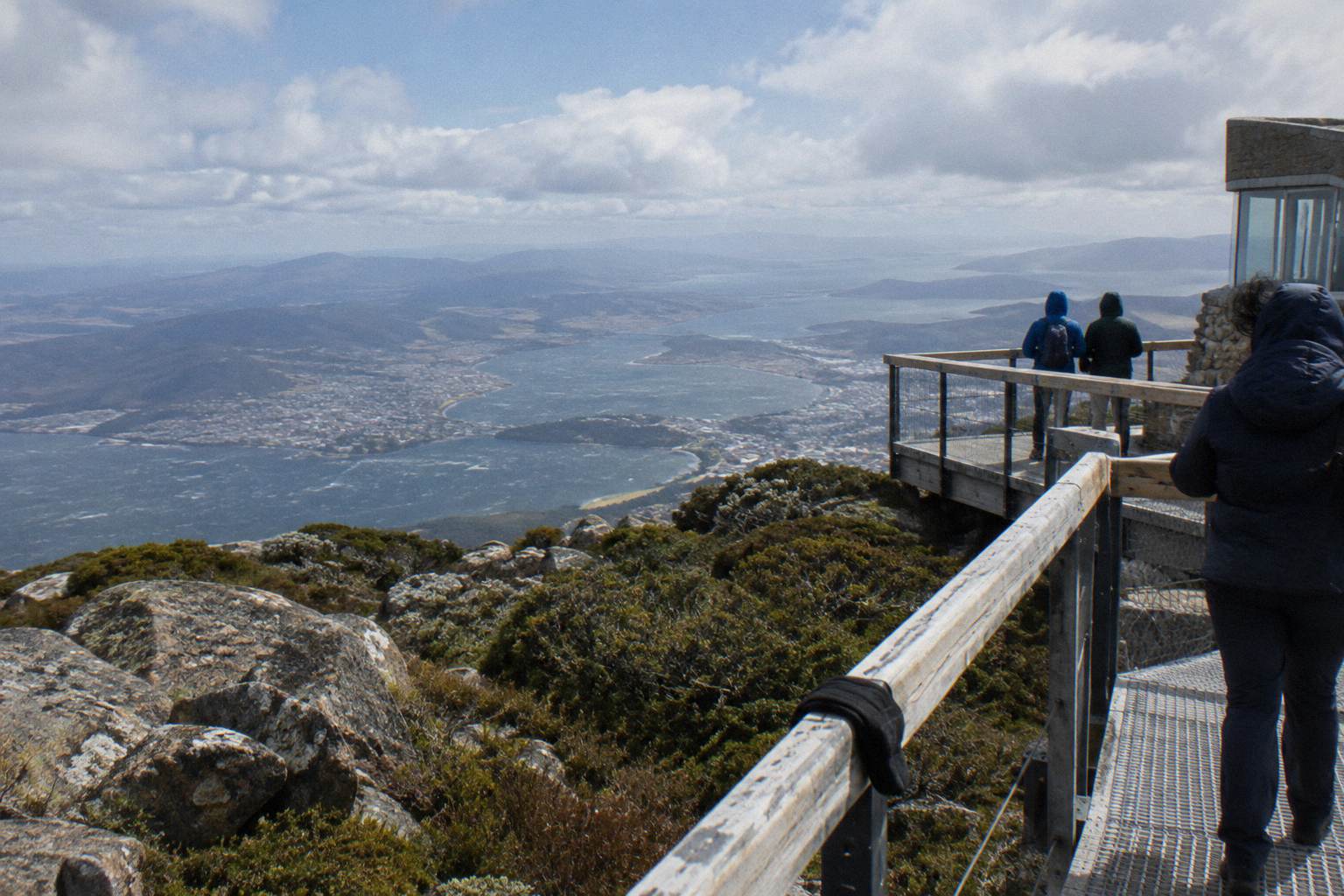
Wind chill is the felt temperature once wind is accounted for, and at The Pinnacle it can push conditions below minus 20 degrees even when the air temperature is well above that. The Trust warns this is possible, which means the gap for a tour day is not just the degrees between city and summit but the difference between still waterfront air and an exposed, windy plateau.
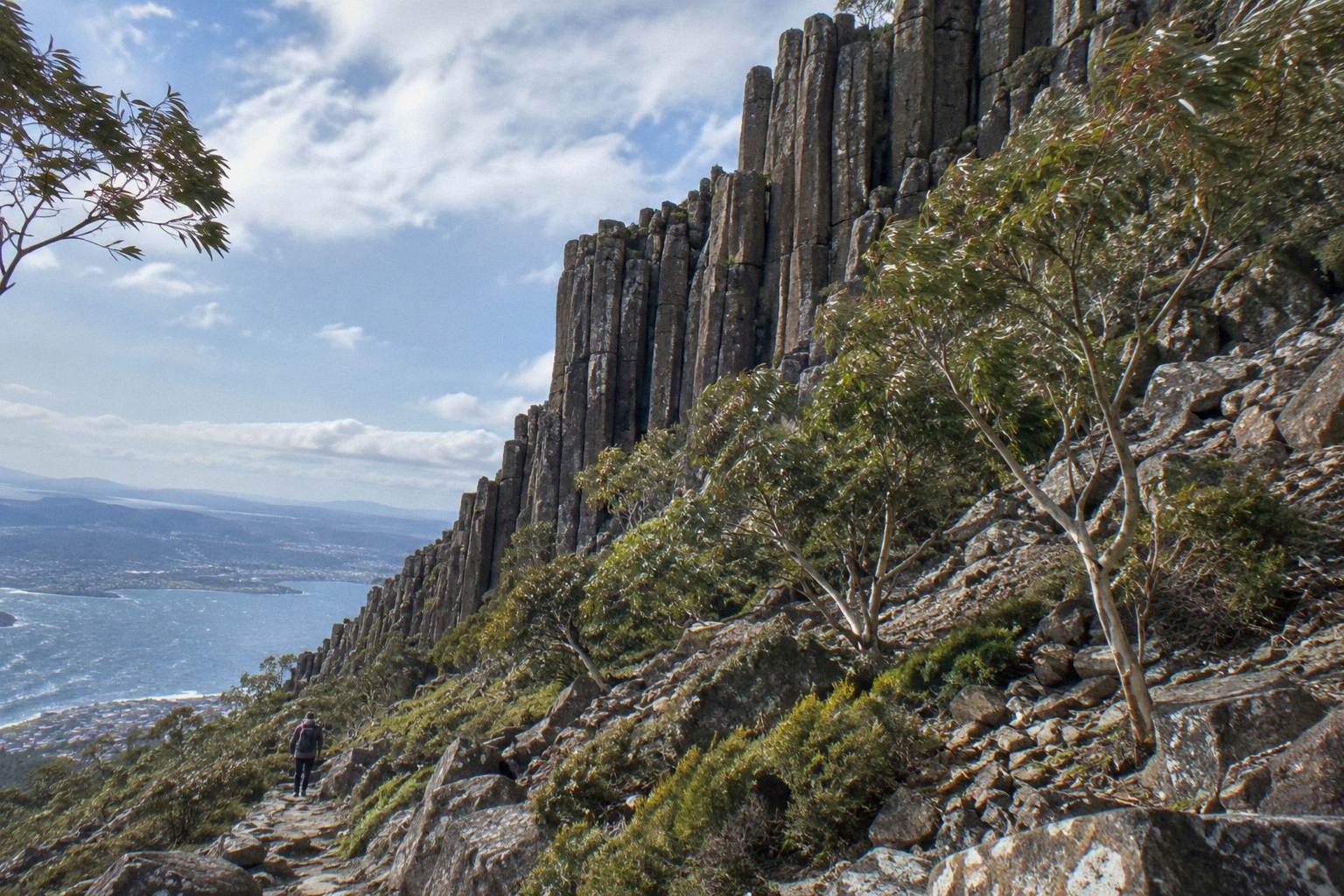
Consider a worked example using only the figures the sources give. If the waterfront is at 12 degrees, the Trust's gap of 12 degrees or more puts the summit at or below freezing. Add the winds that are common on an open plateau at 1,271 metres, and the felt temperature drops several more degrees below what the thermometer reads. That combination, a mild city day and a genuinely bitter summit, catches visitors constantly, because the departure point feels fine and the top does not.
The practical defence is layering rather than a single heavy coat. A windproof outer layer matters more than thickness, because wind is the variable that turns a cold summit into a painful one. Warm footwear and something for your ears and hands earn their place on any tour day, and the detailed guide to what to wear on a summit tour breaks the packing down season by season. The key idea is simple: you can always remove a layer on the bus, but you cannot add one you left at the hotel.
Does The Cold Gap Mean Your Tour Gets Cancelled?
No. Cold alone does not cancel summit tours, and the Explorer Bus Return Tour operates in all weather conditions, though its booking page asks travellers to check the weather before going. What does disrupt tours is snow and ice on Pinnacle Road, which closed for 95 nights across 2025-26, because the City of Hobart shuts the road itself when conditions require it.
The distinction matters for planning. The temperature gap, even at its worst, is a clothing problem the buses handle comfortably with heating and enclosed cabins. Road closures are a different category: Pinnacle Road is managed by the City of Hobart and closes when ice or snow is present, sometimes before snow even arrives. On 14 days in 2025-26 the summit was not reachable by private vehicle at all, though vehicle access to The Springs, 720 metres up, was possible on all but one closure day. The Trust publishes closure counts and updates at its road and track updates page, and the Pinnacle Road Information Line on 03 6238 2711 carries the current status. The road also shuts for annual maintenance each November.
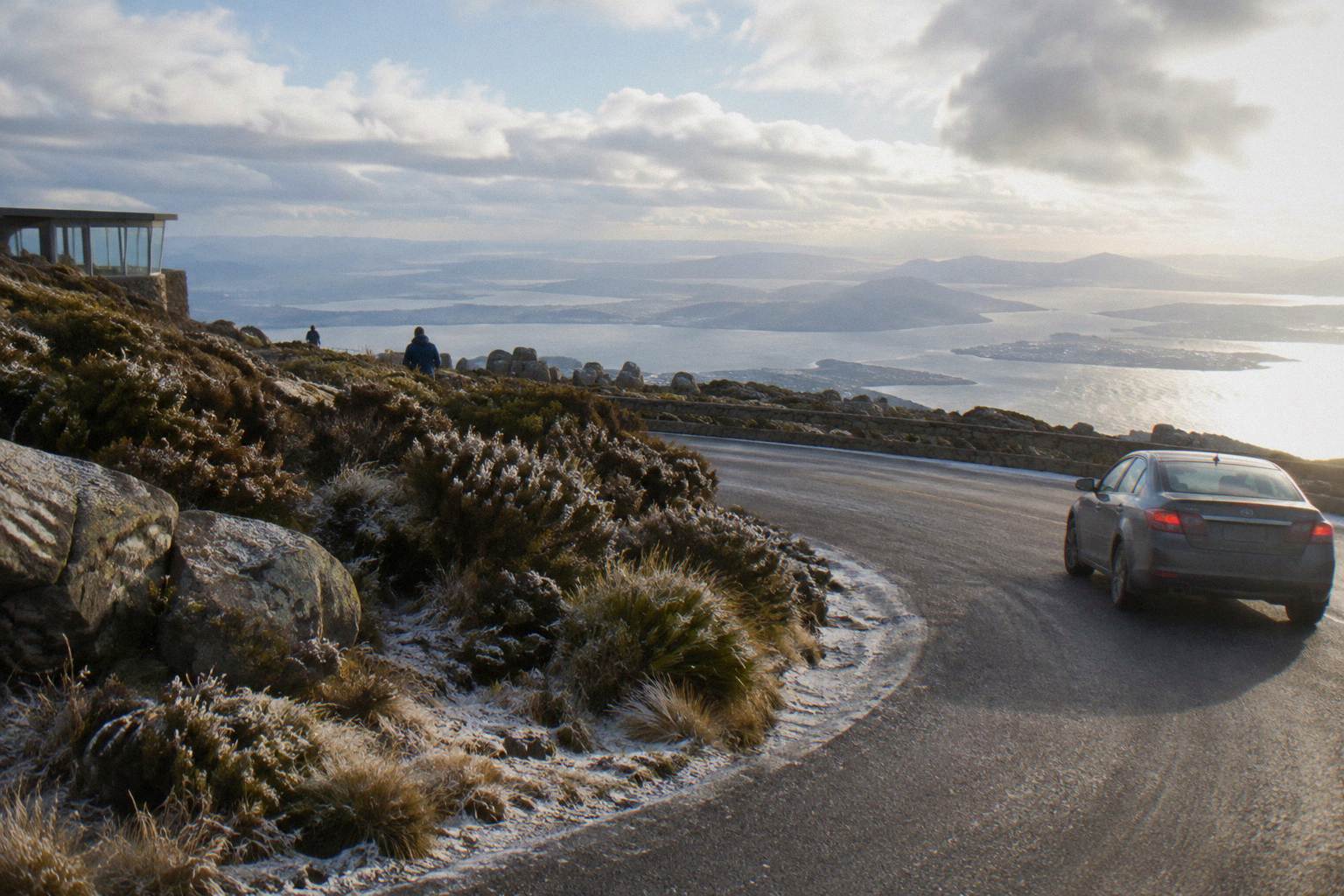
On snow days when the gates are closed to the public, one hop-on hop-off summit pass notes that its tour is run by the Kunanyi/Mt Wellington Explorer Bus partners, described as the only bus approved beyond the closed gates. That is a useful detail for anyone booking a shuttle-style pass in winter: the licensed operator can run when private cars are stopped, though reaching The Pinnacle is never guaranteed on snow days, so snow trips depend on a reliable forecast.
The Hobart Shuttle Hop-On Hop-Off Summit Pass runs from A$55 per person for 2 hours 15 minutes, includes 30 minutes at the summit, and carries free cancellation up to 24 hours before start, with live commentary and a local driver/guide.
For travellers who prefer a fully guided commentary format, the Ultimate Experience Guided Summit Tour from Experience Tasmania Gray Line Day Tours is rated 4.6 from 90 reviews, runs 2 hours 45 minutes from A$65 per person, and includes hotel pickup from selected hotels or a Brooke Street Pier meet. Its itinerary may vary due to road and weather conditions, which on a mountain this exposed is less a warning than a description of normal operations. This trip is not suitable for people with mobility impairments and is not wheelchair accessible.
Cloud, Visibility And The Gap You Cannot See On A Thermometer
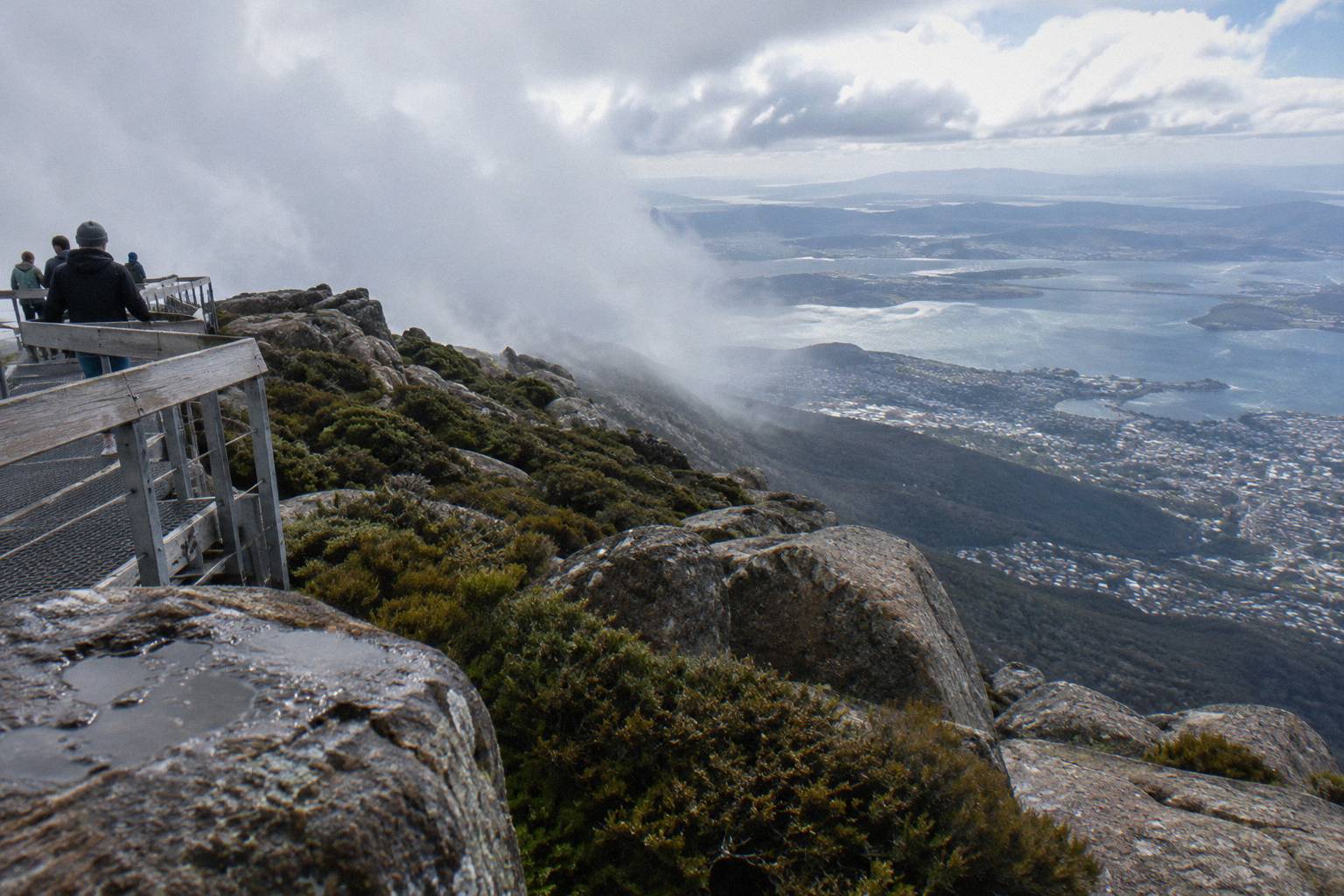
The summit is often in cloud, which means the cold gap sometimes arrives as a wall of grey rather than a view. The Trust and operators alike make no promise of clear conditions, and the Explorer Bus itself says it cannot guarantee reaching The Pinnacle on snow days. Checking live conditions before departure is the only reliable strategy.
Cloud behaves like temperature on this mountain: the city can be clear while the top is inside the cloud. On those days the temperature gap is felt rather than seen, and visitors dressed for the waterfront discover it within minutes of arriving. The Bureau's live summit station is the fastest check, and webcams extend the picture; the guide to summit webcams and live conditions explains how to read them before you commit to a departure time. None of the tours promise a view, and any that hint at one should be read with the Trust's guidance in mind.
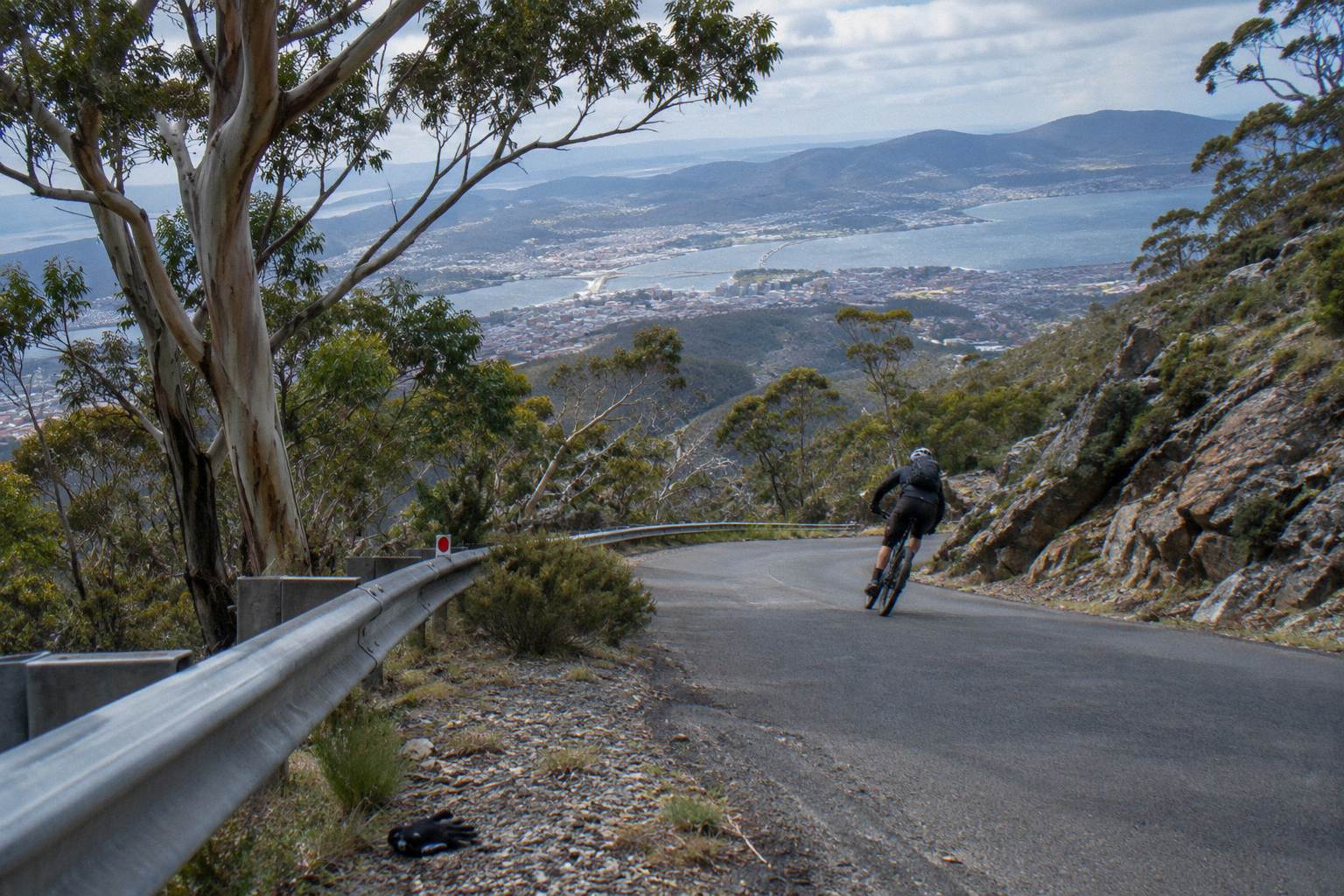
The silver lining, meteorologically speaking, is that summit cloud moves fast. A morning in cloud can clear by early afternoon, and tour schedules that include 30 minutes at the top give you a real chance of catching the change. The Explorer Bus Return Tour, the trip with the most reviews on the booking pages at 4.8 from 1,081 reviews, gives you hop-on hop-off use of the bus for the whole day on its Explorer Pass, which means a clouded-out morning does not end your mountain day, you can ride up again when it clears. It runs from A$55 per person for a 2.5-hour return, meets at Brooke Street Pier, and carries free cancellation up to 24 hours before start. More detail on how that ticket works day-to-day is in the guide to the Explorer Bus and its passes.
How To Use The Gap When Packing For A Tour
Pack for the summit temperature, not the city temperature, by subtracting at least ten degrees from Hobart's forecast and adding a windproof layer. That single habit covers the Trust's 12-degree-or-more gap and the operator's 10-degree figure at once, and it costs nothing to over-prepare.
A quick worked approach for a summer visit, using only verified figures: Hobart forecast 22 degrees means planning for a summit around 12 degrees or lower, which is close to the January mean of 9.5 degrees. In winter, a city forecast of 13 degrees puts the top near freezing, matching the July mean of 0.7 degrees, with wind chill pushing the felt temperature well below. Both seasons argue for the same kit list: windproof outer layer, warm mid-layer, covered shoes, and protection for hands and ears. Snow can fall in any month on this mountain, and is more likely overnight from May to September, so a summer visit is not automatically a snow-free one.
Two small summit facts complete the packing picture. The only food outlet on the mountain is Lost Freight Cafe at The Springs, a shipping-container cafe open seven days year-round except 25 and 26 December, with hours that vary; there is no cafe at the summit itself. And a practical oddity the Trust flags: car key fobs can fail near the summit's FM and TV transmitters, which is harmless but worth knowing before you think the vehicle has a fault.
The Short Answer To Carry With You
Treat ten degrees as the floor of the gap and twelve or more as the realistic ceiling, then let wind chill decide how the day actually feels. The Trust's safety page is the authoritative source for both figures, the climate record confirms the summit averages under ten degrees even in January, and wind chill below minus 20 degrees is possible. Pack for the top, not the departure point.
Every serious source agrees on the shape of the answer even where they differ on the digit. The Trust, the park's manager, gives the wider and more cautionary figure. The operator gives the friendlier one. Neither is selling anything with the number: both are describing the same mountain, and the mountain does not hold a fixed figure for anyone's convenience. On a tour day your real questions are what the wind is doing and whether the road is open, and the answers to both sit a click or a phone call away on the morning you travel.
Mount Wellington Tours offers a wider set of planning resources covering everything from road closures to what waits at the top. Whether you ride the Explorer Bus, take a hop-on hop-off shuttle pass, or join a fully guided commentary tour, the temperature gap will be part of your day, and it is the easiest part to prepare for. The mountain gives you the whole warning in advance: the summit is often 10 to 12 degrees or more colder than Hobart, and dressing for that number, not the one outside your hotel, is all it takes.
Common Questions About The Summit Temperature Gap
How Much Colder Is The Summit Than Hobart On A Tour Day?
Often 10 to 12 degrees or more colder. The Wellington Park Management Trust says the gap between the Hobart waterfront and The Pinnacle can be 12 degrees or more, while the Explorer Bus operator puts it at about 10 degrees. Write the gap as a range, never a fixed number, and remember wind chill can push the felt temperature far lower still.
Can Wind Chill Really Go Below Minus 20 Degrees At The Summit?
Yes, the Trust's safety guidance says wind chill below minus 20 degrees is possible at The Pinnacle. High winds and air temperatures below zero are both common at the summit, and the combination is what produces those extremes. The Bureau of Meteorology's summit station carries live observations, though its wind sensors can drop out when ice builds up.
Is The Summit Cold Even In Summer?
Yes. The 1991 to 2020 climate record for The Pinnacle gives a January mean of 9.5 degrees, and the summit has never recorded 30 degrees, with a highest reading of 29.8. On a warm Hobart summer day of 22 degrees, the top can sit around 12 degrees or lower, so a jacket belongs in your bag year-round.
Do Tours Get Cancelled Because Of The Cold?
Cold alone does not cancel tours, and the Explorer Bus Return Tour operates in all weather conditions. What disrupts trips is snow and ice on Pinnacle Road, which closed for 95 nights across 2025-26. On snow days when gates close to the public, the Explorer Bus partners are described as the only bus approved beyond the closed gates.
What Is The Best Way To Check Summit Conditions Before A Tour?
Check the Bureau of Meteorology's live station for kunanyi / Mount Wellington, station 094087, for current temperature and wind, and the City of Hobart's Pinnacle Road status page or the information line on 03 6238 2711 for road access. Summit webcams add a visual check, since the top is often in cloud while the city stays clear.