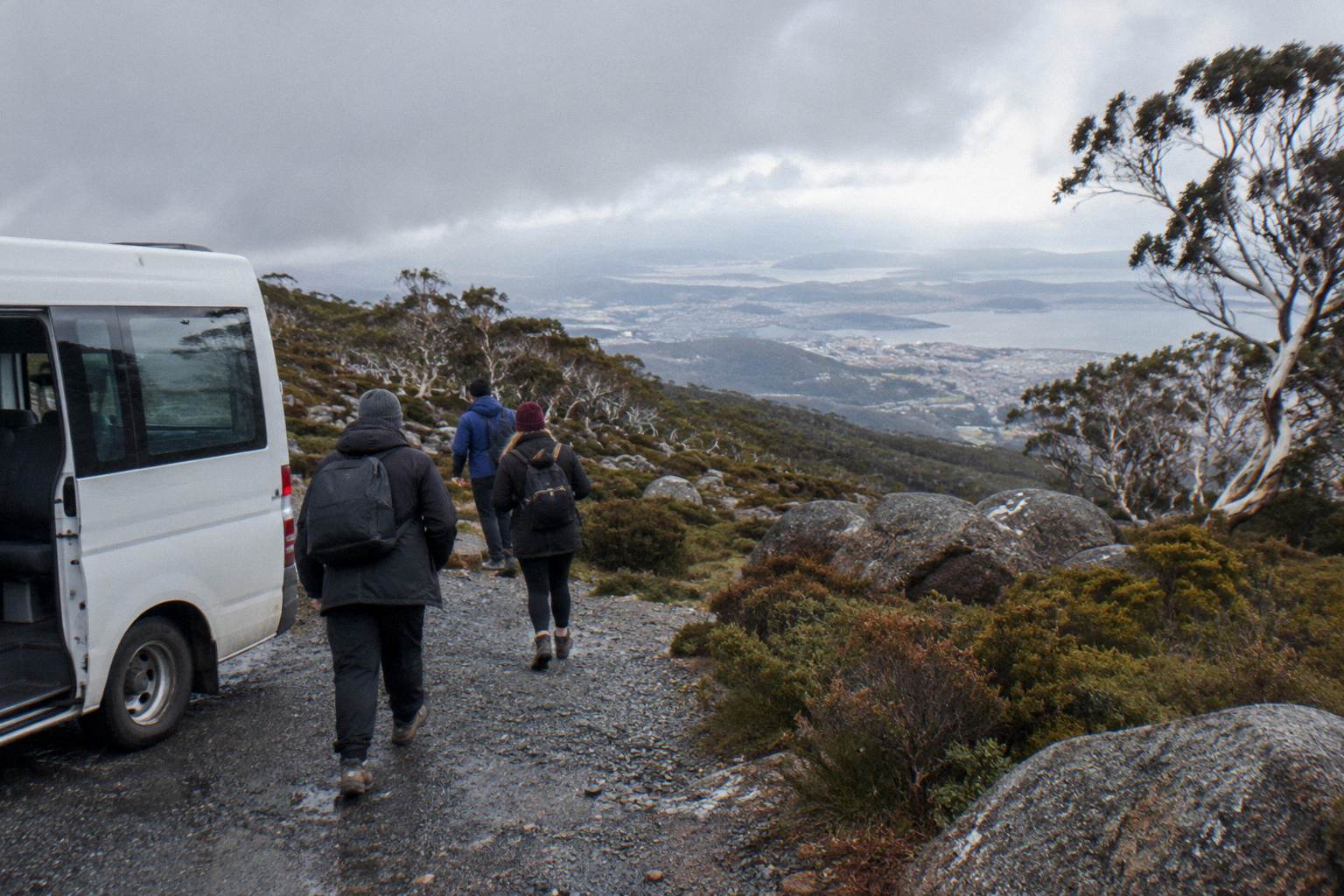
Summit Weather On Kunanyi: Will Your Tour Run?
The summit of kunanyi / Mount Wellington sits 1,271 metres above a harbour city, and the weather at the top has very little to do with the weather at the bottom. Here is what the official sources actually say about wind, cold, snow and closures, and how each kind of summit trip responds when conditions turn.
Short answer
Summit weather is often 10 to 12 degrees or more colder than the Hobart waterfront, with high winds and temperatures below zero common at the top. Snow can fall in any month and is more likely overnight from May to September. Pinnacle Road closed on 95 nights for snow or ice in 2025-26, so check the road status before any summit trip.
The gap between a sunny morning on the Hobart waterfront and the top of kunanyi / Mount Wellington is one of the largest you will find beside any Australian capital city. The Wellington Park Management Trust, which manages the park, puts it plainly: the difference in temperature between the Hobart waterfront and The Pinnacle can be 12 degrees or more. Wind chill below minus 20 degrees is possible. That is not a reason to skip the mountain, but it is the single biggest reason a summit tour can feel nothing like the day you dressed for in your hotel room.
The facts here come from the official and primary sources: the Trust's safety and road pages, the Bureau of Meteorology's summit station, and the weather wording on the booking pages of the summit trips themselves. Where a figure is not official, that is stated. Nothing here forecasts anything, and no month is described as calm, because on this mountain none is.
What Is Summit Weather Actually Like?
At 1,271 metres, the summit regularly carries high winds and temperatures below zero, sits often 10 to 12 degrees or more colder than the Hobart waterfront, can receive snow in any month, and is frequently in cloud, so no trip up can promise a clear view or a warm arrival. The Trust's safety page is direct about the first two points: high winds and temperatures below zero degrees are common at the summit, and wind chill below minus 20 degrees is possible. The Explorer Bus operator describes the gap as about 10 degrees cooler than the city and talks of four seasons in one day. Both figures stand; the Trust's is the stronger source, so the gap is best written as often 10 to 12 degrees or more colder, never a fixed number.
Long-run climate figures back the impression. A climate table for The Pinnacle, covering 1991 to 2020 at 1,260 metres, records a mean temperature of 9.5 degrees in January and 0.7 degrees in both July and August. The record low is minus 9.1 degrees. The summit has never reached 30 degrees, with the highest reading 29.8 degrees, and a sustained wind of over 157 kilometres per hour has been recorded. These are averages and extremes, not a forecast for your day, but they explain why a hoodie that felt right at the wharf feels wrong within minutes of stepping off a bus at the top.
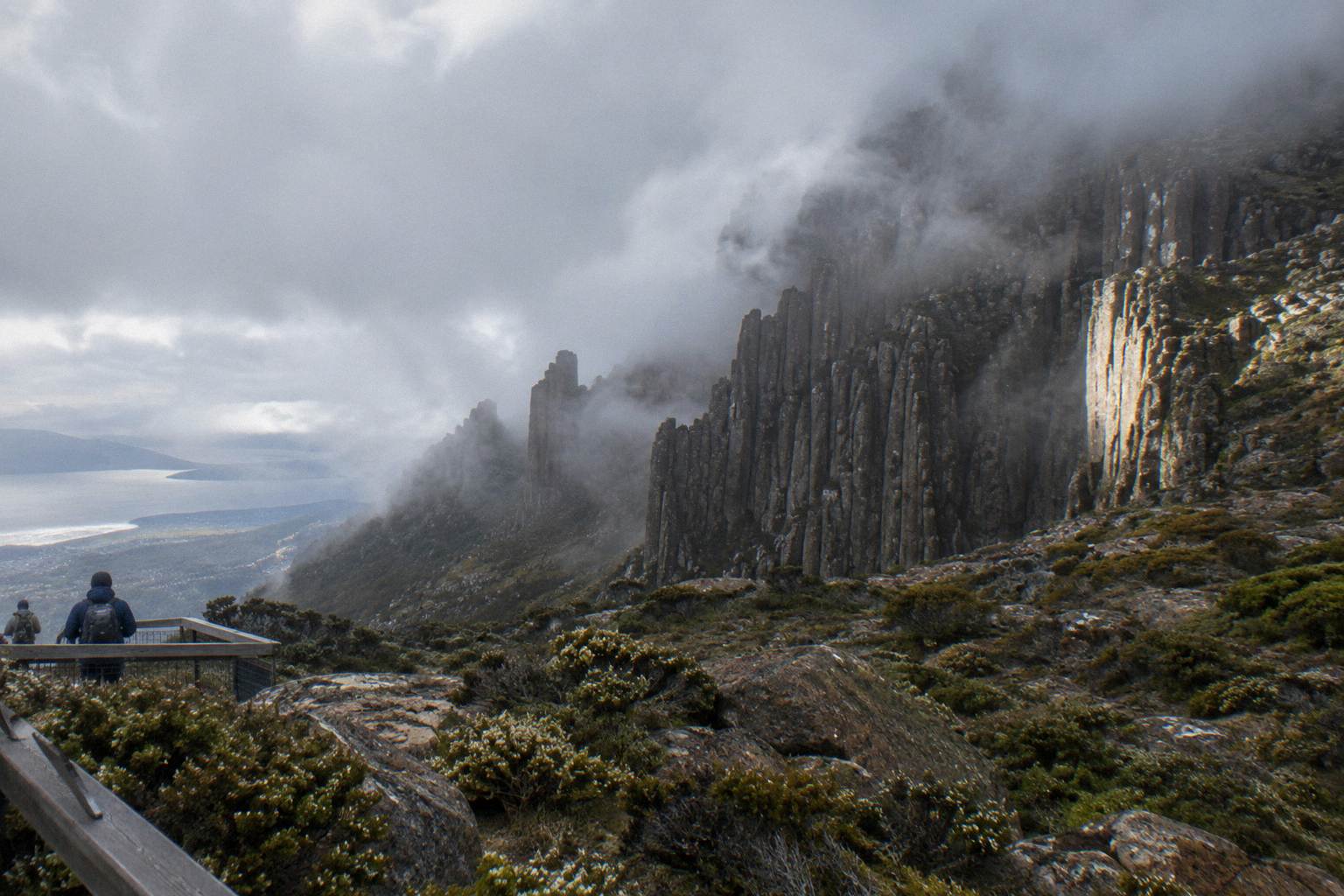
Cloud is the other constant. The summit is often in cloud, which is why operators are careful with their language: the booking pages promise the trip, not the panorama. A clear-weather view is a genuine possibility on many days, but a fog-bound summit with the Organ Pipes ghosting in and out of mist is also a normal kunanyi experience, and arguably the more memorable one.
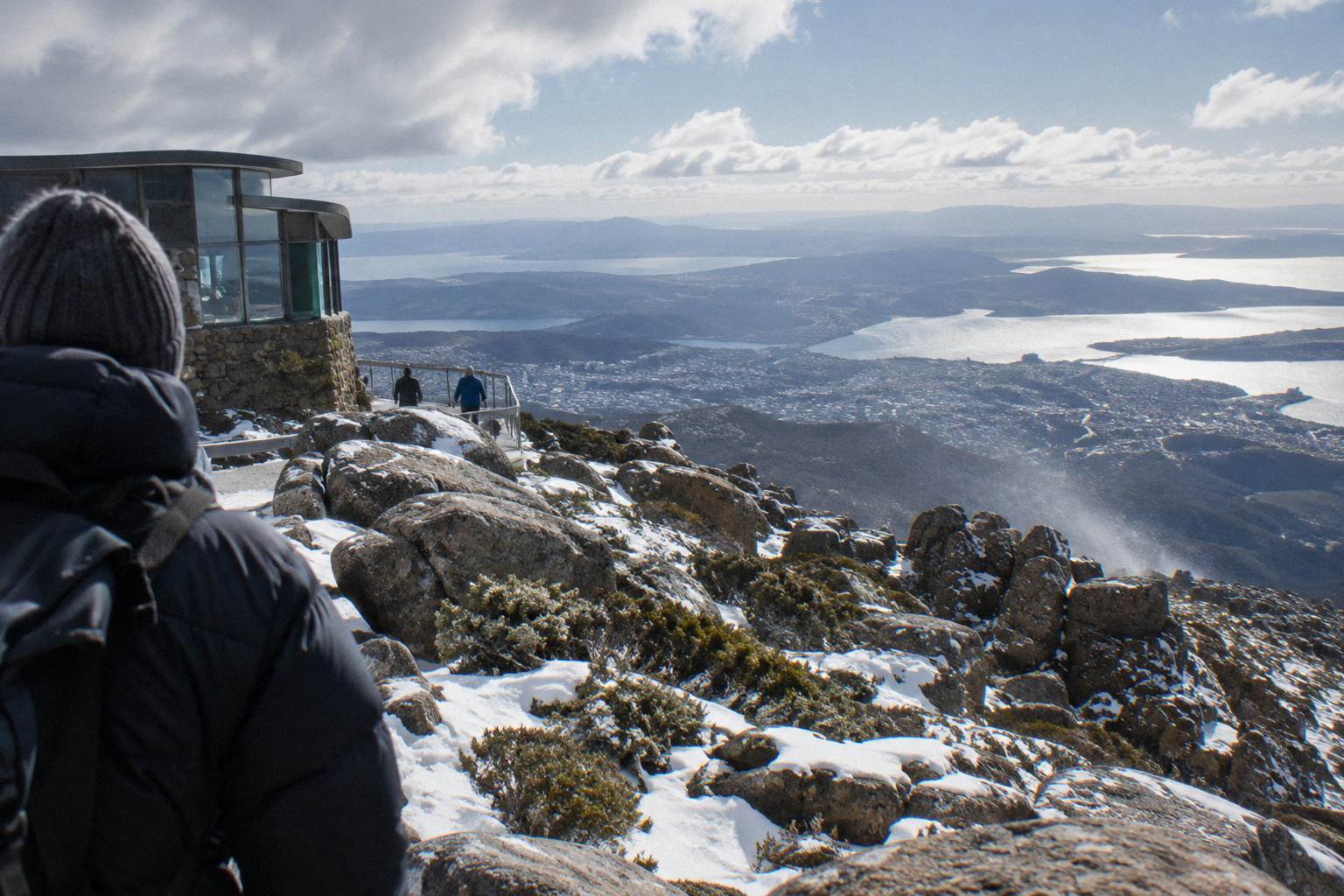
Snow behaviour matters even outside winter. Snow can fall in any month on this mountain, and the operator notes it is more likely overnight from May to September. That matches the Trust's warning that access may be restricted by snow and ice at any time of year, particularly April to September. January snowfalls happen. July weeks without a flake happen too.
If you are weighing what the cold means for comfort and clothing, our separate guide to what to wear on a summit tour works through layering for exactly these conditions.
How Much Colder Is The Summit Than Hobart?
Plan for a summit that is often 10 to 12 degrees or more colder than the Hobart waterfront, with the Trust warning the gap can exceed 12 degrees and wind chill below minus 20 degrees possible, meaning waterfront clothing is never summit clothing. The two published figures come from two kinds of source. The Trust, the park's statutory manager, says the difference between the waterfront and The Pinnacle can be 12 degrees or more. The Explorer Bus operator's own page says about 10 degrees cooler than the city. The Trust figure is the stronger one, so go by the range, because the real gap shifts hour to hour with wind, cloud and the freezing level.
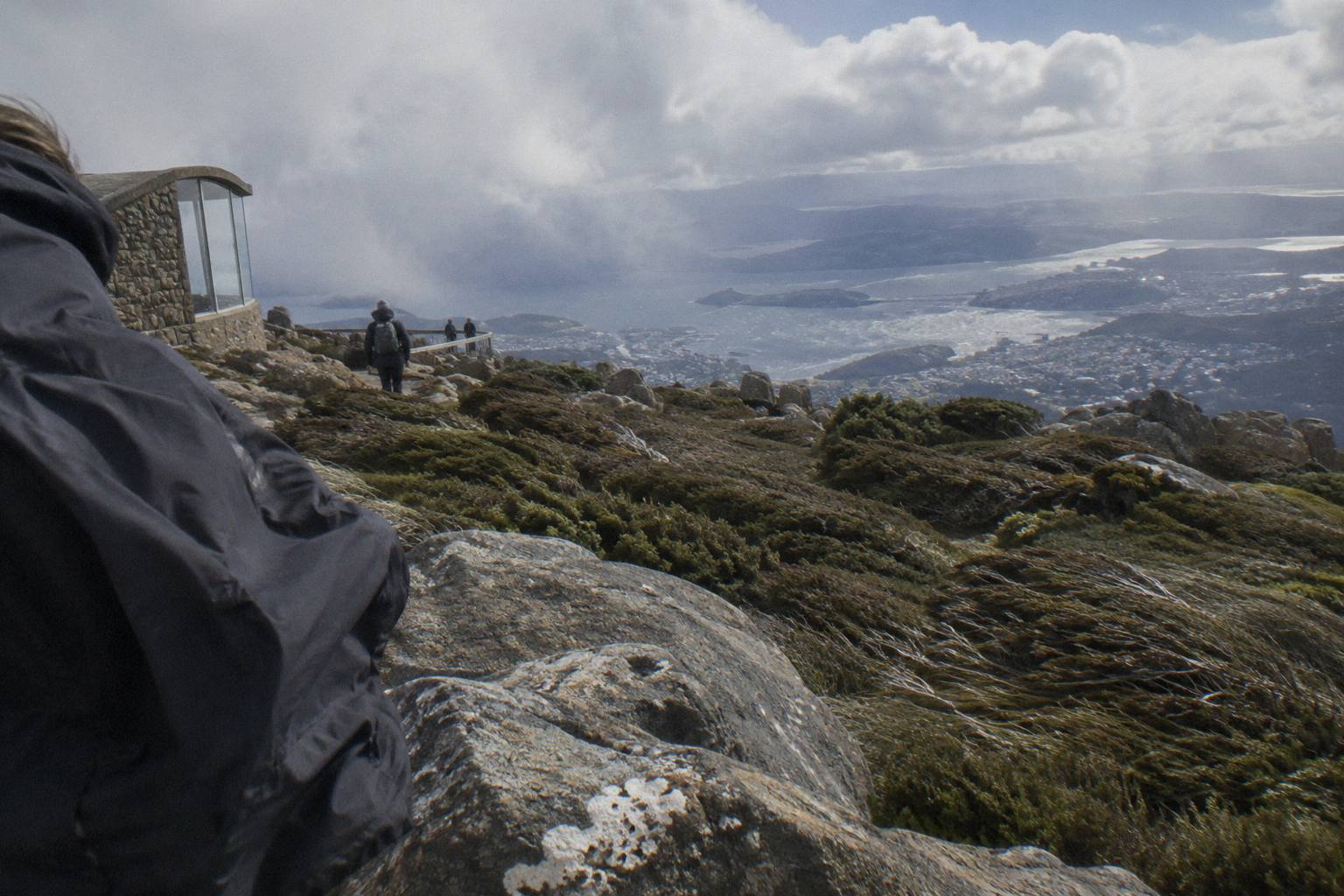
The practical consequence is a wardrobe decision, not a booking decision. Every tour listed here reaches the summit by road, spends time at the top, and returns, so you will be outside at The Pinnacle for at least half an hour in most formats. Wind is the multiplier: a 5-degree air temperature with a strong summit wind behaves like a far colder day, and the Bureau's station notes that its wind and feels-like readings can become unavailable when ice builds up on the instruments, which tells you something about the conditions the equipment endures up there.
For a fuller walk through the temperature question, including what the Bureau station does and does not record, see how much colder the summit is than Hobart.
Three summit formats cover the main ways up, and all three respond differently to a weather forecast, so it helps to see them side by side before matching one to your day:
The Explorer Bus Return Tour, from A$55 per person in Australian dollars, is a 2.5-hour return trip rated 4.8 from 1,081 reviews, and its booking page says it operates in all weather conditions while asking travellers to check the weather before going. That is the trade: the bus goes, the view is whatever the mountain gives you.
Snow, Ice And Road Closures: When Trips Change
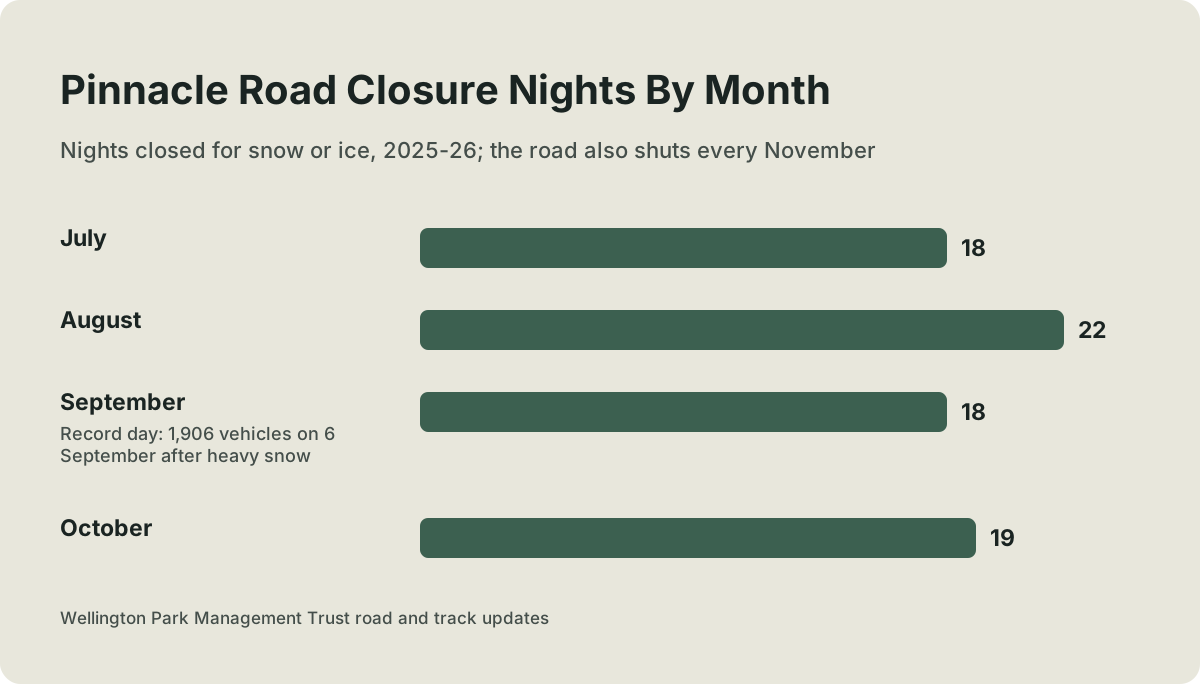
Pinnacle Road closed on 95 nights for snow or ice across 2025-26, with the summit unreachable by private vehicle on 14 days, and the road also shuts for annual maintenance every November, so no summit trip on any day is guaranteed the top. The road figures come from the Trust's road and track updates. August was the worst month with 22 closure nights, then October with 19, and July and September with 18 each; the Trust does not give figures for the remaining months. Overnight closures ran past 9.30am on 46 days, meaning a morning that began with a closed gate often reopened by late morning. Vehicle access to The Springs at 720 metres was possible on all but one closure day, so even a snow-blocked summit usually still allowed visitors partway up.
The closure mechanics matter for tour-goers. Pinnacle Road is the only public road into the park; it starts at the end of Pillinger Drive in Fern Tree, passes The Springs and reaches the summit. The City of Hobart manages it, closes it when ice or snow is present and sometimes before snow arrives, and can shut it for events as well. The gate point is Bracken Lane at the park entrance or above The Springs. Beyond weather, the road shuts for annual maintenance each November, with no vehicle access to the summit, tracks staying open, and no pedestrians or cyclists on the road during the works. Do not count on any claim that the road is open, open today or open now; on any given day the answer lives in the status sources listed further down.
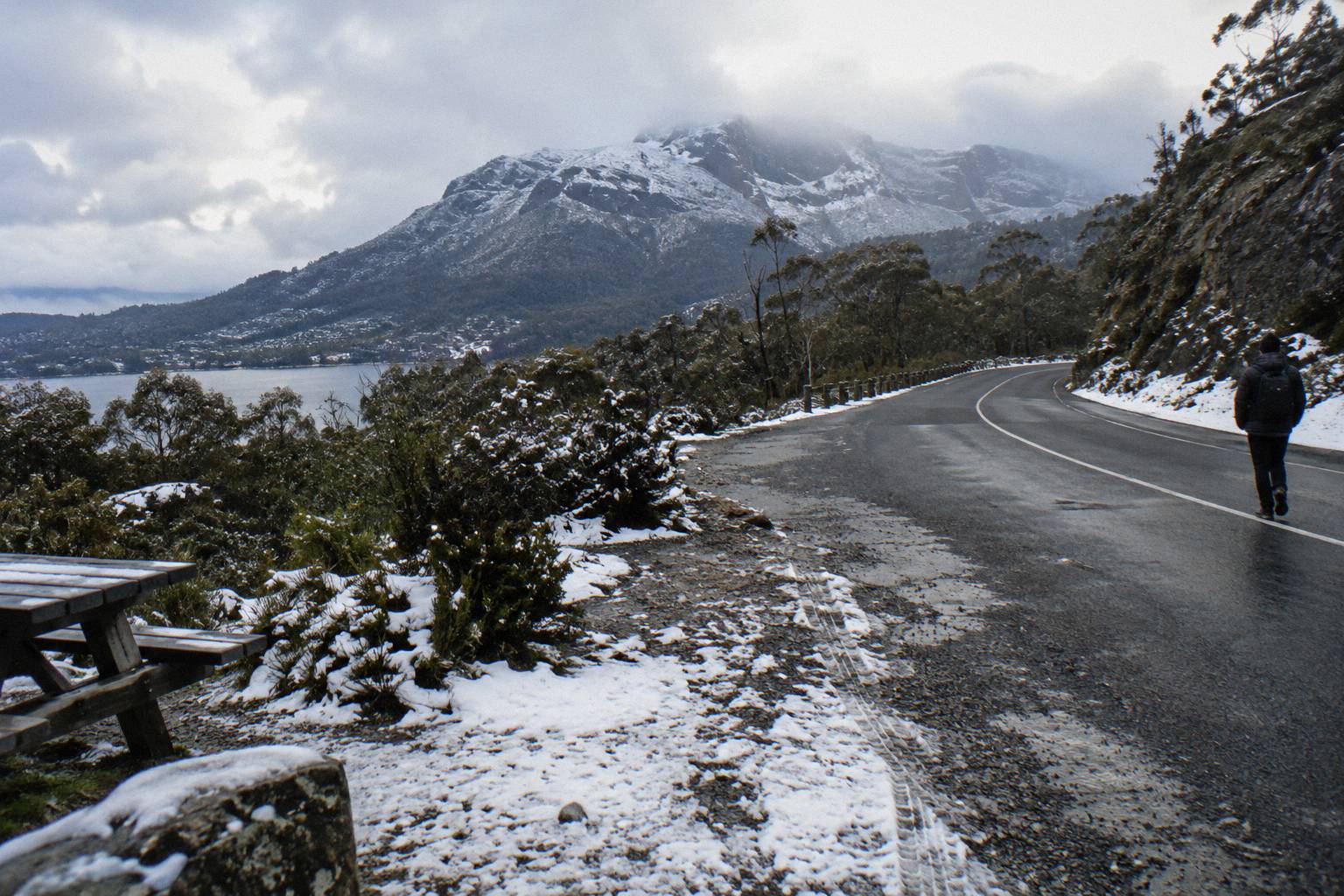
Two facts from the closure data change how a planner should think. First, snow days draw crowds: the record day was 1,906 vehicles on 6 September after heavy snow, with City of Hobart traffic management and limited parking at The Springs, The Pinnacle and the lay-bys. Second, a bus ticket sidesteps the parking problem entirely on exactly the days everyone else is driving up. The deeper story of snow-day operations is covered in snow on the mountain, tours and closures.
How Each Tour Type Handles Bad Weather
Every summit trip here keeps free cancellation up to 24 hours before the start, but their weather behaviour differs: the Explorer Bus runs in all conditions and is the only licensed bus beyond closed snow gates, the shuttle pass hands snow days to the Explorer Bus partners, and the guided coach tours state the itinerary may vary due to road and weather conditions. Those are the exact positions the booking pages take, and they are the deciding facts for a booker matching a trip to a forecast. The clearest way to see the differences is a table drawn only from the booking-page wording.
| Trip | Format | Weather wording on the listing |
|---|---|---|
| Explorer Bus Return Tour | 2.5-hour hop-on hop-off return bus | Operates in all weather conditions; the booking page asks travellers to check the weather before going |
| Hobart Shuttle Hop-On Hop-Off Summit Pass | All-day hop-on pass with 30 minutes at the summit | On snow days when the gates are closed to the public the tour is run by the Explorer Bus partners, the only bus approved beyond the closed gates |
| Ultimate Experience Guided Summit Tour | Guided coach tour with hotel pickup | Itinerary may vary due to road and weather conditions |
| Summit And MONA Day Trip | 7.5-hour coach and ferry day trip | Itinerary may vary due to road and weather conditions |
Two gaps exist and should be named. Nothing in the supplied sources states what happens to a trip already under way if the road shuts mid-tour, and nothing states a same-day refund policy beyond the free cancellation up to 24 hours before start that every booking page carries. If you are booking for a snow-forecast week, put those two questions to the operator directly before you pay, and read the booking terms on the live listing. That is not a hedge; it is simply what the published material does and does not cover. Find more guides at Mount Wellington Tours.
Snow days have their own mechanics on the bus side. The Explorer Bus operator runs a City to Snow tour of 2.5 hours return and a shorter Springs to Snow trip, both bookable only once a reliable snow forecast exists, and the operator says plainly it does not guarantee reaching The Pinnacle on snow days. No one-way fares, no hop-on use and no bike freight apply on snow tours. The Hobart Shuttle pass, meanwhile, from A$55 per person for 2 hours 15 minutes, leans on the snow-gate arrangement above, which makes it a reasonable pick for a booker who wants city-style flexibility on normal days and knows the snow-day fallback in advance.
For a trip that bundles the summit with a full second attraction, weather tolerance spreads across the whole day rather than one road. The Summit And MONA Day Trip, from A$152 per person and rated 4.5 from 74 reviews, spends 7.5 hours on coach, museum and ferry, and its itinerary may vary clause covers the mountain leg rather than the whole outing, so a weather-mixed day still tends to deliver most of the day.
Which Month Should You Book For?
No month is the safe or calm month: snow has fallen in every month of the year on this mountain, closures clustered from July to October in 2025-26, and the bus timetable itself switches between a summer and a winter version, so the real monthly question is which closure risk and which timetable you accept. The Explorer Bus summer timetable runs 1 October to 30 April and the winter timetable 1 May to 30 September, with the extra 3.30pm departure running in summer only. The Trust warns that snow and ice can restrict access at any time of year, particularly April to September. The closure record for 2025-26 puts the heaviest snow-ice months in August, October, July and September in that order. The table below sticks to what can be stated, with the gaps left as gaps.
| Month (2025-26 where given) | What the published record says |
|---|---|
| January | Mean summit temperature 9.5 °C; snow possible in any month, no closure figure given |
| July | 18 snow-ice closure nights; mean temperature 0.7 °C |
| August | 22 snow-ice closure nights, the season's highest; mean temperature 0.7 °C |
| September | 18 snow-ice closure nights; record snow-day traffic of 1,906 vehicles on 6 September |
| October | 19 snow-ice closure nights; summer bus timetable begins on 1 October |
| April | Trust flags April to September as the restricted-access period; no closure figure given |
| November | Annual road maintenance closure every November, no summit vehicle access; tracks stay open |
| May | Winter bus timetable begins 1 May; summit toilet hours switch to shorter hours on 1 May |
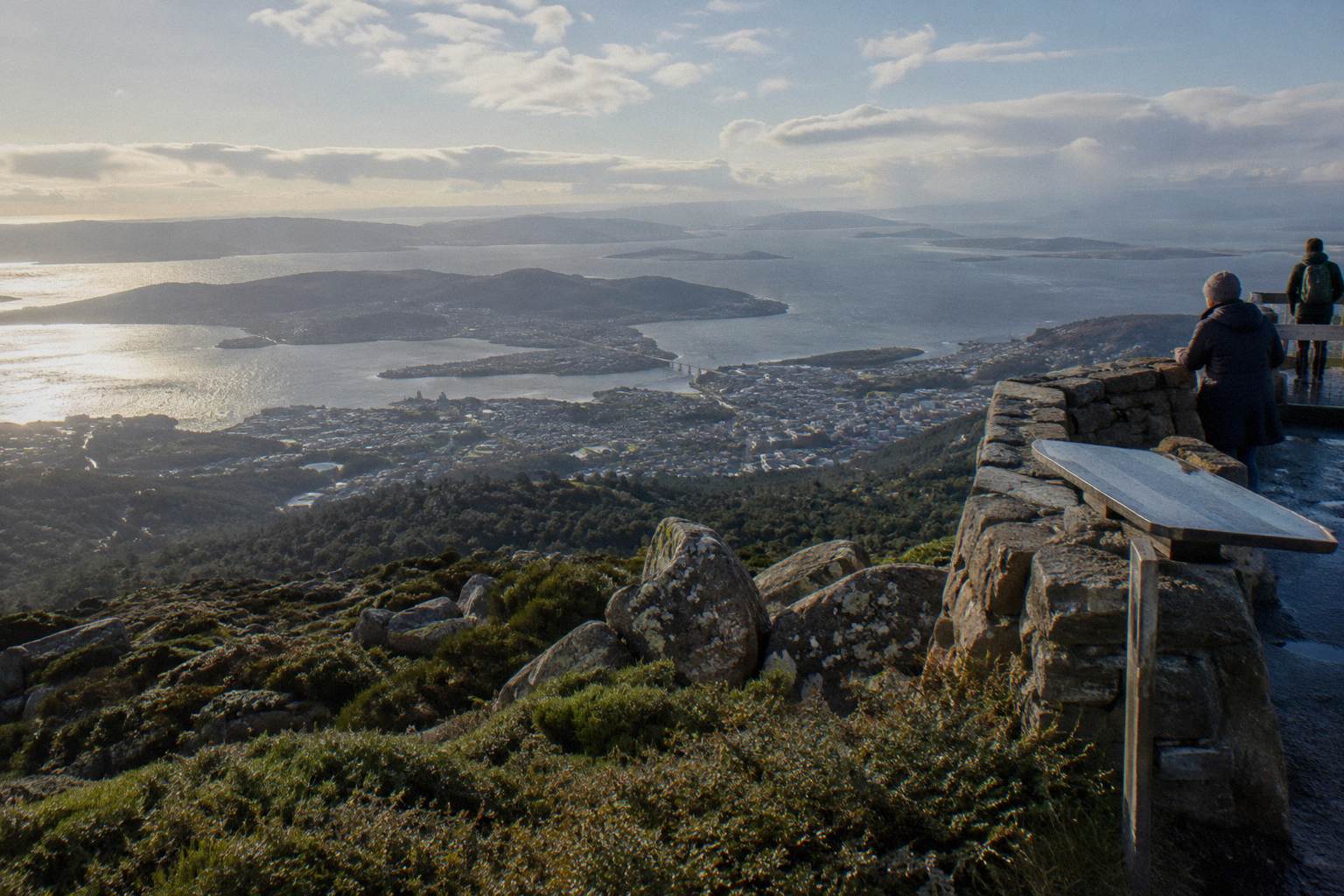
Read that as risk, not verdict. A July booking faces the highest chance of a snow-affected road but also the best chance of a snow-dusted summit, and the Explorer Bus is the one licensed way up when the gates close. A January booking faces the warmest averages and the clearest statistical shot at a view, with a small but real chance of summer snow and the busiest summit traffic of the year. Shoulder months trade between the two, and the November maintenance closure is fixed enough to plan around simply by shifting a summit day to another week. If you are matching the whole season picture rather than just weather, the best season for a summit trip guide works through the same trade-offs with the daylight and crowd facts added.
How To Check Conditions Before You Leave
Four verified sources answer the live-conditions question: the City of Hobart Pinnacle Road status page, the Pinnacle Road Information Line on 03 6238 2711, the Trust's road and track updates page, and the Bureau of Meteorology's summit station 094087, and a careful booker uses the road source and the weather source together. The road sources tell you whether vehicles can reach the top at all; the Bureau station tells you what the top will feel like once you are there. If a page elsewhere promises a summit webcam, treat the road status and the Bureau station as the checkable ground truth.
| Source | What it tells you | How to use it |
|---|---|---|
| City of Hobart Pinnacle Road status page | Whether the summit road is open, gated or closed | Check on the morning of your trip; the page blocks automated reads, so wording cannot be quoted here |
| Pinnacle Road Information Line, 03 6238 2711 | Recorded road status | The Trust-listed number; use it when the page will not load or you are already out |
| Trust road and track updates page | Closures, maintenance, track works such as the Pipeline Track repairs | Check a day or two ahead for works that affect walking plans |
| Bureau of Meteorology station 094087 | Live summit temperature, wind and conditions | Check before dressing; wind and feels-like readings can drop out when ice builds up on the station |
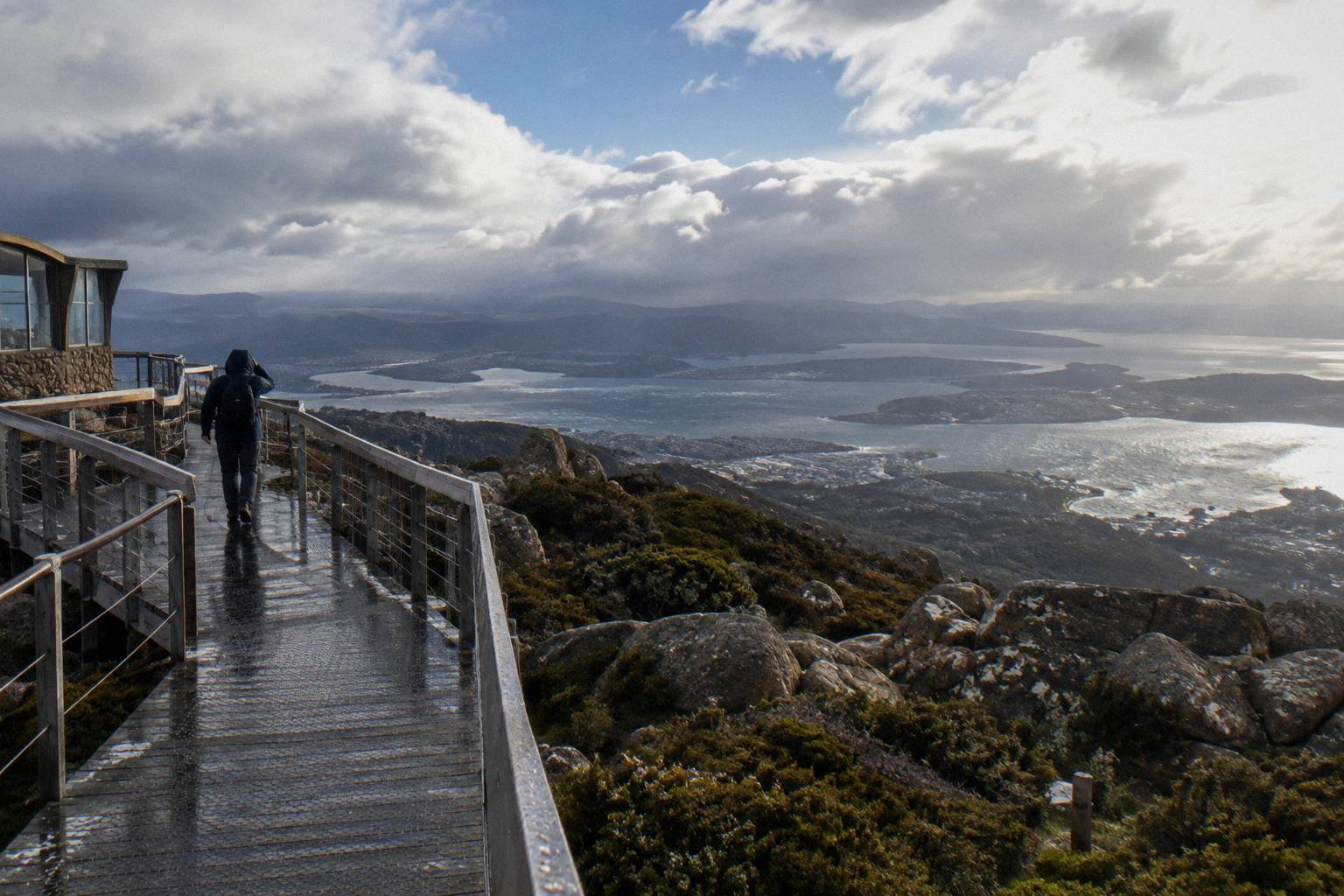
The road status line and page live with the City of Hobart, and the Trust's road and track updates page collects closures, maintenance windows and track works in one place. For the summit's live readings, the official source is the Bureau of Meteorology's Kunanyi / Mount Wellington station, which publishes live observations only, so check it for current figures rather than relying on any static number. The summit webcams and live conditions guide applies the same test to every live source.
Timing the check matters as much as the source. The 46 days when overnight closures ran past 9.30am show that an early-morning check can be stale by noon, and the 14 days when private vehicles could not reach the summit at all are the days a bus ticket or a flexible plan earns its keep. If a trip already booked looks likely to collide with a closure, the 24-hour free cancellation window on every listing means you can usually rebook rather than lose the fare, but inside that window the questions belong with the operator.
Cloud, Fog And Whether You Will See Anything
The summit is often in cloud and no operator listed here promises a clear view, so the sensible way to book is to treat the panorama as the best-case outcome and the mountain itself, its dolerite, wind and light, as the guaranteed part of the trip. Operators phrase this carefully. The Explorer Bus operator says it cannot guarantee reaching The Pinnacle on snow days. The coach tours say the itinerary may vary. None of the booking pages offers a view guarantee or a weather refund, and any page that does promise one is selling something the mountain does not recognise. Fog on this summit is not an edge case; it is a regular resident, and it moves, which means a clouded lookout at 11am can be a clear one by noon.
There is a planning upside. Because the hop-on formats let you ride the mountain all day, a grey morning does not pin you to a single fog-bound half hour at the top. The Hobart Shuttle Hop-On Hop-Off Summit Pass builds 30 minutes at the summit into an all-day pass with live commentary and a local driver-guide, so on a broken-cloud day you can time your summit leg for the gaps. Its snow-day fallback, running under the Explorer Bus partners when the gates close, is described in the table above.
For photographers the calculus is different again: the marginal hours around cloud breaks produce the strongest summit images, and the summit photography lookouts and light guide covers where to stand when the cloud is doing the interesting thing rather than the obliging thing.
Booking Around The Weather: A Practical Order Of Steps
Book the format that matches your weather risk, hold it with the 24-hour free cancellation every trip carries, then run the road status and the Bureau station on the morning itself, and rebook or reroute inside the window if the forecast turns. That sequence uses the one genuinely flexible term on every listing here: free cancellation up to 24 hours before the start. It costs nothing to hold a summit morning early and cancel later if the forecast sours, and on a mountain whose road closed 95 nights in a season, holding that option is simply good sense. Prices are from-prices per person: the Explorer Bus Return Tour from A$55, the shuttle pass from A$55, the Ultimate Experience from A$65, and the Summit And MONA Day Trip from A$152.
The step order, in the shape most bookers actually need it:
| Step | What to do | Why the sources support it |
|---|---|---|
| 1 | Pick the format whose weather wording suits you | Bus formats run in all conditions; coach tours state the itinerary may vary |
| 2 | Check the Trust road and track updates page for maintenance or works | November maintenance and Pipeline Track works are scheduled, not surprises |
| 3 | Book with free cancellation up to 24 hours before start | Every trip here carries it |
| 4 | On the morning, check the road status page or call 03 6238 2711 | Closures can lift by late morning; 46 closure mornings ran past 9.30am |
| 5 | Dress for 10 to 12 degrees or more colder, with wind | Trust wording; the waterfront wardrobe is never enough |
One guided format sits in the middle of the weather spectrum and earns a mention for bookers who want commentary rather than flexibility. The Ultimate Experience Guided Summit Tour, from A$65 per person and rated 4.6 from 90 reviews, runs 2 hours 45 minutes with hotel pickup from selected hotels or a Brooke Street Pier meeting point, and its itinerary may vary clause is the standard coach-tour answer to a hostile forecast.
A last word on expectations, which is really a first word on enjoying the place. Nobody will tell you the top will be clear, because the Trust's own material will not support that claim. What the record supports is a mountain that is colder, windier and more changeable than the city below it, a road that mostly reopens within hours of a snow closure, and a set of trips whose cancellation terms let you match your booking to the forecast rather than gamble against it. Book the flexible thing, check the two live sources on the day, dress for ten degrees colder than feels necessary, and let the mountain decide the view.
Common Questions About Summit Weather And Your Tour
How Much Colder Is The Summit Of Kunanyi / Mount Wellington Than Hobart?
The summit is often 10 to 12 degrees or more colder than the Hobart waterfront. The Wellington Park Management Trust says the difference can be 12 degrees or more, and the Explorer Bus operator says about 10 degrees, so plan on the range rather than a fixed number. Wind chill below minus 20 degrees is possible at the top.
Does Snow Close The Summit Road Often?
Pinnacle Road closed on 95 nights for snow or ice in 2025-26, with August the worst month at 22 nights, October 19, and July and September 18 each. On 46 of those days the overnight closure ran past 9.30am, and the summit was unreachable by private vehicle on only 14 days.
Will My Tour Still Run If The Road Is Closed For Snow?
The Explorer Bus is the only licensed operator the Trust lists as able to take visitors up when the road is closed for snow. The Hobart Shuttle pass runs under the Explorer Bus partners on those days, and the coach tours state the itinerary may vary due to road and weather conditions. Check with the operator before departure.
Can It Snow On Kunanyi Outside Winter?
Yes. Snow can fall in any month on this mountain, and October recorded more snow-ice closure nights than July in 2025-26. The Trust warns access may be restricted by snow and ice at any time of year, particularly April to September.
Where Do I Check Live Summit Conditions Before My Tour?
Use the City of Hobart Pinnacle Road status page, the Pinnacle Road Information Line on 03 6238 2711, the Trust's road and track updates page, and the Bureau of Meteorology's summit station 094087. Treat those four as the ground truth for live summit conditions.
Can I Cancel My Summit Tour If The Weather Looks Bad?
Every trip here carries free cancellation up to 24 hours before the start. Inside that window, the published sources say nothing about same-day refunds or mid-tour changes, so raise those questions with the operator and read the booking terms on the live listing before you book.