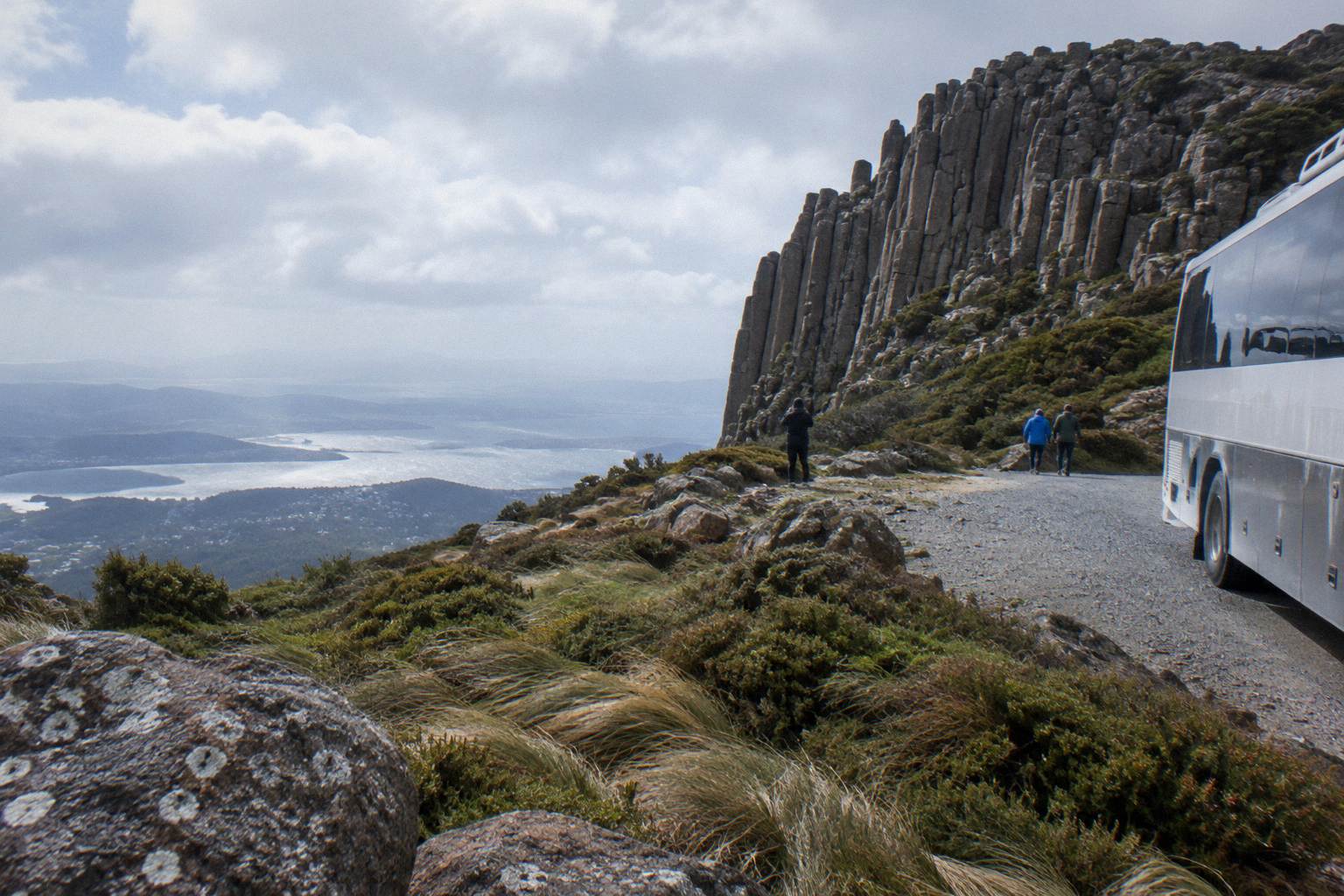
Is There A Cafe At The Top Of The Mountain On A Tour Stop?
No, there is no cafe at the summit of kunanyi / Mount Wellington. The only food on the mountain is Lost Freight Cafe at The Springs, and most tour stops skip it. Here is what that means for your day.
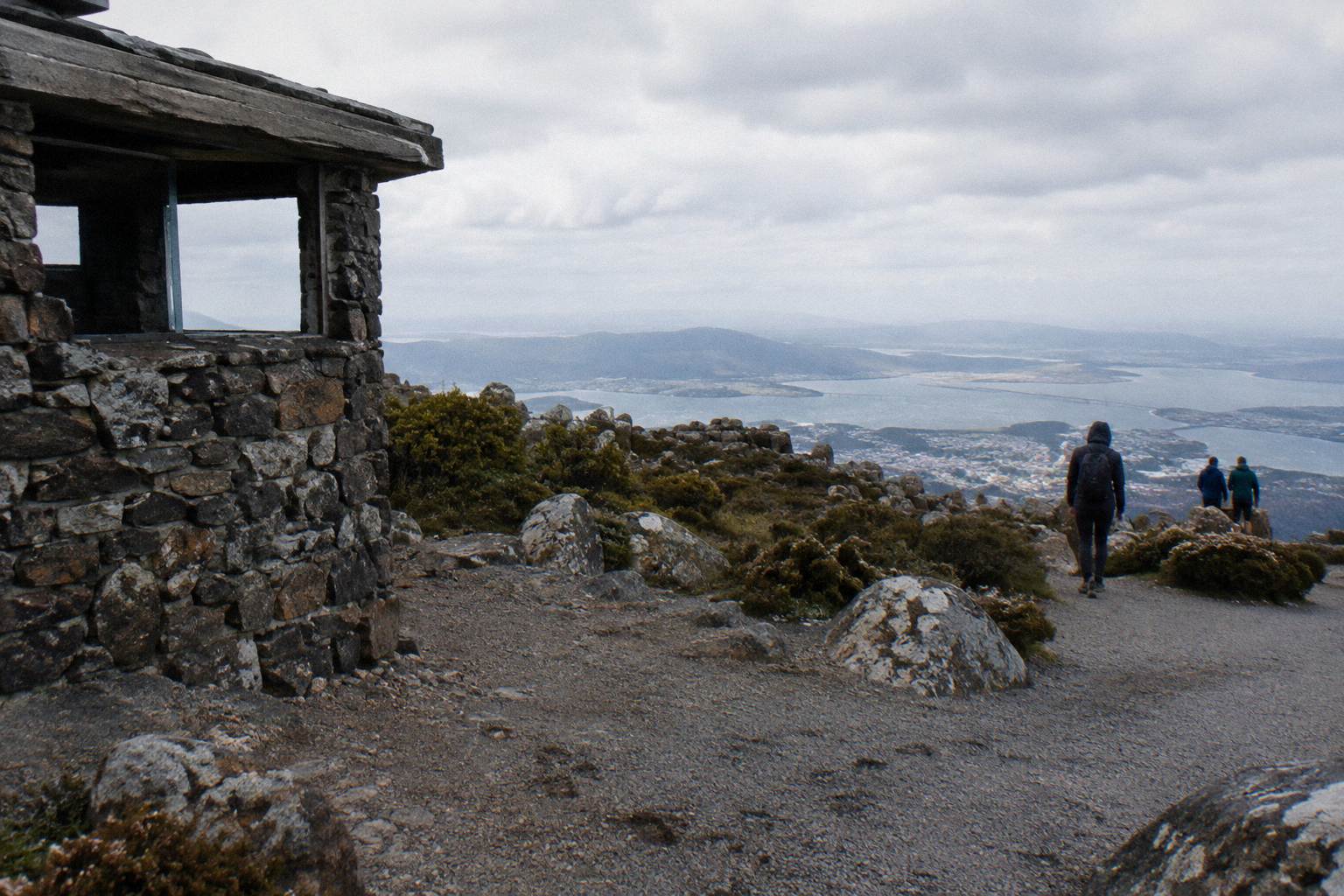
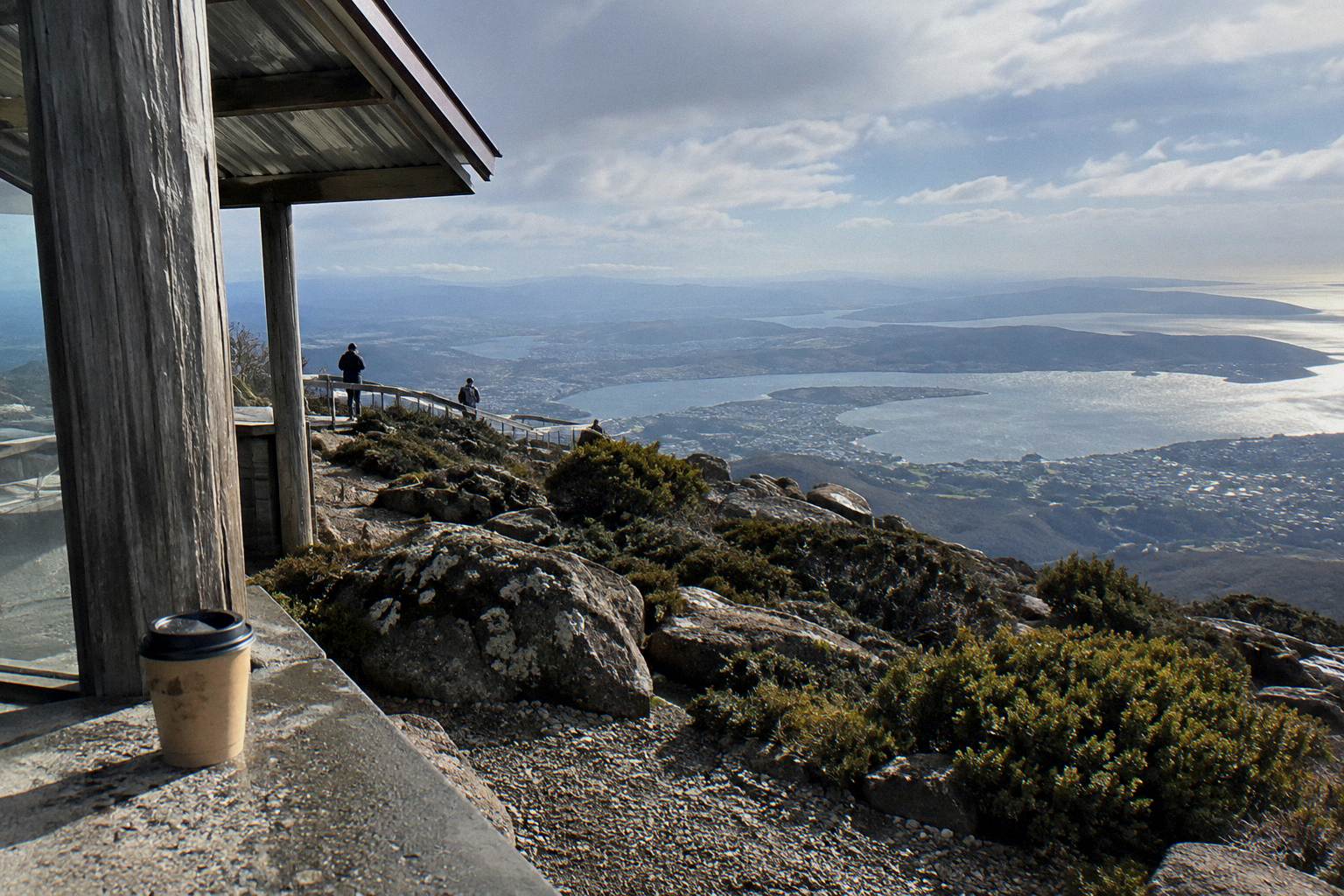
No, there is no cafe at the summit of kunanyi / Mount Wellington, and no food or drink is sold anywhere at the top. The Pinnacle at about 1,270 metres has lookouts, an observation shelter and toilets, nothing more. There is also no visitor centre or ranger station anywhere in Wellington Park, so nobody up there sells so much as a bottle of water. Whatever you want to eat, you carry it.
That surprises a lot of first-time visitors, because the summit feels built for tourists. There is a sealed road to the top, a stone observation shelter, and on a clear day a view that stretches across Hobart and down the Derwent. The infrastructure stops there. The Wellington Park Management Trust, which manages the park, is blunt about it in its facilities information: no cafe operates at the summit, and the lookouts and shelter are the extent of the built amenities.
What this means on a tour is simple and worth planning around. A typical summit stop is around 30 minutes, in cold air, often windier and chillier than the waterfront by 10 to 12 degrees or more. You will be standing outside, taking photographs, walking between lookouts. If you have not eaten, that half hour can feel long, and there is nowhere to buy a snack, a coffee or even a hot chocolate at the end of it.
It is worth being clear about why the mountain is set up this way. Wellington Park is a natural reserve of 18,011 hectares on the traditional lands of the Muwinina people, not a national park with gates and kiosks. Entry is free, there is no Parks Pass and no ticket booth, and the management approach keeps the upper mountain free of commercial development. That is a genuine part of the summit's appeal, but it does mean the usual tourist fallbacks, a cafe, a shop, a vending machine, simply do not exist up there.
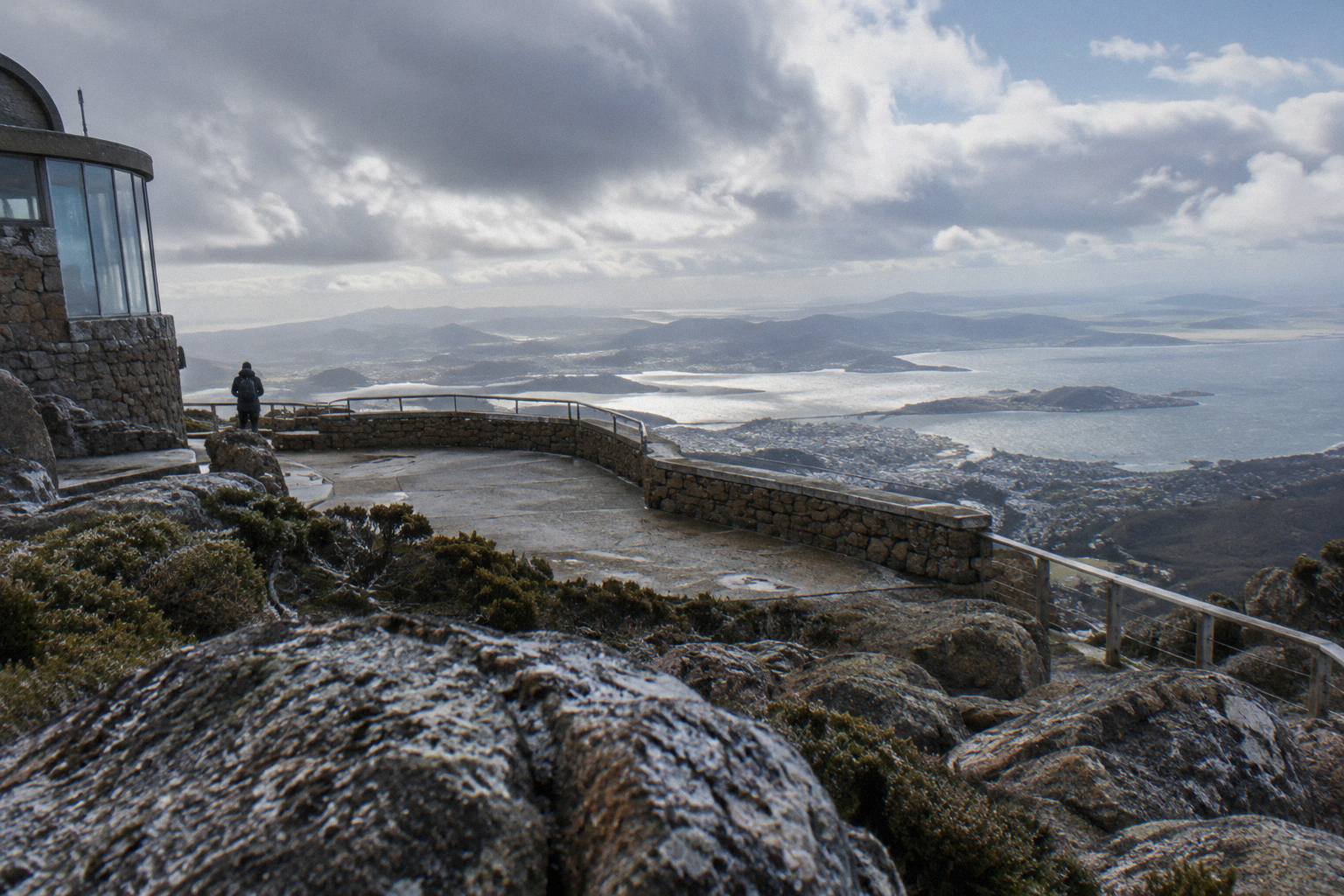
Every tour on this mountain works the same way at the top: the operator's inclusions list food and drink as not included, and none of the booking pages promises anything edible at the summit. The practical takeaway is that the tour itself is fine, the stop is fine, but lunch or a snack is your job. The nearest food is some way from the summit, so it helps to know which tickets get you there and what to pack so the summit stop is comfortable rather than hungry.
If you are still choosing how to get up, these are the three summit formats most bookers weigh up, and none of them includes food:
Where Is The Closest Food To The Summit?
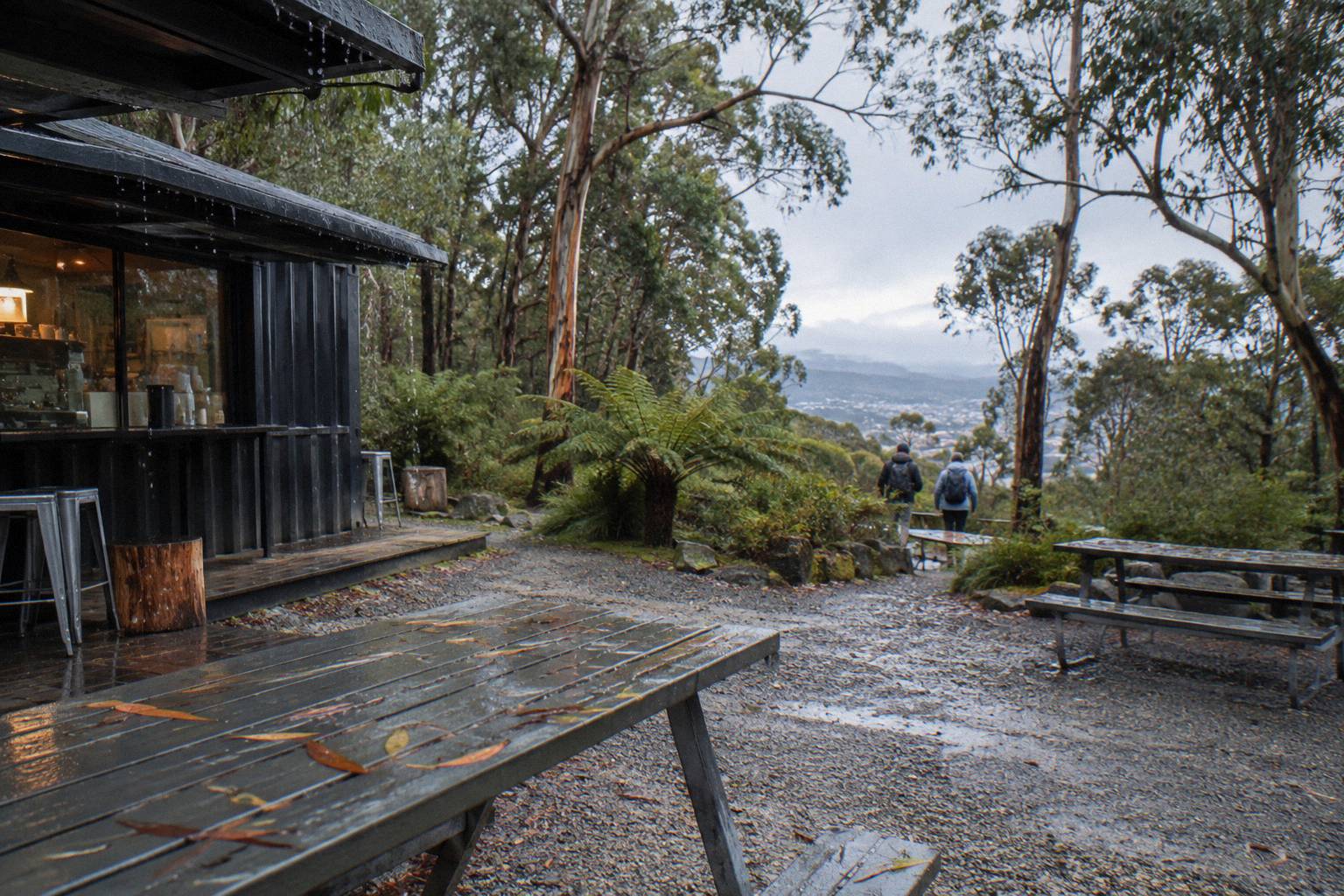
The closest food to the summit is Lost Freight Cafe at The Springs, at 720 metres, roughly halfway up Pinnacle Road. It is a shipping-container cafe open 7 days a week, year round, except 25 and 26 December, though its hours vary. There is nothing between The Springs and the top, so a 30-minute summit stop keeps you at least a steep 6 kilometres of winding road away from anything you can buy.
The Springs is a genuine stop rather than a footnote. The Trust describes it as a sheltered spot with a picnic area and the Springs Lookout, and it is the point where the mountain starts to feel like a mountain rather than a suburban drive. The cafe sits in a fold of the forest at the end of the busy lower road, and it is the only commercial food outlet anywhere in the park. Hours change with the seasons and the weather, so treat any opening time you read as indicative and check before you count on it for lunch.
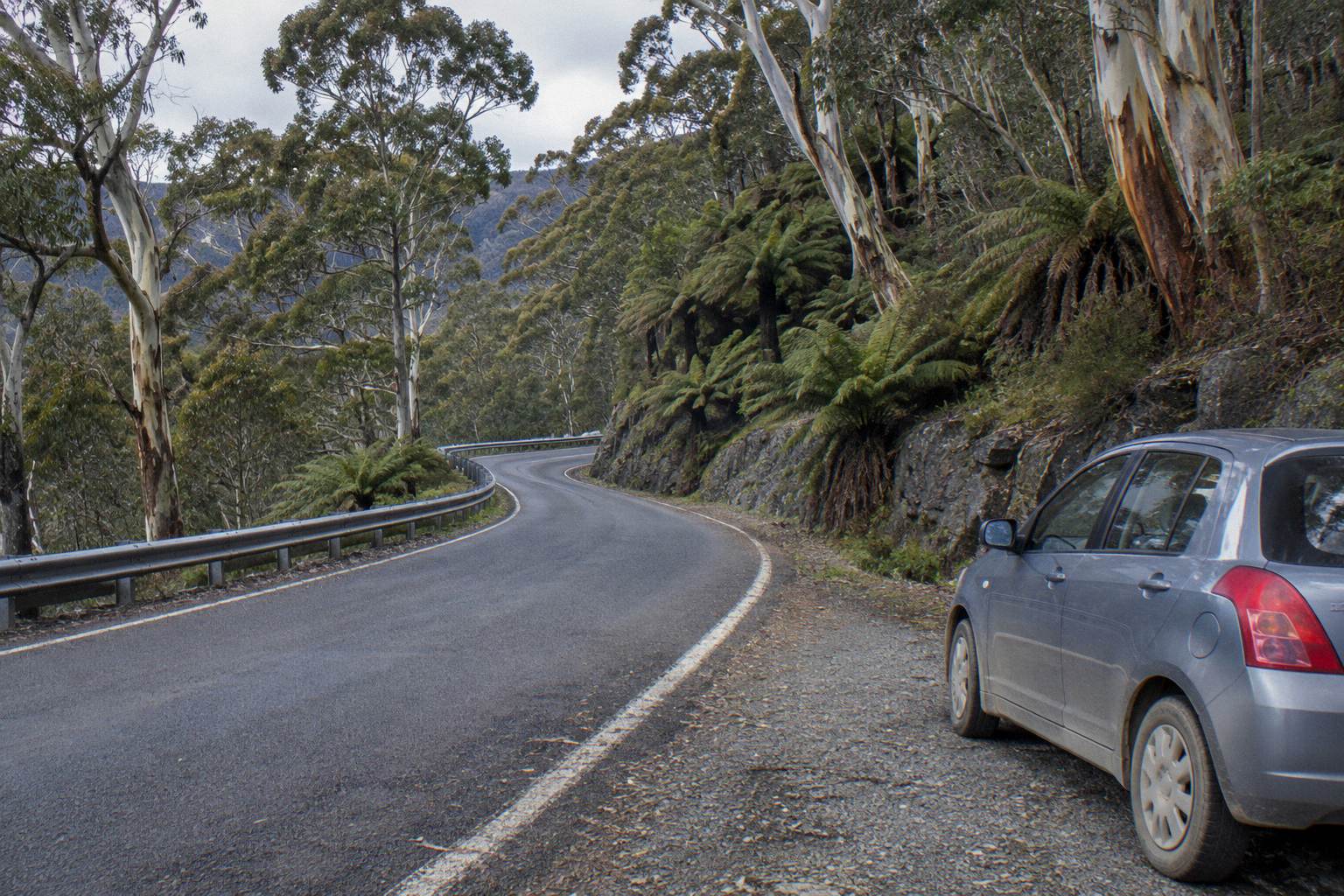
A little geography helps the decision. Pinnacle Road climbs from Fern Tree through The Springs at 720 metres, past The Chalet and Big Bend, and finishes at The Pinnacle near 1,270 metres. The road is the only public road into the park, narrow and winding, shared with bikes, pedestrians and tour buses. So the cafe at The Springs is not a detour from the summit route; it is on the route, just well below the top, at the point where most guided tours are still giving commentary rather than opening doors.
This is where tour format starts to matter. A guided coach tour with a fixed 30 minutes at the top does not stop at The Springs; the schedule is built around the summit lookouts and the commentary on the way up. The hop-on hop-off Explorer Bus is different, because its five stops include The Springs alongside Fern Tree Park, The Chalet, Big Bend and The Pinnacle. With a hop-on hop-off pass you can, in principle, break your journey down, eat, and catch a later departure. That is the one reliable way to combine a summit visit with food on the mountain itself.
One caveat: food stops eat into summit time. If your day in Hobart is short, a cruise-ship day for example, the smarter play is usually to eat in the city before or after the tour rather than budget mountain time around a cafe with variable hours. A packed snack at the top costs you nothing and takes no extra minutes. For a fuller rundown of eating and facility logistics, see what facilities exist at the summit, which covers the shelter, toilets and lookouts in detail.
Summit Versus The Springs: What Each Stop Actually Has
The Pinnacle offers open lookouts, an observation shelter, toilets with fixed seasonal hours and absolutely nothing to buy. The Springs, 550 metres lower, offers the park's only food outlet, a picnic area, a lookout and shorter walking options such as Sphinx Rock. Neither has a visitor centre or ranger station, so the choice between them is really a choice between the view and the meal.
Here is the comparison, using the Trust's own facilities information:
| The Pinnacle (summit) | The Springs | |
|---|---|---|
| Elevation | About 1,270 m | 720 m |
| Food or drink for sale | None, anywhere | Lost Freight Cafe, open 7 days except 25-26 Dec, hours vary |
| Toilets | Yes, 7am-10pm Sep-Apr, 7am-5.30pm May-Aug | Yes, picnic area facilities |
| Shelter | Observation shelter, lookouts open at any time | Sheltered picnic area, Springs Lookout |
| Visitor centre or ranger station | None in the park | None |
| Tour stop time | Around 30 minutes on most tours | Hop-on hop-off stop on the Explorer Bus |
Two things in that table deserve emphasis. First, the summit toilets have fixed seasonal hours but the lookouts and shelter are accessible at any time, so an early or late visit is possible even though nothing is open to sell you anything. Second, the absence of a visitor centre cuts both ways: there is no queue for tickets and entry to the park is free, but there is also no fallback shop if you arrive hungry.
The elevation gap matters more than the numbers suggest. The Trust warns that the temperature difference between the Hobart waterfront and The Pinnacle can be 12 degrees or more, which means an ice cream bought in town at 20 degrees can be eaten in a 8-degree wind at the top. That is not a reason to skip food; it is a reason to pack it in a form that survives a pocket and a breeze.
What Should You Pack For The Summit Stop?
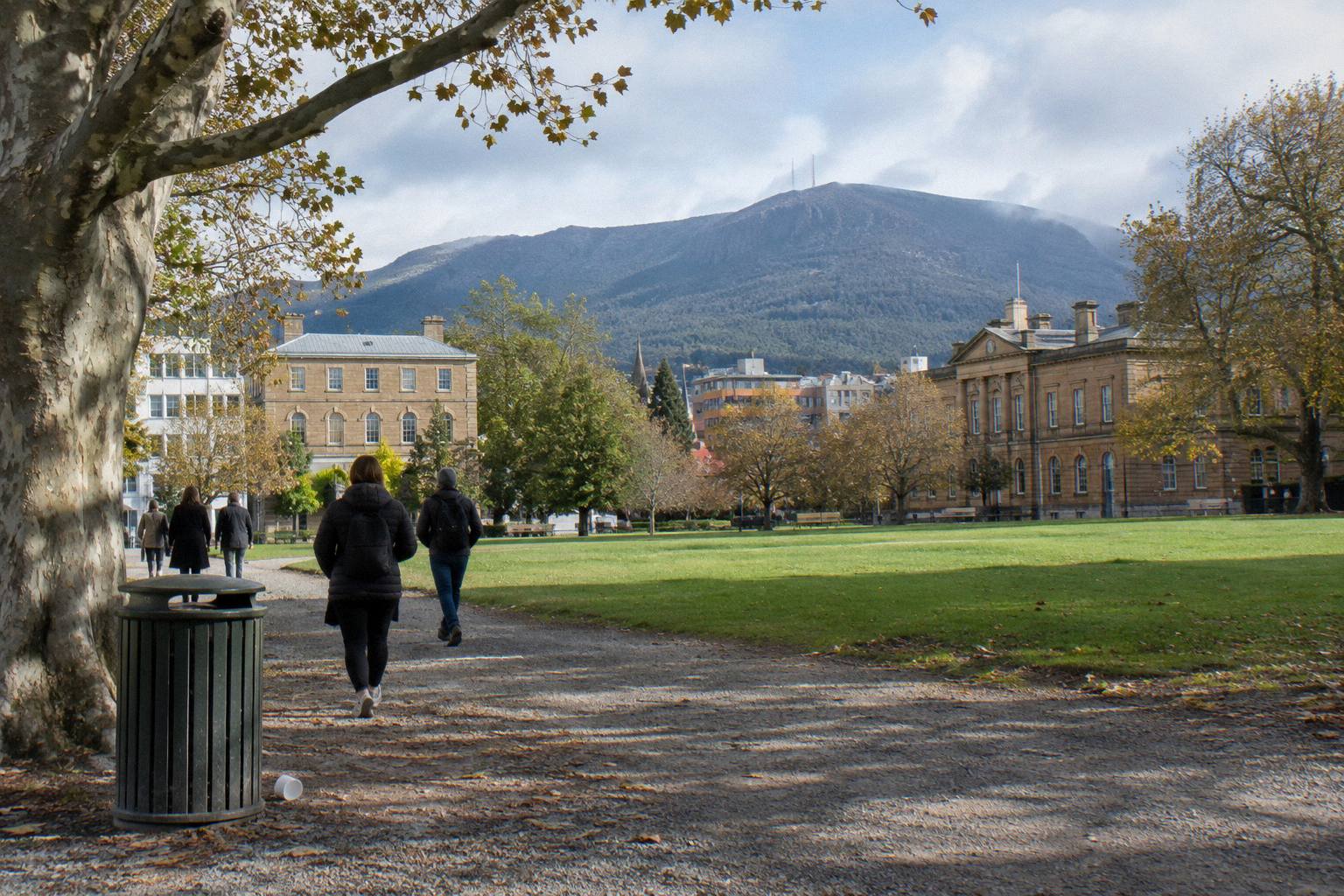
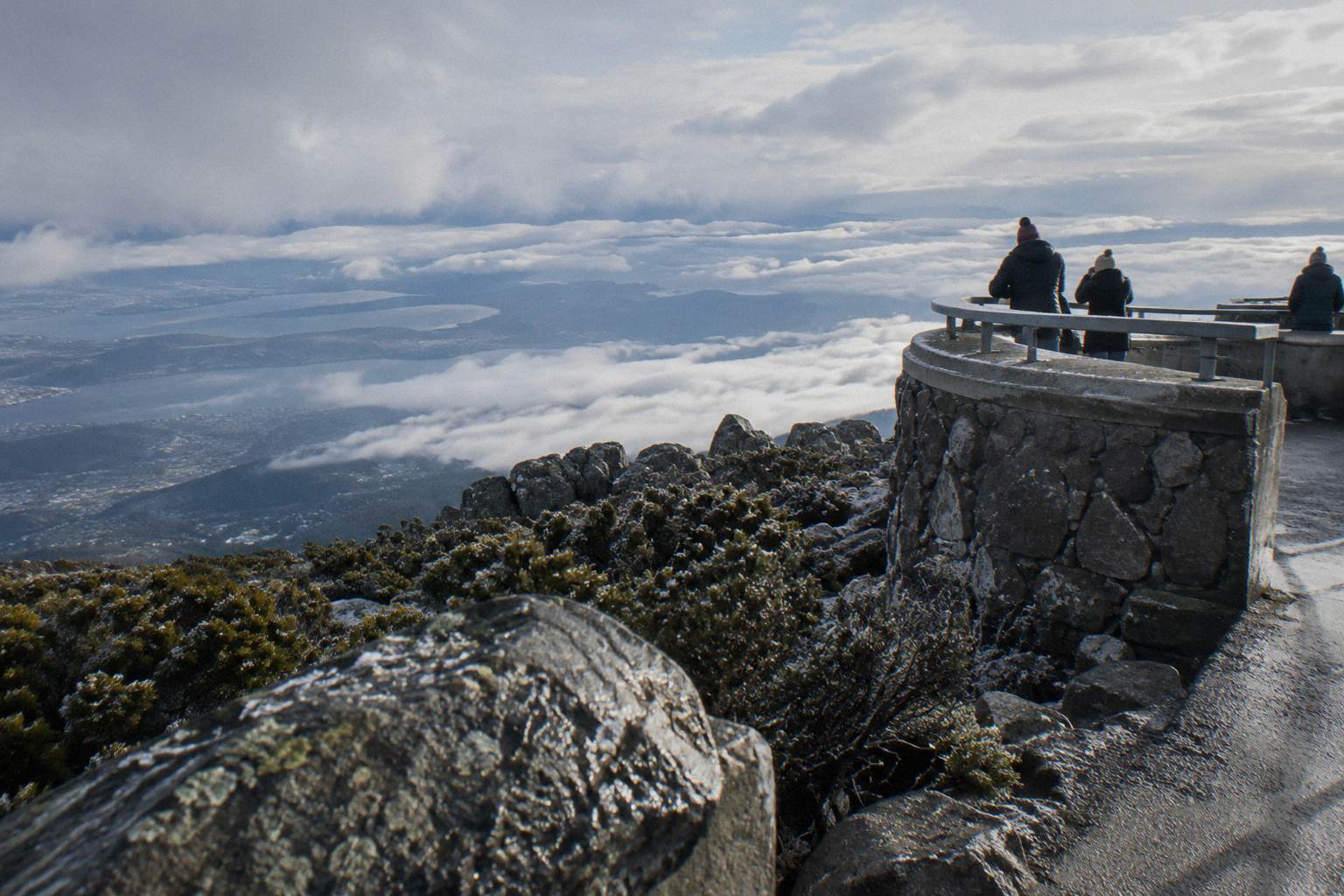
Pack as if for a cold, windy picnic: water, snacks that survive a pocket, and warm layers for every season. The summit can be 10 to 12 degrees or more colder than the Hobart waterfront, wind chill can push below minus 20 Celsius in bad conditions, and there is nowhere up there to buy food, drink or an extra jumper. A 30-minute stop in that air without provisions is the single most common comfort mistake.
The temperature gap is not an operator marketing line. The Trust states it plainly in its safety advice: high winds and temperatures below zero are common at the summit, and the difference between the waterfront and The Pinnacle can reach 12 degrees or more. The Bureau of Meteorology maintains a live station on the mountain if you want the actual readings before you dress, and its notes even mention that wind sensors can ice up. Snow has been recorded in every month of the year, so a summer visit does not exempt you from packing warmly.
There is a small practical quirk worth knowing: the summit hosts radio and television transmitters, and the Trust notes that car key fobs can fail to work at the top because of them. It is harmless and usually resolves back at lower altitude, but if you are on a self-drive day rather than a tour, it is the kind of detail that saves a moment of panic. On an organised tour it is your driver's problem, which is one quiet argument for letting someone else handle the mountain logistics.
For food specifically, think practically rather than ambitiously:
| Item | Why it earns its space |
|---|---|
| Water bottle | Nothing is sold at the summit; cold air masks thirst |
| Energy bars or trail mix | Pocket-stable, eatable in wind without a table |
| Sandwich or wrap | Doable on any tour; no lunch stop is included on these trips |
| Thermos of tea or coffee | A 30-minute stop turns from endurance to pleasure |
| Warm layer and windproof shell | Cuts the chill that makes eating unpleasant |
None of this is heavy kit. The point is that the summit stop is short, exposed and refreshingly free of commerce, and the visitors who enjoy it most are the ones who treated the top like a picnic site rather than a cafe stop. The guide on what to wear on a summit tour goes deeper on layers and footwear.
Which Tours Give You A Chance To Eat On The Mountain?
Only the hop-on hop-off Explorer Bus format lets you stop where food exists, because The Springs is one of its five scheduled stops. Every other summit tour, guided coach or shuttle, drives through The Springs without stopping and gives you around 30 minutes at the top, where there is nothing to buy. On those trips your eating happens in Hobart before departure or after return.
The Explorer Bus Return Tour, run by the Red Decker Company, is the trip with the most reviews on the booking pages, rated 4.8 from 1,081 reviews, from A$55 per person for a 2.5-hour round trip in Australian dollars. Its pass is valid all day and includes hop-on hop-off use, commentary and a Wellington Park bushwalking map, which is exactly the flexibility an eater needs: ride to the top first while the weather holds, then descend to The Springs on a later bus and buy lunch at 720 metres. Note the pass's 30 minutes at the summit is the standard stop, not a limit on your day.
There is a scheduling detail to get right if you plan the cafe stop. The Explorer Bus runs 7 days, closed only on 25 December and Good Friday, with a summer timetable from 1 October to 30 April and a winter timetable from 1 May to 30 September, and pre-booking is essential. Departures listed by the operator leave from opposite the Tasmanian Travel and Information Centre at 4 Elizabeth Street, though the booking pages name Brooke Street Pier as the meeting point; the two differ, so use the meeting point on your booking confirmation and let that govern when your last realistic cafe-to-city bus runs. This is the format featured across Mount Wellington Tours, because it is the one ticket that answers the food question without changing your plans.
The Hobart Shuttle Hop-On Hop-Off Summit Pass, from A$55 per person over 2 hours 15 minutes, is also hop-on hop-off in the sense of an all-day bus pass, with 30 minutes at the summit, live commentary and a local driver/guide. It is a different company's service, and the trade-off for the cafe question is similar in kind: check its stop list against The Springs when booking if eating on the mountain is the goal, since the five-stop layout described above belongs to the Explorer Bus service. One point in its favour on snowy mornings: when the summit gates close to the public, its snow-day running is handled by the Explorer Bus partners, the only bus approved beyond the closed gates.
Guided tours are the opposite trade. The Ultimate Experience Guided Summit Tour, from A$65 per person and rated 4.6 from 90 reviews, spends 2 hours 45 minutes on the mountain round trip with hotel pickup from selected hotels, and its not-included list names food and drink explicitly. You get commentary, a guide and a fixed itinerary, and you eat in town. For travellers deciding between the two approaches, the piece on getting up the mountain without a car lays out every option including the free Metro buses to Fern Tree, which stop well below The Springs.
Does The Lack Of A Cafe Ruin The Summit Stop?
No, and for most visitors it barely registers. The stop is around 30 minutes, the lookouts and shelter give you something to do in every one of them, and the absence of commercial noise is part of what makes the top feel like a mountain rather than a viewpoint car park. The people it genuinely affects are those who planned a meal on the mountain, so plan ahead and you will not be one of them.
It is worth naming what you gain. The Pinnacle has no kiosk clutter, no queue for an overpriced coffee, no bins overflowing with packaging. The park's rules reflect that ethos: commercial operators need a licence from the Trust, and single-serve plastics are banned for licensed operators. Eating your own sandwich at a stone shelter about 1,270 metres above a capital city is, arguably, the better version of a cafe stop anyway.
The failure mode is entirely avoidable and cheap to avoid. Eat a real meal before your tour departure, carry water and a snack, and treat any food at The Springs as a bonus on the one ticket format that can reach it. Every trip includes free cancellation up to 24 hours before start, so even the booking itself carries little risk if your plans shift. As the Trust's own material on the official Wellington Park site makes clear, the mountain is managed as a natural reserve first and a tourist destination second; the food offer, or lack of it, follows from that.
If you want to check conditions rather than guess, the summit has no webcam-fed cafe board, but live temperature and wind readings from the mountain station are available through the Bureau of Meteorology's summit weather station, which tells you more about your comfort than any menu would. The Trust's safety page adds the detail that key fobs can fail at the summit, small proof of how uncommercial the top really is.
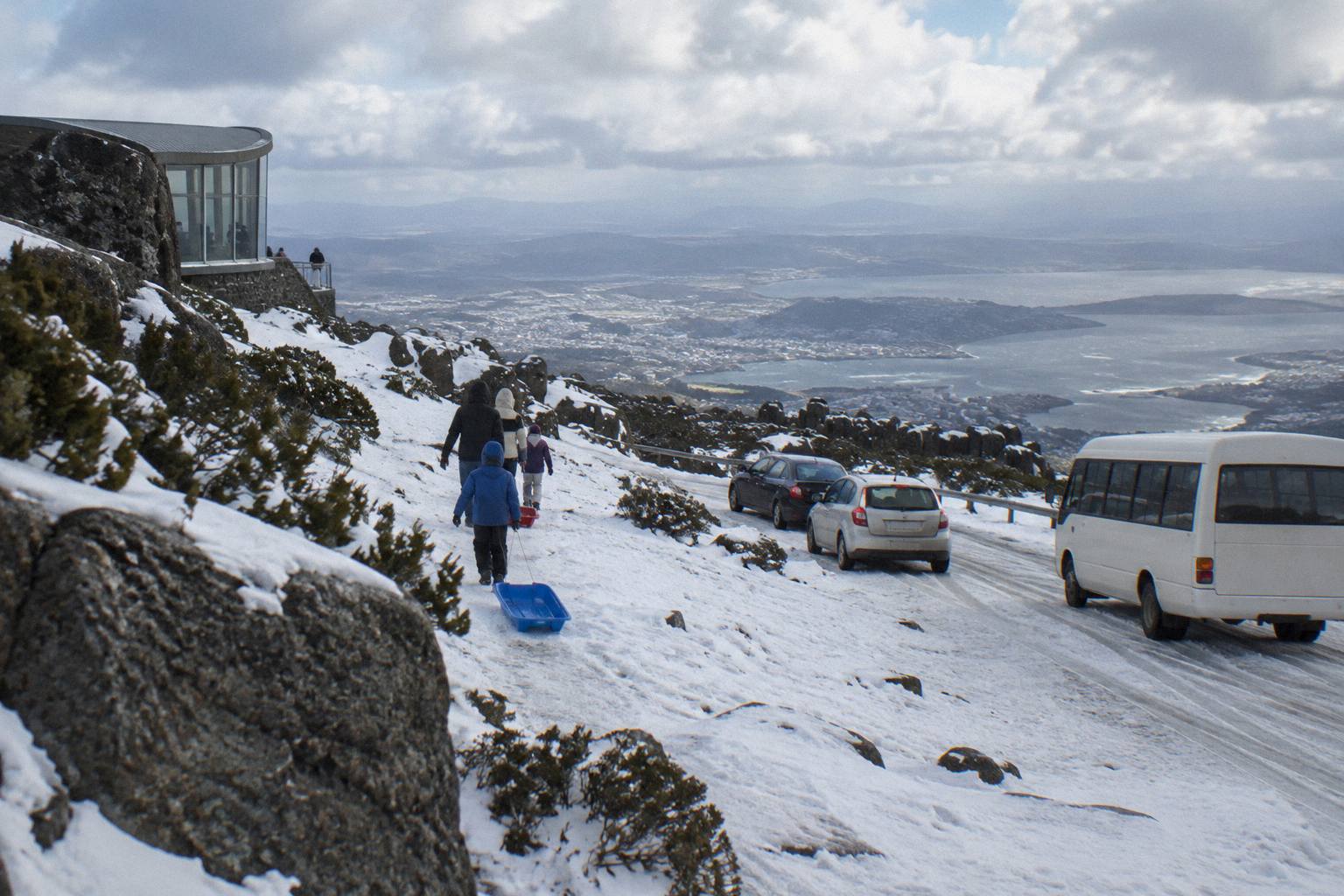
One last planning note: the road itself has a rhythm. Pinnacle Road closes for annual maintenance every November, shuts on snow and ice nights throughout the colder months, and the Trust asks visitors to check the road status or call the Pinnacle Road information line on 03 6238 2711 before travelling. None of that changes the food answer, but a closed road changes everything else, so pair your packed lunch with a quick status check and you will not be eating it in a car park at the bottom.
Common Questions About Cafe And Food Options At The Summit
Is There A Cafe At The Top Of The Mountain On A Tour Stop?
No. The summit of kunanyi / Mount Wellington has lookouts, an observation shelter and toilets, but no cafe, shop or food outlet of any kind, and there is no visitor centre or ranger station in the park. Food and drink are listed as not included on every summit tour. Carry your own.
Where Is The Closest Food To The Summit?
Lost Freight Cafe at The Springs, at 720 metres on Pinnacle Road, is the only food outlet on the mountain. It is a shipping-container cafe open 7 days a week year round except 25 and 26 December, with hours that vary. Nothing is sold between The Springs and the top.
Can I Stop At The Springs On A Tour?
Only on a hop-on hop-off ticket. The Springs is one of the five stops on the Explorer Bus service, so an all-day pass lets you descend to the cafe and ride a later departure. Guided coach and shuttle tours drive through The Springs without stopping.
Are There Toilets At The Summit?
Yes. Summit toilets are open 7am to 10pm from 1 September to 30 April and 7am to 5.30pm from 1 May to 31 August. The lookouts and observation shelter are accessible at any time.
What Food Should I Bring For The Summit Stop?
Water, pocket-stable snacks such as bars or trail mix, and optionally a sandwich or thermos. The summit is often 10 to 12 degrees or more colder than the Hobart waterfront, with wind chill that can fall below minus 20 Celsius in bad conditions, so a warm layer matters as much as the food.
Is There Anywhere To Buy Water At The Top?
No. Nothing is sold at the summit, including drinks. Bring a filled bottle. Pack it before you board, because no tour on the mountain makes a food or drink stop for you.