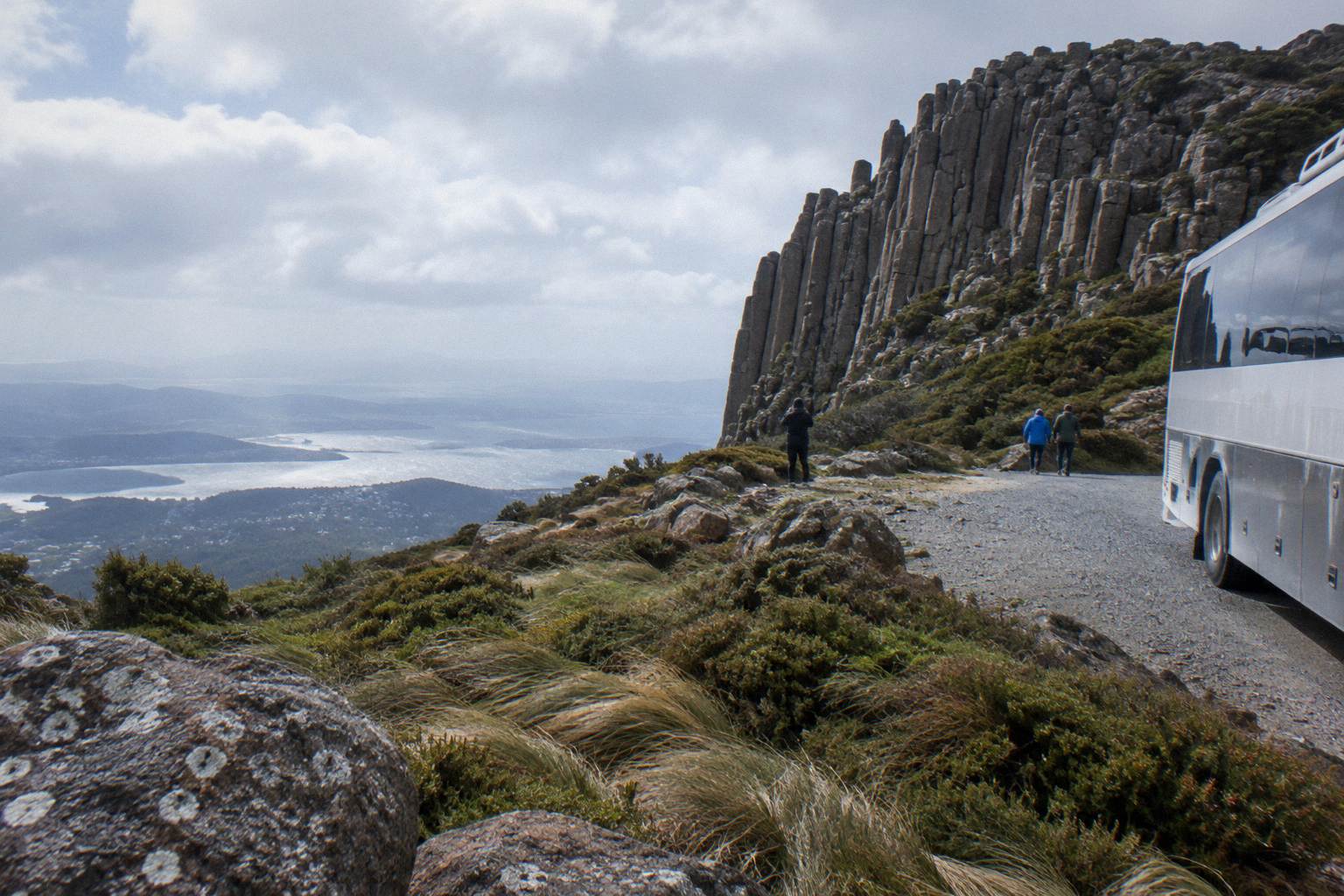
Snow On The Mountain: Tours, Closures And Winter Visits
Snow on kunanyi / Mount Wellington is real, regular and never guaranteed on any given day. Below is what actually happens when the white stuff arrives, which trips keep running, and how to plan around the closures that shut private vehicles out.
Short answer
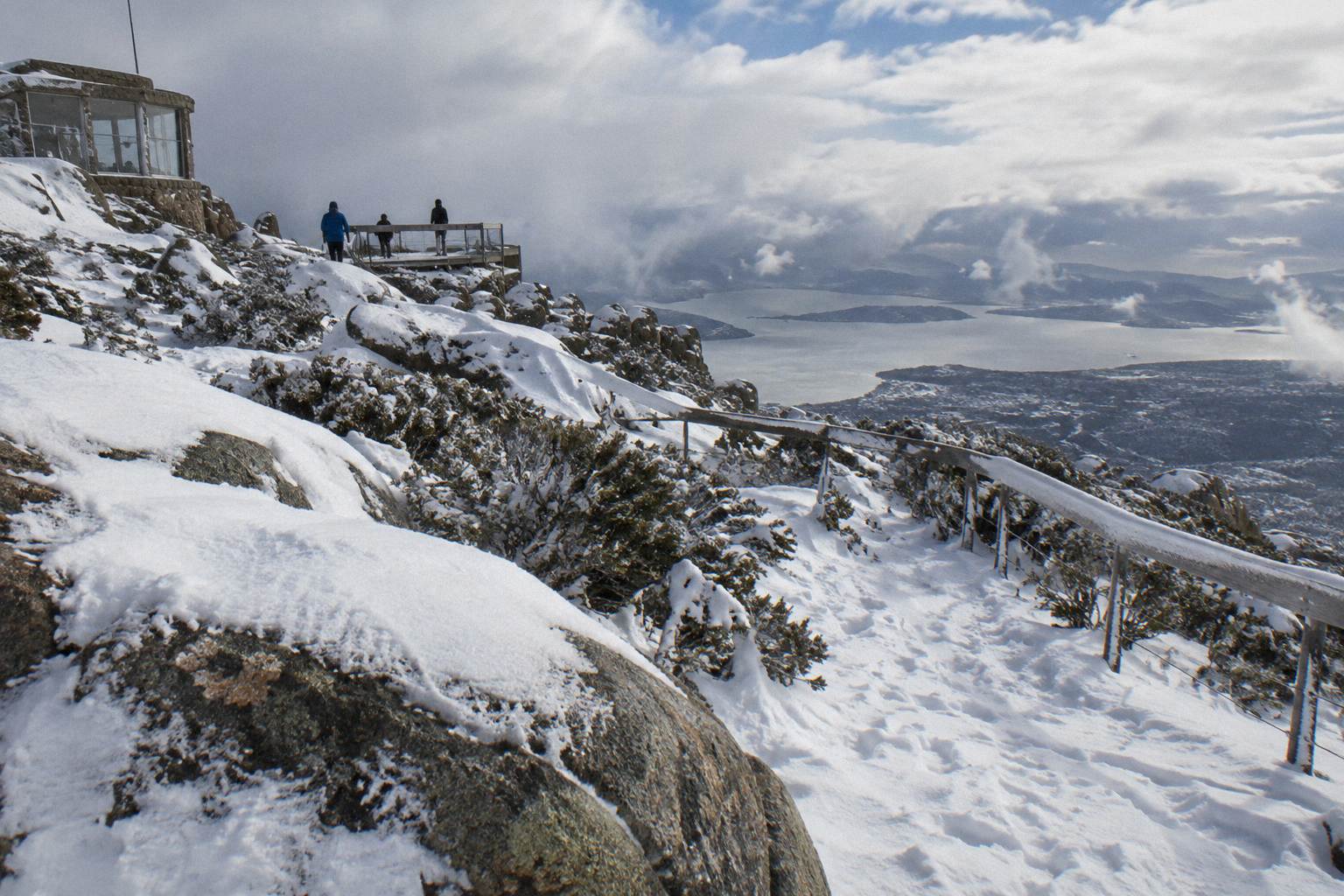
Snow falls on kunanyi / Mount Wellington in any month, and is more likely overnight from May to September. Pinnacle Road closed on 95 nights for snow or ice in 2025-26. Only the Explorer Bus is licensed to carry visitors up when the gates shut, from A$55 per person, rated 4.8 from 1,081 reviews.
Snow on kunanyi / Mount Wellington is the reason many travellers first look up from the Hobart waterfront and start planning a trip. The summit, 1,271 metres up, holds snow when the city below is in t-shirts, and that contrast is one of the most photographed sights in Tasmania. But snow changes everything about how you visit. The only public road into the park shuts when ice is present, private vehicles get turned around at the gate, and most of the tours listed on booking pages operate in ordinary conditions, not blizzards.
What follows walks through the real mechanics of a snow visit, using figures from the Wellington Park Management Trust, the City of Hobart road authority and the tour booking pages themselves. It covers when the road closes, which trips keep running, what happens to tickets you may already hold, and how to dress for a place where the temperature gap between the waterfront and The Pinnacle can be 12 degrees or more. The short version: snow trips do run, one bus has special standing when the gates close, and nothing about snow, views or access is ever promised.
Does It Snow On Kunanyi / Mount Wellington?
Yes, snow falls on kunanyi / Mount Wellington in any month of the year, though it is far more likely overnight between May and September, and the Trust warns that access may be restricted by snow and ice at any time of year, particularly from April to September. No month is snow-free, and no month guarantees it either, so no tour can promise you snow on the day you go.
The mountain's climate explains why. Wikipedia's climate table for The Pinnacle, drawing on Bureau of Meteorology data from 1991 to 2020 at 1,260 metres, records a mean temperature of 9.5 degrees in January and just 0.7 degrees in both July and August. The record low is minus 9.1 degrees, and the summit has never reached 30 degrees, with the highest reading 29.8 degrees. Sustained wind above 157 km/h has been recorded. In other words, the summit behaves more like an alpine station than a hill above a capital city, and snow is a structural feature of the place rather than a rare event.
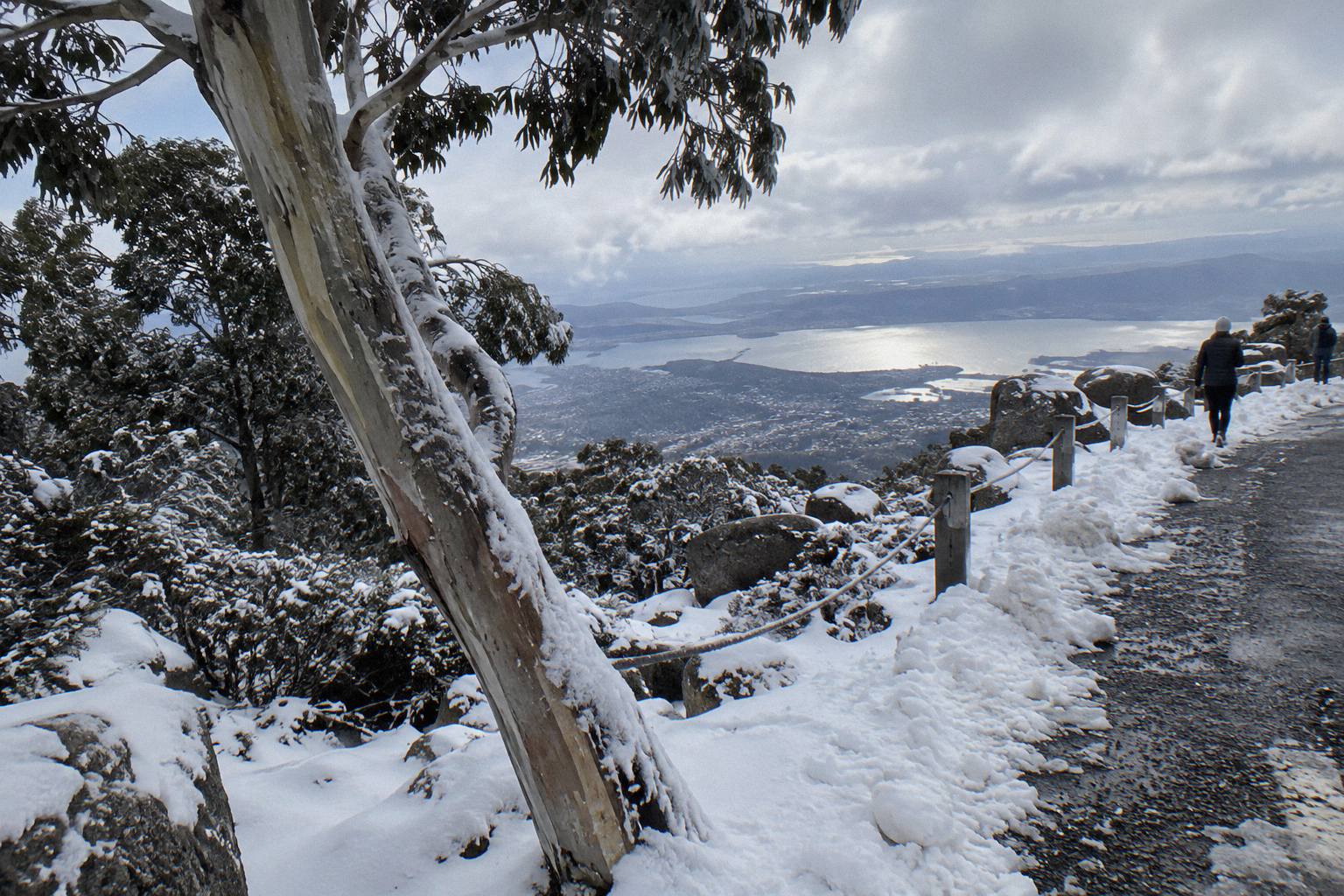
The timing matters for planning. Falls are more likely overnight in the May to September window, which means a road closure on a given morning often follows snow that arrived while Hobart slept. Lighter falls occur in other months, which is why the Trust's advice about access restrictions runs all year. If you are chasing the classic postcard, deep-snow days cluster in the coldest weeks of July and August, but those are also the weeks with the most closures. Snow and access trade off against each other: the heavier the fall, the less likely a private car gets through.
One caveat belongs here. The summit is often in cloud, and a snow day can also be a grey, white-out day with no view at all. The Explorer Bus operator itself says it cannot guarantee reaching The Pinnacle on snow days, and nobody sensible guarantees a view. If your heart is set on the panorama from the observation shelter, our page on what a summit trip is like in fog is worth reading before you commit to a date.
| Fact | Figure | Source |
|---|---|---|
| Mean January temperature at The Pinnacle | 9.5 °C | Climate table 1991-2020, secondary |
| Mean July and August temperature | 0.7 °C | Climate table 1991-2020, secondary |
| Record low at The Pinnacle | -9.1 °C | Climate table, secondary |
| Highest temperature ever recorded | 29.8 °C (never above 30 °C) | Climate table, secondary |
| Strongest sustained wind recorded | over 157 km/h | Climate table, secondary |
| Waterfront to summit temperature gap | 12 degrees or more | Wellington Park Management Trust |
When Does Pinnacle Road Close For Snow?
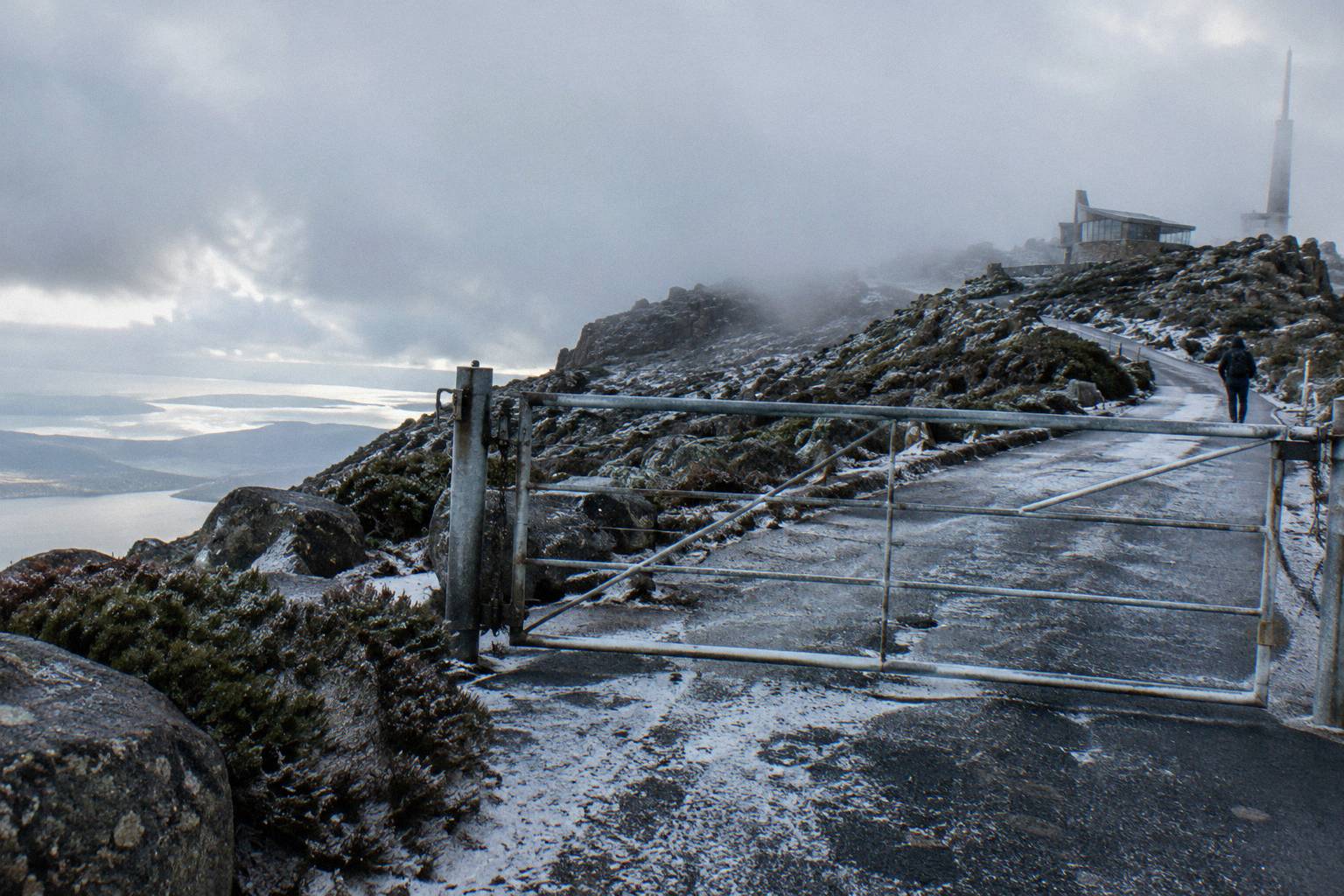
Pinnacle Road, the only public road into the park, is managed by the City of Hobart and closes whenever ice or snow is present, sometimes even before snow arrives; in 2025-26 it was shut on 95 nights for snow or ice, with the most closures in August at 22 nights, then October at 19, and July and September at 18 each, and on 14 days the summit was unreachable by private vehicle at all.
The road runs from the end of Pillinger Drive in Fern Tree, past The Springs at 720 metres, to the summit. It is sealed and passable in conventional vehicles, but narrow, winding and shared with bikes, pedestrians and tour buses. When conditions turn, the gate closes at Bracken Lane at the park entrance, or above The Springs, and private traffic stops there. Overnight closures ran past 9.30am on 46 days in 2025-26, which matters if you booked a morning activity: a closure from the night before can still be in force late into the morning. Vehicle access to The Springs was possible on all but one closure day, so the lower mountain usually stays reachable even when the top does not.
| Month (2025-26 season) | Nights closed for snow or ice |
|---|---|
| July | 18 |
| August | 22 |
| September | 18 |
| October | 19 |
| Other months | not published by the Trust |
| Total season | 95 nights |
Two events from the same season show the two faces of a snow closure. The record day saw 1,906 vehicles on the road on 6 September after heavy snow, so many that the City of Hobart ran active traffic management, because parking at The Springs, The Pinnacle and the lay-bys is limited. Meanwhile, on 14 days the summit was not reachable by private vehicle at all. Snow draws a crowd and shuts the road in the same breath, which is exactly why a booked bus seat beats a car on those mornings.
There is a second kind of closure to plan around. Every November the road shuts for annual maintenance, with no vehicle access to the summit and no pedestrians or cyclists on the road while it is closed; tracks stay open. The Trust also closes the road for events from time to time. Before any snow-season visit, check the City of Hobart's Pinnacle Road status page or call the Pinnacle Road Information Line on 03 6238 2711, the number the Trust's safety page lists. Our longer page on Pinnacle Road closures and how they affect tours covers the fine detail.
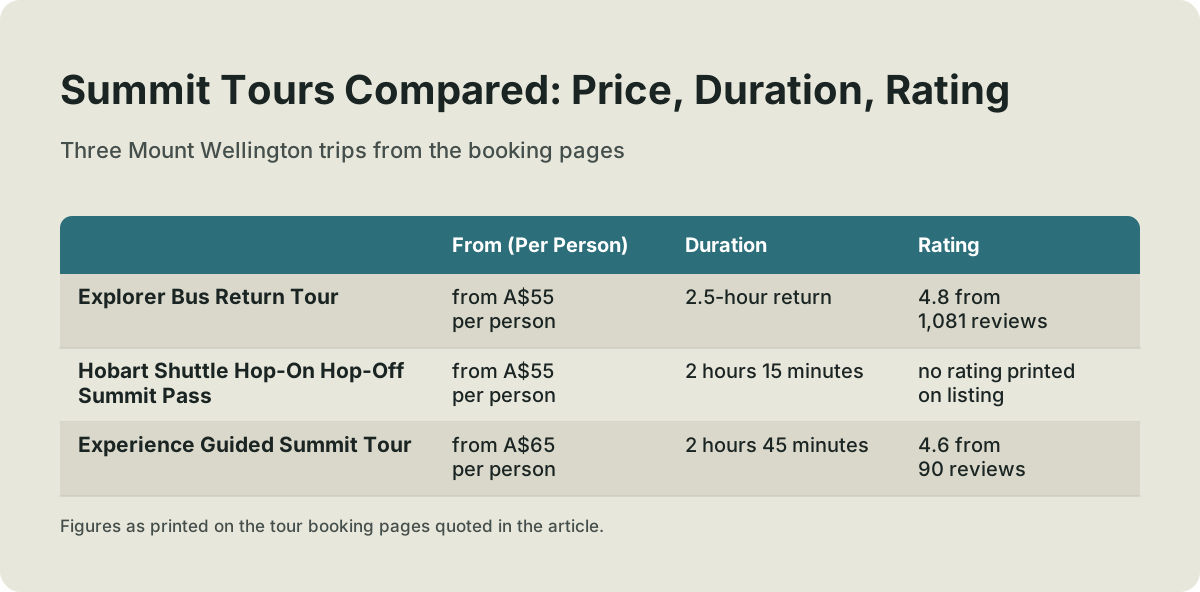
That record September traffic day is the argument for booking ahead rather than driving. Three seat-based trips cover the main approaches to a snow-possible visit: the Explorer Bus Return Tour, the Hobart Shuttle Hop-On Hop-Off Summit Pass, and the Ultimate Experience Guided Summit Tour.
The status line and the road authority page are the ground truth on the morning itself; a booking page cannot tell you whether the gate is shut. The Trust's own road and track updates page, wellingtonpark.org.au, publishes closure data, and its safety page carries the standing warnings about high winds and sub-zero temperatures at the summit. Wind chill below minus 20 degrees is possible, according to the Trust, which is a figure that should shape what you wear, not just whether you go.
Which Tours Actually Run On Snow Days?
The Wellington Park Management Trust describes the Explorer Bus as the only licensed operator able to take visitors up when the road is closed for snow, and on those days the operator runs a 2.5-hour City to Snow return and a one-hour Springs to Snow trip, bookable only once a reliable snow forecast exists, with no one-way fares, no hop-on and no bike freight on snow tours, and no guarantee of reaching The Pinnacle.
That sentence is the single most useful one here, so it is worth unpacking. When the gate at Bracken Lane shuts, ordinary traffic stops, but a licensed bus with the right approval can still travel the road. The Explorer Bus holds that standing. Its snow-day trips are released only when the forecast supports them, which means you cannot book a guaranteed snow experience weeks ahead; you book once the operator is confident snow will actually be there. The trade-off is spelled out plainly by the operator: The Pinnacle is not guaranteed on snow days, and snow tours carry restrictions the standard pass does not.
The standard Explorer Bus Return Tour, from A$55 per person and rated 4.8 from 1,081 reviews, the most reviews of any trip on the booking pages, runs in all weather conditions, and the booking page asks travellers to check the weather before going. It gives you a 2.5-hour return with 30 minutes at the summit, hop-on hop-off use across the five stops on the day of travel, commentary, free Wi-Fi and a Wellington Park bushwalking map. It departs from Brooke Street Pier at 12 Franklin Wharf, and hotel pickup and drop-off is listed as not included. It is the trip most visitors should default to for a snow-possible visit, because it holds up whether or not the weather turns.
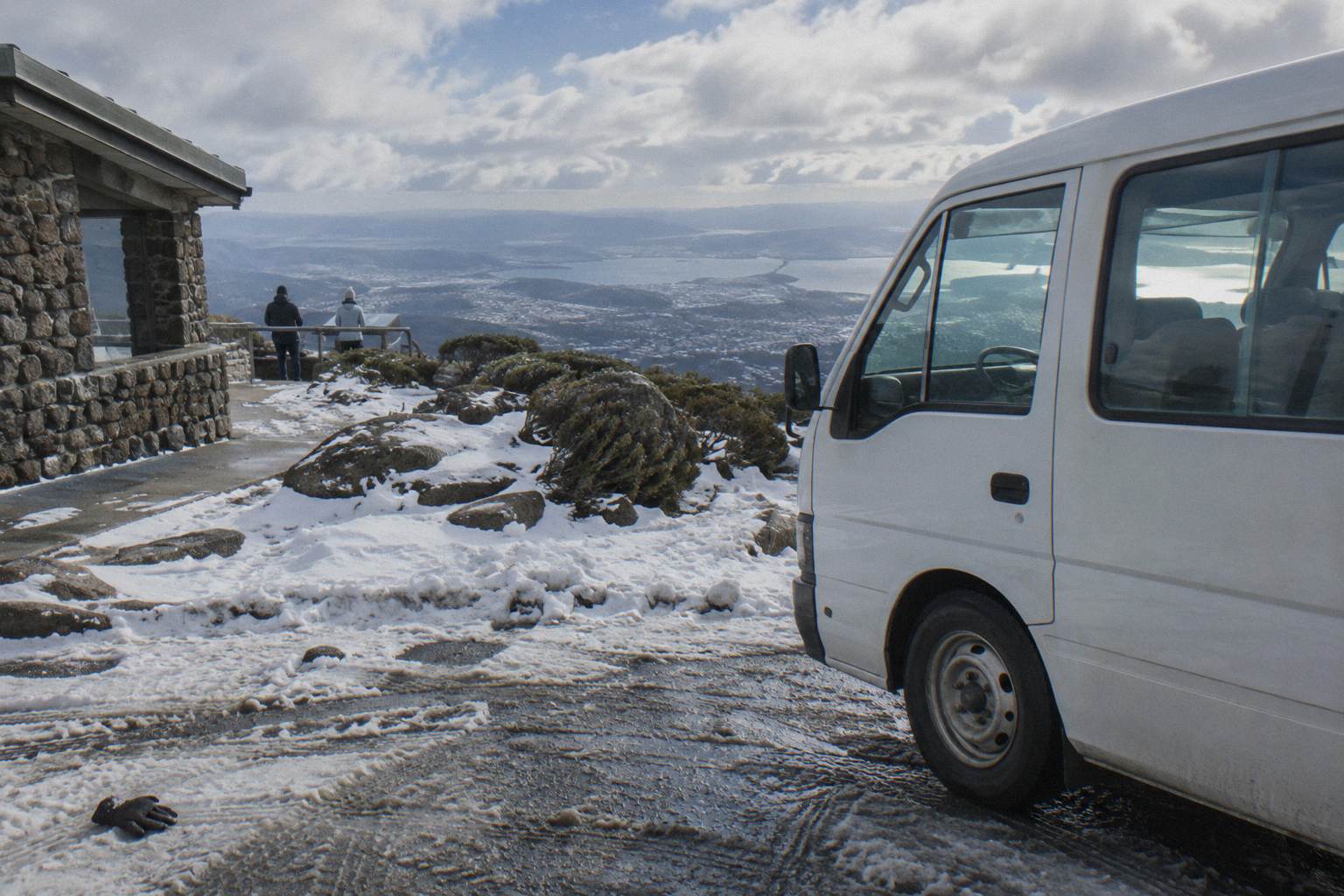
The hop-on hop-off side of the lineup has its own snow arrangement. The Hobart Shuttle Hop-On Hop-Off Summit Pass booking page states that on snow days when the gates are closed to the public, the tour is run by the Explorer Bus partners, the only bus approved beyond the closed gates. From A$55 per person for a 2 hours 15 minutes trip, with no rating or review figure printed on its listing, it includes 30 minutes at the summit, an all-day bus pass, live commentary, a local driver/guide and a modern air-conditioned vehicle. In plain terms: you can buy this pass, and on a closed-road day your seat is honoured on the licensed service.
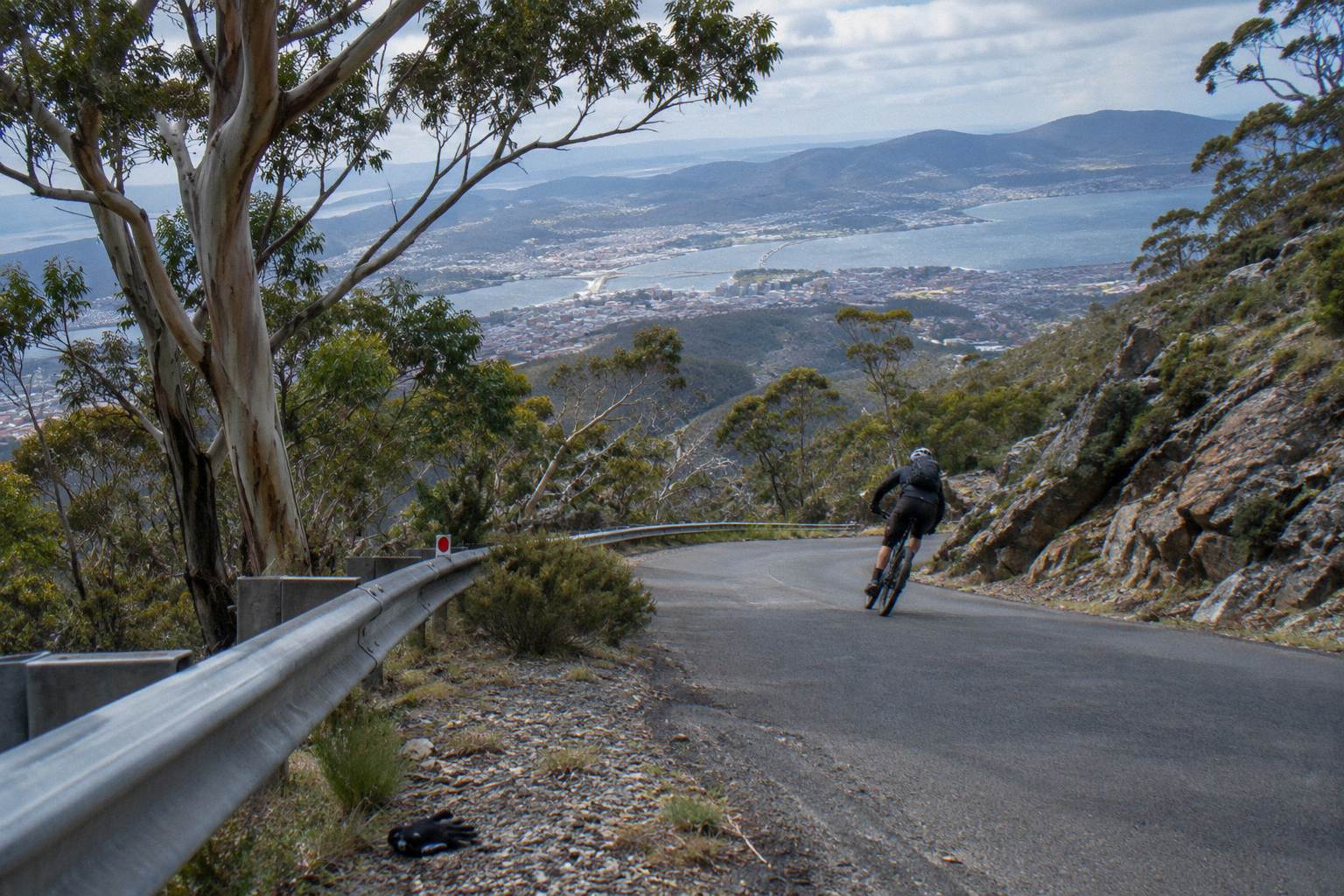
The guided-coach format behaves differently again. The Ultimate Experience Guided Summit Tour, from A$65 per person and rated 4.6 from 90 reviews, is a 2 hours 45 minutes coach trip with hotel pickup from selected hotels or a Brooke Street Pier meeting point, full commentary and an English-speaking guide, for groups of up to 48. Its booking page says the itinerary may vary due to road and weather conditions, and it is not wheelchair accessible. A varied itinerary on a snow day usually means adjusted timing or an amended route rather than cancellation, but the exact outcome sits with the operator and the booking terms, and the booking pages say nothing about what happens if the road shuts while a trip is already under way. If that scenario concerns you, raise it with the operator before you travel.
| Trip | Format | Snow-day behaviour |
|---|---|---|
| Explorer Bus Return Tour | Hop-on hop-off bus, 2.5 h return | Operates in all weather; operator runs dedicated snow tours when the forecast supports them |
| Hobart Shuttle Hop-On Hop-Off Summit Pass | Hop-on hop-off shuttle, 2 h 15 min | On closed-gate snow days, run by the Explorer Bus partners per the booking page |
| Ultimate Experience Guided Summit Tour | Guided coach, 2 h 45 min | Itinerary may vary due to road and weather conditions, per the booking page |
| Explorer Bus One-Way Pass | One-way ride up, 50 min | No one-way fares on dedicated snow tours |
Free cancellation up to 24 hours before start applies to every trip here, which is the reassurance that matters most in snow season. You can lock in a seat while you watch the forecast, and step back without cost inside that window. What the booking pages do not spell out is any day-of refund beyond that, so the safest habit is to cancel or change more than 24 hours out if the forecast has turned against you.
What Happens To One-Way And Hop-On Tickets On Snow Days?
The Explorer Bus One-Way Pass, from A$35 per person for a 50-minute ride from the city to the summit, does not survive a snow day unchanged: the operator runs no one-way fares, no hop-on and no bike freight on its dedicated snow tours, so a one-way ticket is a fair-weather product, and anyone planning to ride up and walk down should read the snow-day rules before committing.
The one-way pass exists for a specific plan: ride to the top, then descend under your own steam. It includes access to Wellington Park and the summit, the bushwalking map, commentary and free Wi-Fi onboard, departing Brooke Street Pier for groups of up to 27. On a normal day it pairs naturally with a walk down, a topic we cover in detail in whether you can walk down after the bus up. On a snow day that pairing collapses, because the snow tours are return-only and the walking tracks above the snowline are a different proposition in ice and wind than in summer conditions.
Bike carriage follows the same logic. On ordinary services the Explorer Bus carries four mountain bikes per departure for a separate per-bike fee, loaded at Brooke Street Pier at least 20 minutes before departure, and the booking pages for the return and one-way passes list bike freight at $10 per bike, booked no later than 30 minutes prior to departure. On dedicated snow tours, none of that applies. Riders hoping to descend the mountain by bike in snow season should instead read our guide to downhill bike rides from the summit, which covers the four-wheel-support bike tours that run their own transfers.
The practical takeaway is to match your ticket to your season. One-way and hop-on freedom belong to clear days. Snow days reward a simple return ticket on the licensed service, taken as a round trip, with the flexibility to enjoy whatever level of the mountain the weather allows. The rest of the planning pages sit on Mount Wellington Tours.
How Cold Is The Summit Compared With Hobart?
The Trust states that the temperature difference between the Hobart waterfront and The Pinnacle can be 12 degrees or more, that high winds and temperatures below zero are common at the summit, and that wind chill below minus 20 degrees is possible; the Explorer Bus operator puts the gap at about 10 degrees, so a fair way to hold both figures is that the summit is often 10 to 12 degrees or more colder than the city below.
That gap catches visitors constantly. You board a bus in a Hobart summer of 22 degrees and step out at The Pinnacle into something closer to 10, with wind on top. In winter the arithmetic gets genuinely serious: a calm five-degree city morning can mean a summit near minus seven, and if wind is running, the feels-like figure drops further. The Bureau of Meteorology maintains a live station at Kunanyi / Mount Wellington, station 094087, and it notes that wind and feels-like readings can become unavailable when ice builds up on the instruments, which tells you something about the conditions themselves.
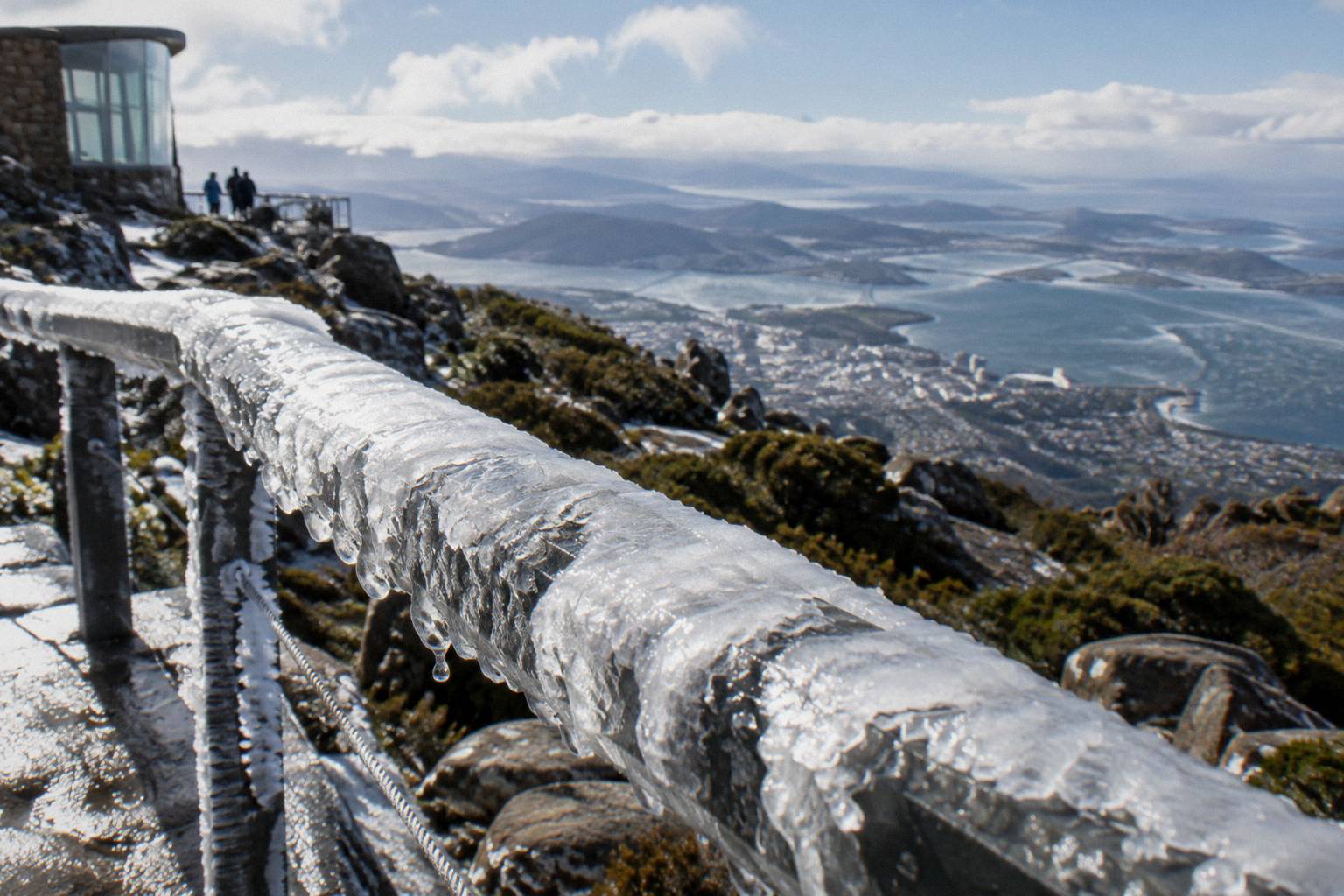
The operator's phrase for the mountain is "four seasons in one day", and it is not marketing fluff. Conditions at 1,271 metres change faster than the city forecast suggests, and a day that starts clear can cloud over within an hour, while a white-out morning can clear to a brilliant afternoon. This is why the booking pages for the Explorer Bus trips ask travellers to check the weather before going, and why the live observations from the Bureau's station at www.bom.gov.au/weatherstation/australia/tasmania/094087 are a better pre-trip check than the Hobart city forecast alone.
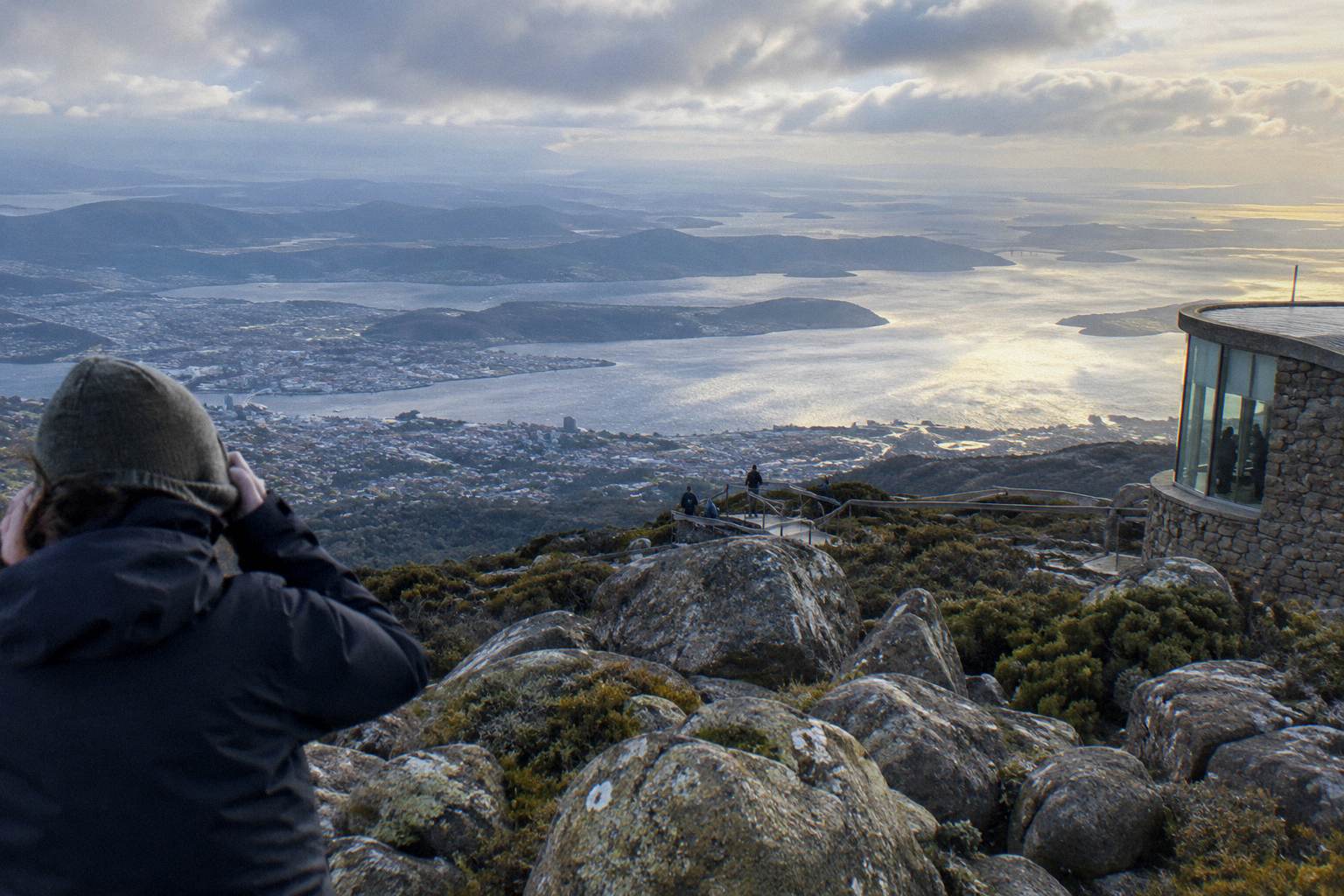
Dress for the summit figure, not the waterfront figure. The Trust's own safety advice treats sub-zero temperatures and high winds as normal summit conditions, not exceptions, and the observation shelter at the top offers stone walls and a view, not heating you can plan a day around. There is no cafe at the summit; the only food outlet on the mountain is Lost Freight Cafe, a shipping-container cafe at The Springs, open seven days year-round except 25 and 26 December, with hours that vary.
How Should You Plan A Snow Visit Step By Step?
Plan backwards from the road, not the view: pick your date in the May to September window when snow is likeliest, book a seat-based trip rather than driving, watch the Bureau's summit station and the road status line in the final 48 hours, cancel free of charge more than 24 hours out if the forecast collapses, and keep your expectations set on mountain weather rather than postcard blue sky.
Step one is choosing the ticket. A return bus or coach seat is the dependable choice, as covered above, and every trip here carries free cancellation up to 24 hours before start. That cancellation window is your friend in snow season, because the reliable snow forecasts only firm up a day or two ahead, which is exactly the horizon the operator uses to release its dedicated City to Snow and Springs to Snow trips. Booking early and adjusting late beats arriving in Hobart with no seat on a morning when the season's record traffic, 1,906 vehicles, has the same idea.
Step two is the morning check. Call the Pinnacle Road Information Line on 03 6238 2711 or check the City of Hobart status page, glance at the live Bureau station, and read your booking confirmation for the meeting point. One quirk worth flagging: the Explorer Bus operator's own timetable page lists departures from opposite the Tasmanian Travel and Information Centre at 4 Elizabeth Street, while the booking pages name Brooke Street Pier as the meeting point; the two differ, so use the point on your confirmation. Pre-booking is essential for the Explorer Bus, and its booking office at Brooke Street Pier is open 8.30am to 4pm if you need to sort something in person.
Step three is timing within the day. Because overnight closures can run past 9.30am, morning trips are the ones most exposed to a gate still shut; afternoon departures sometimes travel after the road has been cleared and reopened. If your schedule allows both, keep the earlier booking but know its backup, or simply hold the later one when snow is forecast. The Explorer Bus departs at 9.30am, 11am, 12.30pm, 2pm and 3.30pm in summer, with the 3.30pm running from 1 October to 30 April only, and the winter timetable applying 1 May to 30 September, so the schedule itself shifts with the seasons.
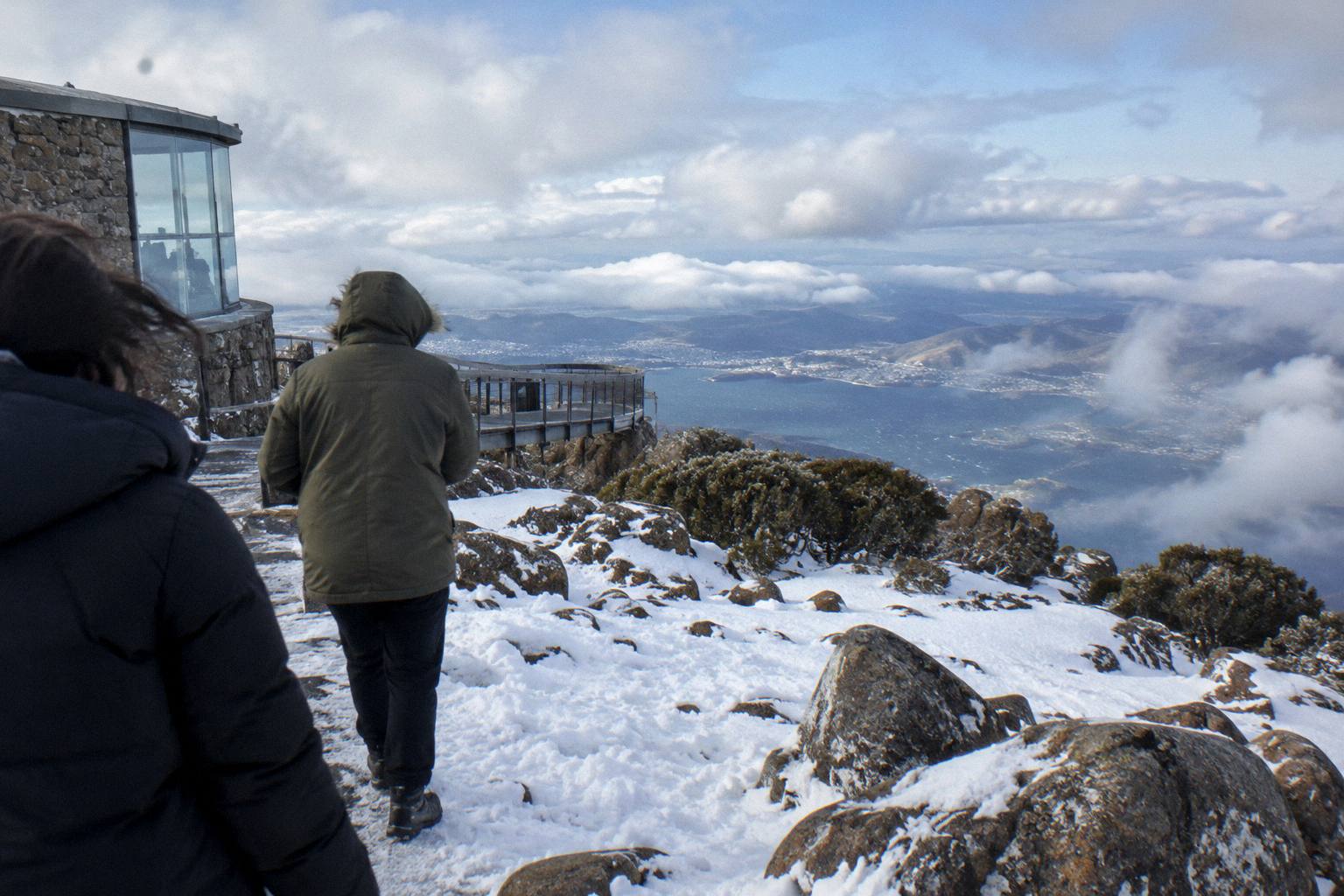
Step four is knowing what the top offers when you arrive. Entry to Wellington Park is free, it is not a national park and no pass is required, and the lookouts and observation shelter are accessible at any time. The Pinnacle is a loop, so vehicles continue around to park rather than stopping on the road, and a small oddity worth knowing is that car key fobs can fail near the FM and TV transmitters at the summit, which the Trust confirms is harmless. Summit toilets run 7am to 10pm from 1 September to 30 April and 7am to 5.30pm from 1 May to 31 August.
For travellers weighing snow season against the warmer months, our guide to the best season for a summit trip compares the trade-offs, and the question of how much colder the summit really is gets its own detailed answer.
| Planning step | What to do | Why it matters |
|---|---|---|
| Book your seat | Reserve a return bus or coach trip with 24-hour free cancellation | Snow forecasts firm up only a day or two ahead |
| Watch the forecast | Check the Bureau's summit station and the road status line | Summit conditions differ sharply from the city forecast |
| Confirm the meeting point | Read the address on your booking confirmation | Operator and booking pages list different departure points |
| Time your departure | Prefer later departures when overnight snow is forecast | Overnight closures ran past 9.30am on 46 days in 2025-26 |
| Dress for the top | Wear windproof layers, gloves and solid footwear | The summit can be 12 degrees or more colder, with wind chill far below that |
What Should You Wear And Bring For A Snow Day?
Dress for a summit that is often 10 to 12 degrees or more colder than the waterfront, with winds that make wind chill below minus 20 degrees possible, high winds and sub-zero temperatures described by the Trust as common, and ground that can be ice rather than soft snow, which means windproof outer layers, real footwear, gloves, a hat, and food and water, since there is no cafe at the summit.
The clothing list is straightforward alpine practice. Layer rather than pile on one heavy coat, because the bus is heated and you will oscillate between a warm seat and an exposed lookout. Waterproof shell over insulation handles both snowfall and wind, and traction matters more than most visitors expect: a thaw-and-refreeze cycle turns the summit precinct into glass, and city sneakers do not cope. Sunglasses are not a joke at 1,271 metres with snow cover; glare off the snowfields is fierce even on a cold day.
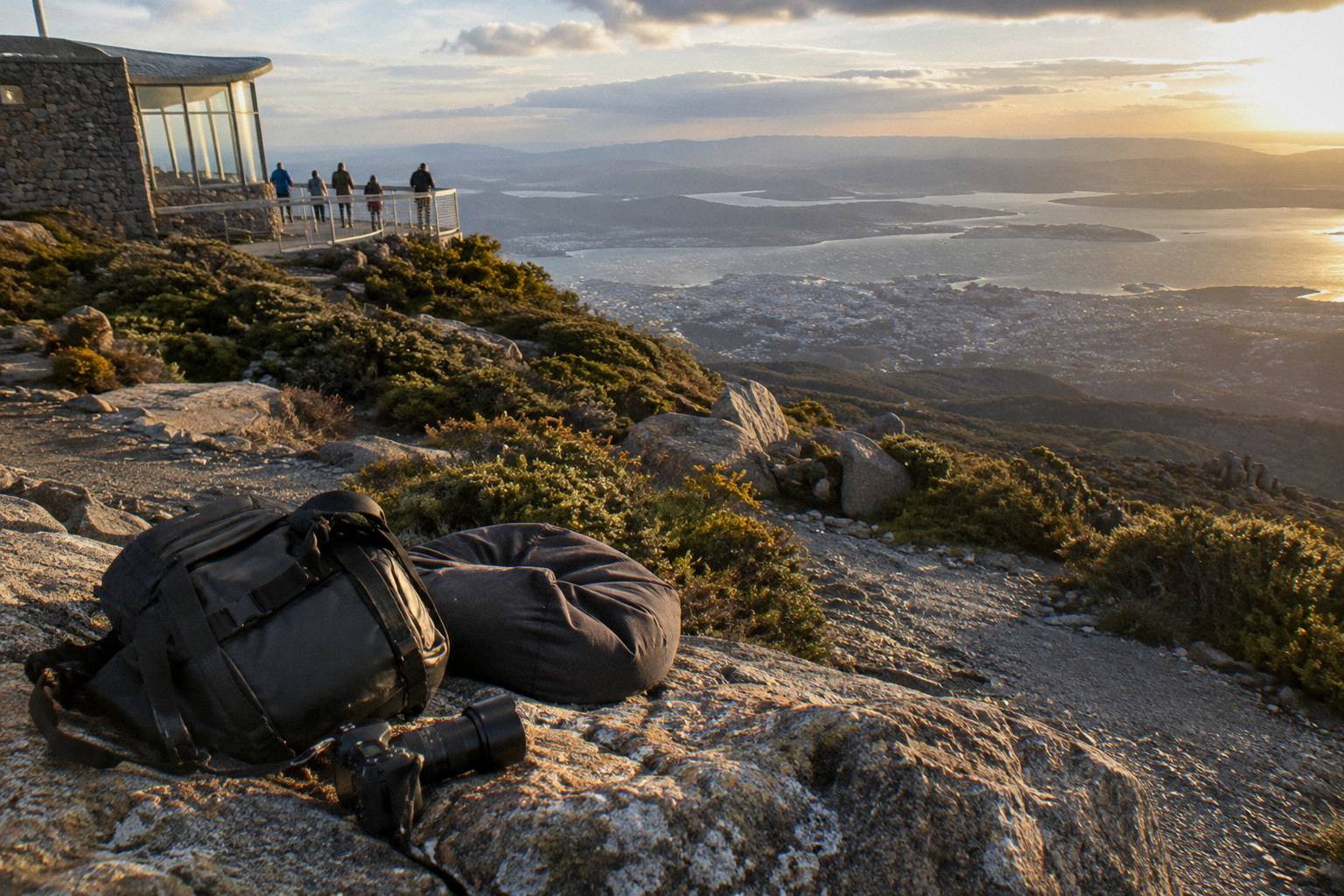
Food planning follows the geography. Nothing is sold at the summit, and every trip here lists food and drink as not included. The 30 minutes at the top that the return and shuttle passes give you is enough for photographs and the shelter, not a picnic, but a thermos and a snack in your daypack change the experience on a minus-five afternoon. The only food outlet on the mountain is Lost Freight Cafe at The Springs, reachable on hop-on services and a natural stop on the way down.
Cameras and phones deserve a thought too. Batteries drain fast in the cold, so keep a spare power bank in an inside pocket, and the same key-fob interference that affects car remotes near the transmitters is worth remembering if you are photographing around the summit buildings. Our page on photographing the summit in every light covers lookouts and timing in detail, including why snow days can deliver the most dramatic frames of all when the cloud breaks.
Families should note the age and access rules before booking. The Pinnacle 2-Hour Small-Group Tour and the Morning Guided Walking Tour, both run by Island of Tasmania Tours, carry a minimum age of 8, and our guide to mountain trips with kids addresses the family question directly. For snow days specifically, the Explorer Bus fleet is mostly wheelchair accessible per the operator, and the return tour and hop-on pass are both listed as wheelchair accessible on their booking pages, while the Ultimate Experience coach is not, a distinction our accessible summit options guide explores in full.
Whatever you choose, this is a mountain that rewards a plan and punishes an assumption. Book a seat, watch the road, pack for the top of the weather range, and treat any snow that greets you at The Pinnacle as the gift it is.
Common Questions About Snow On The Mountain
Does It Snow On Mount Wellington In Summer?
Snow can fall in any month on kunanyi / Mount Wellington, though it is more likely overnight from May to September. Light falls do occur in the warmer months, which is why the Trust warns that access may be restricted by snow and ice at any time of year.
Can You Still Get To The Summit When Pinnacle Road Is Closed?
Not by private vehicle. The road closed on 95 nights in 2025-26, and on 14 days the summit was unreachable by car. The Trust describes the Explorer Bus as the only licensed operator able to take visitors up when the road is closed for snow, though reaching The Pinnacle is not guaranteed on snow days.
Do Tours Run In The Snow?
Yes. The Explorer Bus Return Tour operates in all weather conditions, and the operator runs dedicated City to Snow and Springs to Snow trips once a reliable snow forecast exists. Other trips state that itineraries may vary due to road and weather conditions.
How Much Colder Is The Summit Than Hobart?
The Trust says the difference between the waterfront and The Pinnacle can be 12 degrees or more, and the operator says about 10 degrees. Plan for the summit being often 10 to 12 degrees or more colder, with wind chill below minus 20 degrees possible.
What Should I Wear For A Snow Day Trip?
Windproof layers, gloves, a hat and solid footwear with grip. High winds and temperatures below zero are common at the summit, surfaces can be ice rather than soft snow, and there is no cafe at the top, so bring food and water.
Can I Cancel If The Weather Turns Bad?
Every trip here carries free cancellation up to 24 hours before start. Beyond that window, the booking pages do not spell out day-of refunds, so raise weather questions with the operator or the booking terms before you travel.