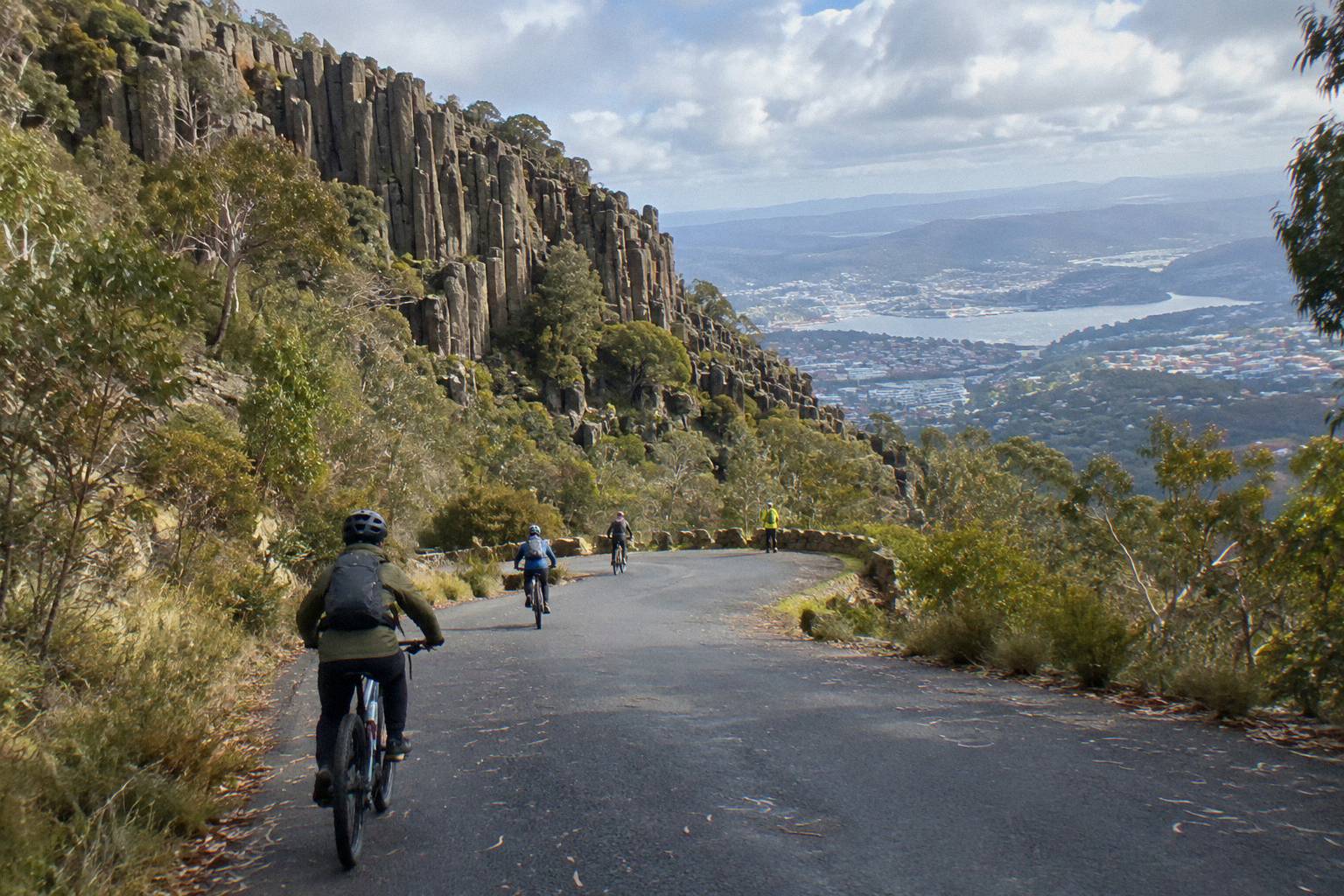
Are Downhill Bike Tours Safe For Beginners?
What the booking rules actually say about beginner riders on the kunanyi / Mount Wellington summit descent: fitness, height and weight limits, what is included, and quieter alternatives.
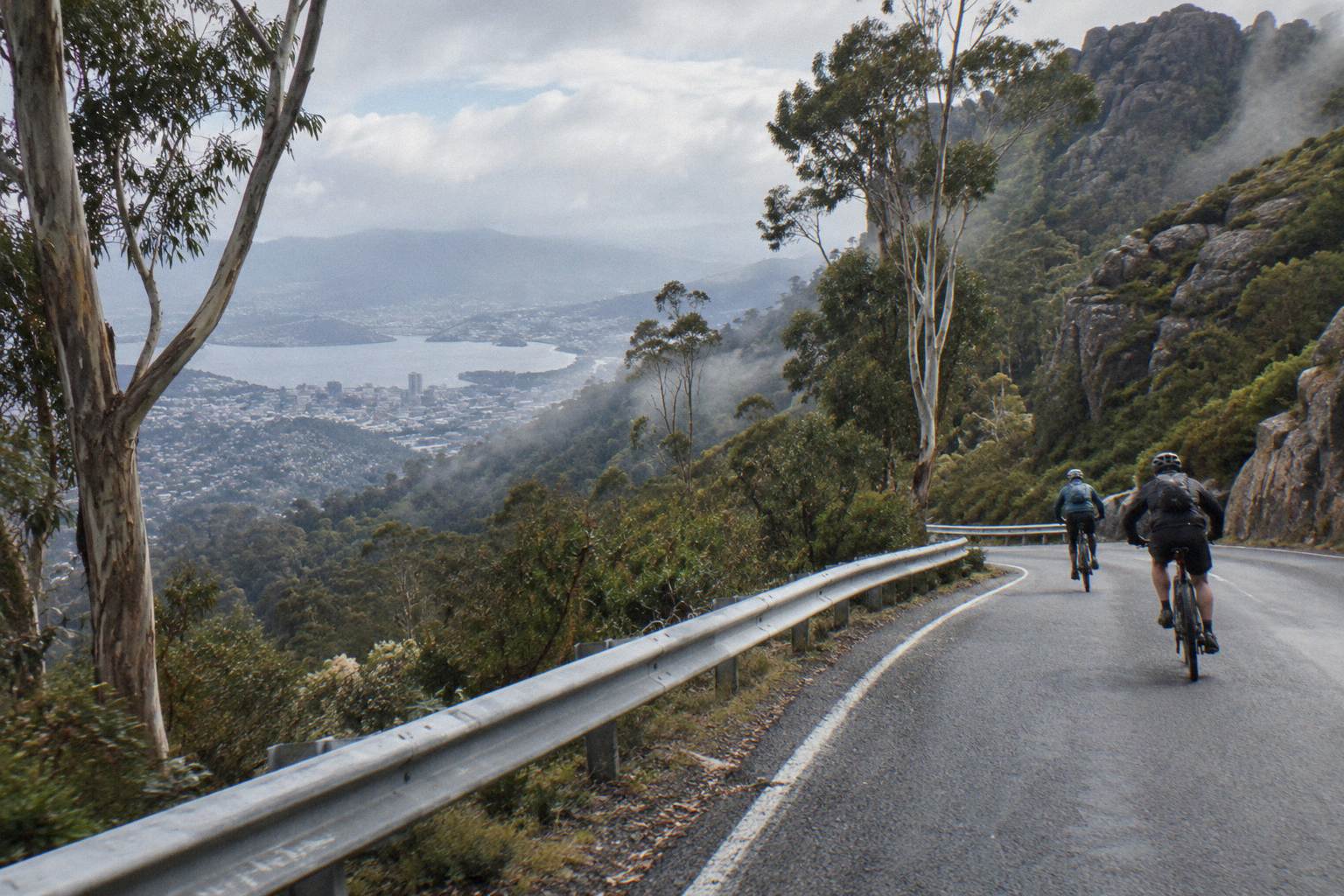
By its own stated rules, the kunanyi / Mount Wellington summit descent is built for riders with basic bike handling skills and a basic fitness level, not for people who have never ridden a bike. The tour supplies the bike, helmet and gloves, caps the group at 10, and puts a guide on the trail with the guests, but it is not a learn-to-ride experience, and no safety verdict is offered here.
The word "beginner" does a lot of work in that question, so it helps to split it in two. A beginner downhill rider, someone comfortable on a bike but new to descending long hills, is exactly who the stated rules describe. A first-time rider, someone wobbly on two wheels, is outside what the tour asks for, because the booking pages state plainly that riders need basic bike handling skills before they start. The operator publishes the fitness and height rules, the weight limit, what gear is included, how the day runs, and which parts of the mountain the tour touches. It also looks at the two conflicts in the published rules, the 120 cm versus 125 cm minimum height being the main one, and finishes with gentler ways down for anyone who reads the rules and decides the bike is not for them.
Prices are in Australian dollars, and every trip mentioned carries free cancellation up to 24 hours before the start. The answer rests on the operator's own published rules plus a clear account of what remains unknown.
What Do The Booking Rules Ask Of A Rider?
The stated requirements are basic bike handling skills and a basic fitness level, a maximum rider weight of 120 kg, and a minimum rider height that the two booking pages state differently, one at 120 cm and one at 125 cm. No minimum age is published and nothing in the rules mentions a licence or a test.
Those four lines are the whole published rulebook for the Summit Descent Bike Tour, run by Tasmanian Mountain Bike Adventures from its shop at 466 Macquarie Street in South Hobart, and they are worth reading carefully because they are the operator's own words rather than a marketing summary. "Basic bike handling" is doing the key work. The tour does not say "must be a confident mountain biker" or "no experience required", it sits deliberately between the two, which is why any nervous rider should message the operator before booking, describe exactly how much riding they have done, and let the people who run the trip every day make the call.
The height conflict is real, with two different minimum heights published on different booking pages, and only the operator can settle it. One booking page excludes riders under 120 cm; another states a minimum rider height of 125 cm. The two pages disagree, and rather than quietly repeat the more generous number, the right advice is to confirm the current minimum with the operator when you book. The same pages also differ slightly in tone on fitness, one saying basic fitness, the other moderate-to-basic, which points the same direction: ask, do not assume.
Here is the full set of stated rider rules in one place:
| Stated rule | What the booking page says |
|---|---|
| Bike skills | Basic bike handling skills needed |
| Fitness | A basic fitness level; one page phrases it as moderate-to-basic |
| Minimum height | One page excludes riders under 120 cm; another states a minimum of 125 cm, confirm with the operator |
| Maximum weight | 120 kg |
| Minimum age | No operator minimum age is published |
| Group size | Up to 10 riders |
| Guiding | Guides ride with the guests |
Beyond the rules, the practical shape of the day matters to a nervous rider. The group is small, capped at 10, which means the guide is not managing a coach-load of strangers down the mountain. The tour begins with a trail briefing and a bike introduction before anyone rolls off, and the bike itself, the cycling helmet and the riding gloves are all included in the price, so a beginner is not riding unfamiliar rented gear they had to source themselves. The price is from A$179 per person for approximately four hours.
A rider who falls between 120 cm and 125 cm sits right on the fault line of the height conflict: the lower figure lets them book, the higher one turns them away, and only the operator can say which number is current. Families face the same gap with age, because no minimum age is published, so that question also has to be asked rather than looked up. The weight limit of 120 kg is stated without a conflicting figure, but anyone at or near it should still raise the point before booking rather than discover it at check-in.
That message is easy to write and should be specific. Say how long it has been since the last ride, what kind of riding it was, and how comfortable the rider is braking and controlling speed on a descent. Ask which minimum height applies on the day you book, whether the fitness standard is the basic phrasing or the moderate-to-basic one, and what happens if a rider needs to stop or walk part of the trail. Ask, too, how the guides share a full group of ten between them, since the published rule is only that guides ride with the guests.
Two gaps in the published rules affect the same decision. Nothing published covers footwear or clothing, even though the bike, helmet, and gloves are the only equipment named as included, and nothing published says what happens in poor weather. Each question takes one line in the same message, along with a request to confirm the from price and the roughly four-hour running time for the date you want. Asking costs a few minutes and settles every open number before money changes hands.
How Does The Descent Actually Run?
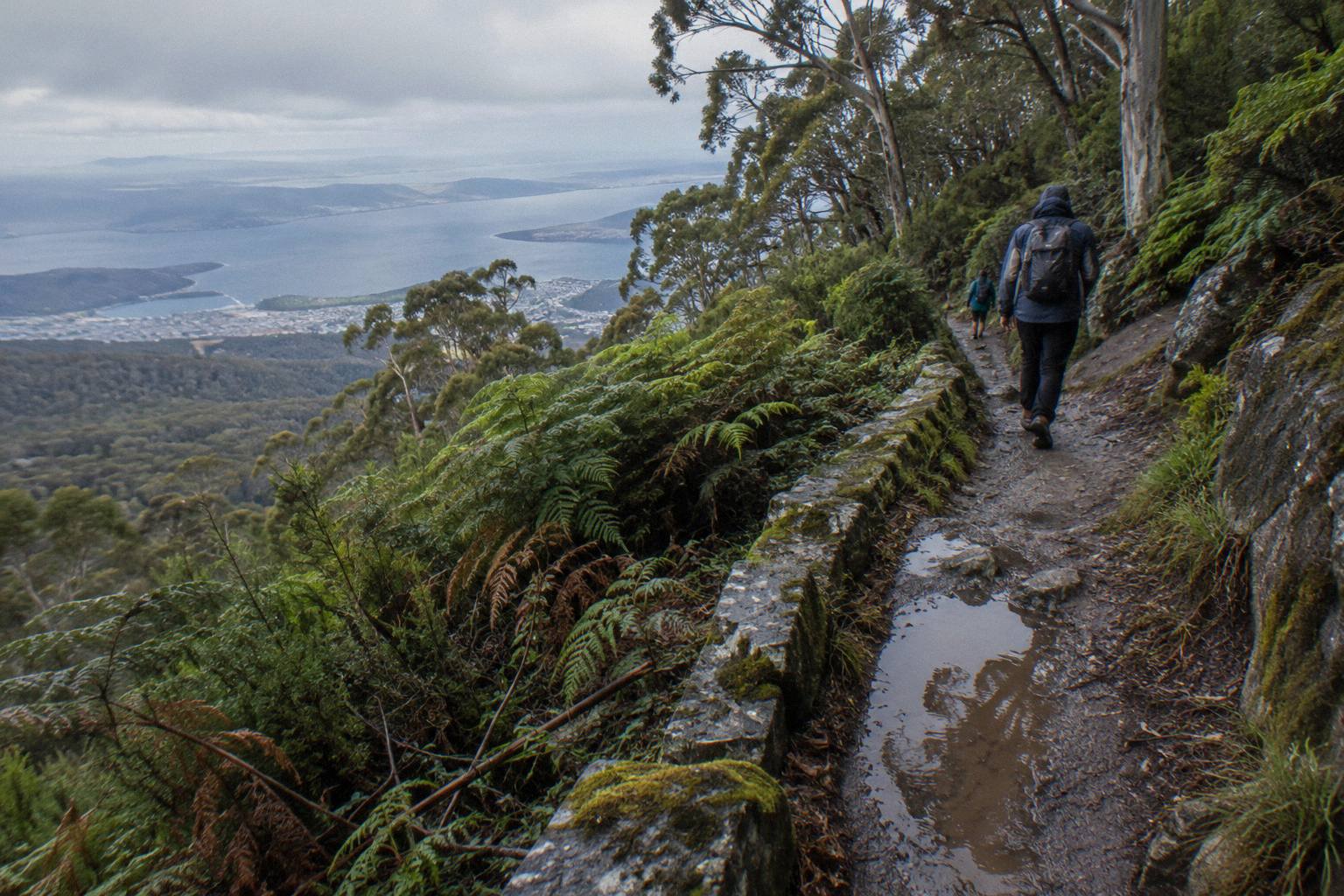
A 30-minute minibus transfer takes the group to the summit of kunanyi / Mount Wellington, then riders descend 6 km of the summit road before a second, 15-minute bus transfer to a rainforest trail for a 12 km guided ride. The whole outing runs about four hours, starts and finishes at the operator's South Hobart shop, and food and drink are not included.
The structure is the part that should calm a nervous rider most. This is not a point-and-shove experience where a van drops you at the top and waves goodbye. The stated itinerary has two distinct riding blocks, and the shorter, faster one comes first: the 6 km road descent from the summit, on the sealed Pinnacle Road that every car, bus and bike uses, with the guide riding alongside the guests. Then comes a breather on the bus, a 15-minute transfer, and the longer 12 km rainforest trail section, again with guides riding with the group. Splitting the day like that gives a beginner a natural pause between the two very different riding surfaces.
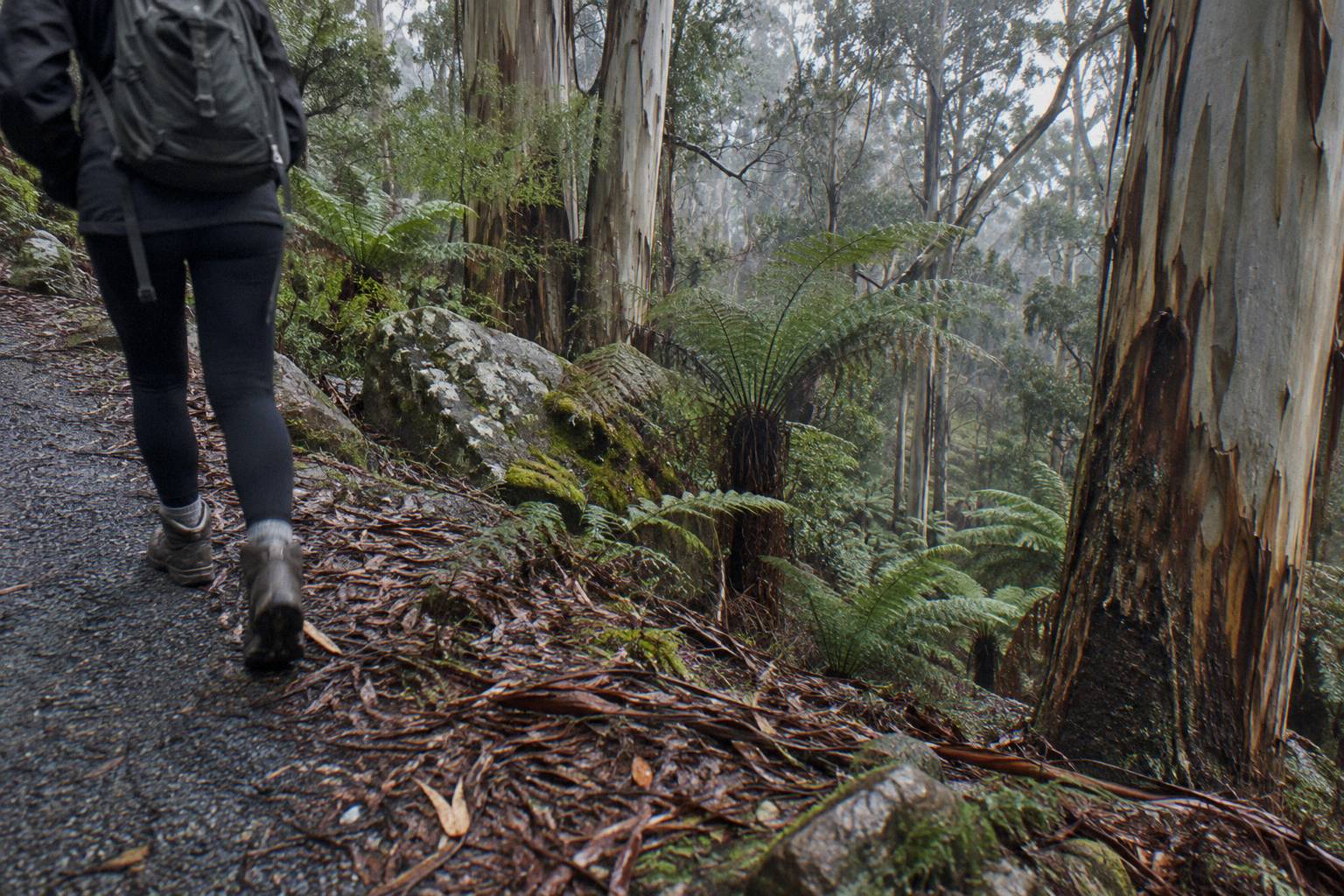
Two figures matter and both come from the booking page. The 6 km road descent figure applies to this tour's listing alone; no other operator's descent distance should be inferred from it. The rainforest section is 12 km, which is the longer and, on paper, the gentler half of the day, though the trail carries no published grade, so check with the operator before booking. What the listing does say is that riders need those basic handling skills for the whole outing, not just the road.
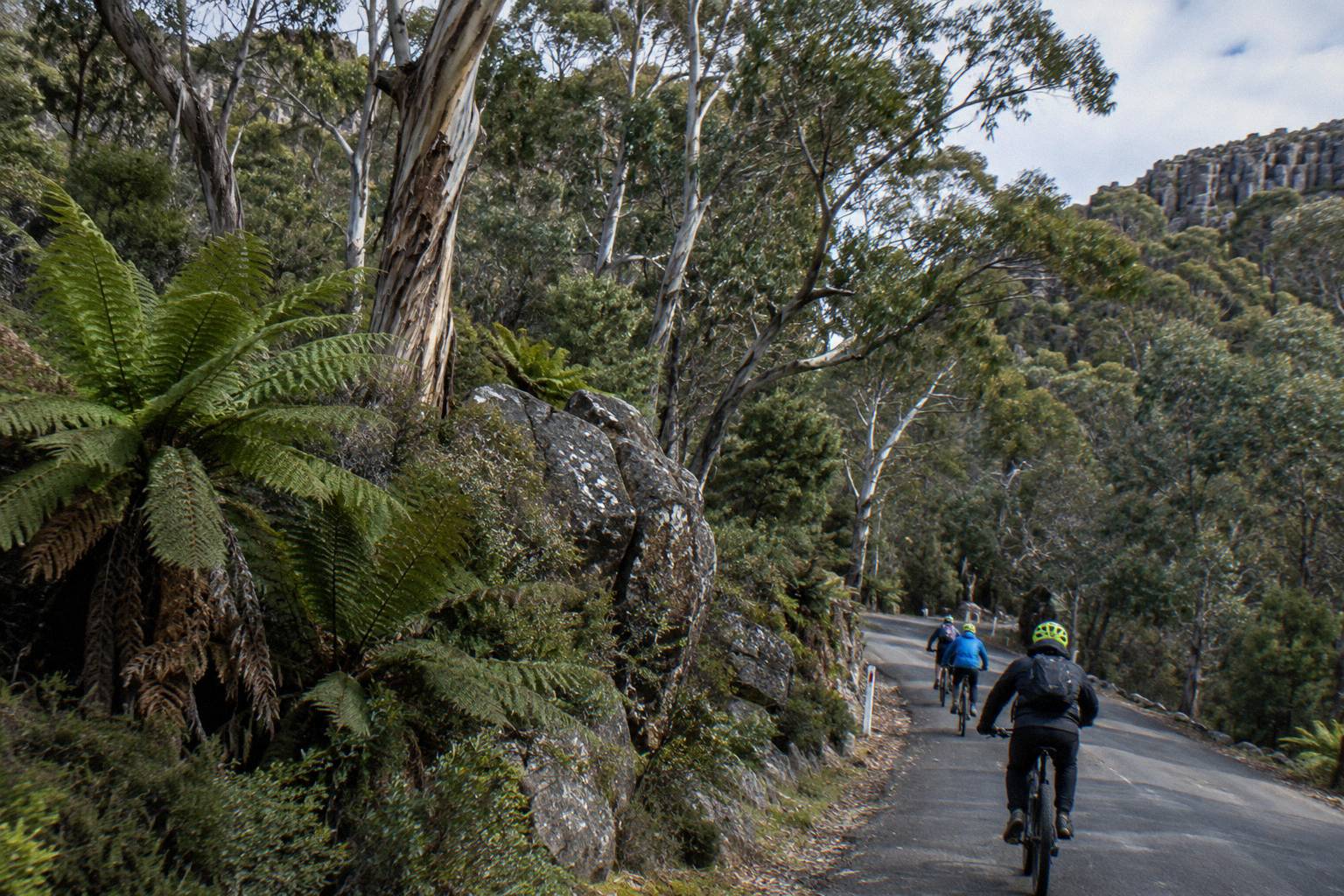
It is also worth being clear about what the descent is not. It is not a jump line, a bike park or a downhill race course; it is a guided ride down a public mountain road and a forest trail at the pace of a group that includes first-time descenders. Bikes on the mountain are allowed on formed roads, fire trails and listed tracks only, and riders who stray onto walking-only tracks can be fined, which is one reason a guided format, with someone who knows exactly where bikes may go, suits a rider new to the park.
One more wrinkle from the research file: a self-guided variant of the same operator's tour sits inside the same booking page, with no price printed for it here, and a third-party page suggests riders may skip the road descent entirely and ride the bus up instead. Neither is a recommendation, but both are options worth asking the operator about if the road section is the part that worries you. The deeper guide to the guided summit and rainforest descent covers how these formats compare in detail.
What Is The Mountain Itself Like Up There?
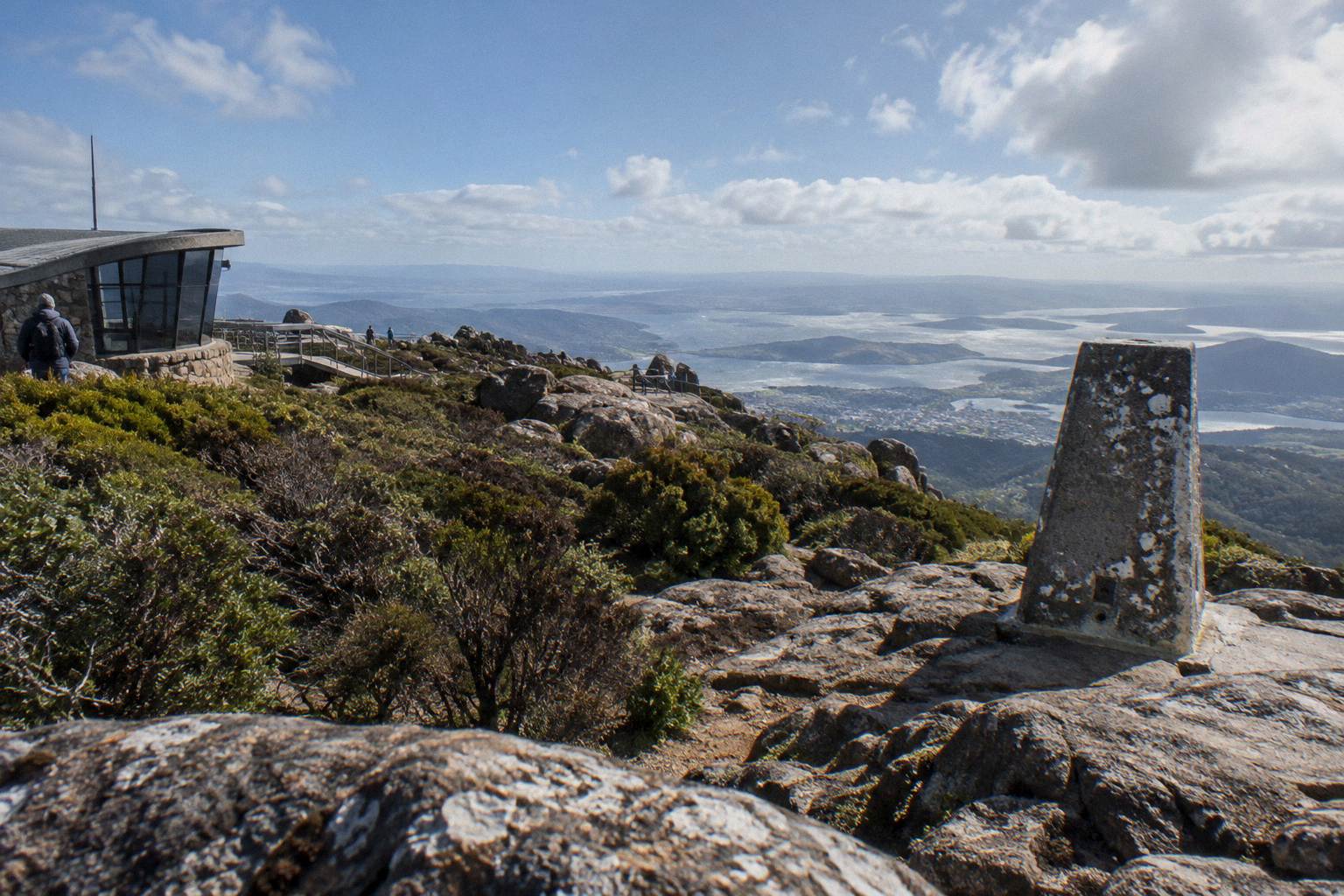
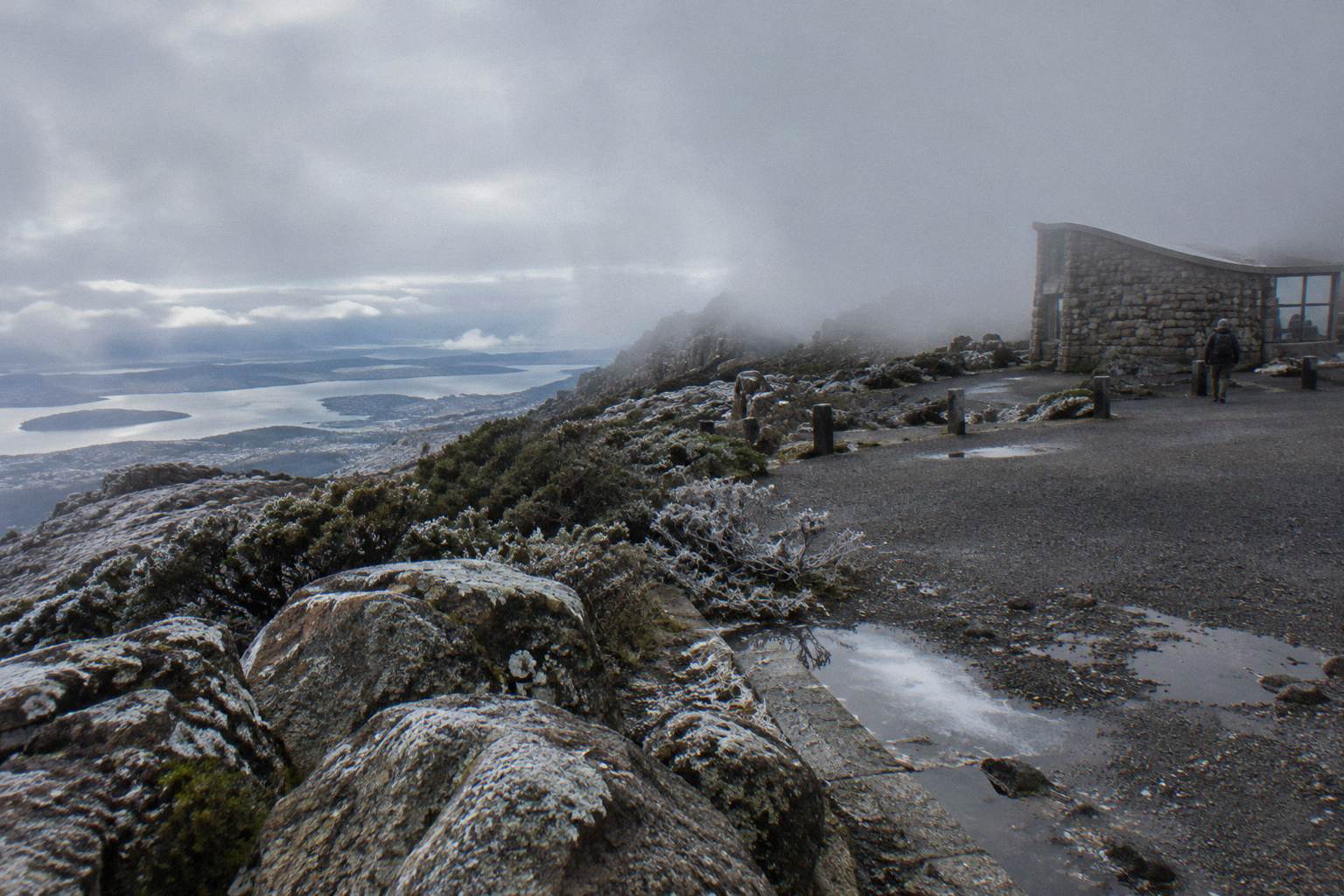
The Wellington Park Management Trust states that high winds and temperatures below 0 degrees are common at the summit, that the gap between the Hobart waterfront and The Pinnacle can be 12 degrees or more, and that wind chill below -20 °C is possible. Snow can fall in any month, and the summit is often in cloud, so no tour promises a clear view.
None of that is a reason to stay home, but it is the difference between a pleasant pedal and a grim one if you arrive dressed for the waterfront. The Trust's safety guidance is the strongest source on conditions, and it is worth reading in full on the Wellington Park Management Trust site before any summit day, on two wheels or four. The operator's own framing, about 10 degrees cooler than the city and "four seasons in one day", lands in the same place, so treat the summit as often 10 to 12 degrees or more colder than Hobart, never a single fixed number.
For riders specifically, two condition facts matter most. First, wind: the Bureau of Meteorology maintains a live station at the summit, and its observations are the ones to check on the morning of a ride; the station page even notes that wind and feels-like readings can drop out when ice builds up on the instruments. Second, road status: Pinnacle Road is managed by the City of Hobart and closes for snow and ice, sometimes at short notice, and the Trust records 95 closure nights in 2025-26. If the road shuts, the day's plan changes, which is one more reason the guided format, with an operator making those calls, suits a first-timer. The full closure picture is in the guide to snow, closures and your tour.
What Should A Nervous Rider Ask Before Booking?
Ask the operator four things: whether your riding history meets the "basic bike handling" bar, which minimum height currently applies, how the group handles a rider who wants to take a section slowly, and what happens to the itinerary if Pinnacle Road closes for snow on the day. None of these is answered definitively on the booking pages.
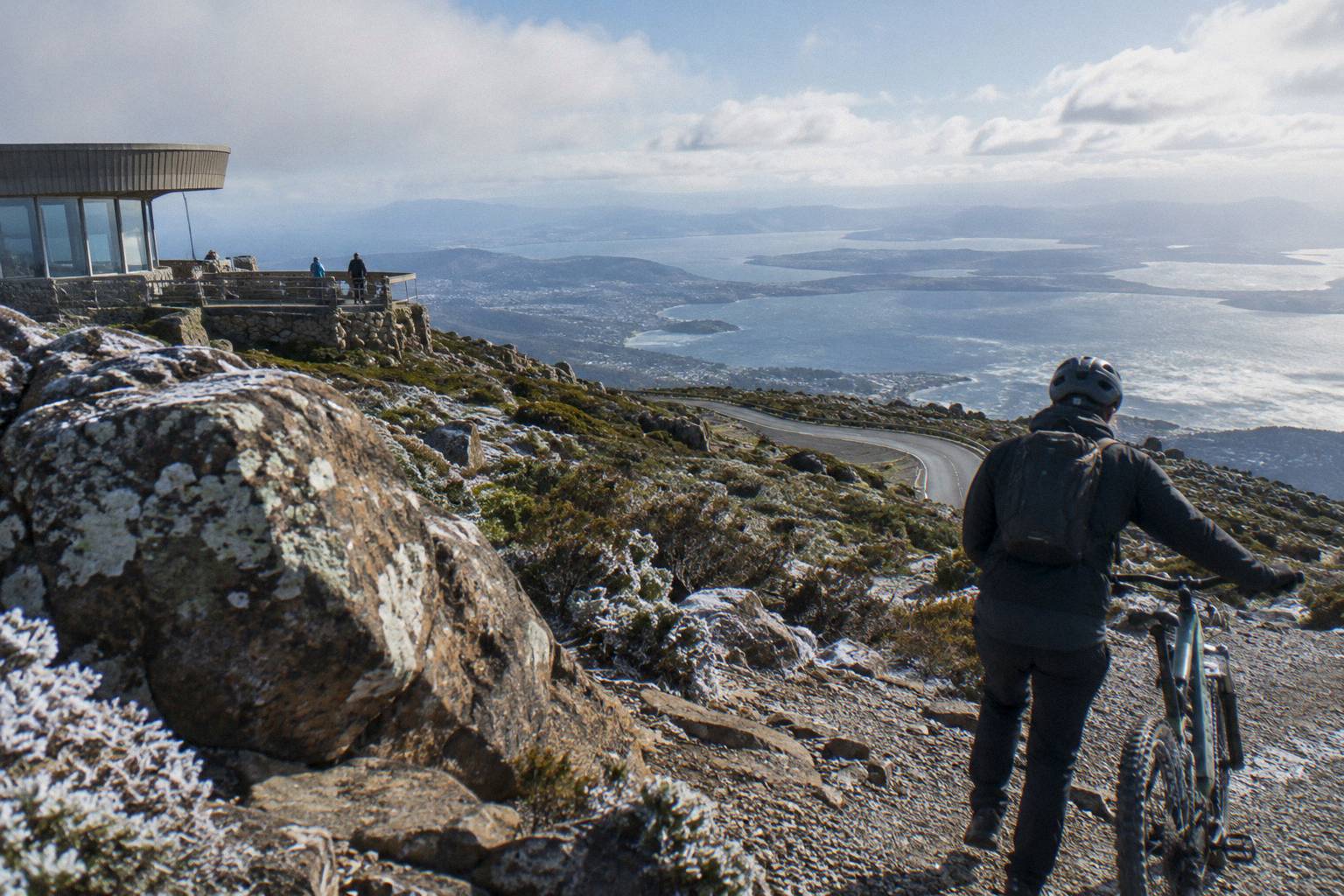
Booking pages are silent on exactly the questions a beginner most wants answered, so ask the operator directly before booking. There is no published safety statistic, no injury record, and no trail grading for the tour. What a nervous rider has instead is a small operator, a stated guide-rides-with-guests format, and a booking office that answers questions, which is precisely why the advice is to use it. A short message describing your experience, "I ride a bike around town but have never done a long downhill", will get a better answer than any article can give.
A few useful framings for that conversation: the 6 km road section and the 12 km rainforest section are separate blocks with a bus between them, so ask whether skipping or easing one is possible on the day. Ask what the briefing covers and how the guide positions the group on the road descent. Ask about weather calls, since the itinerary can change with road and weather conditions. And ask about cancellation timing: free cancellation up to 24 hours before start applies, so the decision does not have to be made weeks out.
It also helps to write down your riding history before you make the call, because the operator can only screen what you tell them. "I commute on paved paths" and "I ride gravel trails most weekends" are both beginner descriptions, but they describe different riders, and the operator's answer will differ accordingly. Overstating your experience helps nobody on a mountain road.
What Are The Easier Alternatives For A First Summit Visit?
Both keep the summit visit and drop the descending entirely.
The one-way bus pass deserves more attention than nervous riders give it. It carries you from Brooke Street Pier up Pinnacle Road to the summit with commentary and a bushwalking map, and it pairs naturally with the question of riding down one way, walking down, or simply catching a later service. The Explorer Bus also carries mountain bikes, up to four per departure, with bike freight booked ahead at a per-bike charge listed separately by the operator, which is how experienced riders build their own descent. For a rider who wants the descent but doubts the fitness rules, that bus-plus-bike option, or the bus up and a walk down, is the middle path.
The walking tour is the quietest option of the three, and the only one with a stated minimum age: 8, with children under 8, people with mobility impairments and unaccompanied minors listed as not suitable. It runs from 20 Davey Street in an air-conditioned minibus with a university-trained local guide, an easy guided nature walk, and lookouts built for photography. Neither alternative involves a helmet, a gradient or a stated skills bar, which is exactly the point.
| Format | From price per person | Duration | Stated rider requirement | Group |
|---|---|---|---|---|
| Summit Descent Bike Tour | A$179 | 4 hours | Basic bike handling, basic fitness, max 120 kg | Up to 10 |
| Explorer Bus One-Way Pass | A$35 | 50 minutes | None stated | Up to 27 |
| Morning Guided Walking Tour | A$85 | 4 hours | Minimum age 8, no mobility impairments | Up to 10 |
So Should A Beginner Book The Descent?
A beginner who already rides, someone comfortable handling a bike on gravel and unpaved paths at a modest pace, matches the stated rules and gets a small group, included gear and a guide riding alongside. A first-time rider does not match the rules; for them the answer is the bus, the walk, or a lesson first. The final call belongs to the operator.
It helps to state the decision plainly, because tour marketing rarely does. The Summit Descent Bike Tour from Mount Wellington Tours does not advertise itself as an anyone-can-do-it experience: it publishes skills requirements, a weight limit and a height minimum, which is the behaviour of an operator that expects to screen its riders a little. A nervous-but-competent rider should read that as reassurance rather than warning, since the same rules that exclude some people also mean the group you ride with is not full of people who have never touched a bike.
For everyone else, the summit is not going anywhere. The bus, the walks and the lookouts deliver the same views, the same 1,271 m elevation and the same four-seasons weather without a single pedal stroke, and a first visit that way often plants the idea of riding it next time. Whichever way you choose, check the road status and the forecast the day before, dress for a summit that is often 10 to 12 degrees or more colder than the waterfront, and give the operator's live listing a read for the details that matter to your booking.
Common Questions About Downhill Bike Tours For Beginners
Are Downhill Bike Tours Safe For Beginners?
By the stated booking rules, the tour is designed for riders with basic bike handling skills and a basic fitness level, not first-time riders. The bike, helmet and gloves are included, groups are capped at 10, and guides ride with the guests. No safety statistic or verdict is published, so describe your experience to the operator and ask before booking.
What Fitness Level Do I Need For The Summit Descent?
The booking pages state a basic fitness level, with one page phrasing it as moderate-to-basic. No training plan, test or prior mountain-bike experience is demanded. If your fitness is borderline, ask the operator directly, since the pages do not define the terms further.
Is There A Height Or Weight Limit For Riders?
The maximum rider weight is 120 kg. The minimum height is stated differently on the two booking pages, one excluding riders under 120 cm and the other stating a 125 cm minimum, so confirm the current rule with the operator rather than trusting either figure alone.
Can I Skip The Road Descent And Just Ride The Rainforest Trail?
The published itinerary runs a 6 km summit-road descent, then a bus transfer to a 12 km rainforest trail. A third-party page suggests riders may skip the road section and ride the bus, but the booking pages do not state it as a rule, so treat it as a question for the operator when you book.
What Happens If The Weather Is Bad On The Day?
The itinerary may change with road and weather conditions, and Pinnacle Road closes for snow and ice, at times with little notice. Free cancellation applies up to 24 hours before the start. Check the road status line and the Bureau of Meteorology's summit station on the morning of your ride.