Photography On A Summit Tour: Lookouts And Best Light
The summit lookouts on kunanyi / Mount Wellington are accessible at any time, but cloud, wind and a cold gap of often 10 to 12 degrees or more shape every shoot. Here are the stops that exist and how tour lengths decide how long you get with the camera.
Short answer
The summit of kunanyi / Mount Wellington (1,271 m) has lookouts and an observation shelter accessible at any time, with toilets open 7am to 10pm in summer. No sunrise or sunset tour exists; the earliest departure is the 9.30am Explorer Bus. The Pinnacle 2-Hour Small-Group Tour gives 30 minutes of free time from A$55 per person.
The summit of kunanyi / Mount Wellington stands 1,271 m above Hobart, and the Wellington Park Management Trust keeps the lookouts and the observation shelter at The Pinnacle accessible at any time. That is the starting point for any photography plan: the platforms are always there, the views are not. The summit is often in cloud, snow can fall in any month, and the Trust warns that high winds and temperatures below zero are common up top.
What follows sticks to the facts. It covers the lookouts and stops you can actually build a shot list around, how much summit time each tour format gives you, the only morning and afternoon departures that exist, and what the cold gap between the waterfront and The Pinnacle does to your kit. No sunrise or sunset tour exists on any booking site for this mountain, so the light discussion here is about the windows the real departures actually serve.
Which Lookouts And Stops Can You Actually Photograph?
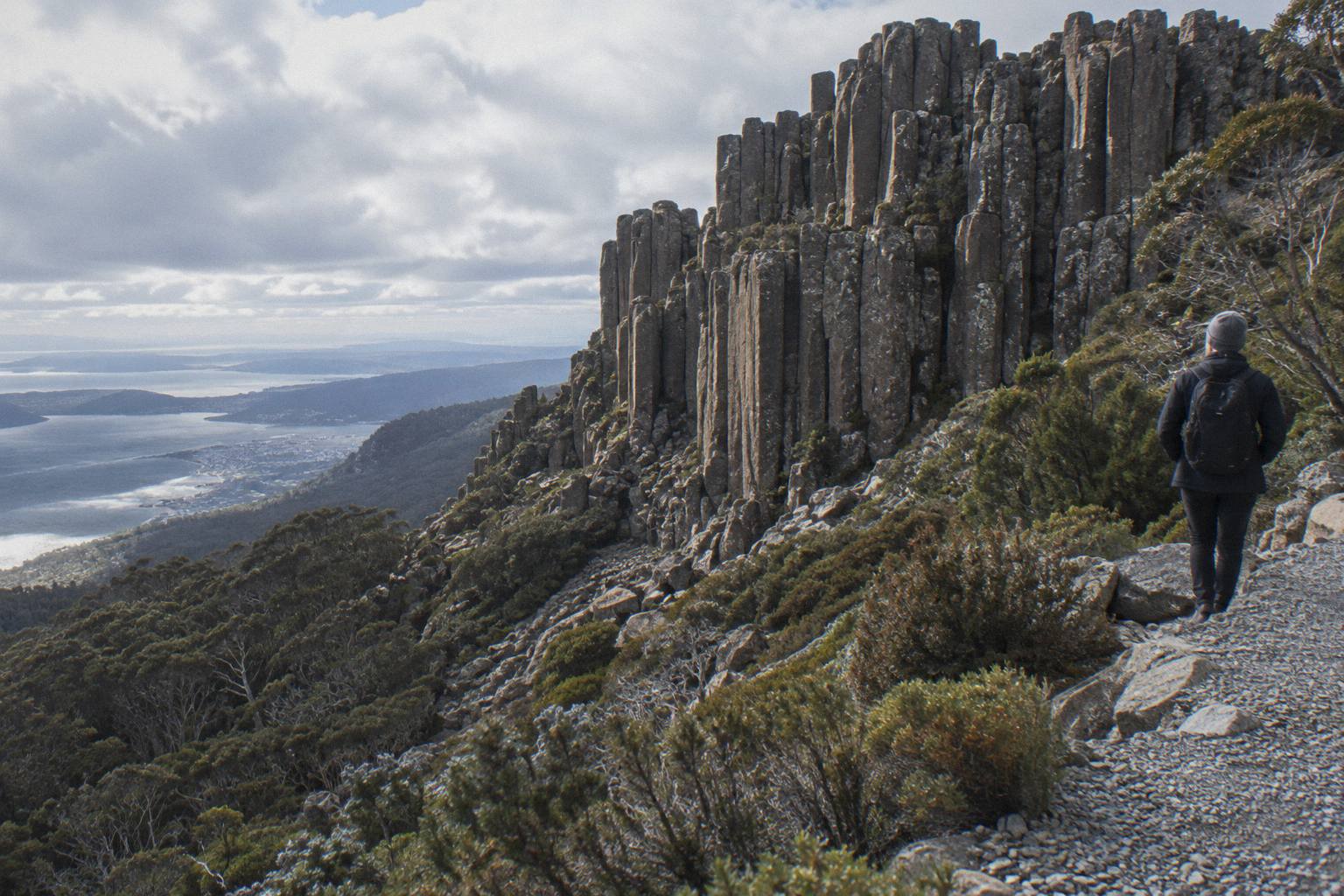
The photo spots on the mountain are the summit lookouts and observation shelter at The Pinnacle, the Springs Lookout and picnic area at 720 m, Sphinx Rock via a short level walk from The Springs, and the Organ Pipes dolerite columns, which are visible from Hobart itself. The Organ Pipes Circuit is a 9.2 km loop if you would rather walk among the columns than shoot them from below, and Silver Falls, a 4 m waterfall, sits at the end of the Pipeline Track from Fern Tree Park. Every one of these is free to visit, since entry to Wellington Park costs nothing and no Parks Pass is needed; the park is not a national park and has no visitor centre.
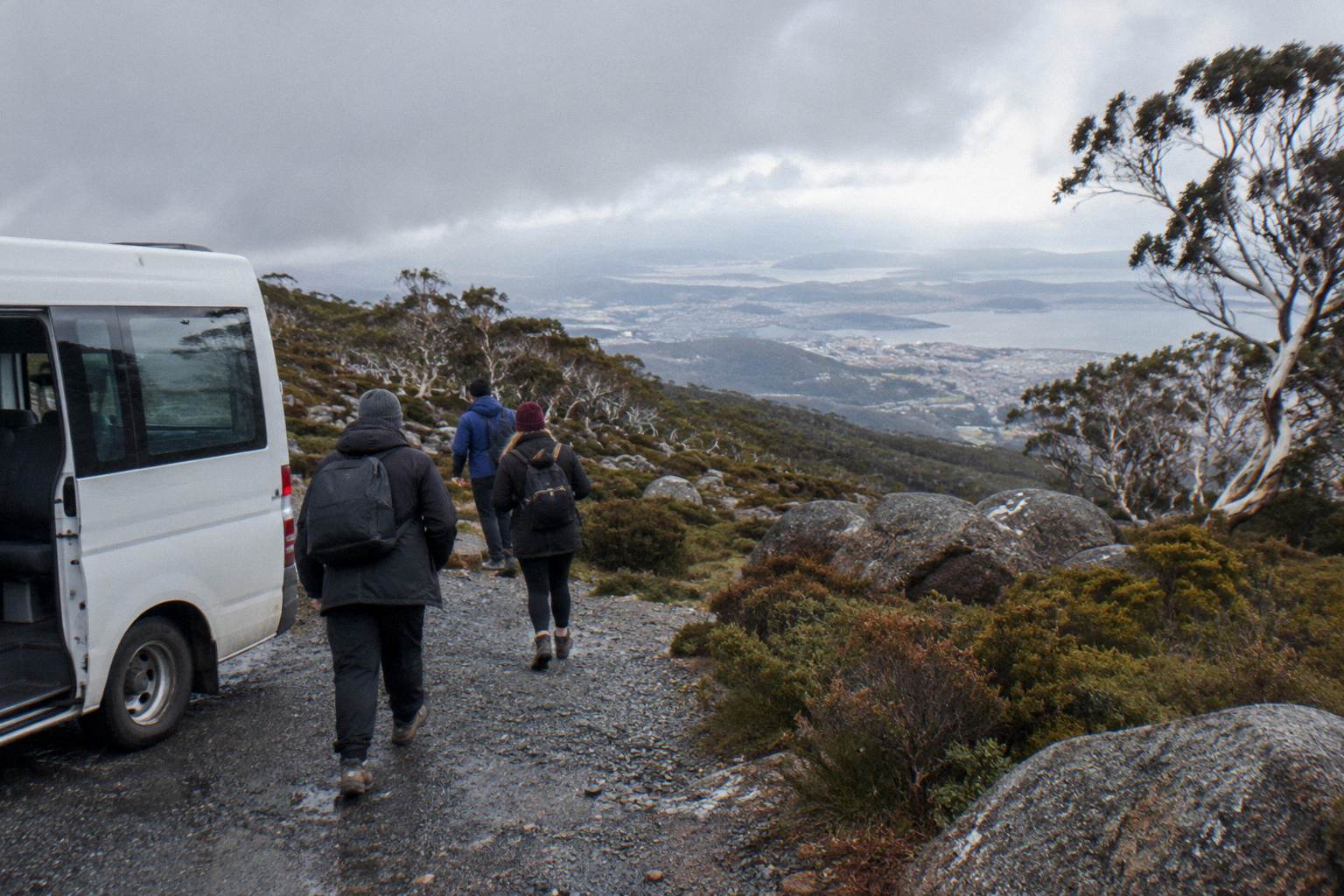
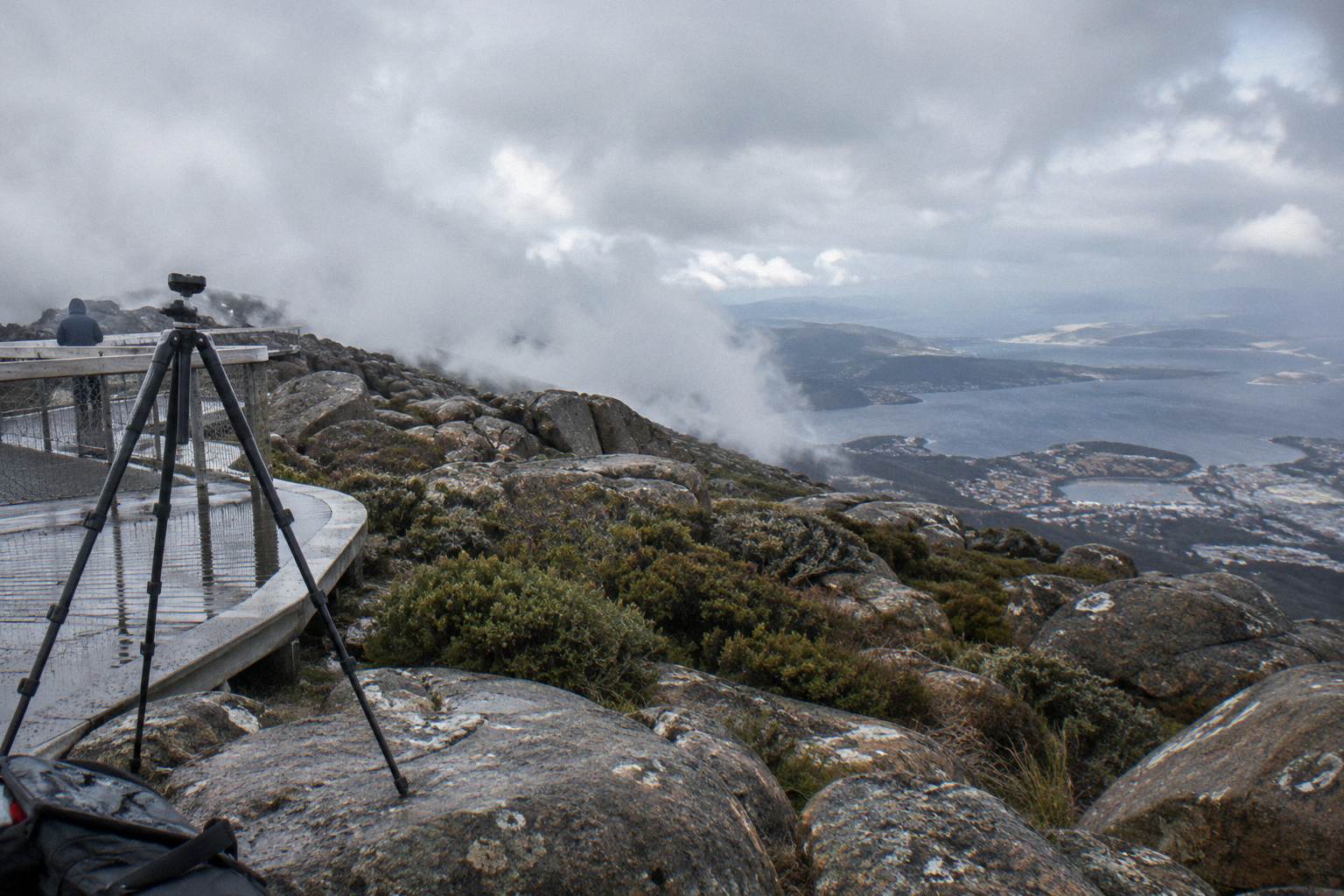
What the summit itself offers is infrastructure, not scenery on demand. The Pinnacle is a road loop: the Trust asks drivers to continue around to park rather than stopping on the road, which effectively makes the loop a walking circuit for photographers. The observation shelter gives you a windbreak, and the lookouts give you framed angles across Hobart and down the Derwent when the cloud is not sitting on the platform. Cloud is the real variable here; the summit spends a lot of time inside it, and no tour promises a view.
Lower down, The Springs is the mountain's most photographer-friendly zone precisely because it does not depend on the summit clearing. The Springs Lookout is sheltered, there is a picnic area, and the Exhibition Gardens and Lookout Circuit sit right there. Sphinx Rock is a short, level walk away and gives a framed outlook over the city without needing the road to the top to be open. When Pinnacle Road closes at Bracken Lane or above The Springs for ice, the lower mountain often stays reachable, which makes these stops your fallback shoot rather than a consolation prize. For more on what the top actually holds, see what facilities and sights sit at the summit.
| Stop | Elevation or position | What you can shoot | Access note |
|---|---|---|---|
| Summit lookouts and observation shelter | The Pinnacle, 1,271 m | Hobart, the Derwent estuary and dolerite slopes, weather permitting | Lookouts accessible at any time per the Trust |
| The Springs | 720 m, on Pinnacle Road | Springs Lookout, picnic area, forest | Sheltered area; Lost Freight Cafe nearby, closed 25-26 Dec |
| Sphinx Rock | Short level walk from The Springs | Framed outlook toward the city | Good option when the upper road is closed |
| Organ Pipes | Cliff face visible from Hobart | Dolerite columns; the circuit is a 9.2 km loop | Circuit for walkers wanting the close-up |
| Silver Falls | Pipeline Track from Fern Tree Park | A 4 m waterfall | Weekday closures possible during TasWater works |
One track caution before you plan a falls shoot: TasWater repair works between Neika and the Northwest Bay Weir began in late September 2026 and run for several months, with temporary closures on the Pipeline Track from 7am to 5pm on weekdays. Never treat that track as fully open. If you want deeper background on the mountain's dual name and the palawa kani word kunanyi, read the story of the mountain and its name.
How Much Summit Time Does Each Tour Give A Photographer?
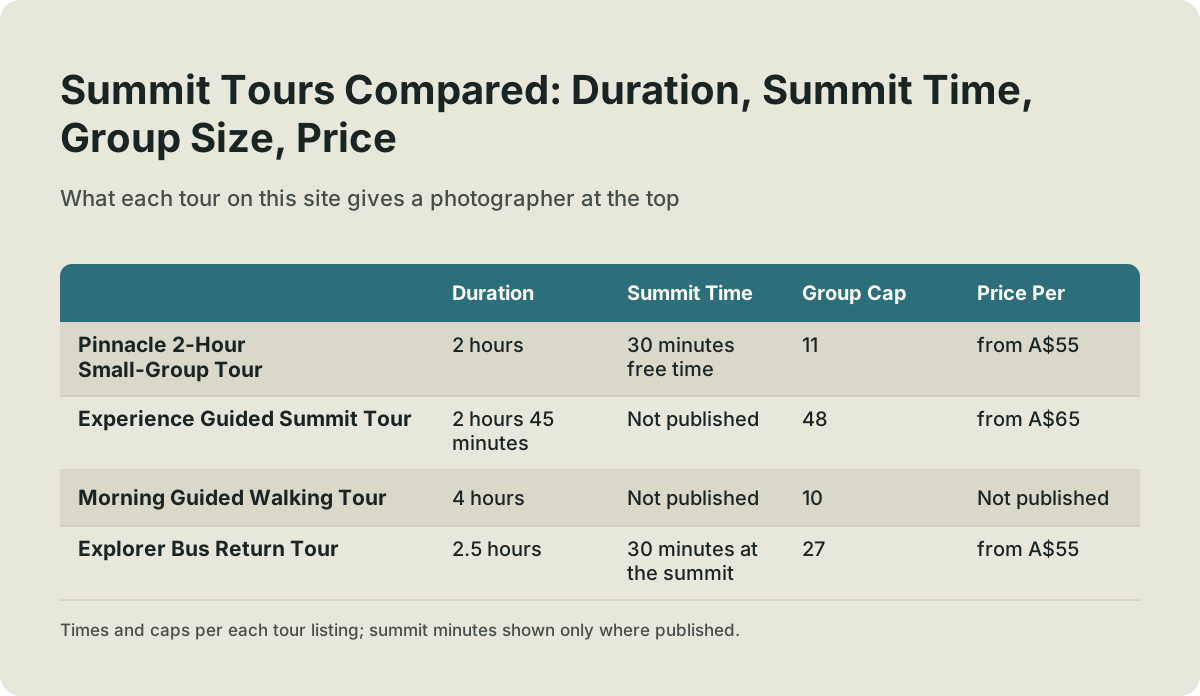
The summit time figures are 30 minutes of free time on the Pinnacle 2-Hour Small-Group Tour and 30 minutes at the summit on the Explorer Bus Return Tour, which runs 2.5 hours overall; the other trips publish total durations but no fixed minutes at the top, so plan on format rather than on a promised window. For a photographer this is the single most practical number on the page. Thirty minutes at The Pinnacle is enough to work two or three lookout angles if you already know your settings, and not enough to wait out a passing cloud bank. If your whole goal is a single frame, a longer or hop-on hop-off format buys you patience.
The Pinnacle 2-Hour Small-Group Tour, from A$55 per person for 2 hours, takes up to 11 people, meets at 20 Davey Street, and explicitly lists stunning lookouts among its inclusions. The Ultimate Experience Guided Summit Tour, from A$65 per person for 2 hours 45 minutes and rated 4.6 from 90 reviews, runs to groups of up to 48 with hotel pickup from selected hotels. The Morning Guided Walking Tour, from A$85 per person for 4 hours, caps groups at 10 and pairs the minibus with an easy guided nature walk, which is the format that puts you on the mountain, on foot, for the longest stretch. All prices here are in Australian dollars per person, and every trip here carries free cancellation up to 24 hours before start.
The Explorer Bus Return Tour deserves a separate mention because its time math works differently. It is rated 4.8 from 1,081 reviews, the most reviews of any trip on the booking pages, runs 2.5 hours, and from A$55 per person includes hop-on hop-off use of the Explorer Bus all day, with five stops: Fern Tree Park, The Springs, The Chalet, Big Bend and The Pinnacle. For a photographer, all-day hop-on hop-off is the closest thing to a custom schedule, because you can leave the summit if it is clagged in, shoot in the forest at The Springs, and come back on a later bus. Our full guide to the Explorer Bus and its passes breaks down how the hop-on hop-off day works.
| Trip | Duration | Summit time | Group cap | Format for a photographer |
|---|---|---|---|---|
| Pinnacle 2-Hour Small-Group Tour | 2 hours | 30 minutes free time | 11 | Fast, small group, minimal waiting |
| Ultimate Experience Guided Summit Tour | 2 hours 45 minutes | Not published | 48 | Hotel pickup, big coach |
| Morning Guided Walking Tour | 4 hours | Not published | 10 | Bus plus guided nature walk |
| Explorer Bus Return Tour | 2.5 hours | 30 minutes at the summit | 27 | All-day hop-on hop-off at five stops |
A decision rule that holds up: if you want the summit frame and nothing else, the 2-hour small-group format is the efficient choice. If you want options when the weather is unstable, the hop-on hop-off pass is the only format that lets you trade summit minutes for forest minutes without rebooking. And if you want the mountain as a subject rather than a viewpoint, the 4-hour walking format puts you among the vegetation and rock rather than above it. The depth on that trade-off, including walking tracks and their current status, is in our walks and hikes on kunanyi guide.
Is There A Sunrise Or Sunset Tour To The Summit?
No sunrise tour and no sunset tour to kunanyi / Mount Wellington exists on any booking site, and no trip here is timed for dawn or dusk; the earliest departure is the Explorer Bus at 9.30am, and the last is the 3.30pm run, which operates in summer only, between 1 October and 30 April. This matters more than any lens advice, because photographers routinely arrive in Hobart assuming a golden-hour bus exists. It does not. What exists instead is a small set of clock-time options you can plan around, and a summit whose lookouts are technically accessible at any time even though the road closes overnight for snow and ice on a regular schedule.
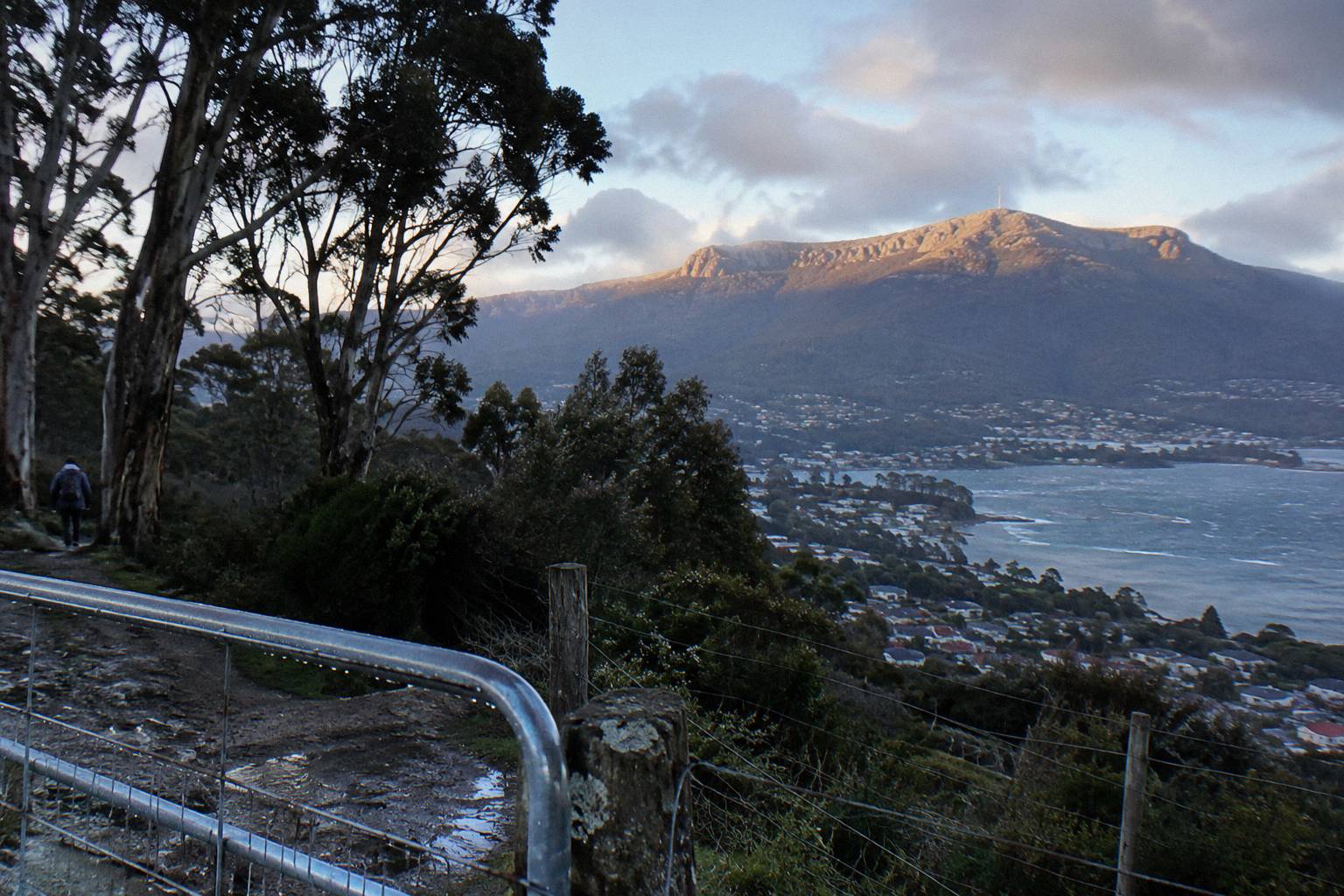
Here is the clock. The Explorer Bus departs from opposite the Tasmanian Travel and Information Centre at 4 Elizabeth Street at 9.30am, 11am, 12.30pm, 2pm and 3.30pm, the last being summer only; it runs 7 days, closed only on 25 December and Good Friday, and pre-booking is essential. For Hobart itself, sunrise sits around 5.54am in early November and about 5.35am in late November, with sunset around 8.16pm. No official source publishes a sunrise time for The Pinnacle, so check the Bureau of Meteorology for Hobart sunrise times and plan from those. The arithmetic: even the first bus puts you at the summit in mid-morning light, hours after dawn, and the last summer departure puts you there in late afternoon light, well before an 8pm sunset. Neither window is golden hour at the top.
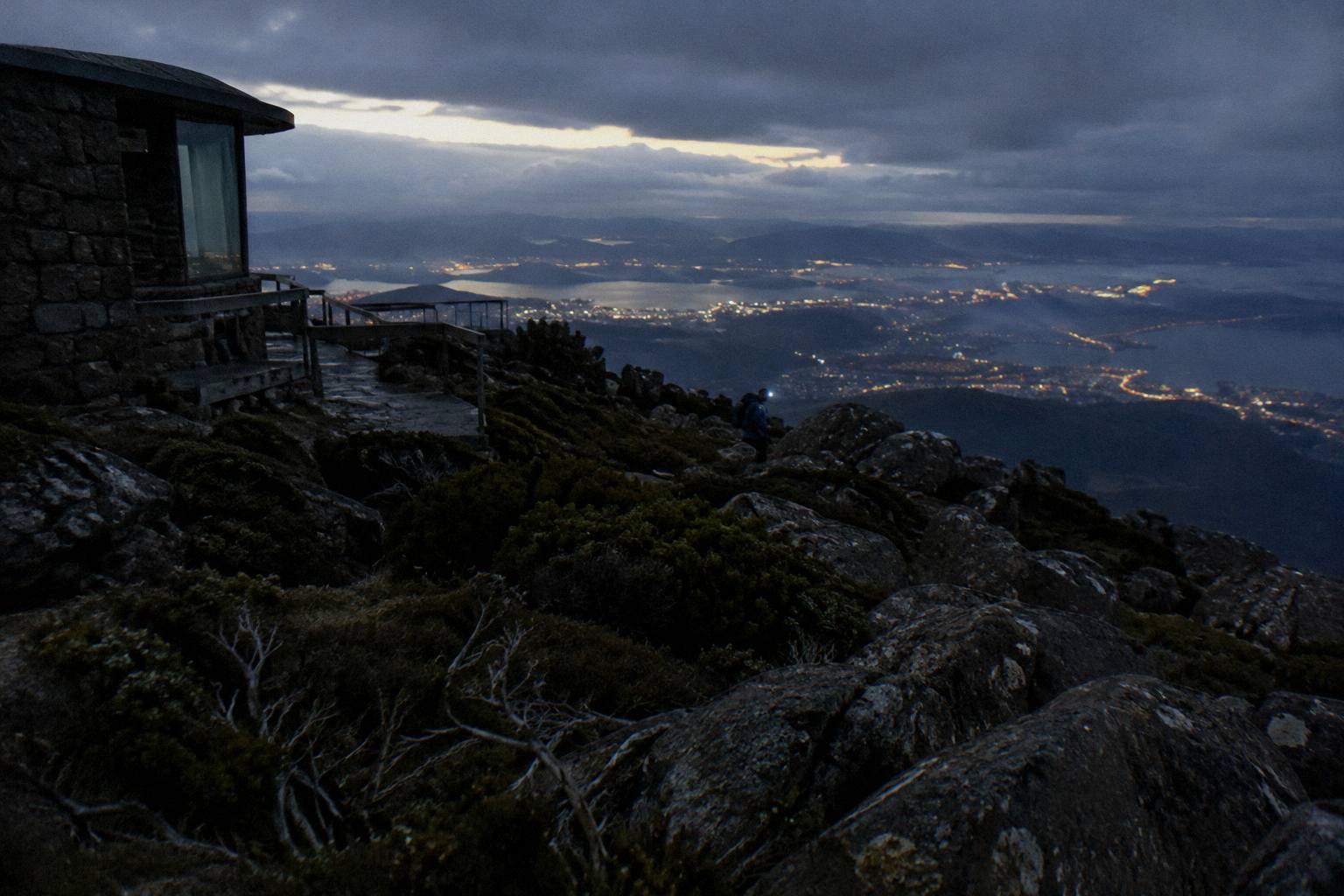
Afternoon options do exist beyond the bus. The Ultimate Experience has an afternoon variant on its booking site, and the Pinnacle 2-Hour Small-Group Tour has an afternoon driving variant of 4 hours; their exact clock times are not published, so treat them as afternoon trips rather than timed shoots. Morning options are the Morning Guided Walking Tour's 4-hour format and the first Explorer Bus departure. If your heart is set on dawn or dusk on the mountain, the only real path is self-drive or self-transport to a lower stop such as The Springs, and even then Pinnacle Road closes overnight for snow and ice, with 95 closure nights recorded across 2025-26, so any dawn plan depends on the road status line on 03 6238 2711. Our pages on sunrise timing on the mountain and sunset at the summit cover what is and is not possible in full.
A note on the one product that gets closest to flexible light: the Explorer Bus's City to Snow tour is bookable only once a reliable snow forecast exists, and the operator states plainly that reaching The Pinnacle on snow days is not guaranteed. If a snow shoot is the goal, that is the mechanism, and it is a forecast lottery rather than a bookable guarantee. The broader question of what happens when the road closes during a tour is covered separately.
How Do Cloud, Wind And The Cold Gap Affect A Summit Shoot?
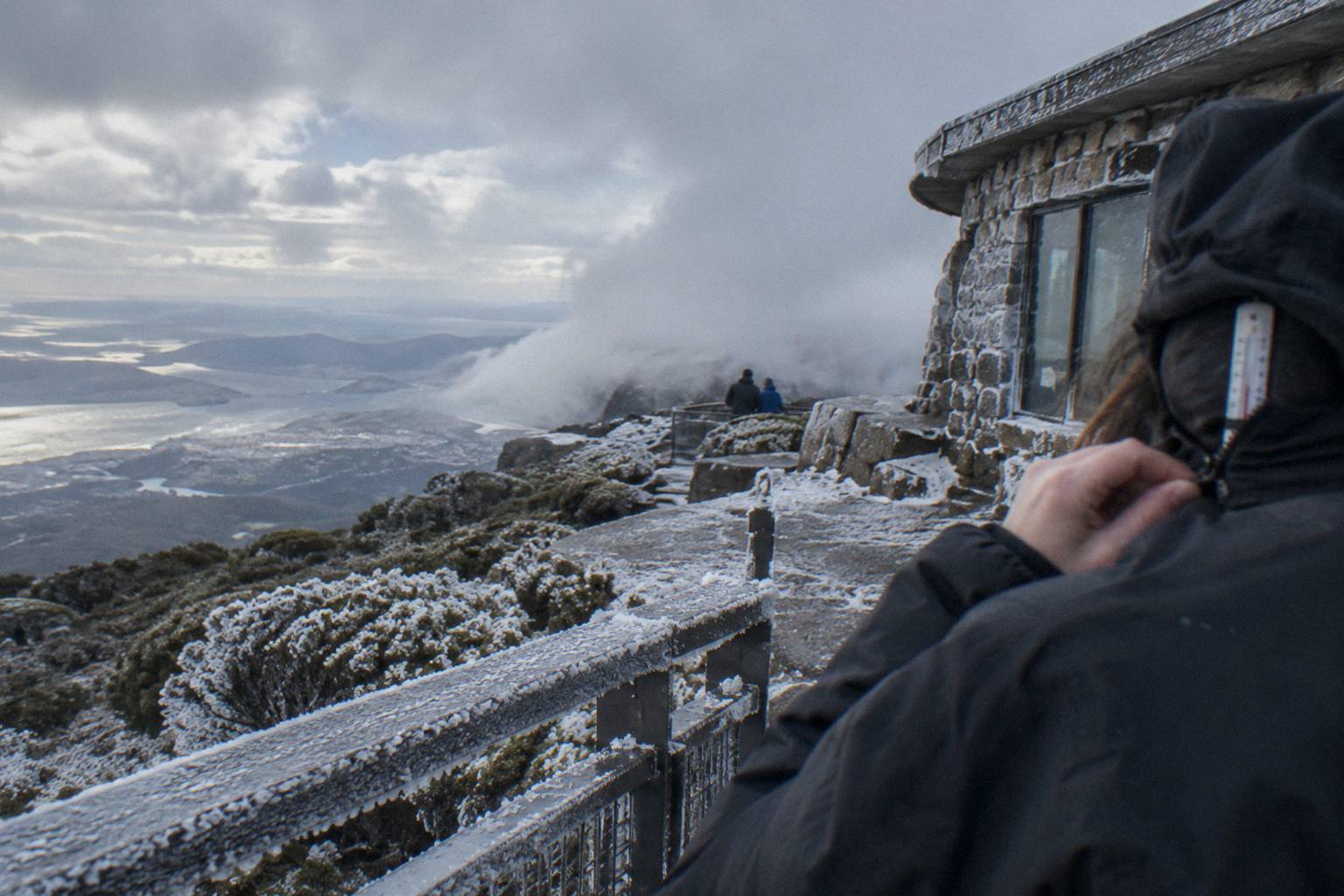
The Trust states that high winds and temperatures below zero are common at the summit, that the gap between the Hobart waterfront and The Pinnacle can be 12 degrees or more, and that wind chill below minus 20 °C is possible, so a summit shoot is planned around insulation, tripod stability and battery cold, not around light. The gap is best written as "often 10 to 12 degrees or more colder" than the city, never as a fixed number, because the Trust and the operator's own figures differ. Whatever the exact figure on the day, the practical version is brutal: a mild 15 degree morning in Hobart can be a near-freezing, gale-swept platform at the top, and the temperature on your weather app is not the temperature on your camera.
The official Bureau of Meteorology station is Kunanyi / Mount Wellington, station 094087, and its live observations page is the only real-time summit readout. Two cautions come straight from the Bureau: wind and feels-like readings can be unavailable when ice builds up on the station, and live observations are all you get, there is no published average that predicts the moment you will arrive. The Wikipedia climate table for the Pinnacle (1991 to 2020, secondary) gives a January mean of 9.5 °C and a July mean of 0.7 °C, a record low of minus 9.1 °C, a highest-ever reading of 29.8 °C, and a recorded sustained wind of over 157 km/h. Treat those as the envelope, not the forecast, and read the Wellington Park Management Trust's safety notes before you go.
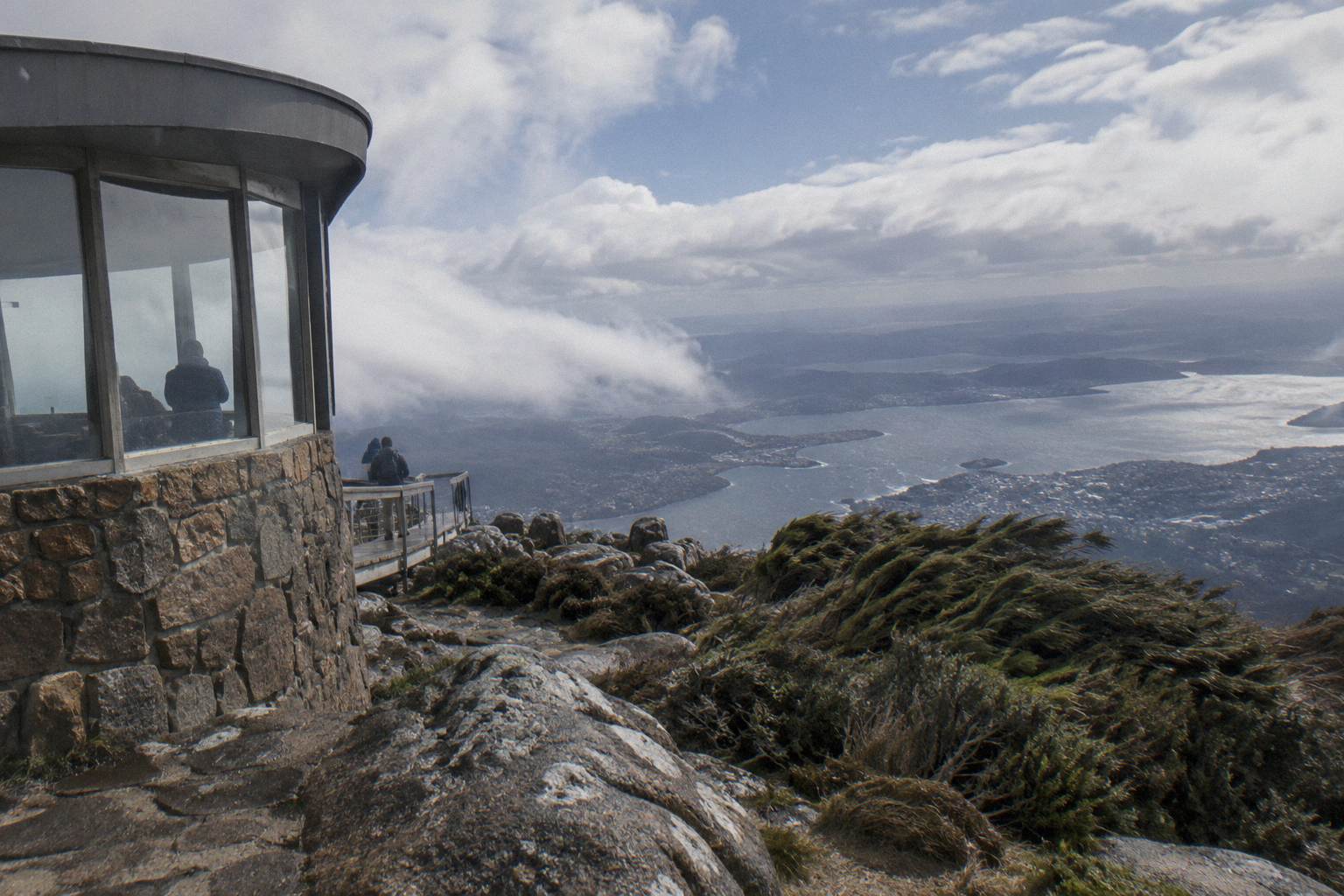
Cloud deserves its own paragraph because it is the thing that actually cancels summit photography. The summit is often in cloud, and a tour that runs in all weather, as the Explorer Bus explicitly does, still delivers you to a white room if the cap is down. The smart structure is to treat the summit as one possible subject and the forest stops as the guarantee. Fern Tree Park, The Springs and the lower tracks sit below the cloud line far more often than The Pinnacle does, and the 4-hour walking format exists precisely for people who would rather photograph mountain vegetation and rock in flat light than gamble on a summit clearing. The guide to summit weather and your tour goes deeper, and the question of whether a summit trip is worth it in fog is answered elsewhere on the site.
| Condition | What the sources say | What it means for the shoot |
|---|---|---|
| Cloud cap | Summit often in cloud; no tour promises a view | Plan a lower-mountain fallback, or hop off at The Springs |
| Wind | Sustained wind over 157 km/h recorded; high winds common | Tripod needs weight; long exposures are luck |
| Cold gap | Often 10 to 12 degrees or more colder than the waterfront | Dress for winter regardless of the city forecast |
| Wind chill | Below minus 20 °C possible per the Trust | Gloves you can shoot in; hand warmers |
| Ice | BOM station readings can drop out when ice builds up | Live data may be missing exactly when you need it |
What Should A Photographer Pack For The Summit?
Pack for a cold, windy, possibly icy platform with no food or drink for sale at the top: there is no cafe at the summit, the only food outlet on the mountain is the Lost Freight Cafe at The Springs, and every trip here excludes food and drink from its inclusions. The packing problem is not exotic, it is just uncompromising. You will be standing still in wind, at altitude, in temperatures that can be more than ten degrees below the city, for thirty minutes at a time, with no shelter beyond the observation structure and nowhere to buy anything.
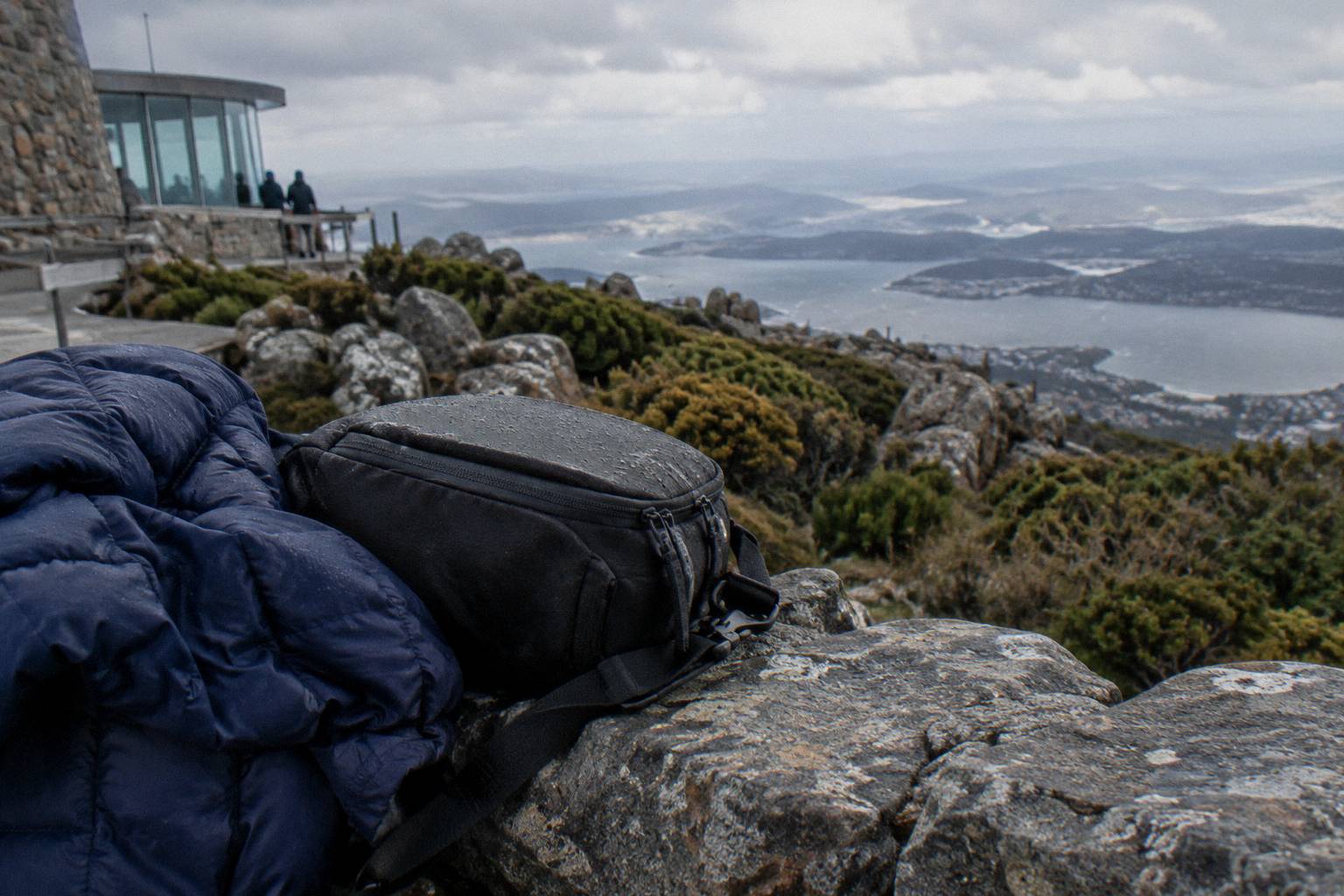
The checklist below is planning advice, not operator policy. Summit toilets run 7am to 10pm from 1 September to 30 April and 7am to 5.30pm from 1 May to 31 August, which sets your comfort window. The accessibility of the toilets, shelter or paths at the summit is not published, so if accessibility matters to your group, rely on the per-trip accessibility lines: the Explorer Bus passes and the Ultimate Experience's booking pages differ on wheelchair access, for example, and the small-group minibus formats are not wheelchair accessible. Our accessible summit options guide covers the detail.
| Item | Why it earns its place |
|---|---|
| Windproof shell and warm layers | The 10-to-12-degree gap, plus wind chill, hits a stationary photographer hardest |
| Shootable gloves and hand warmers | Bare hands stop working fast on metal bodies in wind |
| Spare battery kept in an inside pocket | Cold drains batteries; carry the spare warm |
| Weighted or short tripod, or a brace | The observation shelter and lookout walls steady a camera better than a tall tripod in gales |
| Water and snacks | Nothing is sold at the summit; The Springs cafe is the only food stop |
| Lens cloth, plus a spare | Cloud cap means condensation on glass, repeatedly |
| Offline maps and the road status number | Pinnacle Road closes for snow, ice and annual November maintenance; status line 03 6238 2711 |
One packing note that surprises people: key fobs can fail at the summit because of the FM and TV transmitters, which the Trust flags as harmless but which strands self-drivers more than photographers. And a rules note that matters to this audience: drones are banned in the park without a permit, so aerial plans need to go through the Trust or stay home. The full set of rules, including the fire-danger total closures and the no-campervan-overnight rule, is in our Wellington Park rules and access guide.
Which Lower-Mountain Stops Reward A Camera When The Summit Is In Cloud?
When the summit is clagged in, the alternatives are the Springs Lookout and picnic area, Sphinx Rock, the Exhibition Gardens and Lookout Circuit at The Springs, Silver Falls on the Pipeline Track from Fern Tree Park, and O'Grady's Falls, a 2.2 km walk from Fern Tree, and the hop-on hop-off Explorer Bus pass is the one ticket that lets you drop to them mid-day. These stops photograph in flat light, drizzle and low cloud, conditions in which the summit produces nothing but white. They are also where the mountain's texture lives: wet fern gullies, mossed dolerite and waterfall spray reward a tripod far more than a distant skyline does.
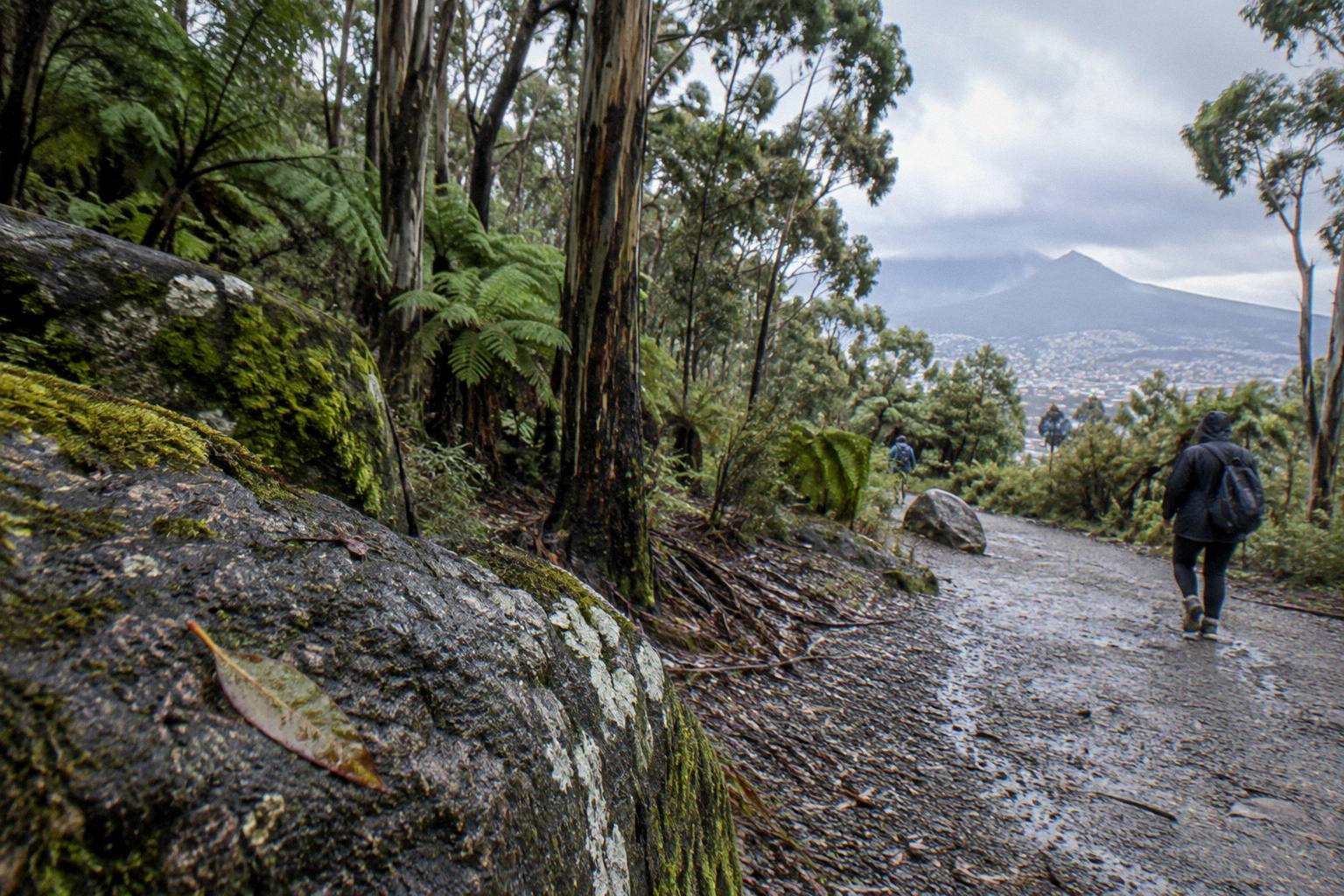
The Morning Guided Walking Tour is built for exactly this contingency thinking. From A$85 per person over 4 hours, in groups of up to 10 with a university-trained local guide, it pairs the minibus with an easy guided nature walk and lists stunning lookouts among its inclusions. It is a morning trip with a minimum age of 8, it meets at 20 Davey Street, and hotel pickup and drop-off are listed as not included. For a photographer deciding between formats, it is the choice when the forecast says cloud: you spend the day inside the landscape instead of above it.
Two cautions keep the lower-mountain plan grounded. The Pipeline Track, which reaches Silver Falls, has TasWater repair works running for several months with weekday closures between 7am and 5pm, so a weekend visit is the safer plan while those works continue. And the North South Track, which runs toward the Glenorchy MTB Park at its northern end, is graded Blue Square, intermediate, for bikes, which tells you the lower mountain has real relief, not flat paths. Bikes are allowed only on formed roads, fire trails and listed tracks, and riders on walking-only tracks can be fined, which matters if your shoot involves a bike-mounted assistant.
Which Trip Format Should A Photographer Actually Book?
Choose by how you handle failure: the 2-hour small-group format for a fast, cheap summit attempt; the 2.5-hour hop-on hop-off Explorer Bus pass, from A$55 per person and rated 4.8 from 1,081 reviews, when you want the option to trade the summit for the forest; and the 4-hour morning walking tour when cloud is forecast and the landscape itself is the subject. Price barely separates the top choices, from A$55 to A$85 per person, and every trip carries free cancellation up to 24 hours before start, so the real decision variable is time and weather, not cost.
The figure below sums up the time budget that drives that choice, and the surrounding decisions, what to wear on a summit tour, the Explorer Bus explained and getting up the mountain without a car, are covered in the guides linked here. If you want a hand-held recommendation in one line: photographers who book the small-group trip and hold a hop-on hop-off backup are the ones who come home with files.
There is one more angle worth naming: the summit as a night subject. Some visitors ask about the aurora, and the plain answer is that no night departure exists, and the road's overnight snow closures make a planned night session a gamble with the status line. The question of whether you can see the aurora from the summit is treated separately, with the same no-promises rule applied.
Whatever you book, book it with the cancellation window in mind. Free cancellation up to 24 hours before start applies to every trip here, and on a mountain where the cloud cap decides your results, the photographers who win are the ones who watch the forecast, the live summit observations and the road status, and rebook without penalty when the mountain says not today. That is the whole game on kunanyi, and Mount Wellington Tours has the figures to help you play it.
Common Questions About Summit Photography On Kunanyi
Which Lookouts Can I Photograph On Kunanyi / Mount Wellington?
The spots are the summit lookouts and observation shelter at The Pinnacle, the Springs Lookout and picnic area at 720 m, Sphinx Rock via a short level walk from The Springs, the Organ Pipes columns visible from Hobart, and Silver Falls on the Pipeline Track from Fern Tree Park. All are free to visit, and the lookouts at the summit are accessible at any time per the Trust, though a clear view is never promised.
Is There A Sunrise Or Sunset Photography Tour Of The Summit?
No. No sunrise tour and no sunset tour to the mountain exists on any booking site, and no trip is timed for dawn or dusk. The earliest departure is the Explorer Bus at 9.30am, and the last is the 3.30pm run, which operates in summer only between 1 October and 30 April. Dawn or dusk sessions require self-transport and a check of the Pinnacle Road status line, since the road closes overnight for snow and ice.
How Much Time At The Summit Do I Get To Shoot?
The figures are 30 minutes of free time on the Pinnacle 2-Hour Small-Group Tour and 30 minutes at the summit on the 2.5-hour Explorer Bus Return Tour. Other trips publish total durations but no fixed minutes at the top. The Explorer Bus pass adds hop-on hop-off use at five stops all day, which is the only format that extends your shooting window on demand.
How Much Colder Is The Summit Than Hobart For A Photo Session?
Write it as often 10 to 12 degrees or more colder than the waterfront, never a fixed number: the Trust says the gap can be 12 degrees or more and the operator says about 10. High winds and temperatures below zero are common at the summit, wind chill below minus 20 °C is possible, and cold drains camera batteries fast, so keep spares in an inside pocket.
What Should I Pack For A Summit Photo Tour?
A windproof shell and warm layers, shootable gloves, a spare battery kept warm, a stable or braced support rather than a tall tripod, water and snacks, and lens cloths for condensation. There is no cafe at the summit and nothing is sold at the top; the only food outlet on the mountain is the Lost Freight Cafe at The Springs. Drones are banned without a Trust permit.
Is A Summit Tour Worth It If The Mountain Is In Cloud?
Only with the right format. The summit is often in cloud and no tour promises a view, so in cloudy conditions the hop-on hop-off Explorer Bus pass and the 4-hour Morning Guided Walking Tour, which spends its time in the forest and lookouts below the cloud line, are the formats that still deliver photographs. The 2-hour summit-only formats are a straight bet on the cloud cap lifting.